AI Can Do More of Our Work. So What Will Make Us Valuable?

SERIES · AI AND THE FUTURE OF WORK · POST 1 OF 6
The real challenge isn’t keeping up with artificial intelligence. It’s understanding what we bring to the table when machines can do more.

Imagine arriving at work on Monday morning to discover that your emails have been drafted, your meeting notes summarized, and your report prepared before you’ve even finished your coffee.
Tasks that once consumed hours now take minutes.
At first, it feels like a win. You have more time, fewer repetitive tasks, and a tool that helps you get through your workload faster.
Then a different question comes to mind.
If AI can do more of the work we are paid to do, what makes our contribution valuable?
It’s a question worth asking, whether you’re a business owner, a manager, an analyst, or an Executive Assistant.
When getting the work done is no longer enough
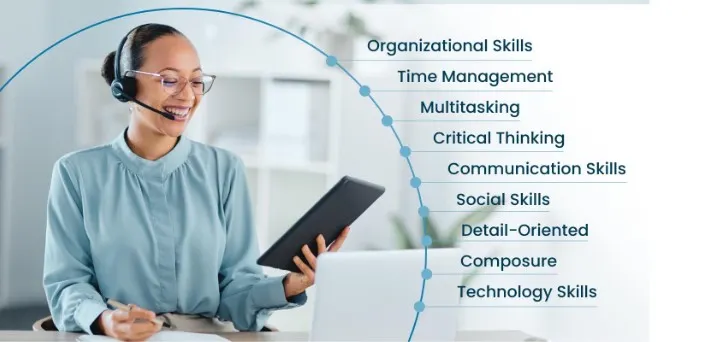
For years, professional value was often demonstrated through output. You were dependable because you could prepare reports quickly, organize information accurately, manage competing deadlines, or produce quality work under pressure.
Those skills still matter. But AI is changing how some of that work gets done.
A first draft can be generated in seconds. Information can be summarized quickly. Repetitive processes can be automated.
The result? Simply completing a task may become less distinctive than it used to be.
That doesn’t mean human expertise is becoming irrelevant. It means we need to think more carefully about where that expertise makes the greatest difference.
What happens after the task is completed?
Consider an executive who needs to prepare for an important meeting.
AI can help summarize documents, organize talking points, and draft an agenda. But someone still needs to consider the meeting’s purpose, recognize sensitive issues, identify missing information, and decide what deserves the executive’s attention.
Get Oluwadamilola Ogunfowokan’s stories in your inbox
Join Medium for free to get updates from this writer.
The technology can accelerate preparation. The quality of the final outcome still depends on how the tools are used and how decisions are made.
This is true across many professions.
A business owner needs more than a well-written marketing plan. A manager needs more than a polished report. An analyst needs more than a table of figures.
They need to know what the information means and what to do next.
Producing an answer and knowing whether it’s the right answer are two different skills.
The opportunity hiding inside automation
Perhaps we should stop viewing AI only as a competitor and start asking how it can help us contribute differently.
If a tool saves you three hours a week, what could you do with that time?
You could improve a process that has frustrated your team for months. You could strengthen a customer relationship. You could investigate a recurring problem instead of repeatedly fixing its symptoms.
The opportunity isn’t simply to do more work. It’s to make room for better work.
Of course, this doesn’t happen automatically. Organizations need to redesign workflows, and professionals need opportunities to develop their judgment, communication, and problem-solving skills.
But the possibilities are worth exploring.
The question we should be asking
We cannot predict exactly how every profession will change as AI advances. Some tasks will be automated, others will evolve, and new responsibilities will emerge.
What we can do is prepare to work thoughtfully with the technology rather than relying on it blindly or avoiding it altogether.
Learn the tools. Understand their limitations. Keep developing the skills that help you make sound decisions and solve meaningful problems.
Because when technology makes execution easier, the ability to decide what deserves our attention becomes even more important.
Here’s something worth thinking about: If AI took half of your routine workload away tomorrow, how would you use that extra time to create more value?
I’d love to hear your perspective in the comments.
For my services, you can check out my LinkedIn profile www.linkedin.com/in/damilola26 or my portfolio through https://sites.google.com/view/oluwadamilolaogunfowokan/home