Side Hustle Summit Day 4 Recap
Russell Brunson on Funnel Hacking, a Guinness World Record, and the Hardest Sell of the Week


Day 4 was the session Iman Gadzhi had been building up all week, and he wasn’t overselling it; Russell Brunson’s presentation was the most substantive hour of teaching in the entire summit. It was also the day the event picked up a Guinness World Record.
All of those things happened in the same three hours, and an honest recap has to cover all three.
I watched live. Below is what was taught, what was claimed, what was sold, and where I think you should be careful.
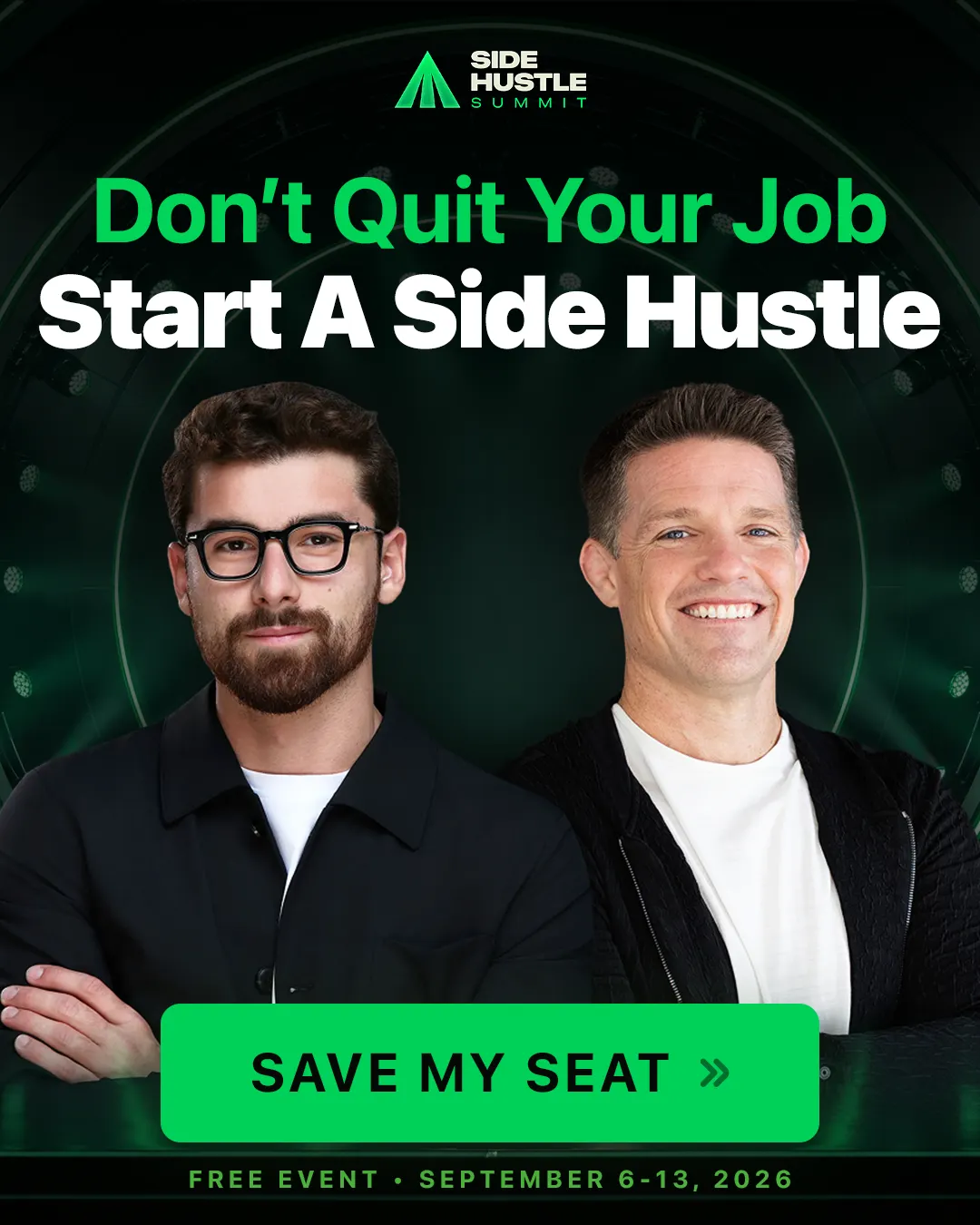
The registration is still open and you can watch the replays as well.
The Guinness World Record
Announced on stream: 203,000 live viewers on Day 1, certified by Guinness World Records as a record for a live event. Brunson later put the funnel maths on screen; hundreds of millions saw the ads, over 2 million registered, 203,000 showed up live to Day 1, and the number narrows every day after.
Whatever else you make of this event, that’s a genuinely remarkable distribution operation, and it’s worth noticing that the funnel they demonstrated all week is the one you’re standing inside.
Can You Still Join After Day 4?
Yes. Registration remains open, replays go out within 24 hours, and Day 5 — the live build finale — is September 13, after a three-day gap.
That gap is the thing to watch. Four consecutive days, then nothing on the 10th, 11th or 12th, then the most practical session of the week. Most people will lose the thread. Set a reminder now.
Russell Brunson’s Session: Funnels
His stated goal was narrow and useful: help you sell more digital products. Not find more customers, not build a bigger audience; sell more to the same traffic you already have.
He opened with Roger Bannister breaking the four-minute mile, then John Landy repeating it 46 days later; his point being that the barrier was belief, not physiology. (Small correction for the record: Bannister ran it in 1954, not 1965 as stated on stream.)
His personal version: reading an email in 2004 from a marketer named John Reese announcing a million dollars in digital product sales in 24 hours. Brunson’s reaction wasn’t “I could do that in a day”; it was “if he can do it in a day, maybe I could do it in a year.” Three years later, October 2007, his first product past a million.
The transferable lesson is the calibration, not the number: he scaled the belief down to something he could actually accept, then moved the goalpost as each one fell.
Picks and shovels
The best strategic content of the day. Sam Brannan, San Francisco gold rush: instead of mining for gold, he bought every pick and shovel in the city, then ran through the streets announcing gold in the American River. He became the city’s first millionaire selling tools to prospectors.
Brunson tied it directly to Day 3’s creator model: the influencers are the miners; they have the audience and the attention. You have the picks and shovels; the ability to create a digital product and build the funnel. In his framing, that’s the more valuable side of the trade.
What a funnel actually is
For anyone who’s never had this explained plainly: a website gives visitors many things to do; a funnel gives them one. Page one does one job, page two does the next, and so on.
Then the mechanic that carries the whole session; the upsell. His potato gun DVD wasn’t working until a friend explained McDonald’s: they sell the Big Mac, they profit on “fries and a Coke with that?” Brunson found a company selling potato gun kits wholesale, added them as a post-purchase offer, and one in three DVD buyers took the $200 kit.
Same product. Same traffic. More revenue per customer.
His plane analogy made it stick: everyone on the flight arrives in the same city, but 20–30% of passengers pay several times more for a seat that reclines. A percentage of people always upgrade; and if you don’t offer an upgrade, you simply don’t collect that money. He noted the summit itself did exactly this: free registration, then a $15 VIP upsell, which he said around 45,000 people took.
Funnel hacking
The core method, and the most genuinely useful thing taught all week:
- Decide the funnel type you need — book funnel, challenge funnel, webinar funnel, product launch funnel
- Funnel hack it — find people already succeeding with that type and actually buy their product, screenshotting every page in the process
- Sketch the structure on a whiteboard
- Build your version — modelling the layout, sequence and price points, never copying the copy or creative
He was explicit on the distinction: model, don’t copy. Copying someone’s headline, images or text is unethical and illegal. Modelling the structure is how everyone in this industry learns.
His demonstration: a neuropathy supplement funnel he modelled took him to $20,000/month, and a second funnel hacked from a company doing $3M/month took the same business to roughly $20,000/day within 30 days. He says he spends $25,000 a month buying competitors’ products purely to document their funnels.
The most quotable line came second-hand, from Agora’s Porter Stansberry: if you want to compete with a company that spends hundreds of millions testing, don’t try to outthink them; model them.
Get Erin J Daniel’s stories in your inbox
Join Medium for free to get updates from this writer.
This is the part worth keeping even if you never spend a dollar here. Funnel hacking costs the price of one competitor’s product and works in any business, online or off.
The two bonuses
For people who joined before the stream ended:
- The Billion Dollar Swipe File — his personal collection of funnels documented over a decade and a half, valued on stream at $25,000+
- Lifetime access to salesfunnels.com — a tool he says he bought for $1.1 million in Bitcoin in 2021, which maps a funnel visually and exports a prompt you plug into an AI to have it built. Stated future price: $997
He confirmed earlier buyers get both added automatically.
The Guest Sessions
Eileen Wilder — the “one-day cash machine”
High-energy, heavy on chat participation, built around one mechanic: create a modest digital product, bonus two free tickets to a live “party” with every sale, then run the party and sell from it.
Her claims: $108,000 in a single day on her own first run; a partner named Dave whose party did $3 million in a night, of which her 25% share was $750,000. Other examples cited: her 10-year-old son, an 81-year-old friend at $33,000, someone at $75,000 on a Friday night, a bird photographer at $200,000.
The through-line was W. Clement Stone’s “do it now” — repeated as an anti-procrastination mantra, and Napoleon Hill’s observation that successful people decide quickly and change their minds slowly.
Where this session turned: it closed on a long motivational sequence about “mediocre men”; the people in your life who’ll tell you to wait, think, be careful and asked viewers to stand up and separate from them. Framed as empowerment. Worth recognising also as a technique: casting the people who might advise caution about a $2,000 purchase as obstacles to your destiny is a very old persuasion move, and it’s aimed squarely at the moment before checkout.
Myron Golden — “be, do, have”
The most philosophically substantial of the three, and genuinely good in parts. His framework: being is the input for doing, doing is the input for having. Most people want the having and skip the becoming.
His own history is the strongest credential in it: started selling insurance in October 1985, made no sale for 18 months, first commission $122.66, and didn’t hit a six-figure year until roughly 13 years later. His line — “the 14 years are going to go by whether you make the money or not” — is the honest heart of the session.
The tree metaphor (roots grow down before shoots grow up; the seed must cease to be a seed) and the eaglet learning to fly by falling both land well. So does his definition of distraction: anything you focus on that doesn’t move the needle in your favour.
Then the close. He walked the audience through writing down their two biggest expenses, revealed the second as taxes, and the first as “not knowing” — calculating that if you could make $1 million with this training and made $120,000 instead, you have “already paid life $880,000” for not knowing. Followed by: join for $1,995 or keep paying that.
That is a rhetorically brilliant and logically hollow argument. It treats a hypothetical million-dollar income as a baseline you’re losing, which is not how opportunity cost works. Notice it, admire the craft, and don’t let it make your decision.

The Pressure Problem
Something changed on Day 4 and it’s worth naming plainly.
Brunson said, near the end: “I have yet to meet somebody who’s both skeptical and successful.” He encouraged viewers to put skepticism on the shelf and step into the dark on faith.
I’d push back on that one specifically. Skepticism and action aren’t opposites. Funnel hacking; the very method he spent an hour teaching is skepticism applied: don’t guess, don’t assume, go buy the thing and check what actually happens. The best operators I know are relentlessly skeptical and decisive. Those two traits are what let you evaluate an offer on its merits instead of on how the room feels at minute 58.
Combine that with Wilder’s “mediocre men” framing and Golden’s “$880,000 for not knowing,” and you have three consecutive sessions ending with a message that caution is the enemy. Each is compelling. Together, on the day before a three-day gap, they are a coordinated close.
The free training remains free and valuable. The paid program has a 7-day refund. Both those facts survive whatever you decide.
Registration is still free
What Day 4 Was Actually Worth
Take this, free:
- Funnel hacking as a method. Buy a competitor’s product, document every page, model the structure. Costs almost nothing, works everywhere.
- The upsell principle. A percentage of buyers always upgrade. If you don’t offer the upgrade, that revenue simply doesn’t exist. Applies to any business.
- Golden’s time argument. The years pass whether you build something or not. The most honest thing said all week.
Day 5: The Live Build — September 13
The finale is the session the whole week has pointed at: an AI-powered side hustle built live from scratch, step by step, with attendees encouraged to follow along rather than watch.
If you only attend one session in full, attend this one. It’s also the one most people will miss because of the gap. Diary it.
FAQ
What was the Guinness World Record? 203,000 live viewers on Day 1, certified on stream as a record for a live business summit.
What is funnel hacking? Studying a competitor’s sales sequence by buying their product and documenting every page, then modelling the structure — not copying the content.
What is the Billion Dollar Swipe File? Brunson’s documented collection of successful funnels, given as a Day 4 bonus to Monetise members.
Can I still register? Yes — registration is open and replays release within 24 hours.
When is Day 5? September 13 at 1 PM Eastern.
How much is the paid program? $1,995 one-time, or financing from around $166/month. General admission to the summit remains free.
Disclosure: This article contains affiliate links to the Side Hustle Summit. If you register or later purchase through them, I may earn a commission at no extra cost to you. The event is free to attend.