The Noosphere


On, Sunday, March 22nd, I gave a talk on the topic of the noosphere for a Unitarian Universalist congregation.
Here are the readings I used, followed by my draft of the talk:
Opening words:
Pierre Teilhard du Chardin, The Future of Man:
“The age of nations is past. The task before us now, if we would not perish, is to build the earth.”
For reflection:
José Argüelles, Manifesto for the Noosphere:
“You are not separate from me, though you may think that you are. Your mind and mine, the mind of the Earth, are one and the same mind. This one mind is called the noosphere.”
Reading:
José Argüelles, The Mayan Factor: Path Beyond Technology:
“Just as the biosphere is the unified field of life and its support systems, so the noosphere is the unified field of the mind, the psychic reflection of the biosphere.
Because we as a species, the aggregate of consciousness-bearing cells of the evolving Earth, are not yet awake to our role as a planetary organism, so too the noosphere is not yet fully conscious. When humanity becomes conscious of itself as a single organism and unites to activate the noosphere, we will find the collective resolve and will to reconstruct the biosphere and divert the energy of the human race from a path of destruction based on mechanized abstraction from nature to a new harmonic order of super-organic reality based on an entirely different state of consciousness than has yet existed on Earth.”
Talk:
Seven weeks ago, Thupten Phuntsok used these words to introduce the talk that he gave for us in this space:
“I am convinced that we stand at a crossroad in human evolution.
I am not talking about biological evolution. I am talking about something much more profound than that.
I’m talking about an evolution of consciousness itself.”
I was really struck when I heard these words, not only because they are compelling and not only because I believe them, but also because I knew then that I would be giving this talk just a short time later — and I knew that these words could have served as an introduction for it. And so they have. So thank you, Phuntsok.
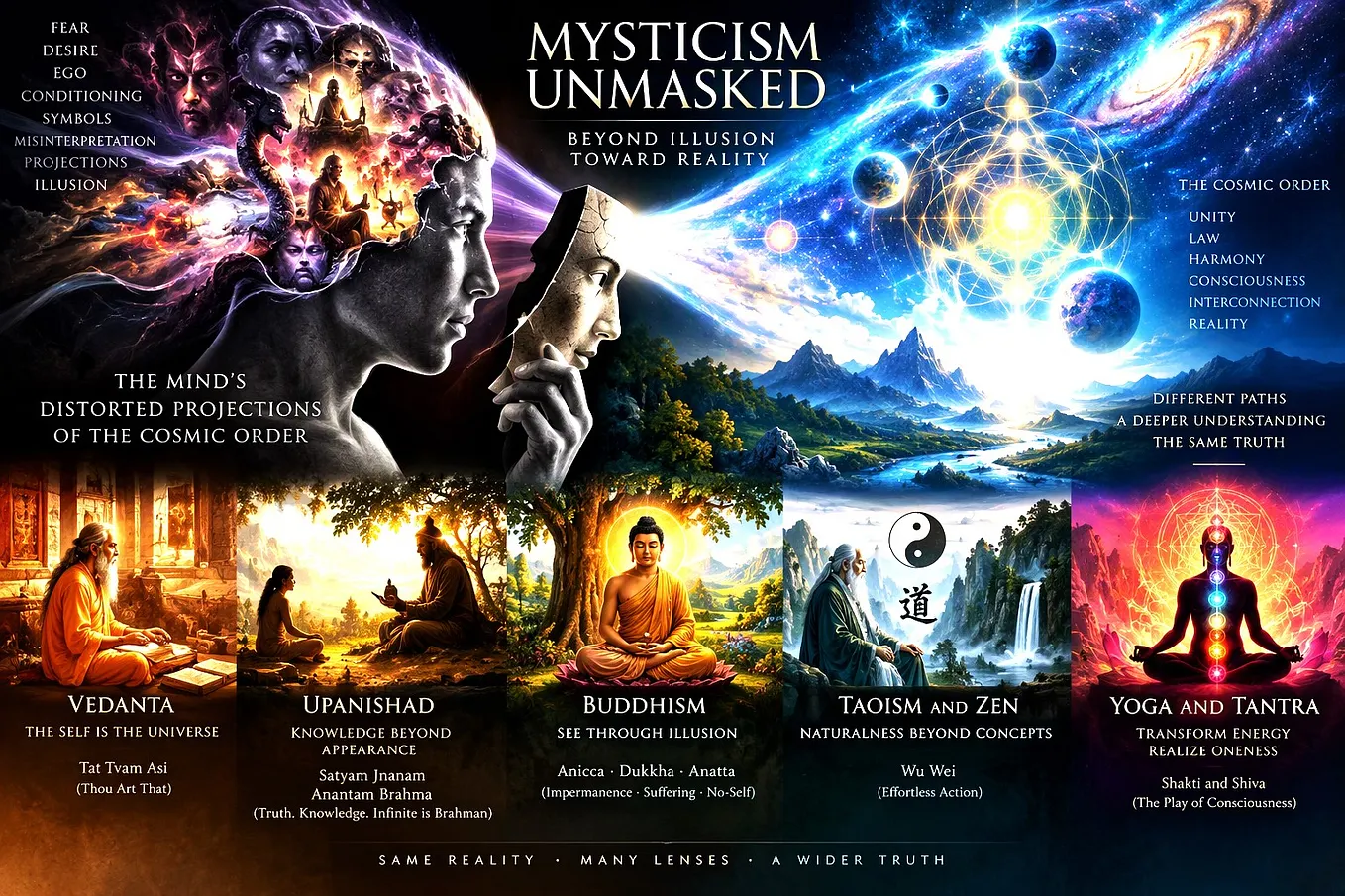
An “evolution in human consciousness,” known as the noosphere, is the subject of my talk today. Although the term was coined by Édouard Le Roy in 1927, and developed further by the philosopher Pierre Teilhard du Chardin in the 30s and 40s, I first learned about it through the writings of Jose Arguelles, and so in this talk I’ve focussed on Arguelles’s work more than the work of any other thinker.
I had originally planned to give this talk around Earth Day, being that Arguelles believed very strongly about taking care of the earth. In 1969, a year before Earth Day was born, he organized a festival at the college where he was teaching, UC Davis. At this festival his students used art interactively to teach visitors about activism, wellness, and the environment. Following the United Nations’ declaration of Earth Day the next year in 1970, Arguelles changed the name of his festival to the “Whole Earth Festival,” and the festival has continued to this day, even beyond Arguelle’s passing in 2011.
Arguelles’s deep respect for the earth demonstrates that he believed, with Unitarian Universalists, in the seventh Unitarian Universalist principle, the need for respect for the interdependent web of all existence of which we are all a part.
When I used to think of this principle, I thought of the biosphere: food webs, the water cycle, the need to save our rainforests, and prevent extinction. And Arguelles was certainly on board with that. But he didn’t stop there. He envisioned a coming interconnection not only of biological life, but also of consciousness — called the noosphere, drawing mostly on the work of Pierre Teilhard du Chardin, and before him, the work of geochemist and mineralogist Vladimir Ivanovich Vernadsk, best known for developing the concepts of the biosphere, helping lay the foundations for the idea of the noosphere.
Noosphere is from the Greek NOH-os — or mind; and from the word “sphere” — sphere as used in words like biosphere — which is the global ecological zone where all life on Earth exists, integrating various ecosystems and biotic communities. So this “mind-sphere” is a global zone where all thought or consciousness becomes integrated, interconnected, or shared as if a part of one interconnected conscious organism.
Get David Young Michaels’s stories in your inbox
Join Medium for free to get updates from this writer.
Arguelles said that this shift to shared or collective consciousness is fundamental to the next stage of human and terrestrial evolution — that is, it is bound to happen — and in fact, it is happening.
So if the noosphere is emerging, then others will be aware of it, even if they are not aware of Teilhard or Arguelle’s writings, because it is not either of their inventions, but is in fact slowly becoming our reality.
So you’ve heard Arguelles’ words about it from the reading, and up until now I’ve described it further using Arguelle’s framework, along with brief mention of some of the thinkers that laid its groundwork, but when talking about concepts like this, I always find it helpful to describe it in my own words.
In my original blurb for this service I used the metaphor of our hands not thinking twice about taking care of a bodily injury that is on another part of our body. The hand and the knee, for example, are not separate but part of a greater whole. They are not individual organisms, but part of one organism.
For me, this metaphor is not just an illustration of what I’ve read about the noosphere, but also a metaphor that illustrates certain interactions I had, well before I even heard the word “noosphere.”
I’d like now to talk about some interactions I’ve had that has convinced me of the emergence of this noosphere. And I’d like to open it up after my talk in case some of you would want to share your own interactions which illustrate the emergence or the existence of the noosphere in your own lives. Mary told me a story lately that I’ve asked her to share, which she said she’d do later, and I’ll invite any of you to do the same, or to just share a thought or a question or two about what might have come up for you during my talk.
These examples that I’m about to share may sound trivial, but the mechanics of these interactions were so outside of my understanding of human consciousness that I once thought was isolated in each one of us as individuals. I mean, I’ve always believed in empathy, and caring for each other, but what I experienced in these example seemed to go beyond these realities.
At one point in my life, I always left my car door unlocked.
One day I ran into a friend who suggested getting a bite to eat. I wasn’t hungry, but suddenly I had a strong knowing to walk to my car, and open the door. There I found a Chipotle bag, and it was warm, as if just purchased. I told my friend I wasn’t hungry, but asked him if he liked Chipotle. He said he loved it. And so he had his hunger satisfied, and we got to catch up. I can’t be sure who left that bag, but the timing was impeccable, and it was pretty amazing that I knew to look in my car at that moment. It seems that the same consciousness that led to somebody buying Chipotle and leaving it in my car also informed me to retrieve it.
Other times I found myself without money. I was once in this position in Washington DC, and became separated from the friends who I was there with. I passed what appeared to be an unhoused man, who asked me for change. I had nothing to give him, so I walked on. But then I felt bad. I had totally ignored the man. So I walked back and apologized. I explained to him that I had no money and that that was why I had ignored him, at which point he asked me, “do you need money?” I had never received money from an unhoused man, so I said no thank you, and walked on. Then, that same inner knowing that had told me to check my car when my friend was hungry reminded me that I had no money, I had nothing to eat, and I was hungry. The man had offered to help, and I had refused. So, I sheepishly returned and told the man my situation. He proceeded to root through his change cup and count out one dollar and seven cents. He said I could get anything I want from the 99 cent menu at the McDonald’s across the street, and that the extra was for the sales tax. So I walked across the street, bought myself a fish sandwich, and ate it happily. When I returned to thank the man, he looked me in the eye, went under his chair, and produced a warm McDonald bag, announcing to me, “you just earned yourself a fish sandwich!”, and proceeded to hand me my second fish sandwich for the day. He must have bought my favorite thing on the McDonald’s extra value meal menu right before I passed by.
I’ve also been on the giving end of interactions like this, seemingly tapped by a higher consciousness to give, at times learning only afterwards that the prompting I received spoke to a specific need the the person had at the time. I’ll spare you the details, although I’m always happy to share if anyone wants to know.
Hopefully the examples I’ve given provides you with an idea of this higher consciousness which I believe I experienced working through the people around me and through me to meet needs.
These simple things may not save our planet in and of themselves, but I believe they point to a mechanism that can — a mechanism that if we all find ourselves in it will insure that all of our needs are taken care of.
And it’s not just utilitarian. It’s beautiful. This consciousness is beyond the self. One doesn’t know what will happen next. It’s an adventure.
One of Jose Arguelles’s desires was to see the phrase, “time is money” replaced with the phrase, “time is art.” This higher consciousness is creative. It’s not linear, following logically from the next moment; it’s a creative, living-in-the-moment process, one that I believe that we can all access. And if we slow down and practice being open to this inner knowing, this higher noospheric consciousness — I don’t see any other outcome than the formation of the perfect society that so many religions have foretold. For example, as I mentioned, Phuntsok argued that this perfect society is right around the corner from his perspective as a Buddhist practicing for 30 years, anticipating that 𝘉𝘰𝘥𝘥𝘩𝘪𝘤𝘪𝘵𝘵𝘢 or “loving-kindness” — which sounds very much to me as the consciousness of the noosphere — will soon be the norm in human society.
Concerning the group of folks who adopted the philosophy of Jose Arguelles, they are expecting the noosphere any moment now. For them, 2012, the end of the Mayan Calendar, was the start of a 9 year ramping up period to 13 years of tremendous global instability, culminating in this noosphere of one human consciousness. An interesting prediction, especially since their prediction of the start of this instability, well before it took place, fit right in with COVID and the lockdowns, and since then we are at no loss, unfortunately, for continued societal instability and upheaval.
This darkness before dawn is also an idea that is not foreign to many religions, such as the one I grew up with. Jesus spoke of a time of great distress on the planet that if it wasn’t cut short, no one would remain alive. Not very hopeful if we stop there. But he said that when we see these things, we should lift up our heads, for our redemption is at hand — our redemption as in the end to isolated individual selfish human consciousness and the emergence of a single human consciousness where all take care of each other as one global organism.
And Teilhard, whose ideas sparked Arguelles’ writings on the matter, definitely was influenced by his own Christian heritage, saying that this noosphere is the “Cosmic Christ, the second person of the Trinity.”
And Arguelles, who was half Mexican, and very interested in Mesoamerican cosmology, saw the concept of the noosphere fitting right into the cosmology of the Mayans, just as Phuntsok sees a similar concept throughout the Buddhist canon.
Here at the Unitarian Church, we have our “Compassion Series,” where we invite folks of various religions to talk about how the Golden rule — “Love your neighbor as Yourself” — can be found in their particular religion. Indeed, it seems to be present in every religion that I’ve looked into. So this noosphere, where loving our neighbor as ourselves will not be an effort because our neighbor will be ourselves — our consciousness will not be separate anymore — but collective. As I’ve already mentioned, the hands won’t complain that they have to bandage a cut on the knee but we will consider each other as part of the same Whole. This seems to me to be the moment so many people of faith — and so many who don’t consider themselves to be a part of any religion—have longed for, and even anticipated.
May this moment come swiftly as we each seek to hasten it by our own compassion for and love and generosity to all beings. Amen.
End of talk.
Closing Words:
Pierre Teilhard du Chardin, “Hymn of the Universe”:
“The day will come when, after harnessing space, the winds, the tides and gravitation, we shall harness for God the energies of love. And on that day, for the second time in the history of the world, man will have discovered fire.”