2019 Yearbook: Films
My favorite films of the year
Author’s Note: The late release of Little Women in the Philippines gave me an excuse to delay this, so forgive the untimeliness. As the end of this post will tell you, I still wasn’t able to see everything I wanted to. Might update this once I do, but I just wanted to get it out while it was still only moderately outdated.
Halfway through the year, a film friend of mine was lamenting the state of his 2019 list, which was, like mine at time, decidedly in need of masterpieces. While we both shared an affinity for Olivia Wilde’s lovely Booksmart (more on it in a bit), the rest ranged from pleasant enough to exhaustingly blah. We wondered where the great films were hiding, and it turns out, all we had to do was wait.
By the numbers, 2019 was one of my favorite movie years to date, just in terms of the sheer volume of films I found myself adoring in one way or another. This ranged from Academy-friendly fare — this list features five of the nine Best Picture nominees, which is a marked improvement over last year — to little-seen non-English films and pulpy crowd-pleasers. While 2019’s blockbuster slate proved to be deathly uninspiring, the landscape as a whole is alive and thriving. As an old decade ends and a new one begins, it’s nice that 2019 turned out pretty great for cinema.
Without further ado, then.

I Liked It! (22–30)
A few short blurbs on some films I liked quite a bit, all more or less equally, but distinctly less than the other films on this list. Think of these as extra-honorable mentions. Arranged alphabetically.
Bacurau
This odd Brazilian mishmash — Corrupt politicians! Androgynous revolutionaries! Foreigners hunting locals for sport! — is, if nothing else, an absolutely batshit time at the movies. In a year whose biggest blockbusters were all safe as milk, it makes for the best kind of corrective.
The Dead Don’t Die
I’ve flip-flopped on Jim Jarmusch’s obtuse, intentionally difficult zombie romp for a few months now, but I think its deliberate flatness and dry-as-Death-Valley-air humor adds to its oblique joys more often than not. Adam Driver’s performance alone is worth the price of admission.
John Denver Trending
Amid a particularly dark Cinemalaya slate, it only seems fitting — and deserved — that this tragic tale of a young boy eaten alive by the Instagram age should take home the top prize. Jansen Magpusao is a revelation, but you might need to lie down for a few hours after this one.
Knives Out
Though the political efficacy of Rian Johnson’s The Last Jedi follow-up might have been a tad overblown, there’s still much pulpy delight to be had with this whip-smart whodunit, whose starry cast coalesces into a constellation around wonderful twin turns by Daniel Craig and Ana de Armas.
The Lighthouse
Much more sound and fury than anything resembling thematic meat, but a little sound and fury never hurt anyone. If anything, listening to the siren songs of Willem Dafoe spinning seaman’s yarns in perfect brine-speak alone is worth the price of admission already.
Marriage Story
Awards for everybody, but especially Julie Hagerty, Merritt Weaver, and the eternal Laura Dern.
Ready or Not
Between this and Bacurau, it’s been a banner year for rich white folk hunting people for sport. It’s not the most sophisticated “eat the rich” movie of 2019, but it’s easily the most relentlessly fun.
System Crasher
If it feels a tad too calibrated to tug at the heartstrings — I mean, it’s a movie about an orphan with anger issues who is failed by the system , come on — you don’t mind it in the moment. Helena Zengel delivers that rare cinematic gift of a legitimately great child performance in an issue film that never feels like a slog even as it repeatedly punches you in the heart.
Us
Jordan Peele’s latest isn’t as elegant a narrative Rube Goldberg machine as Get Out, but its messier pleasures feel destined to age better than his debut’s (overly?) calculated metaphors. Lupita Nyong’o gives the year’s most indelible performances as both the protagonist and antagonist of this imperfect gem.
And now, for the ranked portion of our list.

21. Pain and Glory
Dir: Pedro Almodovar
Much like two other films from established masters you’ll find a bit higher on this list, Pedro Almodovar’s Pain and Glory is constantly in conversation with the rest of his oeuvre. As such, it’s starkly autobiographical (and very much all about his mother), infusing a healthy dose of melancholy into its melodrama-adjacent account of an ailing film director’s — see what he did there? — struggle with not only the malaise of middle age, but the curse of having to literally feel his growing obsolescence in his bones. Having been one of the director’s favorite muses over the past 35 years, Antonio Banderas gives one of the year’s best turns as his avatar, and a host of other Almodovar regulars — Penelope Cruz! Cecilia Roth! Julieta Serrano! — hang around the film, echoing ghosts of masterpieces past. If it never quite digs as deeply as you want it to, it’s hard to blame it. After all, who among can be truly honest to ourselves about ourselves?

20. Black Mother
Dir: Khalik Allah
A visual prayer through the city streets and country roads of Jamaica, filmmaker and street photographer Khalik Allah’s Black Mother is a journey through the permutations of a post-colonial culture’s history, as it reconciles an all-but-lost indigenous spirituality with the oppressive legacy of its occupation by the Spanish and the British. Composed of snippets of everyday Jamaican life and soundtracked by interviews with locals of all backgrounds, the film is a meditation on what it means to be born, live, and die among this particular community, and laden with this particular history. Eschewing any semblance of a clear throughline for something a fair bit more mystical, the film aspires for no less than a hard glimpse of a people’s collective soul — its triumphs and tragedies, its anger and sorrow, its joy and unshakable sense of community. In it, the act of prayer becomes radical once again, at once celebratory, inquisitive, and boundlessly salvific.

19. Transit
Dir: Christian Petzold
Christian Petzold’s preoccupations with both the physical and metaphorical rubble of war finds its purest form in Transit, a film that un-sticks itself from linear time to underline just how little we as a species have moved from the specter of World War II. A rough facsimile of Casablanca (though based on a 1944 novel in its own right of the same name) that ambiguously sets itself in both 1944 and 2018, the film’s most devastating moments come as it dawns on you how seamless this chronological remix feels, as if the world itself has been in stasis for 70 years. Without the movie-star glamour of Bogie and Bergman softening the blow, the protagonists’ desperation comes to the fore, with Franz Rogowski and Paula Beer giving subtly soulful performances as civilians trying to escape a doomed city. Much more than an ambitious experiment, Transit is a lamentation of the individual’s smallness in the face of the conflict of nations, and a meditation on the innate worth of the human lives offhandedly crushed in the gears of war and everyday life.

18. Once Upon a Time…in Hollywood
Dir: Quentin Tarantino
Like many people, it took me some stewing before I properly came around on Quentin Tarantino’s latest. All of the criticisms — it’s too violent! It’s self-indulgent! It’s nostalgia porn! — are valid, but are also kind of the point of both the film’s thesis and Tarantino’s whole schtick. He’s always been preoccupied with violence, and in his recent films, he’s treated violence as a sort of exorcism, making visceral the latent brutality of changing the ugliness of the past in stories. It’s a tricky and grotesque exercise — and folks are quite reasonably turned off by it — but it’s also the most fascinating and self-reflective of the man’s films: A meditation on the inherent violence and salvation of storytelling, which in his mind, seems to come hand-in-hand.

17. And Then We Danced
Dir: Levan Akin
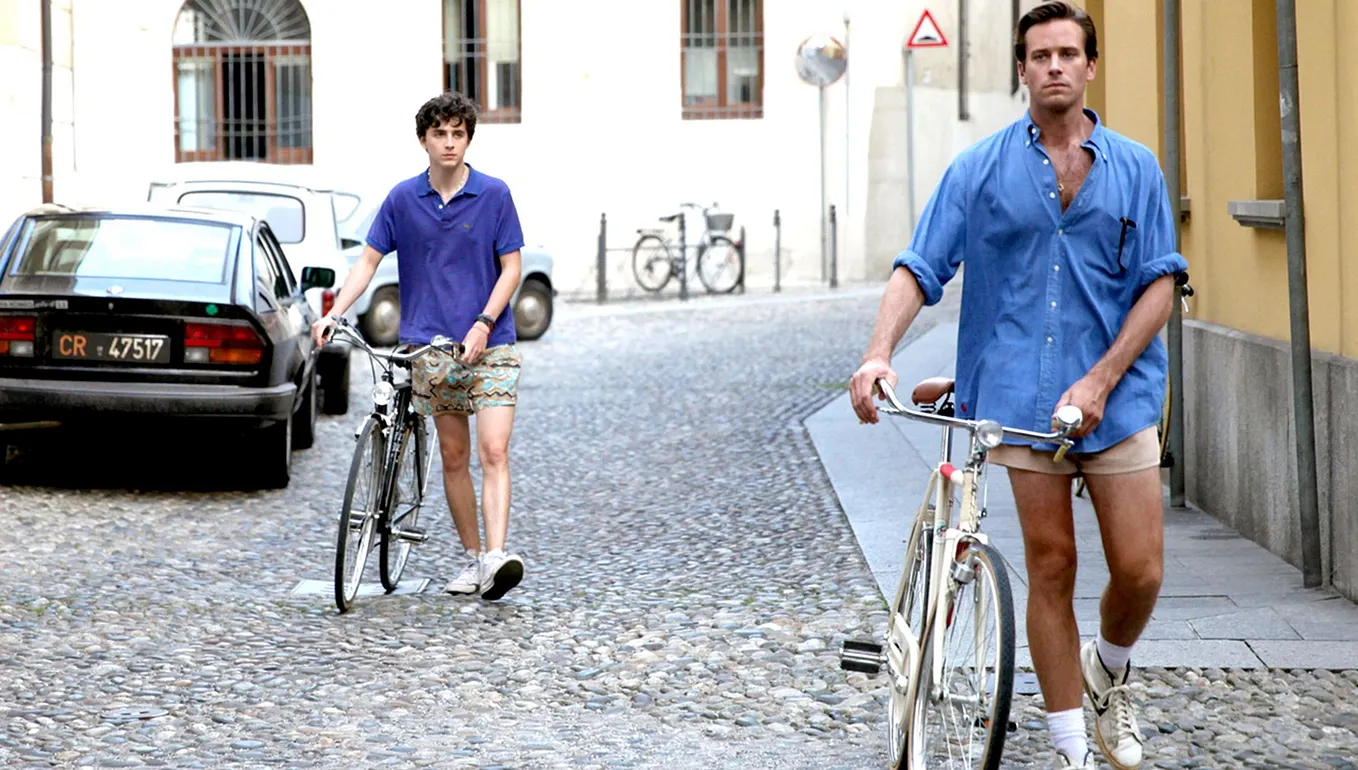
Yes, it’s essentially Call Me by Your Name but with dancing, but where Luca Guadagnino’s film creates an idyllic bubble for his star-crossed lovers, Levan Akin’s And Then We Danced builds a bustling, urban stage out of Tbilisi, a city whose conservative values are exemplified most vividly by their rigid notion of Georgian dance. Disguised as a straightforward love story, the film is at heart about a youth generation whose notions of identity and the right way to live butt heads with the entrenched customs and traditions of the community they live in. There are no true sanctuaries in Tbilisi for these adolescents, bombarded as they are by the expectations of their country’s history, but they find pockets of acceptance in each other, and survive off that while dreaming of escape. Like many great coming-of-age films before it, And Then We Danced eloquently proposes that part and parcel of growing into yourself is understanding which parts of your past you need to let go, and even kill if you have to.

16. Synonyms
Dir: Nadav Lapid
Nadav Lapid’s darkly funny and eminently sad fable on the paradoxical notion of nationalism is one of the year’s most unique offerings. Tom Mercier delivers a frenetic, live-wire performance as Yoav, an Israeli immigrant illegally hiding out in Paris, armed only with his thesaurus and the slowly deteriorating wits about him. Desperate to become a Frenchman, he befriends a pair of bohemian Parisian trust-fund kids, as well as fellow Israeli expats living in the city. As Yoav slowly realizes that there isn’t much differentiating French and Israeli nationalism — a classroom scene in the last act makes this frighteningly clear — he grows slowly unhinged, the promise of existential certainty he thought he’d find in Paris now proven to be just another lie. It’s a heartbreaking and incisive meditation on the role of nations in a rapidly globalized world, punctuated by an absolute gut-punch of an ending.

15. Ad Astra
Dir: James Gray
James Gray’s mad and magnificent space epic is of a pair with the director’s last effort, the equally gonzo The Lost City of Z. While it exchanges the uncomfortable stickiness of the inner jungle for the cold silence of outer space, Ad Astra is likewise preoccupied with emotionally handicapped men going off into the unknown because it’s less frightening to them than therapy, and like Z, it is also deeply flawed and uniquely transcendent in equal measure, sometimes even simultaneously. Brad Pitt gives the performance of his life — all distant stares and stunted narration — in a film that constantly teeters on the verge of being too much. Sometimes it falls over the edge, but that’s just a testament to how big a swing this whole endeavor is. Would that all blockbusters could be this risky.

14. Edward
Dir: Thop Nazareno
The Platonic ideal of a Cinemalaya movie — uniquely Filipino, neorealist in politics, and populated by unknowns or actors playing against type — Edward is a biting and tragic portrait of the Philippine healthcare system through the lens of a young boy’s coming-of-age. Alone and stuck taking care of his estranged father, who is bedridden at a hospital stretched far too thin to really accommodate his needs, Edward (Louise Abuel) makes friends, falls in love, and generally attempts to build a life despite the world doing its very best to kick him while he’s down. Bursting with humanity and equipped with a keen eye towards the corruptions and compromises that come with moving in the country’s margins, the film is a heartfelt paean to society’s victims, and an indictment of the systemic ills that keep them that way.

13. The Invisible Life of Euridice Gusmao
Dir: Karim Ainouz
Get Deany Hendrick Cheng’s stories in your inbox
Join Medium for free to get updates from this writer.
A soaring, soapy melodrama chronicling the twin journeys of two sisters separated by society but searching for each other in fits and starts, The Invisible Life of Euridice Gusmao uses the messy, sprawling geography of Rio de Janeiro to talk about the emotional geometry of separation, as well as the rigid class and gender dynamics that thwart the two at every turn. It’s an unabashedly sentimental affair, eschewing narrative tightness for a full embrace of life’s unpredictability, wringing tragedy and compassion from the caprices of fate and cruelties of men. It’s a feature that sneaks up on you, and if you fall into its rhythms, the whole ride packs a potent punch. Destined to become one of the year’s forgotten gems, The Invisible Life of Euridice Gusmao deserves more than this year’s film discourse gave it.

12. A Beautiful Day in the Neighborhood
Dir: Marielle Heller
A Beautiful Day in the Neighborhood could have been just another mildly pleasant, cookie-cutter biopic, and no one would have batted an eye. Tom Hanks would probably have still gotten his Oscar nomination, and most critics and audiences would have considered it a fun time at the movies nonetheless. If you don’t pay attention, you might even think that’s all it is, so effective is its disguise as milquetoast Oscar bait. Marielle Heller doesn’t roll that way, though, and the film sneaks in some exciting and inventive filmmaking — those diorama wide shots! those dream sequences! — throughout, with so much of the story being told in subtle asides and elegant beats. The film revels in that grey space between who we are and who we want to be, while remaining a galvanizing ode to human frailty and the difficult work of being kind that earns every bit of its battered optimism. Sort of like Mister Rogers, I imagine.

11. Cleaners
Dir: Glenn Barit
In international circles, there are really only two Filipino directors that come up: Lav Diaz and Brilliante Mendoza. They’re the ones whose films make it to the big festivals, and their respective styles are, in broad strokes, the only notion most people outside the Philippines have of Filipino cinema. While I’m as much a fan of slow cinema and gritty neorealism (when done well) as anyone, this does feel like an oversimplification of the eclecticism Filipino cinema is capable of. Enter Cleaners, a film that is every bit as alive and quintessentially Filipino as anything in our local canon, but in ways that feels exciting and new. Composed of thousands of black-and-white frames partially hand-colored with bright highlighters, the film is a series of coming-of-age vignettes evoking memories of doodled-on high school textbooks, a form of reclaimed personal history. Even as it never tackles any capital-I Issues head-on, it is radical and immediate in its acknowledgment of the constant communication between past and present, and its quiet, persistent belief in human connection as a salve against the humiliations of living, both big and small. It is a minor miracle, and perhaps the best Filipino film of the decade.

10. Booksmart
Dir: Olivia Wilde
There have been better and more ambitious films this year than Olivia Wilde’s coming-of-age romp, but few have brought me as much pure joy as Booksmart. Perhaps the most accurate depiction of modern overachiever culture in cinema, the film is an exploration of the ways the formlessness of a life well-lived can come at odds with the rigorous, productive visions of success we are sold, ensconced in delightful needle drops and wonderful comedic turns from Kaitlyn Dever and Beanie Feldstein on down. Horribly mis-marketed as a “woke teen comedy”, which only served to highlight the film’s most glaring flaws, it’s better thought of as a portrait of high school as it exists in one’s memories rather than a straight documentarian take: An impressionistic, heightened, semi-musical remix of popular tropes we’ve come to use as shorthand for coming-of-age.
It’s hardly groundbreaking, but not every great film has to be. It’s whip-smart, relentlessly entertaining, and generous in spirit in all the right places. It’s a winner, and well on its way to becoming a kind of cult classic. At the very least, it’ll probably be the film on this list I’ll revisit the most, if only to remember what it was like to be young and smart enough to know that smart is rarely good enough.

9. Uncut Gems
Dir: Benny and Josh Safdie
In many ways, Howard Ratner may be the defining protagonist of the 2010’s. A gambling addict whose overwhelming solipsism makes him almost incapable of understanding things in terms of anything other than odds or winnings, Howard is the center of a universe of his own making: An overwhelming magnetic force that attracts more ill than good. He is his own worst enemy, but even as he digs himself deeper trying to dig himself out, we root him for him and the sickness we know he will never beat. The genius of Uncut Gems is how it makes Howard sympathetic while still making his general awfulness more than clear. He’s a terrible human being, but he’s only human, after all.
Brilliantly played by Adam Sandler for his once-a-decade sojourn into critical acclaim, Howard is the film’s largest-looming presence, but the seedy world of the New York Diamond District the Safdie brothers construct elevates this movie from character study to compact epic. Many of the most memorable supporting turns are from first-time actors or thespians playing against type, with Kevin Garnett (yes, that KG), Julia Fox, and Idina Menzel individually impressing as three representations of Howard’s slowly-dying conscience. Sandler’s unforgettable, whirling-dervish depiction of unpasteurized id is the main attraction, but Uncut Gems is much, much more than a one-trick pony. It’s a truly unique feature, grimy and anxious and quietly astute about the dynamics of morality in the mind of a fundamentally immoral man.

8. The Nightingale
Dir: Jennifer Kent
The unpleasantness is the point, of course. A haunting meditation on the devastation wrought by colonialism, packaged as a rape-revenge drama set in the Australian woods, Jennifer Kent’s follow-up to The Babadook has much, much more on its mind than your ordinary revenge movie. After her husband and baby are killed by a cadre of brutish British officers led by the maniacally ambitious Lieutenant Hawkins (Sam Claftin, thoroughly despicable), who then leave for a distant town, Irish convict Clare (Aisling Franciosi) enlists the help of Aboriginal guide Billy (Baykali Ganambarr) to track them down through the Tasmanian bush and get her satisfaction. Needless to say, the journey doesn’t go quite as planned, with both she and her guide coming to terms with their respective flavors of anger at the oppressive English colonists that have taken everything from them.
Violence permeates every frame of this movie. Most of the time, it’s in-your-face, and every scene featuring rape or murder is visceral without being exploitative. It finds no joy in violence, only emptiness. However, perhaps most interesting is the way the film portrays a violence that isn’t physical but spiritual: The sort that wounds both the soul of a man and a people. The sort that occurs when a man whose people have been displaced and home desecrated by foreigners is invited to sit at the same table as his oppressors, as if it were some magnanimous gesture. This is the language The Nightingale traffics in — that of the oppressed and imprisoned, those victims of injustice whose wounds will never truly heal even generations later.

7. The Irishman
Dir: Martin Scorsese
The finest of this year’s cinematic meditations on aging from masters of the form, The Irishman is the first film where Martin Scorsese — perhaps our greatest living director and one who, at 77, is fully capable of churning out films with an energy and inventiveness most jittery twenty-something up-and-comers can only dream of — shows his age. From the snaking hallway oner that opens the film (a dark reprise if there ever was one) onward, this film announces itself as a funeral dirge not unlike Mark Antony’s eulogy from Julius Caesar. In The Irishman, Scorsese comes to bury Frank Sheeran, not to praise him. And Johnny Boy, Travis Bickle, Henry Hill, Sam Rothstein, and Jordan Belfort too.
Coupled with the film’s much-ballyhooed 210-minute runtime, this all makes The Irishman sound like a slog, but Scorsese and editor Thelma Schoonmaker would never let that happen. The whole affair flows like running water, chugging along apace as we revisit Scorsese’s indelible iconography guided by some of his most indelible collaborators, with Robert de Niro, Joe Pesci, and Harvey Keitel’s respective returns to the director’s universe after more than two decades away only adding to its ghostly atmosphere. Newcomers Al Pacino, Anna Paquin, and Ray Romano fill out the rest of the film’s vast world, with Pacino in particular functioning as the movie’s fiery, ice cream-loving heart. There isn’t a throwaway shot or malfunctioning performance in the whole thing, which is a hell of a compliment for a 3.5-hour film.
This is almost certainly not going to be Scorsese’s last film — his next one is already in development — but more than anything, The Irishman already feels like a valediction. If we could all write such masterful endings.

6. Little Women
Dir: Greta Gerwig
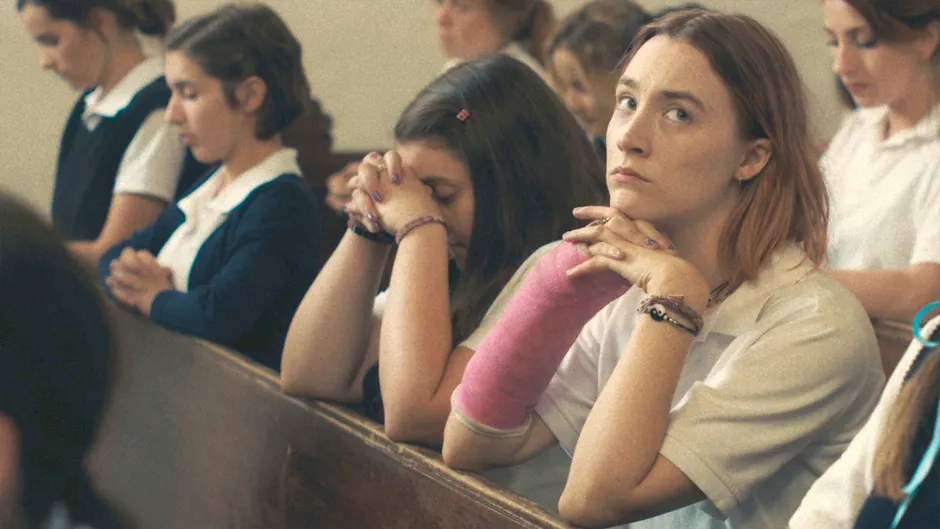
Not that we didn’t already know, but Greta Gerwig sure can direct a picture. Following up her debut, an acclaimed portrait of female adolescence, by adapting the acclaimed portrait of female adolescence, Gerwig manages to carry over a fair bit of that Lady Bird magic in her take on Louisa May Alcott’s enduring classic. More remixed critique than straight adaptation, Gerwig refracts the novel’s linear chronology through the prime of time’s passage to create something fresh and vibrant out of oft-adapted source material, using the canvas of the March sisters’ saga to create a commentary on the triumphs and disappointments of coming-of-age, juxtaposing the idylls of childhood with the humiliations of adulthood through smart editing and a subtly sophisticated cinematic language.
Don’t get it twisted, though — Little Women is very much a film that’s out to impress, with Gerwig and DP Yorick Le Saux taking advantage of the larger vista (and budget) afforded them to deliver some true stunners. Still, the most breathtaking beats are the ones you don’t pick up right away: The ways in which Gerwig uses colors, blocking, and mirroring sequences to create layers of dialogue within and across scenes set years apart yet spliced next to each other. It’s a marvel of craft that is made all the more satisfying by how it all springs organically from her beloved characters, brought to life by a cadre of universally stellar turns from Saoirse Ronan on down. More than anything, Little Women is a film that understands the ways in which the past lives on and bleeds into the present, as if to say that we strive to be nothing but better versions of who we used to be, every day. Philosophically intricate even as it remains warm, unpretentious, and imbibed with unmistakable love, Little Women is an instant classic.

5. Parasite
Dir: Bong Joon-ho
In terms of sheer craftsmanship, it’s difficult to top Parasite. Having sharpened his teeth for two decades making great films that balance a Spielberg-esque flair for the entertaining with decidedly incisive social commentary, Bong Joon-ho finally broke into the Western mainstream with a movie that feels like the apotheosis of his inimitable style. Aggressively genre-defiant and calibrated like a Swiss watch, Parasite is the sort of feature only a director with full control of his powers can pull off: A statement of purpose that doubles as a master-class in narrative filmmaking.
Populated with a slew of stellar performances from Korean cinema legend and longtime Bong collaborator Song Kang-ho down to young talents Choi Woo-shik and Park So-dam, Parasite makes for thrilling entertainment even before you get into its depiction of rigid class divisions and the dehumanization of the urban poor, utilizing every cinema trick in the director’s deep bag to set up and launch its rollercoaster. Of course, the themes are the meat of the endeavor, and Bong — whose penchant for the heavy-handed can sometimes be too much — leaves it as ambiguous as he can. Even if you see a clear right or wrong, there are no easy answers here. Only loss and distant dreams.

4. Her Smell
Dir: Alex Ross Perry
Becky Something is the stage name, and Something She is the band. Named after her, of course, because if there’s anything Becky Something — born Rebecca Adamcyzk, much to her chagrin — excels at, it’s collapsing into her own solipsism when confronted with the prospect of growing up. That, and booze and drugs, as is par for the course when you’re a rock star consumed by your own stardom and delusions of artistic grandeur. There’s allusions made to neglectful dads and overly permissive moms — no one breaks themselves entirely on their own, of course — but for the most part, Becky is a destructive hurricane of her own making, deeply unpleasant and thoroughly petty, without much of a backstory to let her off the hook for it. The film is all the better for it.
Elisabeth Moss leans into the grandiose downward spiral with her usual verve, creating perhaps the year’s most engaging lead performance: A coked-up Tasmanian Devil who kicks and screams as she falls all the way down to rock bottom, with everyone around her turning into collateral damage one way or another. This includes her put-upon bandmates (Agyness Deyn and Gayle Rankin, both stellar) and manager (Eric Stoltz), her ex-husband (Dan Stevens), a young trio who idolize her (Cara Delavingne, Ashley Benson, and Dylan Gelula), and — most tragically — her own baby daughter. To watch it up close is to feel more uncomfortable than being stuck in an airplane bathroom, yet you can never look away from her slow-moving train wreck. You watch her hit bottom, and then you watch her claw her way back up to some happy middle, earning every bit of her salvation. By the end of it, she finds herself someplace close to heaven.

3. Portrait of a Lady on Fire
Dir: Celine Sciamma
Celine Sciamma’s Portrait of a Lady on Fire is, at its heart, a film about seeing and being seen. It is, as the title implies, about portraiture, and the inherent tension of committing to canvas something as volatile and combustible as a human being. To do so — to create a lasting image of something decidedly fleeting — is a fool’s errand, yet the artist and lover cannot help but do so. Sciamma clearly understands this, but more importantly, she understands that that brief moment of transit is when the soul burns brightest ablaze. DP Claire Mathon’s cinematography (the best of the year) frames these lovers (Noemie Merlant and Adele Haenel, both exquisitely melancholy) in a near-heavenly paradise of color and beauty — the kind that simply cannot hold.
Set largely in an austerely decorated, half-packed island chateau, the film moves in spaces that feel inextricably temporary, easily tucked away under sheets and in boxes, to be shipped to some other, more permanent home. Boats arrive and depart at the behest of the tides, constantly bringing visitors ashore only to take them away once more. No one who wasn’t born on this island stays. Nothing in this sacred, lonely place is meant to last, but that’s precisely the point. Portrait of a Lady on Fire seems to exhort its audience to action in the most eloquent of ways, even against the certainty of the end. In that sense, maybe this film can save the world.

2. The Souvenir
Dir: Joanna Hogg
A toxic relationship is not new ground, but when seen through the cracked rear-view mirror of memory, each variation of the narrative feels so specific as to seem entirely new. So it goes with The Souvenir, less a clear-eyed account of a tragic romance and more an interrogation of its memory, and the gaps and hand-waves we use to subconsciously fill in the cracks left in our psyches by trauma. The Souvenir is neither a love story nor a story about love; rather, it is a story about the rubble love leaves behind, and the Ozymandian imaginings we still cling to, of what it once was and could have been.
Film student — and thinly-disguised director avatar — Julie (Honor Swinton-Byrne, revelatory) is preoccupied with sincerity as she plans out her next project, a documentary of her hometown. Her closet-junkie boyfriend Anthony (Tom Burke, likewise moving) believes sincerity is overrated. Neither are correct, of course. Sincerity — the desire for real, human truth — is a noble ideal, but impossible because reality and memory themselves are so nebulous in our own minds, inextricable from subjectivity and emotion. We can never be wholly sincere, even to ourselves, and the film seems to propose that that insincerity — that moving every which way but straight through the truth — is the realest thing there is. Such is the paradox of memory and memoir, and the stuff of one of the most quietly heartbreaking of movies.

1. Asako I & II
Dir: Ryusuke Hamaguchi
It seems I have a type.
Asako I & II shares a lot of surface dressing with Lee Chang-dong’s Burning, the film that topped my best-of list last year. Like Burning, it’s a high-concept interrogation of identity and truth as filtered through the fractured prisms of the human mind, ensconced in a dreamlike love triangle story that also functions as a travelogue for disaffected twenty-somethings living in a rapidly modernizing and globalizing society. Both turn on lead performances that are fascinating because of their apparent plainness, their lack of affectation only masking the roiling sea of angst both characters share.
However, while Burning traffics in largely letting its mystery be, Asako I & II’s power stems from the ways in which it revels in its own lack of pretension. While the film leans on metaphor just as much as Lee’s, it finds a more unabashed humanity in the intuitive, illogical choices its characters make. There is an inarticulable magic happening here, where the poetic and prosaic seem to intertwine and coalesce seamlessly. It’s a deceptively warm feature, finding endless pools of kindness for its flawed, neurotic protagonist and her flawed, neurotic friends. No movie this year feels more wholly itself, more quietly inexplicable, and more starkly, unapologetically human.
(More) Honorable Mentions: Ash is Purest White (Jia), Avengers: Endgame (Russos), By the Grace of God (Ozon), The Farewell (Wang), How to Train Your Dragon: The Hidden World (DeBlois), Hustlers (Scafaria), The Long Walk (Do), Midsommar (Aster), Toy Story 4 (Cooley), The Truth (Kore-eda)
Films I Haven’t Seen: 1917 (Mendes), Atlantics (Diop), The Beach Bum (Korine), Diamantino (Abrantes/Schmidt), Dolemite is My Name (Brewer), An Elephant Sitting Still (Hu), A Hidden Life (Malick), High Life (Denis), Honey Boy (Har’el), Honeyland (Kostevska/Stefanov), I Lost My Body (Clapin), The Last Black Man in San Francisco (Talbot), Slut in a Good Way (Lorain), Under the Silver Lake (Mitchell), Varda by Agnes (Varda)
Ew: Star Wars: The Rise of Skywalker (Abrams)