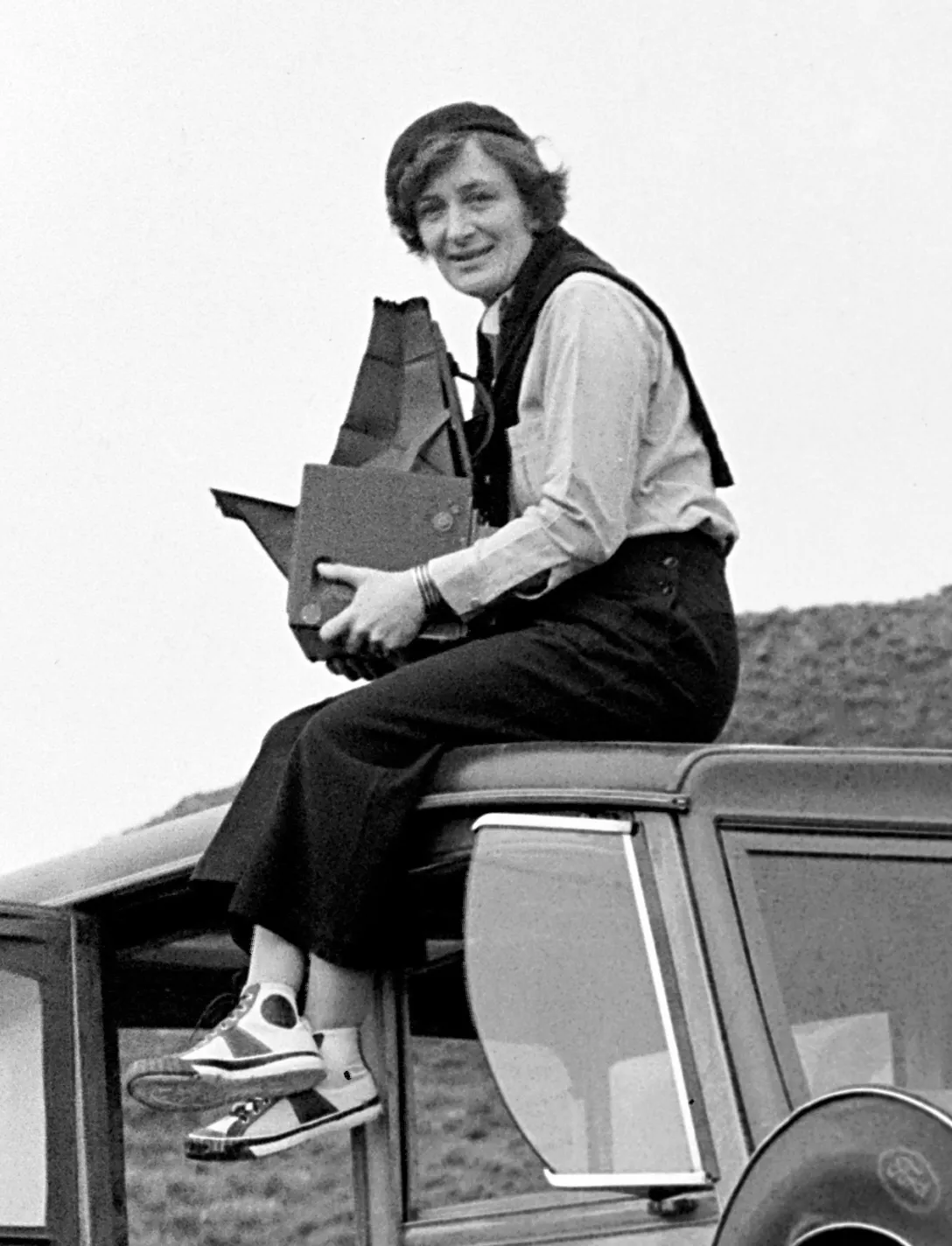
Well-behaved Women Rarely Make History

What names come to mind when we think of our foremothers who fought for the right to vote? Elizabeth Cady Stanton, Lucretia Mott and Susan B. Anthony of course, they are the ones we learned about in school, the ones who have statues of their likenesses on Capitol Hill. I would never take anything away from the contributions these ladies have made. But for one moment, I’d like us to consider the suffragist we rarely hear about and when we do is considered an upstart and combative. Alice Paul was, arguably, the most influential individual in the fight for women’s rights of the 20th century.
Born on January 11, 1885, Paul was the oldest child of successful businessman William Paul and his wife, Tacie. Alice and her siblings were raised on a comfortable New Jersey farm, but as Quakers, the family lived simply, learning firsthand the value of hard work. They also learned gender equality, as well as a necessity to work for the improvement of society. Perhaps one of her strongest influences was Tacie, who as a member of the National American Women’s Suffragist Association (NAWSA), brought Alice along to meetings. Alice studied biology at Swarthmore College, earned an MA in sociology at the University of Pennsylvania, then studied social work in England. It was during those years that Paul, while studying and working as a case worker for a London settlement house, served her apprenticeship for what became her vocation: the struggle for women’s rights. She was enlisted by England’s militant suffragists Emmeline and Christobel Pankhurst. She learned how to generate publicity for the cause and how to capitalize on that publicity. Paul enrolled again at the University of Pennsylvania on her return to the United States in 1910. There she earned a Ph.D. in sociology and began to situate herself in the American suffrage movement.
While in England, Paul met American Lucy Burns, through their association with Pankhurst they learned militant protest tactics, including picketing and hunger strikes. Back in the United States, in 1912, Paul and Burns joined the NAWSA, with Alice leading the Washington, DC chapter. NAWSA primarily focused on state-by-state campaigns; Paul preferred to lobby Congress for a constitutional amendment. Such differences led Paul and others to split with NAWSA and form the National Woman’s Party. On March 3, 1913, the day before President-elect Woodrow Wilson’s inauguration, approximately eight thousand women marched with banners and floats down Pennsylvania Avenue from the Capitol to the White House. A half million spectators watched, supported and harassed the marchers. On March 17, Paul and other suffragists met with Wilson, who said it was not yet time for an amendment to the Constitution.
In January 1917, Paul and over 1,000 “Silent Sentinels” began eighteen months of picketing the White House, standing at the gates with such signs as, “Mr. President, how long must women wait for liberty?” Hecklers, inflamed by war fever, branded the demonstrating women “Traitors!” and ripped down their signs. Tensions escalated in June when a new banner accused Wilson of lying to Russia when he claimed America was a democracy. The next day, the suffragists on duty — wives and mothers, young college graduates, social luminaries and progressive “new women” — were hurled to the ground, their banners torn away and shredded. Instead of protecting the women’s right to free speech and peaceful assembly, the police arrested them on the flimsy charge of obstructing traffic. Paul was sentenced to jail for seven months, where she organized a hunger strike in protest. Doctors threatened to send Paul to an insane asylum and force-fed her, while newspaper accounts of her treatment garnered public sympathy and support for suffrage. By 1918, Wilson announced his support for suffrage. It took two more years for the Senate, House, and the required 36 states to approve the amendment.
Get Women in American History’s stories in your inbox
Join Medium for free to get updates from this writer.
When the Nineteenth Amendment became law on August 26, 1920, Paul had won more than the vote. A federal court had thrown out charges against the pickets, and permits to demonstrate in the nation’s capital, once denied, were now grudgingly issued. The legal precedents set by her efforts empowered future protestors, with her pioneering campaign of civil disobedience as a model.
Post suffrage, Paul armed herself with three law degrees for battles ahead. She wrote and campaigned for the Equal Rights Amendment, living to see it pass, but dying (1977) too soon to know it would never be ratified. Once women achieved freedom, she said late in life, “they probably are going to do a lot of things that I wish they wouldn’t do; but it seems to me that it isn’t our business, to say what they should do with it. It is our business to see that they are free.”
Turning points are easier to recognize long after they’ve occurred than while they’re taking place. Not one moment of the remainder of her life did she forget her plan for women’s suffrage. Paul reached the age of 90 but did not cease her fight for women. She continued discussions with other suffragists and kept the NWP intact. She had vowed to stay hungry until justice had been served. On July 9, 1977, Alice Paul died at the age of 92. To me Alice Paul will be remembered as a tireless, devoted pioneer in the fight for women’s rights, and her legacy is still felt by women around the world today.
Citations
“Alice Paul.” National Women’s History Museum, www.womenshistory.org/education-resources/biographies/alice-paul.
“Alice Paul.” PBS, Public Broadcasting Service, www.pbs.org/wgbh/americanexperience/features/wilson-alice-paul/.
“Alice Paul (1885 — 1977).” Turning Point Suffragist Memorial, suffragistmemorial.org/alice-paul-1885-1977/.