Noticing the Little Things with Digital Notes: How Group Cards Changed the Way We Show We Care


There’s something deeply human about wanting to be seen. Not in the grand, spotlight way — but in the gentle, everyday sort of way. Someone remembering your favorite tea. A Slack message saying “you did great in the meeting.” A post-it on your monitor that says, “We noticed.” In a world where we’re buried under deadlines and jumping between Zoom calls, these quiet acknowledgments feel like rare little miracles.
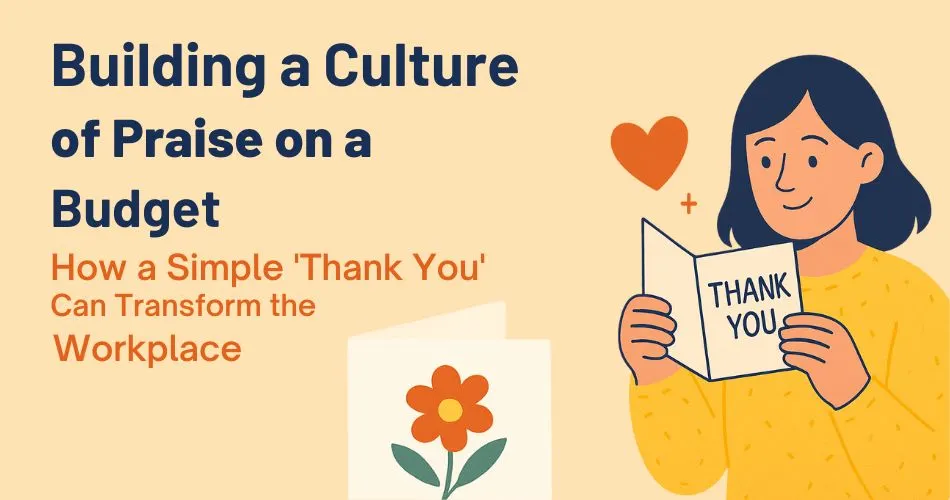
What if I told you that one of the simplest, most meaningful ways to build connection in the modern workplace isn’t through an elaborate retreat or a thousand-dollar team-building event — but through a digital note? A card, really. One that gets passed along, typed into, signed with emojis and inside jokes. One that makes you stop in your tracks and think: “Wow, they noticed.”
Welcome to the world of group cards — the unsung heroes of modern empathy at work.
The Power of Being Noticed
When I joined my current team, I didn’t expect my onboarding week to end with a group card. It was a casual Friday, my desk was already littered with printouts and sticky notes from HR, and then — ping — an email: “Your Team Has Sent You a Welcome Note!”
I clicked, expecting a generic message. But what I found was a beautifully designed digital card filled with individual notes from nearly everyone on the team. Some were long and thoughtful, some just said “Can’t wait to get to know you!” — but each one carried weight. In a sea of new information and names, this small act of acknowledgment felt like an anchor.
There was something about seeing all those little messages in one place that made me feel… seen. It wasn’t just that they’d welcomed me — it was that they had taken the time. And that time, more than the words, is what made the gesture matter.
Group Cards Are More Than a “Nice Touch”
Group cards are often viewed as a “nice-to-have.” Something you do when someone’s leaving, or when it’s their birthday. But here’s what I’ve learned over time: they’re actually a workplace superpower — especially when done right.
Think about the chaos of corporate life. Projects move fast. People burn out. Milestones slip by unnoticed. That small personal win — closing a tricky support ticket, staying late to help a teammate — often fades into the background noise.
That’s where group cards come in.
They pause the chaos.
They zoom in.
They say, “Hey, we saw that.”
And that kind of noticing? It creates an emotional residue that sticks long after the moment has passed.
Why the “Little Things” Aren’t Little
Here’s a story you might relate to.
A colleague of mine, Leah, is one of the quietest team members you’ll ever meet. She rarely speaks up in meetings but does phenomenal work behind the scenes. When a major product feature went live, she was the one who had painstakingly QA-ed every possible edge case.
On launch day, all eyes were on the product lead and the flashy UI. But someone started a group card, and person by person, team members added their thanks — and nearly every single one of them mentioned Leah by name.
“You caught that checkout bug I missed!”
“Wouldn’t have launched this without your calm presence.”
“You’re the glue no one talks about, but we all feel.”
Leah cried. On camera. In the middle of our daily stand-up.
That’s the power of digital notes. They give voice to gratitude we often feel but don’t always express. They help us notice what matters — and most importantly, who matters.
The Digital Twist: Why It Works So Well Remotely
In remote or hybrid work environments, those “small moments” are harder to come by. You can’t bump into someone at the water cooler. You don’t see them staying late at the office. And appreciation can feel like another task in your Asana board — until it doesn’t.
That’s what makes tools like group cards essential. They offer:
- Ease of collaboration: Everyone can sign from wherever they are.
- A living record: These notes live on long after the Slack threads are archived.
- Emotion in pixels: Emojis, gifs, nicknames — they make the messages feel alive.
Unlike a physical card that might get passed awkwardly around a conference room or lost in the shuffle of office mail, digital group cards are intentional. They arrive with ceremony. And they gather momentum as people contribute, one by one, like adding brushstrokes to a collective painting.
(We use Theecards.com at our company, which makes it delightfully easy to start and circulate these group notes. But more on that later.)
The Psychology of Group Appreciation
Research backs this up. Studies on workplace belonging show that people don’t need grand gestures to feel valued — they need micro-acknowledgments. A study from the University of Pennsylvania found that employees who were recognized for their work were 63% more likely to stay at their job for the next 12 months.
Noticing matters.
But what’s more — noticing in groups matters more.
When a peer says “You crushed it,” it feels good. When a team collectively echoes that sentiment — in writing — it becomes something memorable. Tangible. A moment you screenshot and save. A reminder you come back to when imposter syndrome whispers in your ear.

The Anatomy of a Good Group Card
Not all group cards are created equal. Here’s what makes one genuinely meaningful:
- It starts with heart: Whether it’s for a farewell, a birthday, or a “just because,” someone has to spark it with care.
- It includes everyone: Not just the obvious people. Pull in the quiet ones. Invite the unexpected.
- It gets personal: “Happy birthday!” is nice. But “Hope you eat three slices of that chocolate cake you love” hits differently.
- It allows room for play: The best group cards have memes, inside jokes, and that one guy who always signs with “🦄”.
The Secret Sauce: When Group Cards Create Culture
You might not realize it at first, but once a team regularly uses group cards, something deeper starts to shift: a culture of acknowledgment begins to grow.
Get Devid Connelly’s stories in your inbox
Join Medium for free to get updates from this writer.
It’s like planting tiny seeds of gratitude across your company. Over time, people begin to look for things to praise. They start observing more, appreciating more, even communicating better. A team that once reserved praise for performance reviews now begins sharing kindness in real time.
And when that becomes the norm, the effects ripple outward:
- Onboarding becomes warmer
- Farewells become more human
- Birthdays become team-wide moments
- Quiet contributions are finally celebrated
It’s no longer “just a card.” It’s a collective expression of what your team stands for.
Using Group Cards for Key Moments (and Unexpected Ones)
Let’s break down how group cards can quietly revolutionize some of the most emotionally charged (and often awkward) moments at work:
1. First Day of Work
A card waiting in a new hire’s inbox can turn nerves into confidence. You’re not just giving them a task list — you’re giving them a warm welcome from real people with real personalities. Bonus points if people sign off with their Slack handles and favorite coffee orders.
2. Team Milestones
Launched a product? Survived a brutal sprint? Navigated a stressful client call? A group card can memorialize the effort. It turns a temporary “well done” into a permanent snapshot of teamwork.
3. Work Anniversaries
People rarely remember their own work anniversaries. When the team does it for them — with stories from the past year, photos from virtual hangouts, or even a line about their infamous typos — it creates an emotional connection to the company.
4. Hard Goodbyes
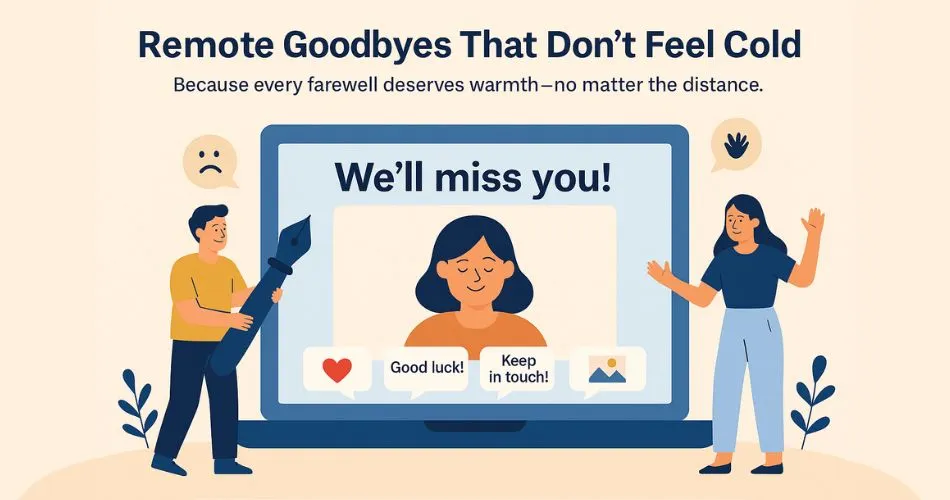
Whether someone’s retiring, moving on, or being laid off with grace, a digital group card becomes the emotional bridge between the past and what’s next. In a remote world, this might be the only collective “hug” they get.
5. “Just Because” Notes
Here’s where the magic really happens. No event, no deadline — just noticing that someone stayed late or helped another team. These unexpected moments of appreciation hit harder than any formal shoutout ever could.
Real-Life Example: The Unexpected Hero
Let me tell you about James.
James was the IT guy — the quiet one who fixed broken keyboards, reset VPNs, and set up monitors without ever making a fuss. One Friday afternoon, after weeks of remote chaos, someone jokingly said in a meeting, “We should send James a card. He’s basically holding the company together.”
So… we did.
A simple group card. Twenty-five messages. Some hilarious (“You’re the Lord of Cables”), some heartfelt (“You fixed my mic minutes before a client call. You saved me”).
On Monday, James messaged our Slack channel. All he wrote was:
“I’ve never been thanked like that before. You have no idea how much that meant.”
And honestly? That card cost us nothing. But it changed everything.

Why This Matters More Than Ever
In today’s workplace — stretched thin between remote screens, async messages, and burnout culture — it’s dangerously easy to forget that real humans are behind every task.
But what if we decided, as teams, as leaders, as people, to make the effort to see more?
What if we built systems not just for productivity… but for presence?
Group cards help us do that. They force us to slow down, to reflect, to appreciate — even if just for five minutes — the people who make our workdays possible.
And when you send one, it doesn’t just brighten someone’s inbox.
It reminds them:
You’re not invisible. You’re not just a username. You’re part of something.
A Gentle Push Forward
If you haven’t already, try starting a group card this week. No reason needed. Just pick someone who deserves to be noticed. Or someone who might need a lift. Or someone who’s too humble to ever ask for it.
You don’t need grand words. A line or two will do.
You just need to show up.
We’ve been using Theecards.com to make that process effortless — especially for remote teams. With easy templates, shareable links, and customization features, it’s like passing a giant card around the world, from keyboard to keyboard, heart to heart.
And in a world that too often overlooks the little things, maybe that’s the most radical act of all:
To notice.
To write it down.
To let them know.
One digital note at a time.
One “you matter” at a time.
One group card at a time.