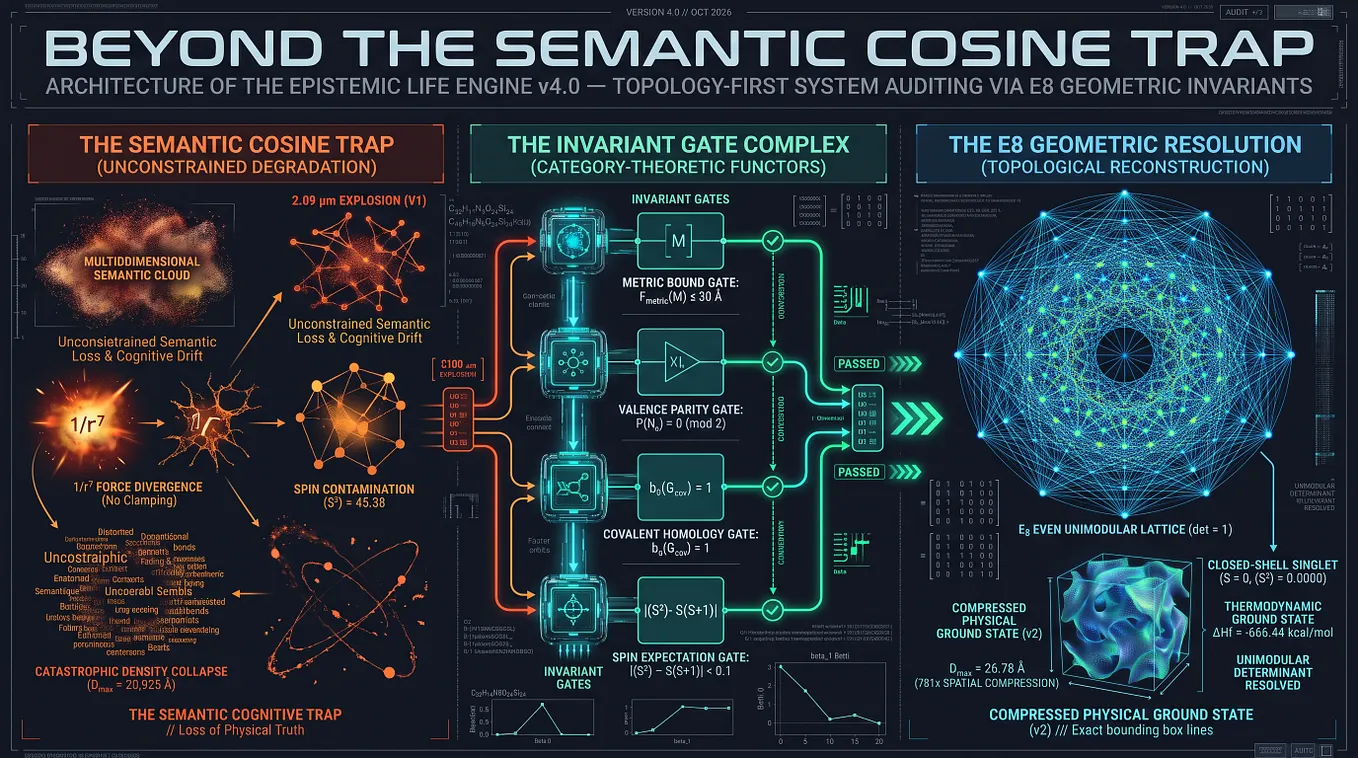
Gating of Information Flow in DNN

In Deep Neural Networks (DNNs), Gate Control refers to mechanisms that regulate the flow of information through a network. Just like a physical gate, these mechanisms decide which information is allowed to pass through to the next layer and which should be blocked or forgotten.
Why do we need Gates?
Standard neural networks often struggle with long sequences of data. They either forget the beginning of a sequence (Vanishing Gradient) or get overwhelmed by noisy, irrelevant data.
The Mathematical Intuition
If x is your input and g is your gate, the operation is usually:
Output=x⊙σ(W⋅x+b)
Where ⊙ represents element-wise multiplication. If the gate σ(…) results in a value near 0, the input x is effectively “muted.”
Gating in Recurrent Architectures (LSTM)
The Long Short-Term Memory (LSTM) network is the most famous example of gate control. It uses three specific gates to manage its “memory”:
Forget Gate: Decides what information from the previous time step is no longer useful and should be discarded.
Input Gate: Decides which new information from the current input should be stored in the cell state.
Output Gate: Decides which part of the current cell state should be output to the next layer.
Gating in Modern Transformers (GLU)
While LSTMs use gates for memory, modern models (like PaLM or LLaMA) use Gated Linear Units (GLU) to improve how they process features.
In a Gated Linear Unit, the input is split into two paths:
- The Signal: A linear transformation of the data.
- The Gate: A sigmoid-activated path that acts as a filter.
The final output is the element-wise product of the two. This allows the model to dynamically “mask” certain features that aren’t relevant to the current task.
Gating in Diffusion Model
In Diffusion Models, “gate control” isn’t usually a single dedicated layer like in an LSTM. Instead, gating mechanisms are used within the U-Net or Transformer backbone to control how the model integrates two specific things: Time (Noise Level) and Context (Text Prompts).
Time-Step Gating (Adaptive Layer Norm)
The most common form of “gating” in models like Stable Diffusion is AdaLN (Adaptive Layer Normalization). The model takes the current time-step (t), embeds it into a vector, and uses it to “gate” the activations. Instead of a simple pass-through, the time-embedding acts as a scale (γ) and shift (β) factor:
Output=γ(t)⋅LayerNorm(x)+β(t)
Get Dr. Zhongqiang DING’s stories in your inbox
Join Medium for free to get updates from this writer.
This effectively “gates” the importance of certain features depending on whether the model is looking at pure noise or a nearly finished image.
Cross-Attention as a Gating Mechanism
In text-to-image models, Cross-Attention functions as a sophisticated gate.
- The Visual Features act as the “Query.”
- The Text Prompt acts as the “Key” and “Value.”
The attention mechanism “gates” which parts of the image should be modified based on the text. If you type “a red ball,” the gate opens to allow “red” information to pass through to the specific pixels representing the ball, while “closing” for the background pixels.
ResNet Gating (SiLU/Swish)
Most Diffusion backbones use ResNet blocks containing the SiLU (Sigmoid Linear Unit) activation function, also known as Swish.
f(x)=x⋅σ(x)
This is a self-gating mechanism. The x is the signal, and σ(x) is the gate. If x is a large negative value, the gate closes (outputs 0). If x is positive, the gate opens. This helps the model decide which pixel-level features are “important noise” to keep and which are “garbage” to discard.
Controlled Diffusion (ControlNet)
In advanced setups like ControlNet, a “Zero Convolution” acts as a trainable gate.
- It starts with weights initialized at zero.
- This ensures that at the beginning of training, the “gate” is effectively locked, and the side-network has zero impact on the main model.
- As the model learns, the gate gradually opens to allow spatial hints (like depth maps or poses) to influence the image generation.
Gating in AlphaFold3
In AlphaFold 3 (AF3), gating mechanisms are used to manage the model’s massive shift from predicting protein backbones to predicting “everything” (DNA, RNA, ligands, and ions). AF3 uses gates to make the network’s information flow more flexible and “data-driven.
SwiGLU: The New Standard Activation
The most direct “gate” in AF3 is the transition from ReLU to SwiGLU (Swish-Gated Linear Unit) in most of the transition blocks.
- How it works: In every layer where the model processes “single” or “pair” representations, it uses a gating branch. One path computes a value, while the other computes a “gate” (using the Sigmoid-based Swish function).
- The Benefit: SwiGLU allows the model to learn much more complex, non-linear interactions between atoms than the simple “on/off” switch of the ReLU used in AlphaFold
Gating in the Pairformer (Successor to Evoformer)
The Pairformer is the core of AF3. It replaces the complex MSA (Multiple Sequence Alignment) processing of AF2 with a more streamlined system that heavily utilizes Multi-head Attention with Gating.
- The Mechanism: Every attention layer in the Pairformer employs a gating mechanism. After the model calculates how much “Atom A” should attend to “Atom B,” it passes that output through a Sigmoid Gate.
- Why it’s there: This gate allows the model to “shut off” or “filter” evolutionary information that doesn’t fit the current 3D context. It ensures that if the sequence data suggests a bond that is physically impossible in 3D space, the gate can suppress that information.
Diffusion Gating (Time-Dependent Control)
Because AlphaFold 3 is a Diffusion Model, it doesn’t build a structure piece-by-piece. It starts with a “cloud of atoms” and refines it.
- The “Gate” of Time: The diffusion module uses a conditioning signal based on the current “noise level.”
- Adaptive Modulation: This signal acts as a gate for the network’s weights. At high noise levels (the start), the gate allows the model to focus on global topology (where the big chains go). As noise decreases, the gate shifts the model’s focus toward local stereochemistry (fine-tuning the exact position of a drug molecule in a pocket).
Gating in Audio Generation Models
- Adaptive Gating (AdaLN): Just like image diffusion, audio diffusion uses time-step gating. At the start of the process, the gate allows the model to focus on the tempo and rhythm (the “beat”). As the denoising continues, the gate shifts focus to timbre and texture (the specific sound of a violin vs. a guitar).
- Phoneme Gating: In Text-to-Speech (TTS), gating signals often correlate perfectly with phoneme boundaries. The gates “spike” when a speaker moves from one sound (like “s”) to the next (like “a”), helping the model segment the audio stream.