Perilously Close

But maybe we can still save ourselves…

At various times in our history, humans have come close to the edge of a dystopian future.
Some 66 million years ago, an asteroid struck what is now the Yucatán Peninsula, wiping out the non-avian dinosaurs. In the mid-fourteenth century, the Black Death killed a third or more of Europe’s population, and plague returned in waves for centuries. In 1918, the Spanish flu killed tens of millions worldwide. In October 1962, the Cuban Missile Crisis brought the Cold War to thirteen days of nuclear brinkmanship. The nuclear accords that followed should have ended it. Then came COVID, and once again millions died.
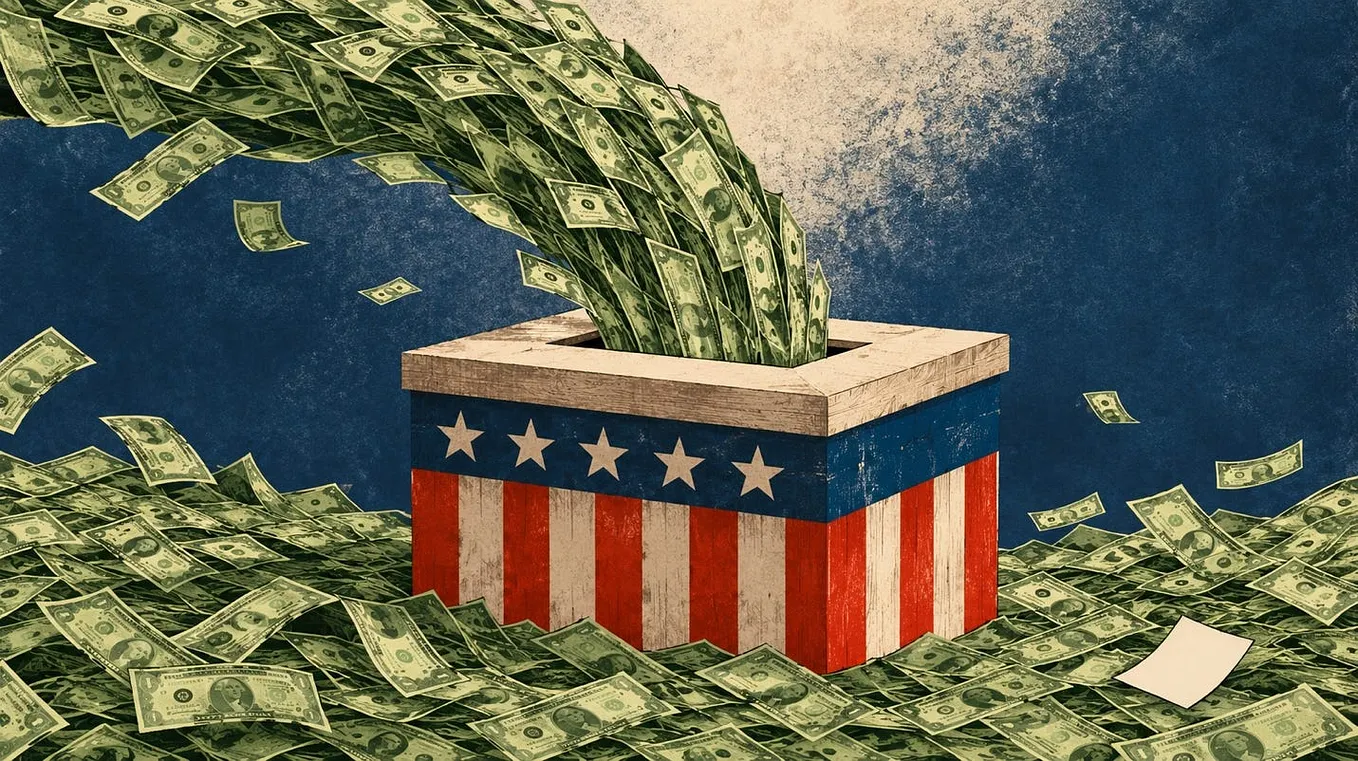
But now we’re heading into a Perfect Storm. Powerful regimes are inflicting war simply because they can. Mad Agent Orange has upended the world with tariffs, insults, and petty grandstanding. Microplastics are altering our insides in ways linked to declining fertility and rising heart disease. AI is automating the world’s work, displacing people and, according to the scientists who build it, potentially setting us up for a Terminator-Skynet end. All this while we are mere decades away from being too late to save our climate.
We’re perilously close to the edge, and from where I sit, we’re doing little to change course. It all reminds me why I dedicated my first novel thus:
Our wake is killing us.
We’re trailing pollution and waste, tilting the climate, poisoning the oceans, and consuming Earth’s resources in limitless abandon.
But we’re all right. And we’re just gonna keep being all right…
Until we, too, are gone
And Earth’s glimmer, like her wake on the sea,
Disappears.
With apologies to Garry Prater: A Sailor’s Dream
I often find myself wondering about this piece of work we’ve become. Shakespeare saw us clearly:
Hamlet, Act 2, Scene 2
“What a piece of work is a man! How noble in reason, how infinite in faculty! In form and moving how express and admirable! In action how like an angel! In apprehension how like a god! The beauty of the world! The paragon of animals!”
But the Bard also knew our darker side, and at times I find myself feeling the same despair:
“And yet, to me, what is this quintessence of dust? Man delights not me; no, nor woman neither, though by your smiling you seem to say so.”
I used to feel differently. When I was launching and growing startups, which by definition are beds of uncertainty, I was certain of more than I doubted. I knew what to do, I worked hard and smart, and the results proved me right. But that certainty worked because the world of the 1980s and 90s was predictable. It revolved in an orderly way, with rules that let most of us in the West expect a better life than our parents had.
Now anyone who feels certain about much is, I think, fooling themselves. As Vonnegut put it, “I’m paranoid as an act of good citizenship, concerned about what the powerful people are up to.” Anyone with intelligence and imagination can’t help feeling uncertain about most issues these days.
Get Eric Goldman’s stories in your inbox
Join Medium for free to get updates from this writer.
Our traditional systems are failing. Religion no longer seems to promote love for our fellow humans, and several of the largest movements actively promote death and destruction for non-believers. Good people struggle to distinguish right from wrong when incompatible views are debated with such heat on social media. When we try to decide these questions for ourselves, we lack the tools. Facts are twisted to suit one narrative over another, and AI can further distort every “truth.” We used to have myths and legends to guide us, but we’ve grown too sophisticated to believe in them. The real tragedy is that many schools in the USA and elsewhere are cutting critical thinking from their curricula.
Look at the Perfect Storm again and you’ll see the same causes behind each item. Regimes start wars and trade fights because they’ve learned that certainty and grievance sell better than facts. Plastics and carbon spread because we have and continue to treat the planet’s resources as infinite. AI is racing ahead because the gains flow to a few while the damage lands on everyone else. The danger isn’t a shortage of knowledge. It’s our willingness to act on simple stories, to put our own happiness first, and to stop thinking about the people downstream of us. The reasons we’re near the edge are the same reasons we struggle to step back.
Take AI. Its boosters like to say the Luddites were frightened men who smashed machines out of hostility to progress. The record says otherwise. The weavers, croppers and framework knitters who rose in 1811 weren’t against machinery. They were skilled workers fighting over how it was used: to cut wages, strip away their trades, and flood the market with shoddy goods. The mill owners branded them enemies of progress, and the same charge is aimed at anyone who questions how AI is deployed today. The tech oligarchs who profit most have every reason to keep that story alive. The technology isn’t the villain. The question is who captures the gains, and whether the people it displaces get any say.
I would like to believe we’re smart enough to change this. Is the Perfect Storm really our destiny? Life can be, and often is, beautiful in ways that defy words. Bertrand Russell argued for a response that “vitalizes rather than paralyzes, based on the completest understanding of the moods, the despairs, and the maddening doubts” that beset us. We need to encourage the pursuit of knowledge; we should heed Tesla’s belief that science is meant to better humanity. We need to eradicate superstition, regulate greed in a capitalist society, and cultivate a more generous mentality, in which we are all more willing to help the less fortunate. And for all of our sakes, we need to teach every young person to think critically.
Russell also wrote, “The good life, as I conceive it, is a happy life. I do not mean that if you are good, you will be happy; I mean that if you are happy, you will be good. Unhappiness is deeply implanted in the souls of most of us.”
The Declaration of Independence enshrined the pursuit of happiness, though its authors surely meant something other than what it has become. Today, in America and elsewhere, the pursuit of happiness is treated as a moral imperative, regardless of the cost to others. My happiness is paramount, and if that hurts you, tough. Your happiness matters less because you are, well, any reason will do, but the most common is just that you are different.
I’m no psychologist, and I don’t know much about how people find happiness. I used to say glibly that we all need only three things to live a happy, good life:
- Something to do,
- Someone to love,
- Something to look forward to.
That formula has much to recommend it, but I now understand that a successful, happy life requires treating life itself as real, not as an intellectual experiment. Our footsteps leave imprints on everyone we meet, and those impacts are real, physical, sometimes hurtful, and occasionally fatal. We need to feel their pain and understand how we could have changed the outcome. That takes deliberate effort and means pausing the headlong pursuit of happiness long enough to think about someone else.
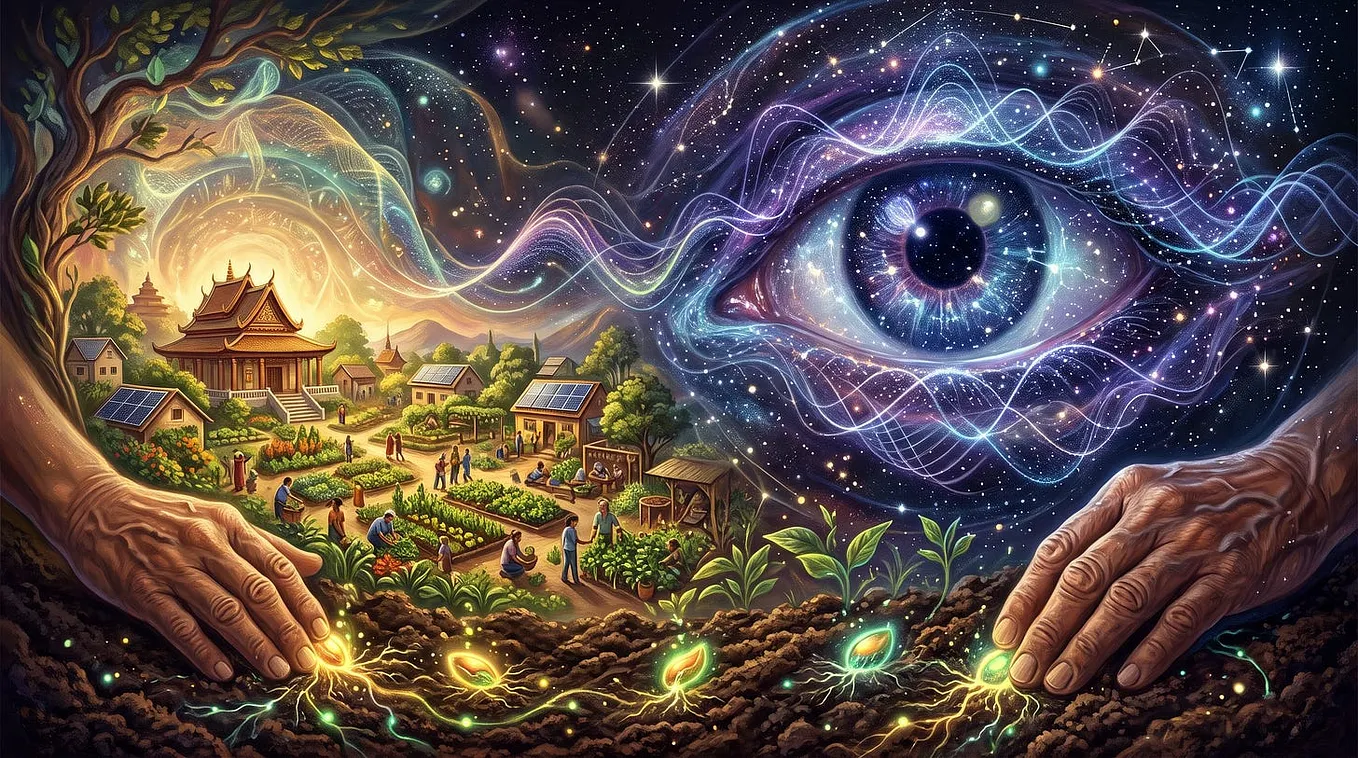
I titled this piece “Perilously Close” because it suggests we can still step back from the edge. Humans are capable of remarkable feats of imagination and bold, almost superhuman effort when they work together. We need to recognize the strengths of diversity rather than fear it. We need to teach everyone to think critically, feel more deeply, and understand empathy’s role in our well-being. If that sounds naive, consider how similar the goals are for most of us: food, shelter, love, and a way to contribute that makes us feel good about ourselves.
Russell again: “When all this is not only understood but deeply felt, it will be easy to live in a way that brings happiness equally to ourselves and to others. If men could think and feel in this way, not only their personal problems, but all the problems of world politics, even the most abstruse and difficult, would melt away. Suddenly, as when the mist dissolves from a mountain top, the landscape would be visible, and the way would be clear.”
He added, most importantly, that: “It is only necessary to open the doors of our hearts and minds to let the imprisoned demons escape and the beauty of the world take possession.”
I truly believe that. It’s the same thought behind the line often attributed to Edmund Burke: “All that is necessary for the triumph of evil is that good men do nothing.”
So, who are you? Where are you in this grand scheme we call humanity?