Building Scalable APIs for Flower Delivery Applications


The flower delivery industry has rapidly transformed from local florist shops into highly digitized on-demand ecosystems powered by mobile apps, real-time logistics, and personalized customer experiences. Customers now expect instant order placement, same-day delivery, live order tracking, secure payments, and seamless communication — all within a few taps.
Behind these smooth digital experiences lies one critical technical foundation: APIs.
Application Programming Interfaces (APIs) act as the communication bridge between mobile apps, backend systems, payment gateways, inventory management tools, logistics providers, and customer notification systems. Without robust APIs, flower delivery applications struggle to maintain real-time synchronization, especially during peak-demand periods like Valentine’s Day, Mother’s Day, anniversaries, and festivals.
As delivery businesses scale, poor backend performance can lead to delayed orders, payment failures, inaccurate inventory, and poor customer experiences. This makes scalable API development essential for flower delivery businesses aiming to support growing customer demand without sacrificing reliability or speed.
In this blog, we will explore how scalable APIs power flower delivery applications, compare architectural approaches, evaluate REST APIs and GraphQL delivery systems, discuss performance optimization, and understand how businesses can build future-ready delivery platforms.
Understanding the Role of APIs in Flower Delivery Applications
What Are APIs in Flower Delivery Apps?
APIs (Application Programming Interfaces) are software intermediaries that allow different systems and components to communicate with each other.
In flower delivery applications, APIs connect:
- Mobile applications
- Backend databases
- Payment systems
- GPS tracking services
- Inventory systems
- CRM platforms
- Notification services
For example, when a customer places an order:
- The app sends product details to the backend API.
- Payment APIs process transactions.
- Inventory APIs verify flower availability.
- Delivery APIs assign drivers.
- Notification APIs send confirmations.
This coordinated communication happens in real time.
Without APIs, these systems would operate independently, causing delays and operational inefficiencies.
Why Flower Delivery Apps Need Scalable APIs
Flower delivery businesses often experience unpredictable traffic spikes.
Major events such as:
- Valentine’s Day
- Mother’s Day
- Weddings
- Festivals
- Birthdays
can dramatically increase user activity.
Without scalable backend systems, businesses risk:
- Server crashes
- Slow response times
- Failed payments
- Delivery assignment delays
- Inventory mismatches
Real-Time Inventory Synchronization
Flower stock changes rapidly due to perishability.
Scalable APIs ensure:
- Accurate stock updates
- Vendor synchronization
- Inventory consistency across locations
Dynamic Pricing
Businesses frequently run promotions or seasonal discounts.
APIs enable:
- Real-time pricing updates
- Coupon validation
- Promotional automation
Multi-Vendor Management
Large flower platforms often integrate multiple florists and delivery partners.
Scalable APIs simplify vendor communication.
Core Functionalities Powered by APIs
Modern flower delivery platforms rely on APIs for essential operations.
Authentication APIs
Secure user registration and login.
Order APIs
Handle order creation, modifications, and cancellations.
Payment APIs
Process secure transactions.
Delivery APIs
Manage live tracking and route optimization.
Vendor APIs
Coordinate inventory and fulfillment.
Together, these APIs power seamless delivery experiences.
Read similar article : Implementing AI Recommendation Systems in Flower Apps
Key Architecture Principles for Scalable API Development
Monolithic vs Microservices Architecture
One of the biggest decisions in scalable API development involves architecture selection.
Monolithic Architecture
In monolithic systems, all components operate within one application.
Advantages:
- Simpler deployment
- Faster early development
Disadvantages:
- Difficult scaling
- High maintenance complexity
- Single point of failure
Microservices Architecture
Microservices separate services into independent modules.
For flower delivery apps:
Separate services may include:
- Payments
- Delivery tracking
- Notifications
- Inventory
- User management
Benefits:
- Better scalability
- Independent deployment
- Improved reliability
Microservices are typically better for high-growth delivery businesses.
Designing for High Availability
Flower delivery platforms require near-continuous uptime.
Load Balancing
Traffic distributes across servers.
Benefits include:
- Reduced downtime
- Better reliability
- Faster response times
Auto Scaling
Cloud systems automatically adjust resources during high traffic.
Redundancy Systems
Backup systems ensure uninterrupted operations.
These practices improve platform resilience.
Database Optimization for Scalability
Efficient databases are essential.
SQL Databases
Useful for:
- Structured transactions
- Payment systems
NoSQL Databases
Better for:
- Real-time updates
- Flexible schemas
Caching Strategies
Tools like Redis reduce database load and improve speed.
Caching works well for:
- Product listings
- Vendor details
- Promotions
API Versioning and Backward Compatibility
As applications evolve, APIs change.
Versioning prevents disruptions.
Examples:
/api/v1/orders
/api/v2/orders
This ensures older app versions continue functioning.
REST APIs vs GraphQL for Flower Delivery Platforms
Understanding REST APIs
REST APIs are one of the most widely used architectures for backend communication.
REST works through standardized HTTP methods:
- GET
- POST
- PUT
- DELETE
Example:
GET /flowersreturns flower listings.
REST provides simplicity and reliability.
Advantages of REST APIs in Delivery Apps
Benefits include:
Standardized Architecture
Easy implementation.
Strong Scalability
Works effectively in distributed systems.
Better Caching
Improves speed.
Broad Compatibility
Integrates with almost every platform.
This makes REST APIs ideal for many flower delivery ecosystems.
What Are GraphQL Delivery Systems?
Unlike REST, GraphQL delivery systems allow clients to request only required data.
Example:
Instead of multiple requests:
/orders
/customer
/payment
GraphQL retrieves everything in one query.
Get Ethan walker’s stories in your inbox
Join Medium for free to get updates from this writer.
Benefits:
- Reduced payload size
- Faster frontend performance
- Better flexibility
REST APIs vs GraphQL Delivery Systems
REST APIs
Best for:
- Simpler architecture
- Predictable endpoints
- Standard integrations
GraphQL Delivery Systems
Best for:
- Complex queries
- Personalized dashboards
- Real-time interfaces
Many businesses combine both approaches.
Essential APIs for a Flower Delivery Application
Payment Gateway APIs
Payment APIs handle secure transactions.
Features include:
- Credit cards
- UPI
- Wallets
- International payments
Popular providers include:
- Stripe
- Razorpay
- PayPal
Secure payments are critical for trust.
Real-Time Tracking APIs
GPS tracking APIs provide live updates.
Benefits:
- ETA predictions
- Driver tracking
- Route optimization
These systems improve customer transparency.
Inventory Management APIs
Inventory APIs synchronize:
- Product availability
- Vendor stock
- Warehouse systems
This minimizes overselling.
Notification APIs
Communication APIs send:
SMS Updates
Order confirmations.
Push Notifications
Live updates.
Email Alerts
Receipts and promotions.
Real-time communication improves retention.
Third-Party Integration APIs
Modern platforms integrate:
- CRM systems
- Analytics platforms
- Marketing automation tools
These integrations improve operational efficiency.
Read similar article : Improving Mobile Checkout UX in Flower Delivery Apps
Security Best Practices for Scalable APIs
Authentication and Authorization
Security begins with access control.
Common methods include:
OAuth 2.0
Secure authorization.
JWT Tokens
Session management.
Role-Based Access
Permission restrictions.
These systems prevent unauthorized access.
API Rate Limiting
Rate limiting protects servers.
Example:
- 100 requests/minute
Benefits:
- Abuse prevention
- DDOS mitigation
- Stable performance
Data Encryption and Compliance
Security best practices include:
HTTPS Encryption
Protect data in transit.
PCI-DSS Compliance
Secure payment handling.
Customer Data Protection
Protect sensitive information.
Strong security builds customer confidence.
Performance Optimization for Flower Delivery APIs
API Caching Techniques
Caching improves speed.
Redis Caching
Frequently requested data loads faster.
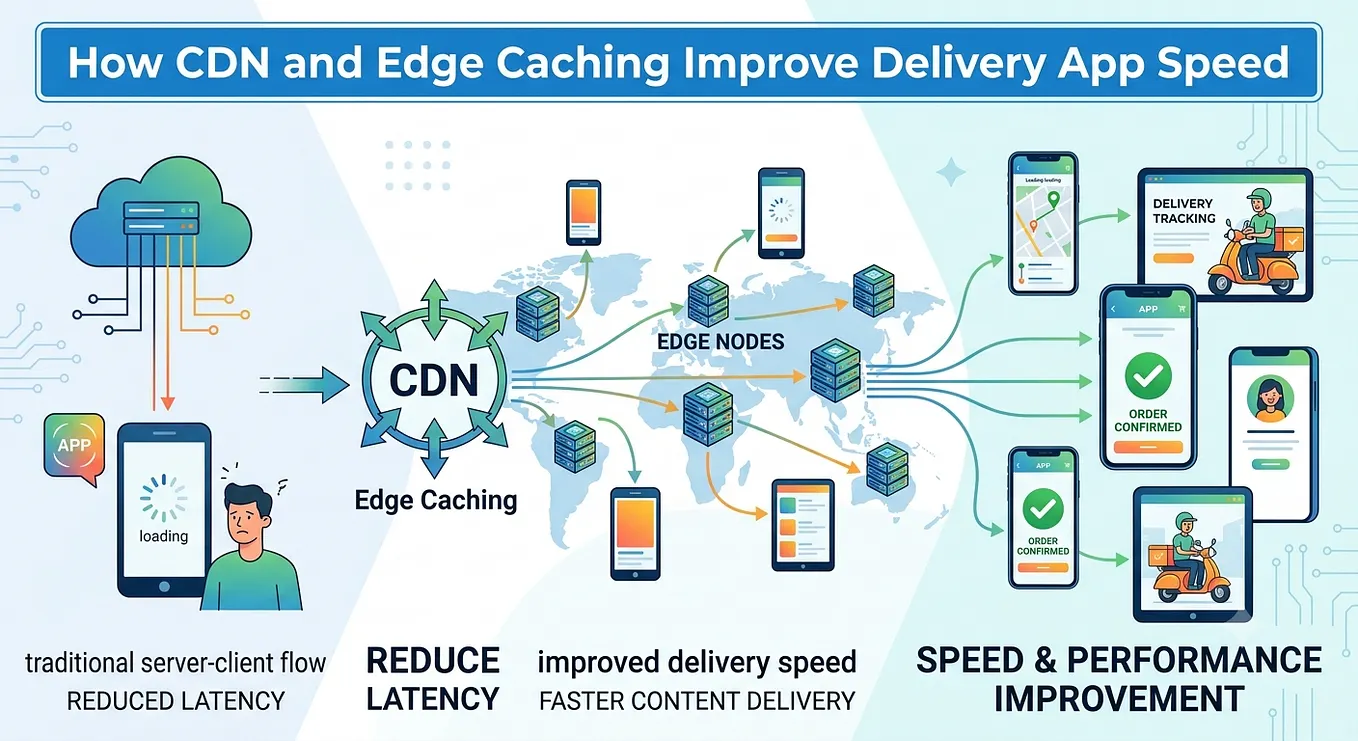
CDN Optimization
Static assets load globally.
Benefits:
- Reduced latency
- Faster performance
Load Testing and Monitoring
Testing helps prevent downtime.
Popular tools:
- JMeter
- Postman
- Grafana
Monitoring ensures system reliability.
Reducing API Response Time
Optimization methods include:
Query Optimization
Faster database retrieval.
Database Indexing
Improves search speed.
Async Processing
Handles background tasks efficiently.
Performance optimization directly affects retention.
Common Challenges in Flower Delivery API Development
Handling Seasonal Traffic Surges
Holiday demand spikes strain infrastructure.
Solutions include:
- Auto scaling
- Cloud optimization
- Load balancing
Real-Time Synchronization Issues
Challenges:
- Inventory mismatches
- Tracking delays
Scalable APIs improve synchronization.
Integration Complexity
Third-party dependencies can create issues.
Legacy systems often complicate modernization efforts.
Proper architecture planning minimizes disruptions.
Why Companies Choose JPLoft for Flower Delivery API Solutions
Businesses building modern delivery ecosystems require experienced technical partners capable of balancing scalability, reliability, and performance.
As a trusted flower delivery app development company for API integration, JPLoft helps businesses build secure and scalable flower delivery ecosystems powered by high-performance APIs.
They specialize in:
- Scalable API development
- Payment gateway integration
- Real-time tracking systems
- Multi-vendor order management
- Cloud-native backend systems
- Secure logistics APIs
One reason businesses choose them is their focus on performance engineering. Instead of building rigid backend systems, they prioritize scalable architectures capable of supporting seasonal demand spikes.
They also emphasize:
- Advanced REST APIs
- Smart GraphQL delivery systems
- Security optimization
- Real-time inventory synchronization
Their expertise enables businesses to launch reliable delivery applications that improve customer experience and operational efficiency.
Future Trends in Flower Delivery API Development
AI-Powered API Automation
AI increasingly improves:
- Route optimization
- Inventory forecasting
- Personalized recommendations
Event-Driven Architectures
Modern delivery platforms are shifting toward real-time event systems.
Benefits:
- Faster updates
- Reduced latency
- Better scalability
The Future of Scalable Delivery APIs
Future systems will focus on:
- Cloud-native infrastructure
- Hyper-personalization
- Faster integrations
Businesses investing in API modernization will gain competitive advantages.
Conclusion
APIs are the backbone of every successful flower delivery application. From payments and inventory synchronization to logistics and notifications, backend communication determines how efficiently delivery platforms operate.
As businesses scale, investing in scalable API development becomes essential for maintaining performance, reliability, and customer satisfaction.
While REST APIs offer simplicity and strong compatibility, GraphQL delivery systems provide greater flexibility and efficiency for complex use cases.
Businesses that prioritize scalable architecture, security, and real-time integrations will be better positioned to meet evolving customer expectations and build resilient flower delivery ecosystems.