Tralalero Tralala & the AI meme lore
An analysis of Italian Brainrot and world-building shitposts.


Generative media has been used for memes since its heyday. The frictionless production of media is perfect for the memetic proliferation of jokes.
Back in 2022 Craiyon (formerly known as Dalle mini) brought us funny surprises, like a Discord moderator caught on trail cam or a 9/11 gender reveal. The opium bird got its shine when it popularized a “big foot” sort of myth of a snowy bird only seen in the most remote mountains. And who can forget all those AI cover songs, like Life is a Highway sang by Eric Cartman or Gangsta’s Paradise by a toothbrush. In 2025, the most popular AI meme yet must have been the infamous Studio Ghibli style images promoted by OpenAI’s newest image model. Even the White House got on this trend. But in the more Gen Z and Alpha corners of the web lies a much stronger and unique trend: Italian Brainrot Animals.
The brainrot aesthetic however doesn't come out of nowhere, it’s an evolution of MLG, Dank Memes and Deep Fried Memes, a rejection of meaning and intentionality in exchange of shitposting. Brainrot was the Oxford word of 2024, as it encapsulates the growing trend of content that is so stupid and numb that it feels like it’s rotting our brains. Skibidi Toilet and Subway Surfer splitscreens are key examples of brainrot, also known as sludge content. Or, if generative media is involved, AI slop.
AI Brainrot memes consist of an umbrella of characters that follow a certain format: wacky generative animal/food/object characters, Italian or Indonesian nursery rhymes voiced by Adam, a text-to-speech voice from ElevenLabs, a dramatic song and some weird CapCut edit.
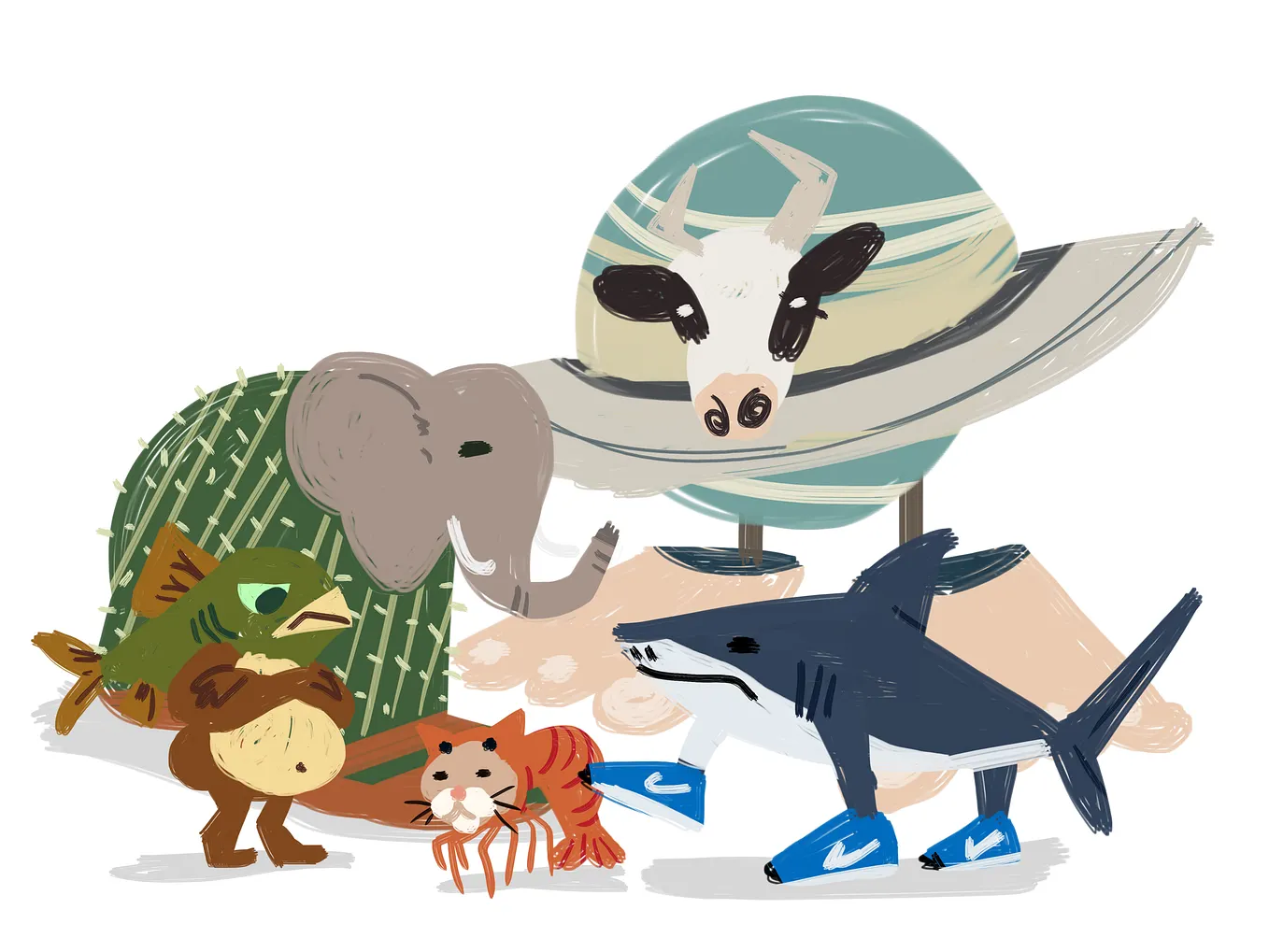
When Trallallero Trallallà is a shark with Nike sneakers talking about how they are playing Fortnite with their shitty son, we don’t care about the meaning of what’s been said, the relation to the image, nor care to translate if you don’t speak Italian. It’s funny because it’s nonsense. It’s hilarious that the text is some silly-sounding yet offensive Italian words, or that it’s all framed through the obnoxious CapCut flame transition effect. However, through it’s rejection of traditional media and storytelling, it has been slowly building it’s own meaning.
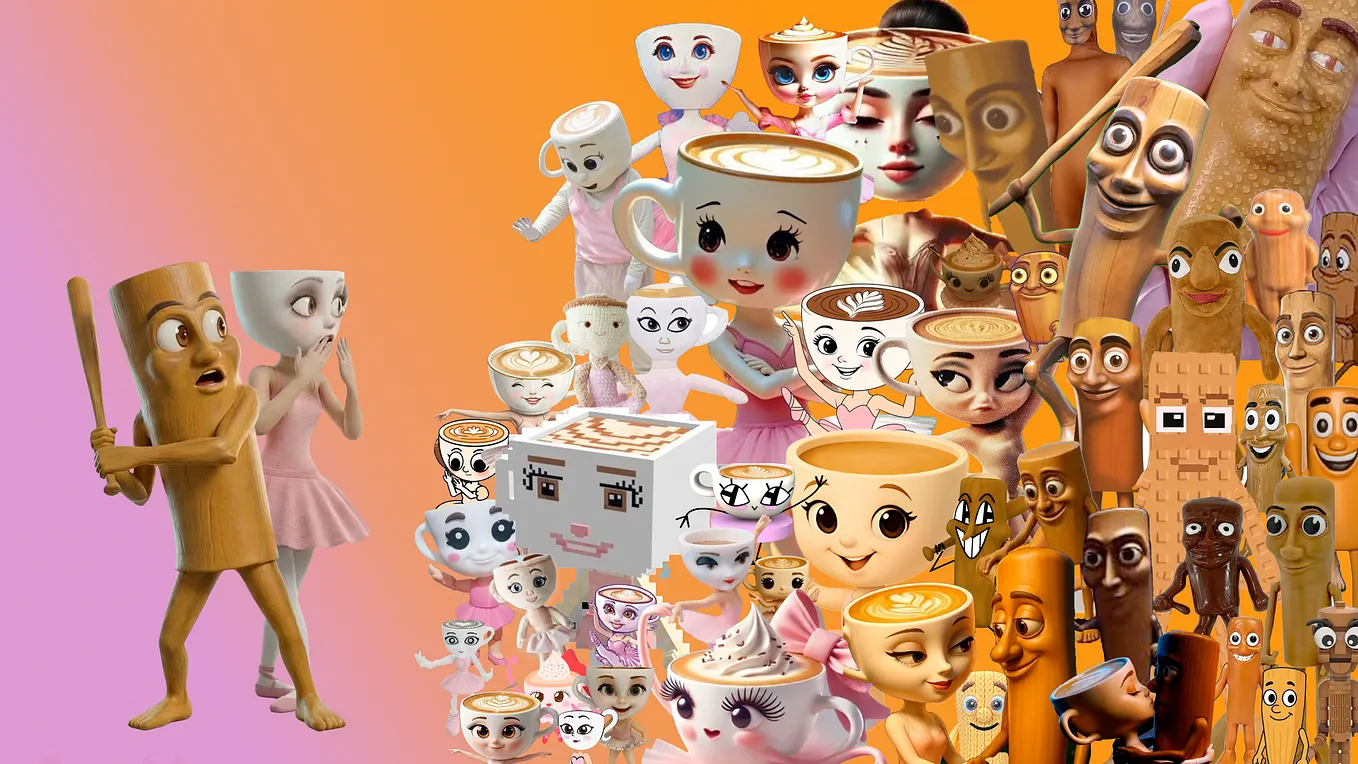
You see, after Trallallero Trallallà first appeared, followed by Bombardiro Crocodilo, and the consequent flood of characters like Lirilirilarilà and Tung Tung Tung Sahur, a type of world building was happening. All these silly characters with their wacky and insulting voices, started becoming recurring characters in a shared universe. A Brainrot Universe.
Back in 2018 the “E” meme got popular for similar reasons. The absurdity of mixing Markiplier, Zuckerberg at the congressional hearing, Lord Farquaad, framed with the caption “E” was hilarious. Peak dank mememery. But it all was contained in that one image and its variations. This time we are creating a world with lore, where all characters have their stories, sometimes fighting each other, other times dancing together. People make tier lists of their favorite character, lyrics mocking pop songs, all the sort of fanfiction that would appear with a regular fandom.
Why AI?
It’s not a coincidence that this was made with AI. Image generators make it too easy to make absurd images, because when you’re not bound by skills and time, it’s pretty simple to end up with an elephant cactus wearing sandals with a clock in the desert. These images don’t pretend to be real, they are consciously generated and embrace that. Non-AI Brainrot usually leans on low-res, janky visuals too. Mostly because the joke is that it looks so shitty.
Get Fabian Mosele’s stories in your inbox
Join Medium for free to get updates from this writer.
What amazes me though is how we got to make iconographies out of generated images. Just as the Balenciaga Pope, it’s not that any generated image recreating that character is part of the meme. It’s that one specific generated image that becomes the character, not the thousand other variations you could have gotten if prompted a second time. Sure, many Tralalero Tralalà videos feature an anthropomorphic shark wearing Nike shoes, but the real icon still remains the original image of the normal shark wearing three sneakers. Each generated character with their own nursery rhymes audio is what solidifies the meme.
Since it’s AI generated, it allowed many characters to be born. As the ecosystem exploded, many character were left behind and only few stayed strong. A relevant example is Cappuccino Assassino, who was early on in the game and slowly forgotten, until a whole subplot emerged with the birth of Ballerina Cappuccina, Ballerino Lorololo and Espressona Signora. A self-sustaining ecosystem where the strongest become canon.

Traditional memes proliferate by creating and sharing iterations on the same joke, where recognizability of the format makes it funny. World building memes rely more on lore, where the participatory community builds fictional stories and character that cohabit the same universe. The most similar examples are the JD Vance meme or John Pork. Also here, we have different iterations of the character, creating many different personalities that coexist in the same universe. A Guess Who or trading card collection of JD creates a sense of world building, where each meme is its own character. Similar to brainrot animals, the meme isn’t the singular character, but the collection of all characters and the way they relate to each other. This seems to be a meme format popularizing in 2025, where the joke gets amplified and built upon to create a more long lasting meme.

Is AI brainrot even real?
I made a video pretending to show toys of the Italian Brainrot cast that went viral. An innocent idea mixing 4o’s recent abilities to transform images plus KLING’s video realism, tricked million of people that such toys were real. I was suddenly flooded with DMs asking me where one could buy such toys, not realizing the videos were fully generated. This brought myself to think of another aspect, the simplicity to scam people through generative media. I could have taken money from so many people for a product that never existed. If an online community creates its own fandom and lore, who owns the rights to sell its merch?
People are now 3D printing these characters, trying to get onto the trend and make a few bucks by bringing to life a toy that was only generative goop. A weird loop that brought a few generated images to life because of a lively fandom. What was a simple absurd joke has spiraled into a full fledged world of characters with their own personalities, merch, songs and market.
This has only been a few months and could die out pretty soon, but who’s to say that we won’t get a full-on generative TV show, movie, videogames of characters no one has the rights of. However, brainrot content mostly stays brainrot. And especially generative AI media will remain in its own imitative nature. We can mimic trailers, songs, tv shows or toys, but that’s about it. Generative media is best at mimicking short form content rather than actually delivering on a fully fledged series.
And maybe that’s how it should stay too. The fun of creating a whole fictional world with a community of shitposters instead of big media conglomerates, is what made the joke so funny in the first place. Generative media excels at slop. Sure, Hollywood can try its best at incorporating AI in their workflows, but when they talk about democratizing creativity, brainrot is the answer. Scams, spams and brainrot content mocking the absurdity of media is what AI was made for. Creating fake trailers, fake products, fake articles and fake songs is what generative media proliferates at. You wonder what will happen if creativity is accessible to anyone?
Brainrot cinematic universes start existing.
If you liked this article, please check out my website for more AI and meme related project: https://www.fabianmosele.com/
Or check out my newest brainrot on Instagram: www.instagram.com/fabianmosele/
Fabian Mosele ✨