Poverty Is Not Humanity’s Destiny


Why ending poverty requires more than charity — and why the next great economic revolution must create opportunity for everyone.
By Gerald B.P. York
Founder, Global World Citizens
⸻
Somewhere in the world today, a child will go to sleep hungry.
Not because humanity has forgotten how to grow food.
Not because the world has no wealth.
And not because human beings lack the intelligence to solve difficult problems.
That child may go hungry because their family cannot afford enough food, because conflict has disrupted their community, because crops have failed, or because the systems meant to support their survival have broken down.
Somewhere else, a young person will wake up with an extraordinary ambition but no realistic opportunity to pursue it.
A mother will struggle to afford medical care.
A farmer will work tirelessly yet earn too little to support a family.
A graduate will possess knowledge but find no meaningful employment.
An entrepreneur will have a promising idea but lack the capital, infrastructure, or connections needed to bring it to market.
These experiences are different.
But they reveal a common reality.
Poverty is not simply the absence of money. It is often the absence of the conditions that allow people to build better lives.
And that is why poverty deserves to be understood not merely as a humanitarian tragedy, but as a profound failure of economic opportunity.
- Poverty Is Not a Law of Nature
For much of human history, material deprivation was widespread.
Food production was uncertain.
Medical knowledge was limited.
Transportation was slow.
Education was inaccessible to most people.
Productivity was low.
A single failed harvest could threaten entire communities.
Humanity has since transformed its productive capabilities.
Agriculture has become more sophisticated.
Medicine has advanced.
Electricity has reshaped daily life.
Industrial production has expanded.
Global trade connects distant economies.
Digital technology makes information available across continents.
Artificial intelligence is beginning to reduce the cost of certain forms of knowledge work.
These advances have contributed to enormous improvements in living standards over the long run.
Yet poverty persists.
This does not mean every form of poverty can be eliminated quickly or easily.
It means we should reject the idea that widespread deprivation is an unavoidable feature of human existence.
Poverty has causes. Causes can be studied. Systems can be improved. And human conditions can change.
That is the starting point of serious development.
2. The Difference Between Surviving and Living
There is a difference between being alive and having a meaningful opportunity to live.
A person may survive without reliable electricity.
Without quality education.
Without affordable healthcare.
Without access to formal financial services.
Without secure housing.
Without dependable transportation.
Without a stable income.
But survival under these conditions can require enormous effort.
Time that could have been spent learning is spent searching for water.
Money that could have financed a small business is consumed by preventable emergencies.
Energy that could have supported creativity is spent managing daily uncertainty.
A family that lives close to the edge of survival may find it difficult to take productive risks.
Starting a business becomes dangerous when failure means losing the ability to buy food.
Pursuing education becomes difficult when immediate income is necessary for survival.
Moving to a better opportunity becomes impossible when transportation is unaffordable.
Poverty therefore affects more than consumption.
It can restrict choice, mobility, learning, productivity, and the ability to plan for the future.
A serious effort to end poverty must help people move beyond survival and toward genuine economic capability.
3. Charity Matters. But Charity Alone Cannot Build Prosperity
When people encounter poverty, the natural human response is often compassion.
We want to help.
We donate food.
We contribute money.
We support families.
We establish charities.
We organize community programs.
These actions can be essential.
When a child is hungry, food is not optional.
When a family is displaced by conflict, emergency shelter matters.
When someone requires urgent medical treatment, immediate assistance can save a life.
There is no dignity in telling a hungry person to wait for long-term economic reform.
But we must distinguish between emergency relief and lasting development.
Food assistance can address immediate hunger.
A sustainable agricultural system can help strengthen food security over time.
A donation may help someone survive a crisis.
Reliable employment or a viable enterprise can provide recurring income.
A scholarship can transform one student’s future.
A functioning education system can expand opportunity for generations.
Charity and development are not enemies.
They serve different purposes.
Compassion helps people survive difficult circumstances. Development should also help change the circumstances that make survival so difficult.
We need both.
4. Poverty Is Also an Economic Loss to Humanity
Consider a child with exceptional mathematical ability who never receives a quality education.
A talented inventor who cannot access tools or financing.
A young entrepreneur whose business never begins because reliable electricity is unavailable.
A farmer whose harvest spoils before reaching a market.
A skilled worker unable to reach employers.
A researcher whose ideas remain undeveloped because their institution lacks equipment.
These are not only individual losses.
They are losses to the wider economy.
Every unrealized business represents potential products, services, jobs, and economic activity that never materialize.
Every preventable interruption to education can reduce future capability.
Every unnecessary barrier to productive participation can leave valuable talent unused.
This does not mean every person would become an entrepreneur, scientist, or wealthy professional if given better opportunities.
People have different abilities, preferences, and circumstances.
But an economy that systematically prevents capable people from participating cannot realize its full productive potential.
Poverty is costly not only because people have too little. It is costly because humanity creates less than it otherwise could.
That should concern governments, investors, businesses, researchers, and citizens alike.
5. The Missing Infrastructure of Opportunity
When we discuss economic infrastructure, we usually think of roads, ports, electricity, factories, and telecommunications.
These are essential.
But productive participation also depends on less visible systems.
Access to information.
Quality education.
Recognized skills.
Reliable financial services.
Legal identity.
Business registration.
Professional networks.
Market access.
Trustworthy institutions.
Mentorship.
Digital tools.
Consider a young entrepreneur in Accra who wants to sell products to international customers.
They may have the product.
They may have the determination.
They may even have customers willing to buy.
But can they receive payments?
Can they ship reliably?
Can they meet the required standards?
Can they obtain working capital?
Can they find accurate information about international markets?
Can they protect themselves against fraud?
These are not small details.
They are the systems that determine whether economic ambition can become economic activity.
A world serious about reducing poverty must invest in the infrastructure that makes opportunity usable.
Not merely opportunity in theory.
Opportunity that people can actually access, afford, and convert into better livelihoods.
6. We Must Build Economies That Produce More Owners and Creators
Employment is one of the most important pathways out of poverty.
Productive jobs provide income, experience, stability, and opportunities to develop skills.
But the global economy must also make room for more creators of economic value.
Entrepreneurs.
Farmers.
Manufacturers.
Independent professionals.
Cooperatives.
Inventors.
Digital creators.
Small-business owners.
Researchers.
Service providers.
People who can develop products, establish enterprises, reach markets, and create employment for others.
This does not mean everyone should start a business.
Entrepreneurship involves risk, and many people are better served by secure, fairly compensated employment.
Nor should we romanticize informal self-employment that produces little income and offers no protection.
The objective is broader.
We need economic systems that create more viable pathways to productivity and prosperity.
Some people will become employees.
Some will become entrepreneurs.
Some will work in public institutions.
Some will build cooperatives.
Some will create intellectual property.
Some will develop technologies.
Others will strengthen the services and infrastructure that make all these activities possible.
A prosperous society needs more than a few extraordinary winners. It needs broad opportunities for productive participation.
7. Africa Must Build Its Own Engines of Prosperity
Africa’s development challenges are often presented through images of poverty, conflict, hunger, and dependency.
Those realities deserve attention where they exist.
But they do not tell the whole story.
Africa is also home to extraordinary creativity, entrepreneurial ambition, cultural influence, scientific talent, natural resources, and growing technological capabilities.
The continent’s development must be understood through both its challenges and its possibilities.
Long-term poverty reduction requires stronger productive foundations.
Reliable energy.
Quality education.
Get Gerald B.P York’s stories in your inbox
Join Medium for free to get updates from this writer.
Effective healthcare.
Transport and logistics.
Agricultural productivity.
Manufacturing capacity.
Access to finance.
Digital infrastructure.
Well-functioning institutions.
Regional and international market access.
And opportunities for African enterprises to create and retain more value.
Consider the difference between exporting raw agricultural products and developing competitive processing, manufacturing, branding, and distribution industries.
Both can generate income.
But building more sophisticated value chains can create additional opportunities for employment, enterprise, technology adoption, and investment.
The challenge is not simply to extract more resources.
It is to develop more capabilities.
Africa should not be permanently positioned as a recipient of the world’s economic decisions.
African people and enterprises must become increasingly influential participants in creating, owning, and shaping economic value.
That requires investment, policy reform, institutional quality, and sustained execution — not slogans.
8. Technology Can Help. But It Cannot Replace Development
Digital technology has created possibilities that previous generations could scarcely imagine.
A student can access educational materials from another continent.
A small business can reach customers through digital platforms.
A farmer can obtain market information.
A creator can distribute original work internationally.
A researcher can collaborate across borders.
Artificial intelligence can assist with translation, analysis, learning, and business operations.
These tools can reduce certain barriers.
But technology is not magic.
A smartphone does not replace a functioning school.
An AI assistant cannot guarantee employment.
An online marketplace cannot compensate for unreliable logistics.
A digital wallet does not automatically create purchasing power.
And a powerful algorithm cannot replace accountable institutions.
Technology produces its greatest development benefits when it operates alongside education, infrastructure, capital, governance, and productive enterprise.
The question is not simply whether people can access technology.
It is whether they can use it to improve their capabilities and economic circumstances.
Technology should be judged not only by how intelligent machines become, but by how much more capable human beings become because of them.
9. The World Needs Better Development Systems
We have spent decades creating development programs.
Governments have launched initiatives.
International institutions have financed projects.
Charities have delivered services.
Businesses have invested.
Researchers have studied poverty.
Communities have organized.
Many of these efforts have produced meaningful results.
Others have failed, underperformed, or disappeared when funding ended.
The lesson is not that development is impossible.
It is that good intentions require effective systems.
We need better information about what people actually need.
Better evidence about which interventions work.
More transparent financial management.
Stronger local participation.
Reliable measurement of outcomes.
Institutions that can maintain projects after the initial funding ends.
And the willingness to stop repeating approaches that consistently fail.
A development project should not be judged only by how much money it receives.
Or how many meetings it holds.
Or how impressive its announcement sounds.
It should also be judged by what changes.
Did household incomes improve?
Did students learn more?
Did healthcare become more accessible?
Did businesses become more productive?
Did communities become more resilient?
Did the benefits last?
The purpose of development is not to produce activity. It is to produce meaningful, measurable improvements in human life.
10. Poverty Reduction Requires Both Markets and Institutions
There is no single institution capable of ending poverty alone.
Markets can mobilize capital, coordinate production, encourage innovation, and create employment.
Governments can provide public goods, establish rules, protect rights, invest in infrastructure, and support social protection.
Nonprofit organizations can reach vulnerable communities, test solutions, provide services, and advocate for change.
Universities and researchers can generate knowledge and evaluate results.
Communities can identify priorities, organize resources, and hold institutions accountable.
These contributions are complementary when properly designed.
But they can also fail.
Markets may exclude people who cannot afford essential services.
Governments may suffer from corruption, weak implementation, or poor policy.
Nonprofits may become dependent on donors or fail to measure results.
Businesses may pursue profits through harmful practices.
Researchers may produce knowledge that never reaches decision-makers.
We should neither romanticize nor dismiss any one sector.
We should ask a more useful question:
Which combination of institutions can solve a particular problem effectively, fairly, and sustainably?
That is the practical work of development.
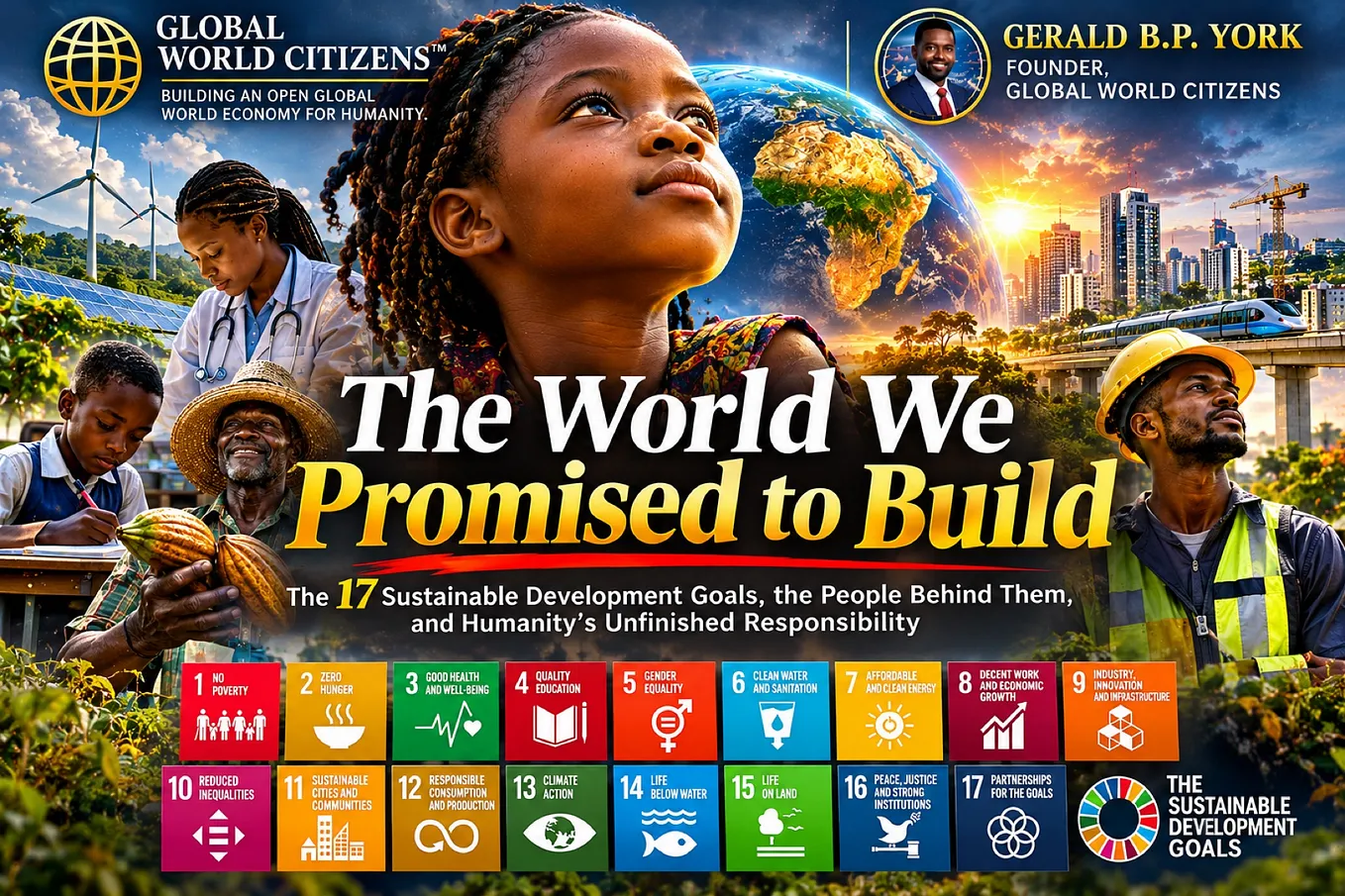
11. The First Sustainable Development Goal Is a Test of Our Priorities
In 2015, the world’s nations adopted the Sustainable Development Goals.
The first goal was clear.
No Poverty.
It was placed first for a reason.
Poverty affects health, education, nutrition, housing, economic opportunity, and human dignity.
But the SDGs were never intended to be seventeen isolated ambitions.
They recognize that human development is interconnected.
Ending poverty requires progress in education.
Healthcare.
Gender equality.
Clean water.
Energy.
Decent work.
Infrastructure.
Reduced inequality.
Peace.
Strong institutions.
And partnerships.
The goals provide a useful framework.
But frameworks alone do not transform lives.
The world must move from commitments to implementation.
From funding announcements to durable results.
From measuring activity to measuring outcomes.
From treating poverty as a permanent feature of humanity to confronting it as a challenge that demands serious solutions.
The 2030 deadline is approaching.
But human responsibility does not expire with a calendar.
12. The Future Must Be Built Around Human Capability
Imagine a world where more children receive quality education.
Where more families have reliable healthcare.
Where farmers can access productive technologies and profitable markets.
Where small businesses can obtain appropriate financing.
Where young people can develop internationally competitive skills.
Where entrepreneurs can participate in global trade.
Where communities have reliable infrastructure.
Where institutions become more transparent and effective.
Where people can build assets, accumulate savings, and withstand economic shocks.
Where poverty is less likely to pass from one generation to the next.
This world will not emerge simply because we wish for it.
It requires choices.
Investments.
Institutions.
Entrepreneurship.
Research.
Cooperation.
Accountability.
And a willingness to confront difficult economic realities.
There will be setbacks.
Some policies will fail.
Some businesses will close.
Some investments will disappoint.
Conflicts and crises will continue to threaten progress.
But the existence of difficulty does not justify surrender.
The question is not whether ending poverty is easy. It is whether humanity is willing to organize its capabilities around making poverty less common, less severe, and less persistent.
Poverty Is Not Humanity’s Destiny
A child born into poverty has not failed.
A young person without opportunity has not necessarily lacked ambition.
A farmer earning too little has not necessarily lacked determination.
A family struggling to survive has not necessarily made poor choices.
Individual decisions matter.
But so do institutions, markets, infrastructure, history, conflict, and the opportunities available to people.
We must recognize both personal agency and structural reality.
Humanity has already demonstrated that living conditions can improve dramatically over time.
We have developed technologies, institutions, and productive systems that earlier generations could scarcely imagine.
Now we must become more effective at extending their benefits.
Not through promises alone.
Not through charity alone.
Not through technology alone.
And not through economic growth that leaves too many people unable to participate.
But through the sustained work of building economies, institutions, and communities that expand human capability.
Because the ultimate objective is not simply to help people survive poverty.
It is to create conditions in which more people can build lives beyond it.
A life with choices.
A life with opportunity.
A life with dignity.
A life with the possibility of creating something valuable for oneself, one’s family, one’s community, and the wider world.
That is the development challenge of our time.
That is the promise of a more open global economy.
And that is why we must never accept poverty as humanity’s permanent destiny.
⸻
Gerald B.P. York
Founder, Global World Citizens
Building an Open Global World Economy for Humanity.
Ideas. Insight. Impact.
GlobalWorldCitizen.com
GeraldYork.org