Frequently asked questions on the returnable plastic crate rental model

Interest in the returnable plastic crate rental business model highlighted in the article below has risen.
Potential practitioners ask series of questions when engaging on the topic. This article helps answer some of frequently asked questions that have been asked over time.
- What is the market size of the plastic crates rental industry?
Market size data is a challenge due to poor access to data. The GEMS4 tomato cluster mapping report places tomato production at 1.8 million metric tonnes per annum i.e. 72 million crates worth of tomatoes per annum (at 25kg per crate). Crates should be used for other various fruits and vegetables e.g. pepper, cucumbers, oranges, mangoes, spring beans, lettuce, cabbage etc. This gives a sense of the potential industry market size.
2. How much is required to start the business? How many crates can the business start with?
The amount required at the outset is determined by the scale at which the rental provider is willing to start the service offering. Currently, the minimum number of crates at start up on any operational service provider is 2,000 crates but that quickly becomes inadequate given the rising demand.
3. Who rents the crates from the service provider?
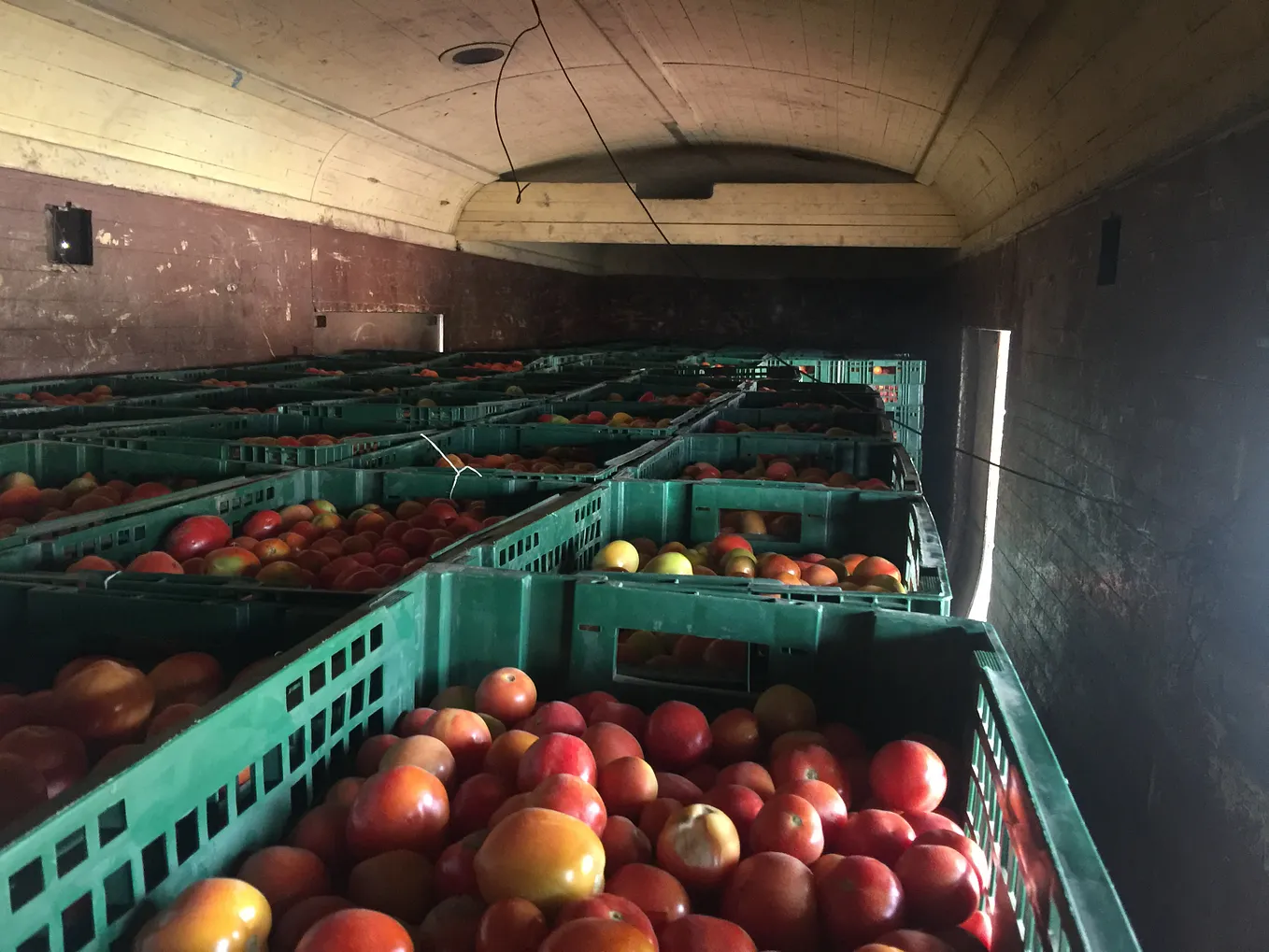
The dealers/aggregators up North currently constitute the largest volume of clients for the rental business. They move the fresh produce from North to South and this is the part of the journey that has the highest percentage of waste in the value chain due to damage from using raffia baskets.
4. What does the demand cycle for crate rentals look like?
Fresh produce production in Nigeria is geographically seasonal so when a certain produce requiring plastic crates is out of season, another commodity requiring the crates will be in season, in the same location or different locations. If the service provider decides to stick to a specific produce e.g. tomatoes, different northern markets are at their peak at different times and when they are exhausted, the South Western states e.g. Oyo and Osun offer crates rental demand potential. At peak periods of production, crates are needed every day for the entire period.
5. What exactly do the clients pay for? i.e. do they pay per day/ week/ month?
The client is paying for the use of crates to transport fresh perishables. The payment regime is currently done per trip. Usually the crates take about a week to return up north i.e. 3 days to Lagos, one day gathering and warehousing, 3 days return to the North.
6. When is payment made?
Get Kabir Lawal’s stories in your inbox
Join Medium for free to get updates from this writer.
Payment is made before the crates are picked up for rent. The client takes the crates to the location of fresh produce pickup and ships it to the south where the rental provider will have staff to receive the crates. In situations where the crates are in the south where the client requests, the service provider will pay to transport the crates directly to the clients’ market or a nearby location for ease of collection.
7. How is payment made?
They run mainly a cash based system. Poor internet access at the markets and low literacy levels makes web based transfers a challenge. Commercial banks are not always close by for direct payments to be made. There exists an opportunity for USSD payment systems to capture this market.
8. How does the service provider know the southern destination of the crates (to help facilitate crate collections)? What happens when the crates are unused in transit?
The rental provider should inquire from the clients the destination of the crates. Currently Mile 12 market in Lagos is the primary destination because of prior sensitization on the benefits of plastic crates by donor agencies and the state government. Locations in the South East and South-South have gradually started opening up and are potential markets. It is expected that the service provider will have a representative (not necessarily a fulltime staff) at each of the destination markets to aid gathering, warehousing and transporting back to the North for reuse. Crate tagging that will enable online tracking is not available at the moment.
If the crates go unused, they will already have been paid for. Any refund will be an agreement between service provider and client
9. Is there any special quality the service provider should look out for when deciding on the crates to be used for the service?
On the average, the crates in the market carry between 20–25kg of produce for ease of manual carriage. The crates should be manufactured with adequate ultraviolet light protection to reduce the rate of degradation. It should be strong enough to withstand rough handling that is expected in the open markets. The perforation in the crates must be sufficient to ensure ventilation is maximized. The design must be one that makes it easy to clean and difficult to hold debris in crevices.
The service provider should also be concerned with the stacking — nesting ratio (number of nested crates for every column of stacked crates). A higher ratio suggests the service provider will carry less “air” (the crates sit deeper into one another) when returning his crates thereby aiding in cost reduction on logistics.
10. Where can the plastic crates be sourced?
There are several plastic crate manufacturers in Nigeria. Most of the major plastic companies have a plastic crate design in their portfolio. Some purchasers have sourced crates from outside the country. Collapsible crates, for instance, are sourced from Europe and Asia. However, their durability in the Nigerian environment has not be tested and they are known to be more expensive than the regular rigid crates.
11. What is the level of competition in the rental space?
Currently, there are two known crate rental service providers available; one in Danja, Katsina state and the other in Zaria, Kaduna state, both concentrating on tomatoes. Their total crate stock is less than 10,000 crates so competition is virtually non-existent given the market size. There are several states that remain untapped.
12. What form of market sensitization has been done to help driven the demand of the crates and the rentals?
Several development agencies have carried out awareness campaigns in various markets in both Northern and Southern Nigeria on the benefits of crates. Various state governments through their agriculture development agencies have carried out similar exercises among their farmers and traders.