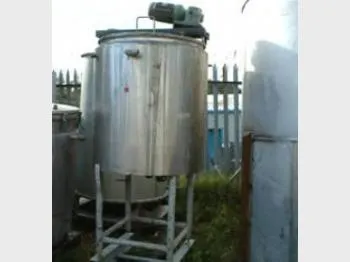
How Are Chemical Tanks Used For Wastewater Treatment

In the addition to the physical forms of treatment which includes different processes of filtering and screening, there are other forms of treatment as well. The biological treatment, of course, includes that lagoons and the oxidation pools. Chemicals are pretty much essential for the treatment of wastewater. The entire process of wastewater treatment demands of large quantities and aggressive amounts of chemicals. For that, proper storage is really important.
Using The Chemical Tanks
This is where the chemical storage tanks come to play. For the proper treatment of wastewater, these tanks are really useful along with all the equipment.
We shall have a look at the different chemicals that are used for the treatment of wastewater. Also, we will be highlighting the storage considerations that are required for those.
Let’s look at the chemicals used during the wastewater treatment process, and highlight the chemical storage considerations.
Neutralization
Also known as the process of adjusting the wastewater pH levels. A certain base or acid is added efficiently to achieve the desired levels of pH.
It is a very common process which is used in the treatment of wastewater. The most commonly used substances are sodium hydroxide, the chemical base or Sulphuric acid.
These substances are added carefully to the wastewater. These substances are pretty corrosive in nature and have storage challenges. These substances also demand a certain storage system.
RemovingThe Solid Particles
Get Rob hudson’s stories in your inbox
Join Medium for free to get updates from this writer.
The removal of the sold particles from the wastewater is really important. For that process, there are some chemicals such as polymers, ferric oxides, alum, etc.
These chemicals are responsible for producing certain positive charges. This neutralizes the negative charges that are present in the solid particles.
What’s the result you ask? Well, to start with, the solid particles start to clump up together so that the removal process can be easier. The wastewater has a large number of solid particles when compared to the municipal drinking water.
Hence, the workers need more chemicals for the coagulation process to work efficiently. For the safe storage of certain chemicals, the chemical storage tanks need to be filled with aluminium chloride, polymers, and other substances.
There are certain regulatory changes that reduce the nutrient amount in the water. Phosphates and nitrogen are the common examples. You will also find acetic acid.
Odour Control
The entire process of treatment of the wastewater after the collection always leads to certain odours. These unpleasant odours can be controlled with the help of chemical treatment.
Wet scrubbers and carbon treatment are the most common methods for the control of odour. Also, calcium nitrate and sodium hydroxide are used very often.
Some plants even make theuse of Hydrochloric acid for the conjunction process. However, since HCL has got a pungent smell, it is essential to have a storage to keep that in.
Sludge Treatment
The removal of Sludge after the treatment is another important process. For that, a certain chemical polymer can be used for the removal of sludge from the water. This will transport the sludge in an easy and effective way.
Storage of chemicals is really important for these particular stages of treatment of wastewater. So, the chemical plants need to have chemical storage tanks along with the other used process equipment.