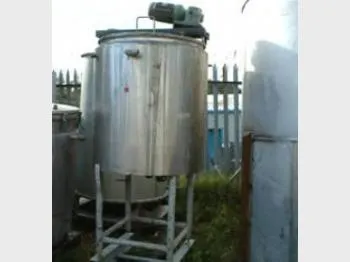
Storage Tanks For Industrial Purposes And How It Works

All industries use various types of Tanks for a smooth functioning of their processes. The storage tank uk are essentially used for the help of transfer of a variety of liquid elements to various machines for processing. These elements range from acidic solutions to alkaline mixtures to normal water.

Installation of the Tanks
The installation of a Tanks is done in a well-ventilated area. The Tanks is bolted to a flat and dry surface. If it is installed in an open area, it is recommended to protect the Tanks with well-ventilated cover to avoid hindrance from foreign elements such as dust or rain water.
Once the Tanks is secured, the connections to the process plant machinery are taken care of using plastic fittings. The connection is done in such as a manner that the suction and the discharge outlets are placed near the Tanks to avoid putting any pressure on the motor while the pumping is in process.
The most essential part of the installation of a Tanks is its electrical connection. The Tanks should be connected to a stable and compatible power source to avoid issues like overheating or short circuit due to continuous use or excessive load.
Get Rob hudson’s stories in your inbox
Join Medium for free to get updates from this writer.
Initiation of the Operation of the Tanks
When the tanks are run for the first time, it is recommended to disconnect the suction and discharge lines and fill the Tanks with the liquid to provide initial lubrication to the components of the Tanks. Once the Tanks is initially run for a certain amount of time, the connections for the suction line and the discharge line can be secured again. Now the Tanks is ready for use.
Working of the Tanks
The Tanks is responsible to Tanks liquid from the storage tank to the respective machines for use. With the help of the motor, the Tanks uses the suction line to extract liquid from the storage tank and send it to its respective destination through the discharge line.
The Tanks uses a frequency controller to manage the speed of the motor. The frequency controller alters the speed of the motor within a certain range as required to complete the process successfully. It is vital to use a frequency controller while using the Tanks to eliminate the chances of overheating when the Tanks is being used continuously.
Maintenance needed for the Tanks
The maintenance of any type of chemical process plant includes a thorough cleaning of the suction and discharge lines, stator as well as the motor for a smooth process. When a Tanks is cleaned, it is essential to fill it again with a liquid to lubricate the stator and the motor. The lubrication should not be done with soap, any type of cream, grease or oil to avoid damaging the stator. Additionally, it should be made sure that the suction and discharge lines do not get entangled. If the Tanks is fitted in an outdoor area, the external cleaning of the Tanks is suggested which will remove any dust or debris accumulating on the Tanks body.