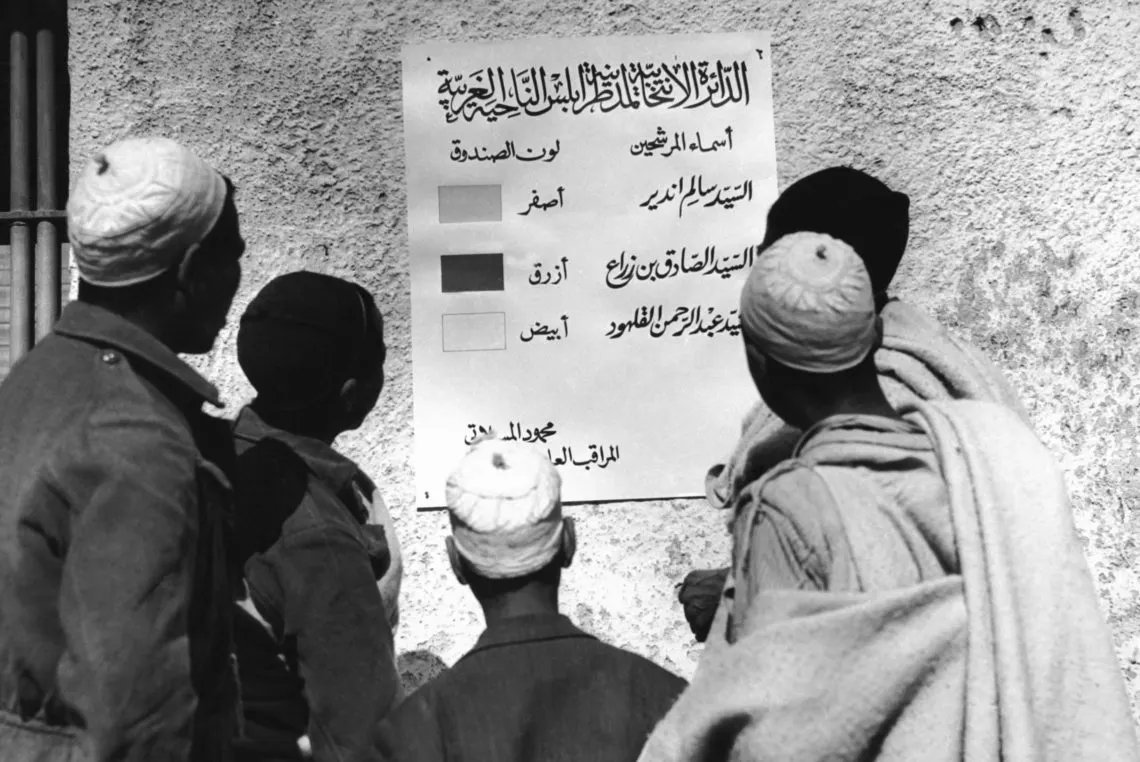
Barometers of dissatisfaction II/II

Part II — The Power of Saying “No”
By H. Daoui

Summary:
What if Libyans could reject candidates on the ballot — and their “no” actually triggered new elections? Around the world, nations have given voters the right not just to choose, but to refuse.
What if your ballot in Libya didn’t have to be just yes or no — what if “none of the above” really meant something?
Around the world, democracies have been experimenting with that very question. These systems don’t silence dissent — they count it.
From Blank votes with real consequences …. To Ranking candidates, not just choosing one:
In Colombia, the “voto en blanco” lets citizens formally reject all candidates. If blank ballots win a majority in certain electoral races, the election is repeated with new contenders. It’s a bold statement — (voters can demand better options without staying home)!_!
Ireland and Australia use ranked-choice or preferential voting. Instead of picking one candidate, you list them by preference “first things first”. If your top choice is eliminated, your vote transfers to the next.
It’s a system that rewards consensus over division and helps prevent the “spoiler” effect. Candidates must earn not only passionate followers but also second-choice respect.
The right to reject everyone
Russia once offered an “Against All” option on its ballots — an official box to say “none of these.” Though removed in 2006, it remains a striking example of institutionalizing dissent. Ukraine used a similar practice, allowing citizens to record disapproval rather than abstain.
Meanwhile, Switzerland makes rejection part of governance itself. Its frequent referenda allow citizens to veto government proposals directly, proving that “no” can coexist with stability.
What this means for Libya
Since 2011, Libyans have faced shifting laws, delayed elections, and fragile institutions. Many young citizens turning 18 now grew up with uncertainty “politically speaking” and that has became their norm!
When people abstain or submit blank ballots, it’s not always apathy — often it’s protest. A refusal to legitimize flawed processes …. Another what if …. What if Libya recognized those refusals as valid democratic acts?
A future that knows how to listen to silence ….
Get Haider Mohammed Daoui’s stories in your inbox
Join Medium for free to get updates from this writer.
Picture an election law that:
- Counts blank ballots as political signals.
- Requires re-runs if “none of the above” wins a majority.
- Allows ranked-choice voting so candidates must build real consensus.
- Publishes abstention data as part of official results, not as a footnote.
In such a Libya, abstention and protest votes would become feedback, not noise. Elections would be instruments of dialogue, not contests of endurance. Democracy that listens is not afraid of dissent.
When the “Blank” and the “No” are recognized in law, it becomes a mechanism for accountability.
The generation that came of age after 2011 deserves to recive these knowledge crombs, and deserves that kind of democracy — one that counts disagreement, too …. sense it all about the count at the end of the day!
About the Author
H. Daoui is a Libyan civic and political rigths advocate, writer, and researcher exploring civic participation, political design, and cultural identity in North Africa’s emerging democracies.
Sources & Further Reading
(For readers, journalists, or editors who want to verify or explore further.)
IFES (International Foundation for Electoral Systems): Civic education and election support programs in Libya, 2012–2024.
IFES Libya Teacher Training Report (2018): On developing school-based civic education curriculum.
Colombia’s “Voto en Blanco”: Legal recognition of blank ballots; repeat elections when blank votes win (Colombia Reports, The Bogotá Post).
Ireland’s PR-STV System: Official explanation of the single transferable vote by Ireland’s Electoral Commission.
Australia’s Compulsory Voting: Australian Electoral Commission — explanation and turnout effects.
Russia’s “Against All” Option: Radio Free Europe / legislative history of the 2006 removal.
Swiss Direct Democracy: SwissInfo guides on referenda and people’s initiatives.
IFES Libya Election Research: Findings on youth participation, civic attitudes, and public confidence.