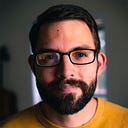
Along for the Ride with Jane Tardo


Jane Tardo is busy. I don’t know how else to describe someone who teaches, sews professionally, and spends six hours a day (12 on their days off) working in a studio to create mixed media works for exhibitions and public performances. More than an artist, Tardo is an inventor who refers to their creations as “products,” interactive pieces designed to inspire their own market culture, branding, and fandoms. Their work ranges from the Adventure Cattery Quilt Show (a series of textile tapestries displaying cats in a utopian environment) to large-scale products that combine robotics, sewn landscapes, and soft sculpture techniques, where audience members’ cell phones play a major role: Snake Tube Adventure Racing Haunted Hearse Snake Tube Adventure Ride . Somehow, they managed to find time to meet with me at Old Road Coffee in Tremé-and brought the hearse. Luckily, Tardo had recently taken the Haunted Hearse to the Overlook Film Festival in early April, and they were-more or less-set up to give me a truncated demonstration. But not before we talked for hours about art, climate change, and life in New Orleans.
You’re referring to your Snake Tube Adventure Racing installation?
Yeah, so this is my second larger-scale, quasi-animatronic, analog reality versus virtual reality [product]. The first one was Snake Tube Adventure Racing . You get to choose your own snake and put it inside of a tube, connect your phone and then race around my quilted landscapes with up to four other people. And that started getting me thinking about phones, and our use of phones every day to observe and document everything going [on] around us-including trauma and tragedies and climate collapse.
Climate collapse must be on your mind a lot, especially being from New Orleans.
I worry about it. I worry about my neighbors. I didn’t really understand it until Katrina. Until then, it was just stories of Camille and Betsy and the Great Flood. My family’s been here about seven generations, so I grew up with the stories. And then we lost our home in Katrina. We were going to stay because my grandfather was in hospice at the time. But at the last minute we ended up piling into my 1990 Dodge Neon and driving 16 hours to Shreveport. And the next day [we were] in the hotel lobby watching with everybody else as they’re showing the city flooding. They showed a Shell gas station that was around the corner from where we lived, and there was water all the way up. All my remaining grandparents died within four to six months of Katrina from stress. We lost six cats. My grandmother (on my dad’s side) got lost in the system. We didn’t even know where she was for months. By the time I saw her again, she had full-on dementia.
That’s a powerful experience to have. How often do you incorporate that into your art?
Climate collapse is in everything that I do. I think even in the utopian cat works-it’s that escape from the dystopian future and imagining a world where we get to hang out with our friends in nature and everything’s fine. It’s a way of reinterpreting that fear. I want to be an artist that’s representing my region. The way I grew up was very special and-for better or worse-I have a unique vision and a take on the world because of what I went through. The surface layer of all my work is that it’s fun, whimsical, and colorful. And then you pull off that layer and it’s political, and you pull off that layer and it’s personal. Then you pull off that layer and somebody else is throwing their own story into it as well. In the back of the hearse, I have a haunted New Orleans scene-except it’s underwater. It’s the view from the overpass with the Superdome in the background and the Lee monument floating in the water. And then we also have a soundtrack written by Morgan Orion [where] he’s singing about nuclear waste, the end of days, climate collapse-and to go along with that, I have post-apocalyptic zombie graveyard imagery in there as well.
Why make it haunted? Is that just because it’s in a hearse?
One of the houses I grew up in-in the French Quarter-was haunted. And I have some very early memories of being interested in ghosts and the paranormal, interdimensional beings and cryptids. I also like Halloween-I like the magic and silliness of it, but I don’t like the guts and the gore. I’m flashing-light sensitive, and some of my friends have seizures around flashing lights, so they can’t go to haunted houses. Or people with asthma can’t go into haunted houses because of the smoke, or people with heart conditions or people with mobility issues. So the idea was to create a whimsical, fun, accessible-and at $1 a ride, affordable-haunted attraction that’s going to allow lots of different types of people to experience the wonder of Halloween.
Why should art be accessible?
My work has to be attractive to get people to engage. I’ve found that it is more difficult for me to make a statement if my work is too heavy or too sad. I use novel ideas and textiles to start audiences with a smile. And then, maybe-if they’re ready-they’ll be hit by the true meaning of it… I think it’s important to have art that makes people stop in their tracks, like the Haunted Hearse does, and reconsider life as they know it.
Do you get to see that transformation happen?
Oh yeah, I see people come up to the Haunted Hearse with arms crossed, grumpy face on, so suspicious. And then I greet them with a smile, and I tell them what this is: the world’s first haunted mansion ride for cell phones. And then I push the button and the little cart moves and they’re like, “I put my phone in there?” And I’m like, “Yeah, and it gets pushed through 45 feet of spooky art and your phone makes a video, and you get to be in the video as a monster.” And it’s this whole song and dance and slowly I crack their nut and their inner child comes out, ready to believe in something or someone again.
Has something caused that transformation in you recently?
One thing that has really inspired me and stopped me in my tracks was a film I saw at the Overlook Film Festival. It’s called , directed by Jacqueline Castel . It’s a queer, werewolf, coming-of-age story with a gorgeous, slow, old way of filmmaking. The moody synth soundtrack is by Augustus Muller (of Boy Harsher ). It hit all my brain tingles. It’s one of those films I wish I had seen when I was a teenager. Jim Jarmusch said he couldn’t make a better film.
Were you encouraged to pursue art growing up?
I grew up in a working-class New Orleans family where “art’s not a job.” But it is. It sure is a job. I think that more families should accept that and encourage their children to pursue professional interests in art. Just like any job, if you want to be successful, you must study, work hard, and show up.

Candy Planet Catgirlfriend, from the Adventure Cattery Quilt Show
Get Hayden Legg’s stories in your inbox
Join Medium for free to get updates from this writer.
And now you’re a teacher yourself?
I teach at the University of New Orleans as adjunct faculty in sculpture, and I’m a sewing instructor through ricRACK NOLA. Prior to that I taught in South Korea and in Prague, Czech Republic, and for Teaching Responsible Earth Education here in New Orleans. All added up, I’ve worked in education for about 15 years.
Where does your soft sculpture work come in?
I finished my bachelor’s degree at UNO in international studies in 2008. And then I went overseas and worked in international education for seven years until my dad got sick. So, I had to come home, leave my dream job, and then do hospice care for him for two or three years. After he passed on, I went to grad school to study sculpture. In grad school, I thought I’d do more traditional styles of sculpture. But after my first year, the sculpture professor, Aaron McNamee -who was very helpful and inspirational-left his position. And they never hired anybody else. I was like, “Oh, shit. What am I going to do? I guess I’ll try some sewing.” So, I learned what I could from books and started sewing.
What are you working on now?
Right now, the main commercial interest is towards my cat pieces, which are quilted tapestries. It’s a textile collage technique that I’ve really mastered and perfected. So, I’ll take maybe 30 different types of quilting fabric that I find or collect, or people give to me, and then I’ll run it through an intensive process of appliqué making. And then I’ll layer everything on top of each other until I’m happy. It’s a lot like collage, but with sewing. Then I’ll sew all of them together and make a quilt. LeMieux Galleries on Julia Street is where people can find my cat quilt inventory… In November, I’ll be doing a two-person show with Kjelshus Collins at the Sibyl Gallery . And that’s going back to my soft sculptural work, making the interactive products. I’m very excited about it! It’s going to be a lot of things that I’ve been journaling about and haven’t actually had a chance to make because the Haunted Hearse stuff is so time consuming.
I didn’t realize the hearse took up so much time. What are some challenges you faced with it?
The biggest challenge is the space itself, working inside of the hearse and trying to figure out the curve so the cart is able to make the turn and keep pushing. And there are so many technical things that were really challenging: switching everything over from batteries to rechargeables, running everything off of remotes so we can stop and start the carts with the push of a button-that was a pretty cool one. And then, of course, to go out with my intimate partner and learn how to work it without blowing up at each other-that was tough. We had to have a lot of conversations about what’s working, what’s not working, what lines are important and what lines are fluff. He and I have very different, yet complementary, roles in the installation. His job is super technical: getting the carts ready, preparing the phones, getting them on the cart, and making sure the cart is going up onto the track without getting stuck. He takes care of nearly every technical aspect, bringing all my wild ideas to reality.
Speaking of personifying phones, can you tell me about the t-shirts?
I like putting a smile on people’s faces and joking with them. It’s as much a performance as it is an installation, so I try and find things that I think are funny to insert. One of my ideas was small t-shirts for phones that say: I Survived the Haunted Hearse. [I thought], “People are going to laugh and we’ll move on.” But I didn’t realize that people would laugh and then want to buy one for their phone and I’d be spending all of my free time sewing tiny t-shirts.
Did people have a similar response to Snake Tube Adventure RacingSnake Tube Adventure Racing has a very deep cult following, but it’s something that doesn’t get installed often. I think people have a way better chance of experiencing the Haunted Hearse than doing my snake racing. Until I have my third experience ready, and then the dream is to have all three up and running at the same time. And it’ll be “Jane Tardo’s Phone Amusement Park!”

Is funding a big part of your job?
Yeah, I think most artists can’t keep making art without some sort of funding. And that’s been the biggest priority for me right now. I just put in for several grants that will really help us pay for everything, and-fingers crossed, moving forward-hopefully more people will show up with open hearts and open checkbooks. Currently the Haunted Hearse is sponsored by Espíritu , the mezcal bar in the CBD, and we’re also sponsored by ricRACK NOLA and Nolaworks -which is a DIY space over by the Comeaux Furniture building. We put the logo for all our sponsors on the side of the hearse and we include them in our programming. I’ll make social media content with them and find other creative ways to grow our partnerships as well. I work with other artists around town to bring my ideas to life, so being able to pay them fairly is important to me. I have a graphic designer that I work with, Ellsbeth Truitt , and Kjelshus Collins and Sylvia Santamaria are two artists I went to UNO with. They’re incredibly supportive in everything I do, and they’ll come in and paint a little bit here and there. Sylvia actually did the hood art on the hearse.
A lot of people assume the job of an artist is just to create, but that doesn’t sound like the case. What’s the reality of the business side of art?
You really have to be your own storefront. Even though I have work in galleries, I still have to work to tell people that I have work in galleries. I still have to try because I want that work to sell, to move. Then the paperwork side of being an artist, keeping inventory and keeping your books, paying taxes, finding a system to write everything down-nobody teaches you how to do those things, not even in grad school. You have to develop networks of support and find a way to be there for others. Many people have an idea of what they think art, or an artist should be; that’s one thing I really like to explore with my work: assumptions and expectations.
What are your dreams for the future of your art?
We definitely want to tour the Gulf South again. We did a small tour with the Haunted Hearse this past season and what we really like to do is go to small art walks or community events. Those are the kind of crowds we like because we like it when it’s everything from toddlers to really old people, and all sorts of people, too, in these diverse Gulf South communities… In the smaller towns where people have less access to art, this is something special for them. It’s barrier free, it’s accessible, it’s just a dollar. But if they don’t have a dollar, kids ride for free, or people wearing purple ride for free today, whatever. Let’s have some fun!
What about your future? With the climate crisis on your mind, do you think you’ll stay in New Orleans?
I mean, this is home. It’s where my family is. Logically, it doesn’t make any sense to stay… but I think I’ll stay ’til the end. And I know what that means. I don’t romanticize disaster survival, I know what the next one will mean to me and my community. Being from New Orleans is a huge part of my story and I take pride in being an “artist from New Orleans,” and being an early survivor of climate change, losing homes and family to climate change, growing up in a traditional household in a time when there were very few options to express yourself and to experience community outside of the family. And growing into a person that has had a lot of experiences, who has traveled a lot, who’s come back to New Orleans and settled here ’til the end… and knowing that the end is soon. And continuing to exist against all reason. Continuing to make work that is joyful and fun, but also really thought-provoking and interactive, pioneering this new art form, and also inventing a lot of techniques along the way. I don’t think I could live or work in the same way outside of my home, New Orleans.

Originally published at https://antigravitymagazine.com on June 7, 2023.