How to Think About Property Ownership 10 Years From Now
Quick Summary
Over the next decade, property ownership will transition from a static asset class to a dynamic, tech-enabled ecosystem. Key drivers include the rise of fractional equity, the integration of artificial intelligence in home management, and a fundamental shift toward carbon-neutral living. Investors and homeowners must look beyond location and size, focusing instead on digital infrastructure, ecological resilience, and community-driven architectural designs that support hybrid lifestyles.

The Transition from Static Possession to Fluid Utility
As we approach the mid-2030s, the concept of owning a property is moving away from the simple acquisition of land and bricks. The historical model of lifelong debt for a single location is being challenged by a global workforce that prioritizes mobility and asset liquidity. By 2034, we will likely see a rise in multi-modal ownership, where individuals own shares in various residential assets rather than a single deed. This shift is driven by the increasing cost of urban entry and a psychological change in younger demographics who view housing as a service rather than a permanent anchor. Heritage Prime has observed that this transformation is already influencing how developers conceptualize new projects, moving toward modular designs that can adapt to changing family structures over time.
Why is the rental-yield model changing in major cities?
Traditional rental models are evolving into comprehensive living subscriptions. In the next ten years, owners will not just provide space: they will provide a curated environment including high-speed connectivity, wellness facilities, and integrated energy solutions. This change is visible when analyzing the latest NCR real estate blog and market insights, where data indicates a growing preference for managed residences over standalone apartments. Yields will no longer be calculated solely on square footage but on the quality of services and the technological stack embedded within the unit. Investors who ignore these service-oriented demands may find their properties losing competitive value against newer, more integrated developments.
Technological Infrastructure as the New Location
In the past, the mantra of real estate was location, location, location. While geography remains important, the digital connectivity of a property is becoming its most significant valuation driver. A house in a prime area with poor connectivity or outdated structural technology will trade at a discount compared to a digitally advanced home in a secondary location. By 2034, every home will function as a data-producing hub, using artificial intelligence to manage energy consumption, security, and even predictive maintenance. Sensors will detect a leaking pipe or a structural weakness long before a human eye can perceive it, allowing for proactive repairs that preserve the asset value over decades.
How will artificial intelligence impact long-term property values?
AI will transform homes into self-healing assets. Imagine a property that automatically adjusts its glass opacity based on the sun’s position to maintain internal temperatures, or one that trades excess solar energy on a local micro-grid to generate income for the owner. These features will become standard requirements for luxury buyers. High-end developments like the Ayodhya Enclave luxury villa project are already setting the stage by incorporating advanced architectural frameworks that allow for seamless tech integration. Properties that lack the wiring or structural capacity for these upgrades will require expensive retrofitting, making early adoption a fundamental strategy for capital appreciation.
The Green Imperative and Ecological Resilience
Environmental factors will no longer be optional add-ons: they will be legal and financial requirements. By 2034, property taxes and insurance premiums will be heavily weighted toward the carbon footprint of the building. We are moving toward a reality where net-zero homes are the gold standard, and buildings that fail to meet these criteria will face a brown discount in the market. This means buyers today must think about the source of their home’s energy, the sustainability of its materials, and its ability to withstand extreme weather events. The focus is shifting from aesthetic luxury to functional resilience, where water recycling systems and independent power storage are considered more valuable than marble floors.
What role does urban greening play in future property demand?
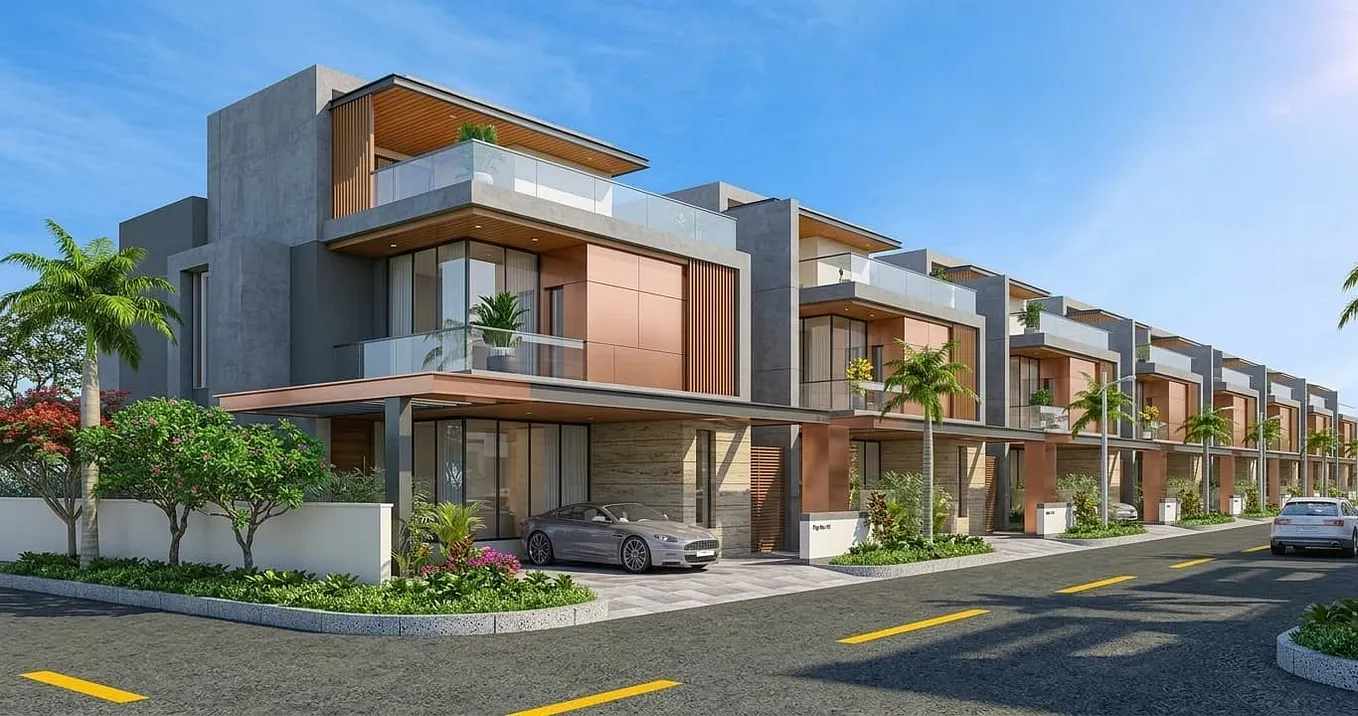
As cities become denser and temperatures rise, the value of private and communal green space will skyrocket. Future property owners will prioritize access to parks, vertical gardens, and biodiversity. Secure residential spaces such as the Palm Villas Noida gated community demonstrate this shift by integrating extensive landscaping with modern housing, creating a micro-climate that is both cooler and more breathable than the surrounding concrete urban centers. This environmental buffer is not just a lifestyle choice but a health and financial necessity in an increasingly volatile climate landscape.
Get Heritageprimencr’s stories in your inbox
Join Medium for free to get updates from this writer.
Financial Evolution: Tokenization and Fractional Equity
The way we pay for and trade property is heading toward a digital revolution. Blockchain technology will enable the fractionalization of real estate, allowing individuals to own 10 percent of a luxury apartment or 5 percent of a commercial complex. This lowers the barrier to entry for younger investors and increases market liquidity. Instead of property being an illiquid asset that takes months to sell, owners could potentially trade their shares on a digital exchange in minutes. This democratization of property ownership will likely lead to a more stable market with fewer speculative bubbles, as ownership is spread across a wider and more diverse demographic.
Legal Frameworks and Digital Verification
The administrative side of property ownership is also undergoing a massive overhaul. Physical title deeds and manual registry checks are being replaced by immutable digital ledgers. This transition increases transparency and significantly reduces the risk of fraud or disputed claims. Understanding the governing legal terms and service conditions of modern digital platforms is becoming a fundamental skill for any property buyer. As jurisdictions adopt smart contracts, the role of intermediaries like traditional brokers and lawyers will shift toward managing the digital architecture and ensuring that the code governing the property transaction is sound and secure.
Will property law become fully automated by 2034?
While the execution of property transfers will become largely automated, the underlying legal principles will still require human oversight for complex disputes. However, for the average buyer, the process of verifying a title, checking for encumbrances, and completing a transfer will happen through a unified digital interface. This will remove much of the friction currently associated with real estate, making it as easy to buy a property share as it is to buy a stock today. This efficiency will attract more international capital, as the risks associated with local procedural hurdles are minimized through standardized digital protocols.
Architectural Adaptation and the 15-Minute City
The design of homes is changing to accommodate the hybrid nature of modern life. By 2034, the separation between work, living, and recreation spaces will have blurred almost entirely. This is giving rise to the 15-minute city concept, where every necessity of life is within a short walk or bike ride. Property owners in these self-contained urban ecosystems will see the highest levels of demand. The architecture of the future will prioritize flexibility: walls that can be moved to create an office during the day and a living room at night, and communal areas that facilitate social interaction while maintaining high levels of security and privacy.
Is the suburban model dying or just evolving?
The suburbs are not disappearing: they are becoming decentralized hubs of their own. Rather than being dormitory towns for a central business district, they are transforming into productive zones with their own co-working spaces, local energy production, and cultural centers. This evolution means that property values in suburban areas will depend on how well they integrate these urban amenities. Low-density living is being reimagined as high-quality, high-tech living where residents enjoy the space of the countryside with the connectivity and convenience of the city center. This balanced approach is what will drive the next wave of residential development.
Frequently Asked Questions
1. How will climate change affect my property’s resale value in 10 years?
Climate change will become a direct factor in property appraisal. Homes in areas prone to heatwaves, flooding, or water scarcity will face higher insurance premiums and potentially lower demand. Conversely, properties that incorporate adaptive features like high-efficiency cooling, flood defenses, and independent water systems will command a significant premium. Buyers will look for energy-rating certificates and historical data on climate resilience before committing to a purchase.
2. Is it better to buy a finished property now or invest in land for the future?
Both have merits, but the value of land will increasingly depend on its zoning for mixed-use development and its proximity to digital and transport infrastructure. Investing in finished property today is wise if the building is designed for future tech upgrades. If buying land, focus on areas slated for decentralized hub development. Land without planned connectivity or utility access may stagnate in value compared to land in smart-city zones.
3. What is the biggest risk for property owners in the next decade?
The biggest risk is asset obsolescence. A building that cannot be upgraded for high-speed connectivity or that relies on fossil fuels for heating and cooling will become a liability. As regulations tighten and consumer preferences shift toward sustainability, owners of inefficient buildings may find themselves with assets that are difficult to sell or rent. Proactive retrofitting and staying informed on technological trends are the best ways to mitigate this risk.
4. How will the rise of remote work affect urban property demand?
Urban demand will remain high but will shift in nature. People will still want to live in cities for the social and cultural benefits, but they will no longer tolerate cramped, dark apartments. Demand will move toward larger, more flexible units within the city that offer high-quality amenities and community features. The focus will be on the lifestyle experience of the neighborhood rather than just proximity to a corporate office tower.