Why Do You Need to Know Someone’s Caste


Hey there!
I’m sitting on the couch, and this is my first piece of writing. I’m a little scared and confused, but whenever I hear news about my country, I feel an urge to speak. So, I’m writing this. I don’t know how many people will agree with me, and honestly, that’s okay.
As I reflect on humanity, I can’t help but wonder: Why do we need to know someone’s caste?
If someone were to ask me about my caste, I would simply respond by emphasizing our shared humanity.
I first started thinking about this when I was debating with my brother about humanity. I asked, “Why do we need caste?”
Someone responded—I won’t say who, because that person has held the same view for more than 40 years:
“If caste is not there, how are we going to recognize them?”
I was like,
“Why do you want to recognize them?”
And that question stayed with me.
What Does Humanity Mean to Me?
First, let me tell you what humanity means to me.
Help each other without knowing someone’s caste, religion, sex, color, or financial status. Respect people even when you don’t like them. Well, that’s my personal standard.
I have a personal rule:
“I don’t like you. I don’t want you in my life. But you’re still a human being, and I’m not going to treat you badly. That’s not for you — it’s because that’s who I choose to be.”
Love people as they are. Treat them respectfully.
I’ve never actually researched the definition of “humanity,” so this is simply what humanity means to me.
Someone’s birth cannot decide how we should treat them.
But Caste Discrimination Still Exists
Many people never experience caste discrimination themselves. Because of that, they may believe that caste discrimination no longer exists.
But there are still villages and communities where people experience it.
Bundelkhand is a region spanning parts of Uttar Pradesh and Madhya Pradesh. [1]
I came across a video in which Rahul Gandhi spoke with women from the Bundelkhand region about their experiences of caste discrimination. One woman described unequal treatment when accessing water, including being made to sit separately and, at times, not being allowed to draw water themselves. [2]
Another woman described being made to sit separately during weddings and other community events. [3]
India gained independence in 1947. Nearly eight decades later, reports of untouchability and caste-based discrimination still exist.
Still this much untouchability?
People who are educated and still practice such discrimination—why?
Some reports have documented cases in which Dalit people faced discrimination around access to water, including practices such as cleansing hand pumps after a Dalit person touched them. [4]
Just thinking about that makes my eyes watery.
I can’t bear it.
WHY SO MUCH HATE?
And another practice shocked me: reports of Dalit people being expected to remove their slippers and carry them in their hands when walking past upper-caste homes or villages. [4]
India is too big. These experiences may not represent every village or every person.
But that’s exactly why I think we need to look, listen, and question instead of pretending these things don’t exist.
What Does the Mahabharata Say?
While exploring this question, I came across a conversation in the Ajagara Parva of the Mahabharata that made me stop.
The Mahabharata is one of the two major ancient Sanskrit epics of India.
Get Her Second Thought’s stories in your inbox
Join Medium for free to get updates from this writer.
In this dialogue, Yudhishthira discusses the qualities and conduct associated with a Brahmin and a Shudra.
The passage says:
शूद्रे तु यद् भवेल्लक्ष्म द्विजे तच्च न विद्यते ।
न वै शूद्रो भवेत् शूद्रो ब्राह्मणो न च ब्राह्मणः ॥ २५ ॥
यत्रैतल्लक्ष्यते सर्पवृत्तं स ब्राह्मणः स्मृतः ।
यत्रैतन्न भवेत् सर्प तं शूद्रमिति निर्दिशेत् ॥ २६ ॥
A translation of the passage reads:
“O serpent, the characteristics that are found in a Śūdra but absent in a twice-born (Dvija), and those found in a twice-born but absent in a Śūdra, show that birth alone is not the determining factor. A person is not a Śūdra merely by birth, nor is a person a Brāhmaṇa merely by birth. Wherever this conduct (vṛtta) is observed, O serpent, that person is regarded as a Brāhmaṇa. Where this conduct is absent, that person should be considered a Śūdra.”
In this dialogue, Yudhishthira emphasises qualities and conduct rather than birth alone.
I completely agree with this idea.
My favorite line is
“न वै शूद्रो भवेत् शूद्रो ब्राह्मणो न च ब्राह्मणः”
In translation:
“A person is not a Śūdra merely by birth, nor is a person a Brāhmaṇa merely by birth.”
For me, respect and character belong to the individual. They don’t need a caste or religious label to exist.
What Are We Teaching the Next Generation?
I want to ask parents something:
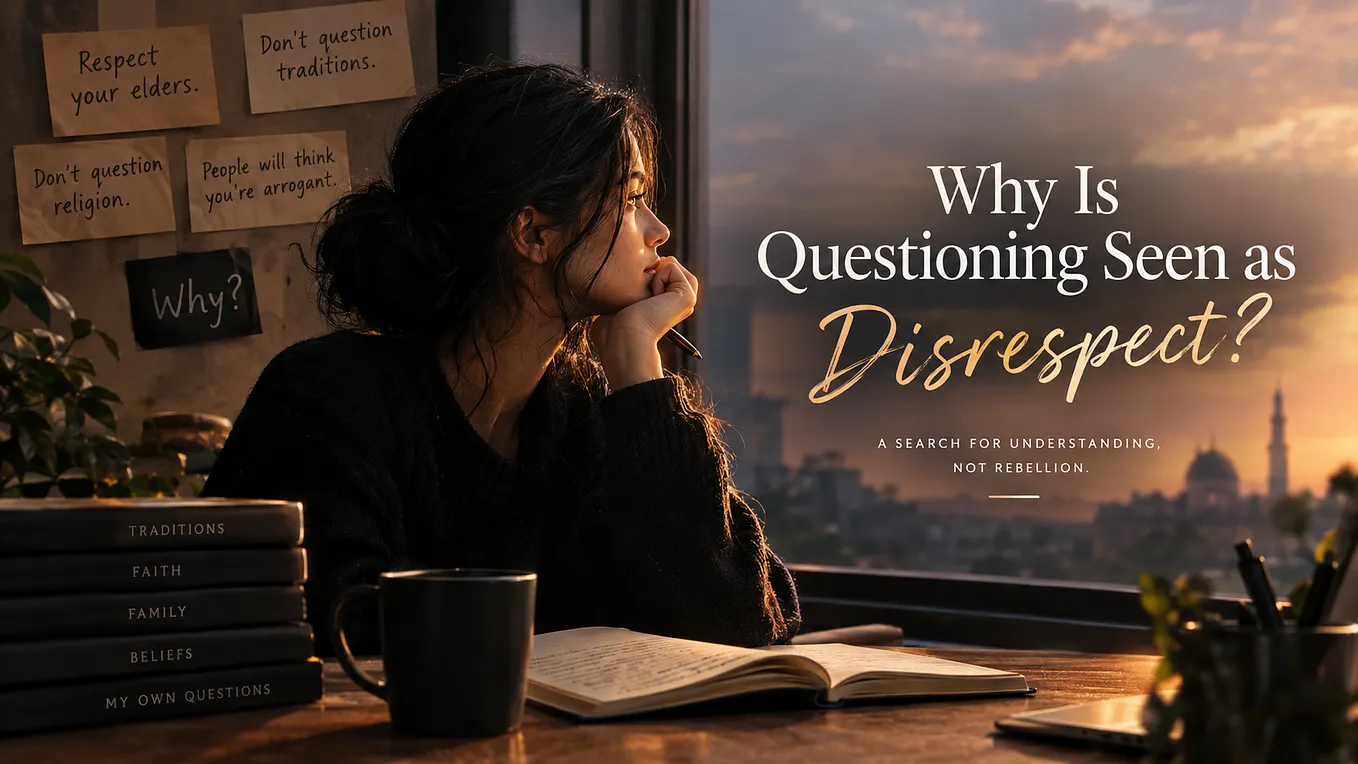
Please teach your children to be curious.
Teach them to ask questions.
Because asking questions doesn’t mean saying no.
It means being willing to examine what you have been taught.
If a tradition has been passed from one generation to another, ask:
Where did this tradition come from?
Why do we follow it?
Does it hurt anyone?
Is it fair?
Not every tradition is bad. I don’t believe that.
But if something makes people suffer or treats someone unfairly, shouldn’t we at least be allowed to question it?
Sometimes a belief is passed from family to family for so long that people stop asking where it came from.
I don’t want children to blindly reject everything.
I want them to think before they accept anything.
Put yourself in the place of someone experiencing discrimination.
What would you feel?
Would your caste make that pain disappear?
Would your birth make you more human than someone else?
I don’t think so.
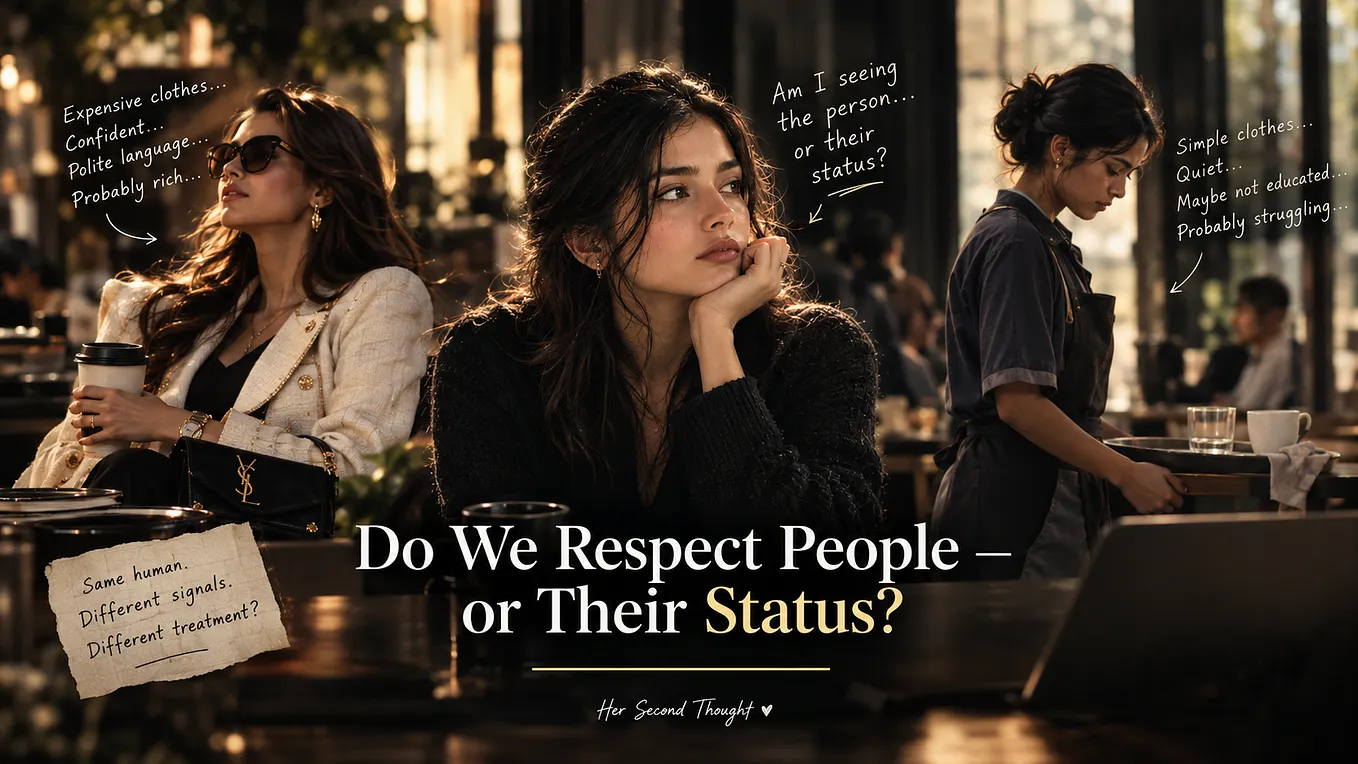
Maybe the question we should ask first is not
“What caste are you?”
But:
“What kind of person are you?”
Sources
[1] Bundelkhand Regional Overview — Wikipedia.
[2] Rahul Gandhi’s video/interviews with women from Bundelkhand — YouTube.
[3] Reporting on caste discrimination and social exclusion in Bundelkhand — The Wire.
[4] Documentation and reporting on caste-based discrimination, including discrimination involving access to water and untouchability practices—ActionAid India’s Untouchability in Rural India and BBC News.
[5] The Mahabharata. Translated by Kisari Mohan Ganguli, Gita Press Edition, Book 3 (Vana Parva), Chapter 180, Verses 25–26.
Note: While traditional Indian prints like the Gita Press catalogue this dialogue in Chapter 180 (Verses 25–26), the scholarly BORI critical edition condenses this text into Chapter 177, Verse 20.