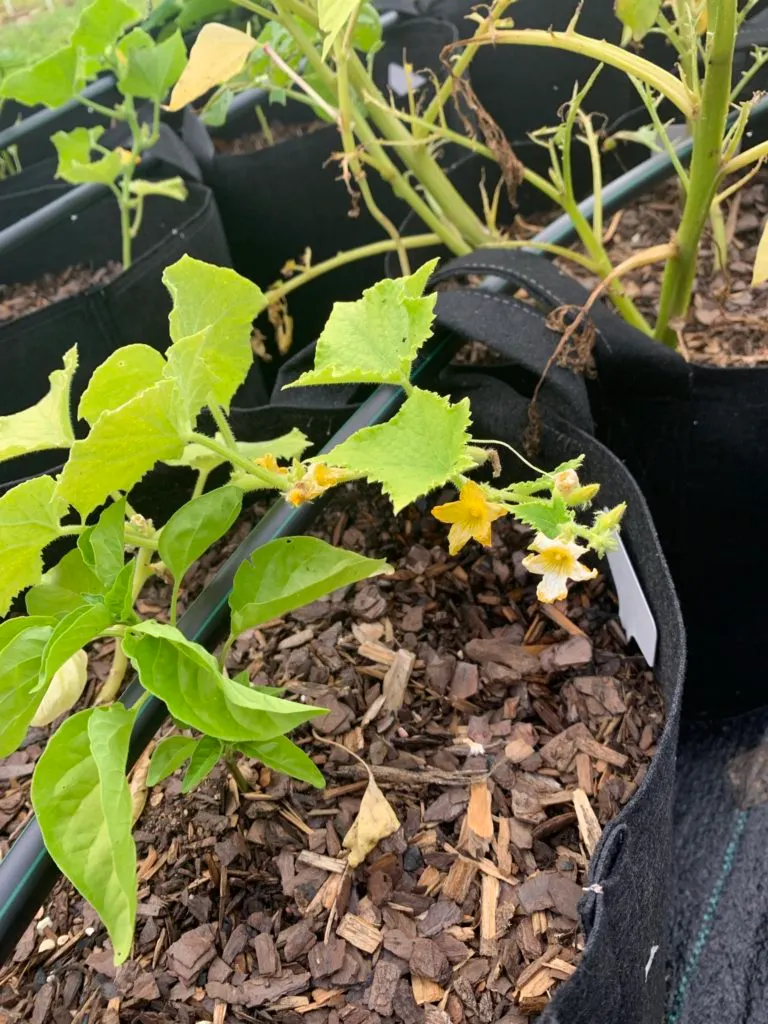
Mediterranean Grow Bag

Designing and creating a Mediterranean garden in a grow bag.
Types of Mediterranean diets
The Mediterranean diet is based on the cuisines of the countries that border the Mediterranean Sea; Spain, Israel, Syria, Greece, North Africa and Italy.

There are several versions of the Mediterranean diet.
There is the Italian Mediterranean diet which embraces pasta as the carbohydrate source.
The Pesco Mediterranean diet which limits the amount of red meat, dairy products and eggs. It emphasizes fish and seafood as the main source of protein.
The Nordic Mediterranean diet emphasizes fresh, locally sourced meat and vegetables as well as the healthy fats in salmon and avocados.
There are also different variations of eating that were generated from the Mediterranean diet. The Therapeutic Lifestyle Changes (TLC) diet for saturated fats and cholesterol, the Dietary Approaches to Stop Hypertension (DASH) diet for hypertension and the Indo-Mediterranean diet which has no animal foods…except for fish.
Many think the Indo-Mediterranean diet is far superior to the “plain” Mediterranean diet, specifically in relation to cardiovascular disease. The DASH diet is recommended routinely by physicians and nutritionists to those with hypertension and diabetes. The TLC diet is also recommended by health care providers as a way to make heart-healthy choices.
While The Mediterranean diet is based on foods eaten in countries that border the Mediterranean Sea, many of those foods are eaten all over the world as well.
Many studies have documented the health benefits of the Mediterranean diet. Harvard School of Public Health reported that “Research has consistently shown that the Mediterranean diet is effective in reducing the risk of cardiovascular diseases and overall mortality.”
The Mayo Clinic also touts the benefits of the Mediterranean diet. “…numerous studies have confirmed that the Mediterranean diet helps prevent heart disease and stroke.”
The studies show that the Mediterranean diet has cardiovascular benefits, but are there more benefits? The studies continue…
Foods for a Mediterranean diet
What foods are the best foods to eat on the Mediterranean diet?
Extra Virgin Olive oil is the main source of fat. That with plant-based foods, such as whole grains, vegetables, legumes, fruits, nuts, seeds, herbs and spices, are the foundation of the diet.
You can add fish, seafood, dairy and poultry as well but in moderation. Wine is fine on this plan…not to excess. Red meat and sweets are eaten only occasionally.
Fruits include berries such as strawberries, blueberries and raspberries. It also includes apples, apricots, peaches and kiwis.
Vegetables include zucchini, eggplant, spinach, peppers, broccoli and cauliflower. It can also include sprouts and microgreens. You can use fresh or frozen vegetables.
Whole grains are foods like whole wheat bread and pasta, pita bread, brown rice and even pizza…not like we Americans do it…a simple pizza with a whole grain crust and fresh ingredients.
No butter on the bread…dip it in olive oil and herbs. Make toast and brush it with olive oil, tasty!
Extra virgin olive oil and some wine with dinner. Finally, a diet that includes wine!
Don’t forget nuts like walnuts, almonds and pistachios. I live in the south…we love a pecan down here…but I don’t see them on the list! Perhaps that will be a treat?
Salmon, tuna, mackerel and sardines are good sources of omega-3 fatty acids.
Is there a link between nutrition and inflammatory diseases?
Diet has been associated with decreased and or increased concentrations of markers of inflammation according to the National Center of Biotechnology Information at the National Library of Medicine.
Inflammation in the body works to heal the body when there is an injury such as an infectious disease; however, chronic inflammation does not know when to quit. It gets confused when there is constant stimulation from inflammatory causing substances.
According to the European Heart Journal a high consumption of low nutrient high fat food may cause increased inflammation as a result of a reaction from the immune system.
Since we have gone over all the reasons for a Mediterranean garden…let’s get one going.
How to plant a Mediterranean diet garden in grow bags.
What plants can be grown in a Mediterranean garden?
You don’t have room for a nut tree, or don’t have a stream full of salmon!? Me either.
But, we can grow some fruits, berries and vegetables. Maybe we can save enough to get some wild salmon to go with those vegetables! And some good wine…don’t forget the wine.
Vegetables common to the traditional Mediterranean Diet include: artichokes, arugula, beets, broccoli, Brussels sprouts, cabbage, carrots, celery, celeriac, chicory, collard greens, cucumbers, dandelion greens, eggplant, fennel, kale, leeks, lemons, lettuce, mache, mushrooms, mustard greens, nettles, okra, onions (red, sweet, white), peas, peppers, potatoes, pumpkin, purslane, radishes, rutabaga, scallions, shallots, spinach, sweet potatoes, turnips, zucchini.
Since it is summer, let’s concentrate on summer crops.
What I have are 5 gallon, 7 gallon and 10 gallon grow bags for my garden. But, you may have different sizes in your garden.
You can grow arugula, beets, carrots, celery, celeriac, collard greens, eggplant, fennel, kale, leeks, lettuce, mushrooms, mustard greens, onion, peas, peppers, potatoes, radishes, scallions, shallots, spinach, turnips and zucchini in a 5 gallon grow bag.
I would put cucumbers, okra, pumpkin, sweet potatoes, zucchini and kiwi in a 7 or 10 gallon bag.
You can grow blueberries, raspberries, dwarf peaches, apples and apricots in a 10 gallon bag.
Take a 10 gallon grow bag and plant a tomato, see some of the best ones for a grow bag here. Then plant some basil beside it…because it helps both the basil and the tomato.
Add some leeks, mustard greens, green onions, radishes and some marigolds.
Then, take a 7 gallon grow bag and put it next to a trellis. Plant a bell pepper, see some good ones here. Add some shallots, turnips and a zucchini in the back and grow it up the trellis.
Take another 7 gallon grow bag, place it beside a sturdy trellis and plant an eggplant, here are some varieties to try. Add some mustard greens, leeks, arugula and a turnip or two on the side. Add a cucumber plant at the back and grow it up the trellis.
Take a 10 gallon grow bag and plant a couple of blueberry bushes in it. Plant some nasturtiums under them as well as marigolds.
Now, take a 10 gallon grow bag and plant a dwarf peach or apple or apricot tree. Again, add some pollinator flowers, perhaps some edible flowers such as lavender.
If you saw my post about the lemon tree here, you may already have a lemon tree going in your garden. If not a lemon tree, perhaps a lime tree. You can order one online or find one at a local nursery in most areas.

How many plants are needed in a Mediterranean grow bag? OR How much food do you need for the benefits of the Mediterranean diet to work?
Initially, the amount of food necessary to see benefits from eating as the Mediterranean’s do depends on your current situation.
Get Peggy Evans Esq.’s stories in your inbox
Join Medium for free to get updates from this writer.
If you eat nothing but fast food and cola drinks, changing any meal to a Mediterranean meal can only benefit you.
However, you can transition from that way of eating on a gradual basis…this is not a diet, you know what happens when you go on a diet…
Just add a cucumber salad with an olive oil and mustard dressing to your dinner meal on Thursday night. Then Friday, have a pasta salad with some rotisserie chicken, olives, feta, cherry tomatoes, mushrooms and green onions for lunch. Add the cucumber salad to the top of that or on the side if your still hungry.
Congratulations! You just ate an entire Mediterranean meal for lunch!
Except for the chicken, pasta and the oil, you can grow everything you just ate.
I know, you can grow wheat in a grow bag; however, it would take so many plants…it would likely take up most of your bags which prevents you from growing the other things.
YES, you can grow an olive tree in a grow bag!
Olive trees can grow 3–30 feet tall and need full sun. If your in a very cold climate, you can bring them inside during the winter…unless you are lucky enough to have a greenhouse! Lucky You!

You can find out how to grow and care for an olive tree at Nature and Garden, here.
Nature and Garden reminds us that “A pot will sustain growth up to three times wider than the pot itself.”
But, keep in mind, the size of the pot will also dictate to some extent how big a plant will grow. So, if you want a 10 foot olive tree that has a width of 10 feet…you will need a grow bag with at least 36 inches in width.
That equates to a 45 gallon grow bag, which is the size I planted my Pasta Grow Bag garden in here. It takes up a 3-foot by 3-foot space in the garden or patio.
Keep in mind that you can grow seasonal crops under the olive tree as well. Marigolds, Petunias, Borage and Nasturtiums attract pollinators and distract pests from your olive tree.
You can also put in garlic, onions, basil, lavender, rosemary, sage and thyme…all of which will just add to your Mediterranean garden.
One of the best things you can plant with your olive tree are bush beans. They will help get nitrogen to your olive trees…win win!
If you are looking for an olive tree to order online, here is an excellent site…they also have citrus trees.
If you are especially diligent, you may be able to make olive oil from your olives! I know! The Italians had to start somewhere!
If you can grow an olive tree in a grow bag, cucumbers, tomatoes and green onions will be a breeze!!
If you are hesitant, just take a 5 gallon grow bag and plant some edible flowers and green onions. Who can’t use some green onions and flowers to decorate the plate?
Make a plate of deviled eggs, lay some baby green onions amongst them and place an edible flower on top of each egg. Beautiful!
Top Anti-Inflammatory foods.
At the beginning of this article, we talked about food and cardiovascular health. Harvard and the Mayo Clinic thinks there is a link between what we eat and our cardiovascular health.
Additionally, they both stated that the Mediterranean diet can help increase cardiovascular health.
The National Institute on Aging (NIA) discusses the benefits of the Mediterranean diet for the prevention of Alzheimer’s.
They call it the MIND diet and state some elements help reduce blood pressure… Blood pressure is one of the initial signs of cardiovascular issues.
NIA shines a light on the link between inflammation, diabetes and heart disease and Alzheimer’s.
The MIND diet recommends olive oil as the fat source. Additionally, if you are going to have wine make it no more than 1 glass a day.
They further recommend 6 servings a day of leafy green vegetables, 1 serving a day of other vegetables, 3 servings a day of whole grains, 2 servings of berries a week, 3 servings of beans a week, 5 servings of nuts a week, 2 servings of poultry a week and 1 serving of fish a week.
Let’s Grow Something!
If we are going to grow some of our food for the Mediterranean diet, we can start somewhere easy.
Leafy greens; how much do we need to grow to get 6 servings of leafy greens a day?
First, we need to know some stuff;
What is a serving? According to the American Heart Association, a serving of leafy greens is 1 cup.
What is the yield of one plant? How many plants does it take to make a serving? How long does it take to grow that serving?
After much research, I created a cheat sheet for grow bag planting that answers all those questions. You can get a copy of that below.
How many servings can we grow in the space and time we have? Measure how much space you have, the growing time of your season and you can figure out how many servings you can grow in a year in the space and time you have.
For example, if you want to grow 6 servings of leafy greens, it can be so many types of greens but let’s concentrate on one…collards. I say collards because where I live, you can grow them nearly all year.
So, for collards, each plant will yield 5–6 cups/servings of packed leaves, based on my cheat sheet, it takes 40–50 days to grow them from starts or 65–85 days from seed, this is our growing cycle.
The Almanac gives us the information we need to figure out the amount we get from our harvest for eating.
We can grow 1 collard plant in a 12” grow bag based on the spacing they require, that plant will yield 1 serving per growing cycle, we can get 4 growing cycles a year…so we can get 20–24 cups of packed raw leaves of collards per 12" grow bag per year.
If we eat 1 serving of collards a day, we can grow enough collards for 1 person for ¼ to nearly ½ of the year from one 12” grow bag.
Plant one grow bag of collards, when that bolts, pull it up and plant another plant. I suggest growing your own starts since you may not be able to get them from the garden center when you need them.
If you are unsure how to start your own seeds, you can see how I do that here.
Once you get your garden started, it will be easy to keep it going. Just remember to add a slow release fertilizer at planting time.
Keep planting and re-planting your grow bags. If you have any issues, refer to my article here about what to do when you have troubles.
Once everything starts to bloom begin fertilizing with a foliage feeding fertilizer every two weeks.
Don’t forget to water!
Don’t forget to harvest!