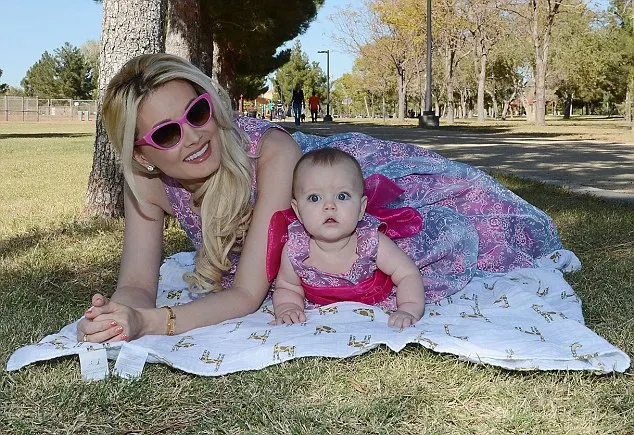
Teaching My Little “Arc-en-ciel” (Rainbow) French


If you’re a parent, you’ve experienced, or are about to experience, the remarkable process of your child learning how to speak. Babies’ brains are like sponges, and from birth, they are paying close attention to the tones, pronunciation, and sounds that we make when we speak to them, then filing this information away until they are ready to start verbalizing.
I recently watched a fascinating TED Talk by a woman named Patricia Kuhl, who holds a PhD in speech science and psychology and studies the process of language acquisition in babies. In her talk, Kuhl explains that unlike adults, who are “language-bound listeners” and therefore cannot differentiate between sounds in other languages, babies are masters at doing precisely this until they reach the age of about 10 months old. In fact, a child’s ability to pick up languages is strongest between birth and 7 years of age, which makes early childhood the optimal time to teach your child multiple languages if you want them to become fluent speakers.
When my daughter Rainbow was born, Pasquale and I decided that we wanted her to learn how to speak French in tandem with English. I set about doing a ton of research on the benefits of teaching your child 2 languages at the same time. Learning that bilingual children have been shown to have better problem-solving skills, better social and communication skills, better memories, and a more holistic understanding and appreciation of other cultures only increased my resolve to raise Rainbow bilingually.
I’ll admit it — the prospect of teaching her two languages simultaneously was daunting since I am not fluent myself, but now that we’ve figured out our strategy for making this dream a reality, I’ve put together a list of tips for other parents who are about to embark on this exciting journey but aren’t quite sure where to start.
Movies, Games, TV Shows, Oh My!
In this age of technology, there are a number of great tools available online to help you teach your child a second language. You can download language games for her to play on the computer or a tablet, find and purchase movies and TV shows for children in other languages that she can watch during TV time, and download music in the new language that you can listen (and dance) to together during bonding time.
Get Holly Madison’s stories in your inbox
Join Medium for free to get updates from this writer.
I am a strong advocate of using the process of teaching a second language to also teach your child that learning is fun. Creating a positive association with education early on will make your child more intellectually curious and excited about expanding her horizons for the rest of her life.
Use Bedtime Stories To Your Advantage
In an earlier post, I wrote about the importance of reading to your child at bedtime, which happens to be the optimal time for knowledge absorption. Reading together will not only make your child an enthusiastic book lover — it will also provide you quality time during which you can start to familiarize your child with the way words are spelled in her second language, which will assist her in becoming fully fluent eventually.
Don’t Bite Your Tongue
In the Patricia Kuhl TED Talk I linked to above, she discusses a fascinating experiment that demonstrated the importance of talking to your baby in their second language in addition to playing them movies and TV shows. When babies participated in a controlled study to find out what role their language instructor played in their lingual development, it was proven that in order for the babies to really master the development of sound, they had to engage with a real person in a face-to-face interaction. Audio alone and video alone were both inadequate — learning only took place when a teacher who was physically in the room with the babies spoke to them directly.
This shows that since language is fundamentally about communication, a baby’s social brain must be engaged for her to actually soak up information. If you are bilingual, then speak to your child in your native tongue. This will improve her comprehension of the pronunciation, grammar and slang that is used in real conversation outside of the classroom. If you don’t speak the language that your baby is learning, think about hiring a babysitter or au pair who is a native speaker to only speak to the child in her second language. This way, your child will become facile at switching back and forth between languages, and she will master the concept of “object permanence,” or understanding that an object can exist even if you can’t see it, more quickly than her monolingual peers.
That said, if hiring a caretaker is not an option, look into tapping into a network of parents and children who are going through the experience of learning the same language and start making friends, both for you and for your child. Finally, if you are seeking total immersion, consider enrolling your child in a school that is conducted exclusively in their second language.
Time to Redecorate
Children are very observant and easily-influenced, which is why a great way of introducing their second language to their environment is by purchasing posters, placemats, and other decorations in that language to put up in your house. Looking at a different alphabet or simple drawings that are labeled in another language on a daily basis will help cement those fundamental pieces of knowledge in your child’s brain and cause her to draw positive associations between the happiness of being at home with her family and learning her second language.
There are many more tips for raising a bilingual child, but following these should help start you off on the right foot. If you go into the process with a strategy in mind and endless support for your child, then before you know it, she’ll be teaching you how to speak her second language, instead of the other way around. Bonne chance!