Why Does Kolkata Biryani Have a Potato?
The first time someone from outside Bengal saw a potato inside Kolkata biryani, they looked at me and said:
“Is this a mistake?”
I smiled.
If you grew up in Kolkata, the idea of biryani without a golden, soft, masala-soaked aloo feels incomplete. It’s like mishti doi without sweetness. Something is just… missing.
But have you ever paused mid-bite and wondered —
why does Kolkata biryani have a potato in the first place?
It turns out, the answer is not random. It is history. It is exile. It is adaptation. And a little bit of Bengali genius.

A Nawab, An Exile, and a New Beginning
The story begins in 1856.
Nawab Wajid Ali Shah, the last ruler of Awadh (Lucknow), was dethroned by the British and sent away to Calcutta — what we now call Kolkata. He settled in an area called Metiabruz.
The Nawab loved culture. Music, poetry, dance — and especially food. When he came to Kolkata, he brought his royal chefs with him. These khansamas carried the recipe of Awadhi biryani, rich with meat, aromatic spices, and royal indulgence.
But life in exile was different. The treasury was not the same. The resources were limited. The environment had changed. And somewhere in that transition, the potato entered the biryani.
Was It Just a Cost-Cutting Trick?
One popular explanation says that meat was expensive, so the cooks added potatoes to stretch the quantity.
Sounds logical.
But here’s the twist — potatoes were not exactly a cheap, everyday vegetable back then. They were introduced by the Portuguese and were still becoming popular in Indian kitchens.
So maybe it wasn’t just about money. Maybe it was experimentation.
Maybe a chef noticed that when a potato cooks in dum with meat fat, saffron milk, and whole spices, it absorbs flavour beautifully. The inside becomes soft and slightly creamy. The outside carries the aroma of the biryani.
Maybe someone tasted it and thought, “This works.” And once something works in a royal kitchen, it stays.
Kolkata Made It Its Own
Awadhi biryani is richer and slightly heavier in spices.
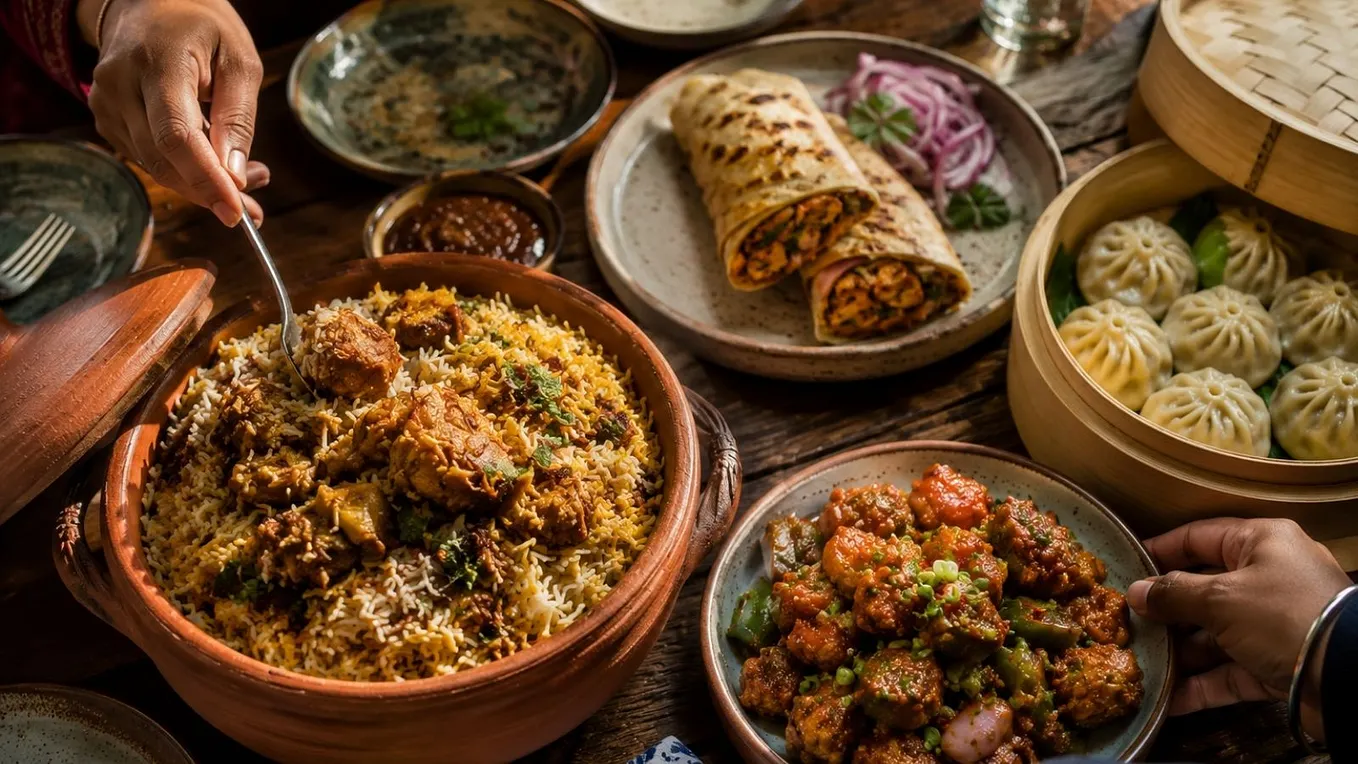
Kolkata biryani, on the other hand, is lighter, more fragrant, and subtly sweet in aroma. The spices are balanced. The rice is delicate. And then there is that one golden potato.
Get shahrukh khan’s stories in your inbox
Join Medium for free to get updates from this writer.
Kolkata did not just copy Lucknow’s biryani. It softened it. It adapted it. It gave it personality. That’s what cities do. They absorb influences and reshape them.
In Bengal, we already had a quiet love affair with aloo. From aloo posto to aloo bhaja, potato is almost an emotional ingredient here. So when it entered biryani, it didn’t feel strange. It felt familiar.

The Silent Hero on the Plate
If you observe carefully, many people eat the potato first.
Not the meat.
Not the rice.
The potato.
There is something deeply satisfying about breaking it with a spoon and watching the steam escape. It holds the story of the entire handi inside it.
And if two siblings are sharing one plate, there is always that unspoken rule — whoever opens the lid first claims the aloo.
That’s not written in any history book. But it is cultural truth.
More Than Just an Ingredient
So why does Kolkata biryani have a potato?
Because a Nawab refused to give up his food culture.
Because chefs adapted to new circumstances.
Because a city embraced a royal dish and made it local.
Because sometimes tradition begins with adjustment.
The potato in Kolkata biryani is not an accident. It is a reminder that food evolves when people move, migrate, and settle. Recipes travel. Ingredients change. Identity forms quietly over time.
And today, if you serve biryani in Kolkata without potato, people will look at you with suspicion.

A Small Question That Carries Big History
It is fascinating how one simple question — “Why does Kolkata biryani have a potato?” — carries within it a story of colonial history, cultural blending, and culinary creativity.
Food is never just food. It is memory. It is adaptation. It is identity served on a plate. Because sometimes, even a humble aloo deserves its own story.