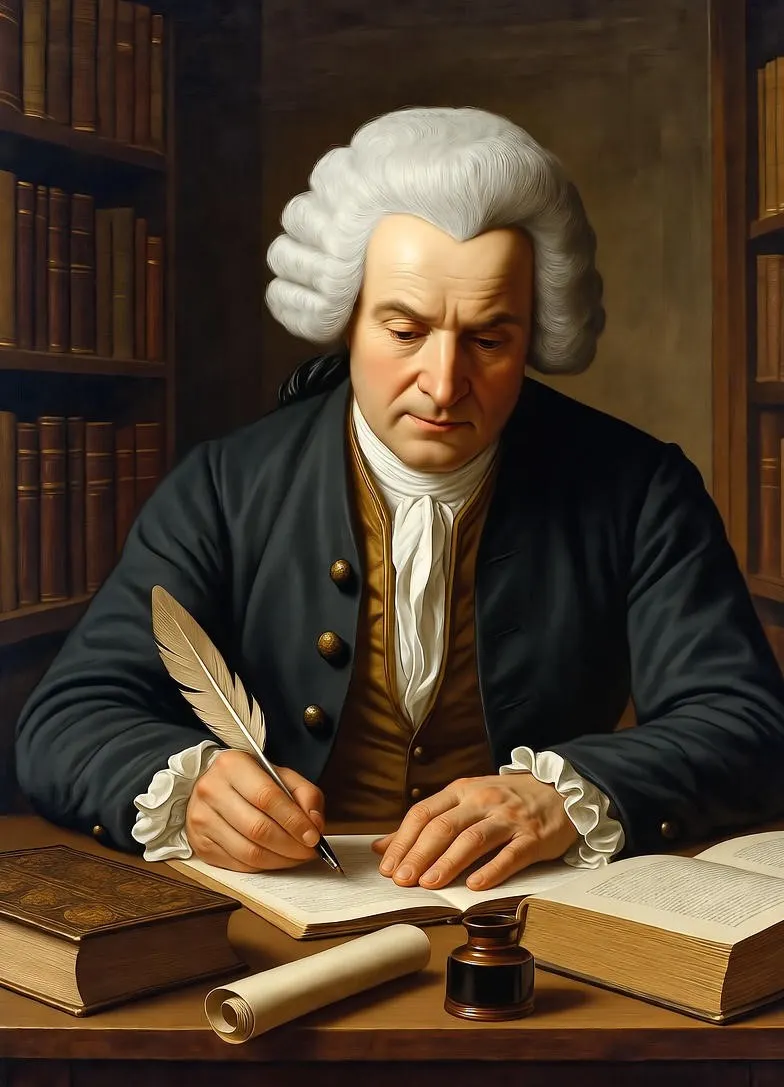
Dickens and Mesmerism: The Victorian Trance Epidemic


Picture this: Charles Dickens, at the height of his fame, waving his hands over his wife’s head in a Pittsburgh hotel room until she dissolves into hysterics and falls asleep. Or Dickens, travelling through Italy, spending hours closeted with another man’s wife, trying to banish the phantom that haunts her dreams. Or Dickens writing urgent letters about his “perfect conviction” that he could “magnetize a Frying-Pan” if he put his mind to it.
This isn’t the Dickens we know from adaptations of A Christmas Carol or those worthy BBC productions. This is Dickens the mesmerist, a man who genuinely believed he possessed healing powers and spent years practising a controversial form of treatment that sat somewhere between medicine, magic, and parlour trick. He kept detailed notes of his sessions. His wife grew increasingly uncomfortable with it. And by all accounts, he was rather good at it. To understand how one of Victorian England’s most celebrated novelists ended up doing this requires understanding both the man himself — ambitious, curious, convinced of his own abilities — and the peculiar historical moment when mesmerism exploded across Britain. Because whilst Dickens’s involvement might seem eccentric today, in 1840s Britain he wasn’t alone. Mesmerism captivated everyone from respectable physicians to spiritualist mediums, from the urban working class to aristocratic salons. For about two decades, you couldn’t escape it. It was the equivalent of, I don’t know, cryptocurrency or mindfulness meditation today — simultaneously everywhere, deeply divisive, and attracting both true believers and vociferous sceptics.
The German Doctor and His Magnetic Fluid
The story begins in 1770s Vienna with Franz Anton Mesmer, a German physician with an audacious theory and, one suspects, a flair for the dramatic. Mesmer proposed that everything in the universe — stars, trees, rocks, you, me, your cat — was permeated by an invisible magnetic fluid he called “animal magnetism.” According to his thinking, health depended on the unobstructed flow of this fluid through the body. Blockages caused illness: headaches, vomiting, paralysis, hysteria, you name it.
The solution? A trained practitioner could manipulate this magnetic fluid through various techniques, restoring proper flow and thus health. Simple, really. Except for the part where the magnetic fluid didn’t actually exist.
But before we get there, let’s appreciate Mesmer’s showmanship. His methods were wonderfully theatrical. He’d have patients sit around a large tub filled with magnetised water whilst holding iron rods. Sometimes he arranged them in circles, having them hold hands to create a chain through which the magnetic fluid could supposedly flow. He would pass magnets over their bodies, or simply wave his hands in elaborate gestures, staring intensely at his subjects. The goal was to induce a “crisis” — often a convulsive fit — after which the patient would supposedly be cured. Paris society ate it up. Mesmer’s demonstrations attracted enormous crowds. But the French establishment grew nervous about his growing influence, and you know how that story goes. In 1784, King Louis XVI appointed two royal commissions to investigate. The panels included some formidable minds — Benjamin Franklin was on one of them, which tells you this was serious business. Their conclusion was diplomatically brutal: yes, patients often experienced genuine relief from their symptoms, but no, there was absolutely no evidence for Mesmer’s magnetic fluid. The therapeutic effects, they suggested, came either from the patients’ imaginations or from outright fraud.
Mesmer’s reputation never recovered. He died in obscurity in 1815. But here’s the thing about ideas: they don’t always die with their creators, especially when they tap into something real, even if they explain it wrongly.
The Practice Evolves and Crosses the Channel
One of Mesmer’s students, the Marquis de Puységur, modified the theory in a crucial way. He observed that patients didn’t need to experience violent convulsions to benefit. Instead, they could enter a peaceful, trance-like state he called “magnetic sleep” or “artificial somnambulism.” In this state, patients became highly suggestible, responsive to the mesmerist’s instructions, sometimes even exhibiting what appeared to be clairvoyant abilities. This gentler approach, which we might recognise as closer to modern hypnosis, became known as mesmerism and it spread gradually across Europe despite scientific scepticism. By the 1820s, mesmerism had reached Britain, where it met with predictable suspicion. The British medical establishment dismissed it as unscientific continental nonsense, the sort of theatrical effeminacy one might expect from the French but certainly not something for respectable English physicians. During the Revolutionary Wars there was even paranoia about “magnetic spies” using mesmerism to infiltrate English minds. But in the 1830s something changed. Several popular books on mesmerism sparked what contemporaries called “mesmeric mania.” Suddenly everyone was talking about it, demonstrating it, arguing about it. The practice spread from fashionable salons to public demonstrations and then into medical practice, despite continued controversy. This is the world Charles Dickens encountered in January 1838 when he attended a demonstration at University College Hospital that would change his life.
The Surgeon Who Made It Respectable
The man conducting that demonstration was Dr John Elliotson, and understanding him is crucial to understanding how Dickens became involved. Elliotson was no charlatan. He was one of Britain’s most distinguished physicians, a professor at University College Hospital, a founder of that institution, and the first doctor in England to use and promote the stethoscope. He was respected, innovative, committed to improving medicine. He was also convinced that mesmerism worked. Elliotson had begun using mesmeric trances to treat patients in 1837 and soon started conducting public demonstrations at the hospital. These weren’t small affairs. Large audiences gathered to watch him mesmerise patients, particularly two sisters named Elizabeth and Jane O’Key, who demonstrated what seemed like remarkable powers whilst in trance. The demonstrations were reported in detail in The Lancet, Britain’s leading medical journal. At first intrigued, the medical journal eventually grew sceptical. The editor, Thomas Wakley, arranged to test the O’Key sisters under controlled conditions. The results suggested deception. The scandal was enormous. Elliotson was forced to resign from University College Hospital in 1839. For a man of his stature, it was a devastating fall from grace. The mainstream medical profession closed ranks against him. He became a pariah, his reputation forever tainted by his association with mesmerism. But Elliotson never recanted. In 1843 he founded The Zoist, a journal dedicated to mesmerism and phrenology, and continued to practise and advocate for mesmeric treatment until his death. And through all of this, Charles Dickens stood by him.
Dickens the Believer
When Dickens attended Elliotson’s demonstrations in January 1838, he came expecting to laugh at the whole thing. He’d previously ridiculed mesmerism in his writing. But what he witnessed changed his mind completely. Years later, Dickens would write to an American doctor that “with regard to my opinion on the subject of Mesmerism, I am a believer. I became so against all my preconceived opinions and impressions.”

Let’s sit with that for a moment. This wasn’t casual interest or boredom at a dinner party. Dickens, one of the sharpest, most sceptical minds in Victorian England, saw something that convinced him. He threw himself into learning the technique. He studied under Elliotson, absorbing the theory and practice. And he discovered something that must have delighted him enormously: he had a gift for it.
His confidence grew to the point where he joked to friends that he had “the perfect conviction that I could magnetize a Frying-Pan.” I love this line. It’s so perfectly Dickens — the blend of self-mockery and genuine conviction, the hyperbole that isn’t quite hyperbole. It’s worth pausing here to consider what this tells us about Dickens. This was a man at the height of his fame and powers, a novelist whose work was shaping public opinion on social issues, someone whose reputation mattered enormously to his career and livelihood. Yet he publicly aligned himself with a practice that had cost his friend and physician his professional standing. Why? Because Dickens genuinely believed it worked. He wasn’t performing for entertainment or pursuing some eccentric hobby. He thought he possessed the ability to heal people, and he took that responsibility seriously.
The First Experiments
Dickens’s first mesmeric subject was, naturally, his wife Catherine. Because nothing says “romantic evening in Pittsburgh” quite like experimental psychotherapy, apparently. In March 1842, whilst travelling during an American tour, he decided to put Elliotson’s teachings to the test. He had Catherine sit quietly whilst he waved his hands over her head in the prescribed manner.
The result was dramatic. Catherine became hysterical — properly hysterical, not the Victorian “vapours” sort of thing — and then fell into what Dickens called “the magnetic sleep.” For Dickens, this was vindication. He possessed the power. He could do this thing.
His sister-in-law Georgina Hogarth responded similarly when he mesmerised her, slipping almost immediately into a hysterical episode. Not everyone was so susceptible, however. When Dickens attempted to mesmerise his dour Scottish friend, the actor Charles Macready, nothing happened. Macready simply wasn’t having it. One imagines him sitting there, arms folded, looking distinctly unimpressed whilst Dickens waved his hands about. But these failures didn’t discourage Dickens. If anything, they reinforced the theory. Elliotson and other mesmerists had always maintained that some people were more “sensitive” than others, more receptive to the magnetic influence. The variable responses seemed to confirm rather than contradict the practice. By the time Dickens returned to England later in 1842, he was mesmerising family and friends regularly. Sometimes for fun, sometimes to treat minor ailments. But his most intensive mesmeric work was yet to come.
The Case of Augusta de la Rue
In 1844 Dickens travelled to Italy with his family, settling in Genoa for several months. There he met Emile de la Rue, a Swiss banker, and his English-born wife Augusta. On the surface, Augusta de la Rue appeared to be the perfect wife of a successful businessman, presiding over fashionable gatherings at the Palazzo Brignole Rosso. But beneath the facade, she was suffering terribly. Augusta experienced severe insomnia, debilitating headaches, facial tics and convulsions. Most distressing of all, she was haunted by what she called “the phantom,” a supernatural presence that appeared to her both in her dreams and whilst awake, filling her with dread.
Modern readers might recognise these symptoms as severe anxiety, possibly with elements of what we’d now call panic disorder or obsessive-compulsive disorder. Victorian medicine had no such diagnostic categories. What it did have was mesmerism. Dickens, hearing of Augusta’s suffering, offered his services. Their first session on 23 December 1844 was not encouraging. Instead of calming Augusta, Dickens’s mesmeric passes triggered a massive anxiety attack.
A less committed practitioner might have stopped there. Dickens interpreted her violent reaction as proof that she was an extraordinarily sensitive subject. This was going to work. And it did seem to work, at least initially. Over the following months, Dickens mesmerised Augusta regularly, sometimes daily. Her physical symptoms improved noticeably. She was sleeping through the night. The facial tics diminished. She appeared more relaxed. But as the sessions continued, they evolved into something more complex.
Dickens as Proto-Psychotherapist
What makes Dickens’s treatment of Augusta de la Rue fascinating from a modern perspective is how closely it resembles psychotherapy. As her physical symptoms eased, Dickens became increasingly interested in their psychological roots. The sessions began to focus on Augusta’s dreams, hallucinations, and fears. She spoke extensively about the phantom that tormented her. Dickens kept detailed notes of their conversations during her trances, attempting to understand the symbolic meaning of her visions and to help her confront them.
In letters to Augusta’s husband Emile, Dickens described his struggle with “this Phantom” for control of Augusta’s “mind and body.” He wrote that the figure was “so closely connected with the secret distresses of her very soul, and the impression made upon it is so entwined with her confidence and trust in me, and her knowledge of the power of the Magnetism, that it must not make head again.” This is extraordinary when you consider the timing. Dickens was doing this work forty years before Sigmund Freud began using hypnosis as a therapeutic tool and fifty years before Freud developed psychoanalysis. Here was a novelist, not a physician, using mesmeric trance to access what we’d now call the unconscious mind, exploring symbolic content, addressing trauma and anxiety through the therapeutic relationship.
Of course, we can’t know for certain whether mesmerism actually helped Augusta de la Rue. It’s entirely possible that what she needed was simply someone to listen to her, to take her suffering seriously, to provide a framework for understanding and addressing her fears. The mesmeric trance may have simply created a space where that could happen. Or perhaps the relationship itself, the attention and care from someone as charismatic as Dickens, was the true therapeutic agent. What we do know is that Augusta reported significant improvement whilst under Dickens’s care. Whether that improvement came from animal magnetism, suggestion, the therapeutic relationship, or simply time and attention remains an open question.
The Marriage That Suffered
There was one person who definitely didn’t benefit from Dickens’s mesmeric obsession: his wife Catherine. Catherine Dickens had never been enthusiastic about being her husband’s experimental subject. I mean, would you be? But she could tolerate it when the mesmerism was confined to their home and involved family members. What she absolutely could not tolerate was watching her husband spend hours closeted with another woman, mesmerising her, writing her letters, corresponding with her husband about her condition, becoming emotionally invested in her recovery.
Put yourself in Catherine’s position for a moment. Your husband, a famous novelist with a known eye for attractive women, is spending more time with another woman than with you. Yes, he claims it’s therapeutic. Yes, the woman’s husband is present and supportive. But still. You’re watching him become obsessed with another woman’s dreams, her fears, her innermost thoughts. You’re reading his letters where he describes his intimate knowledge of this woman’s soul.
The situation became increasingly tense as Dickens’s focus on Augusta intensified. When the Dickens family left Genoa to tour Italy in spring 1845, Catherine probably thought she’d finally have her husband’s attention back. Instead, letters from the de la Rues followed them everywhere, updating Dickens on Augusta’s condition. Worse still, Dickens insisted on continuing the treatments remotely. He and Augusta attempted to maintain their mesmeric connection by both concentrating at the same time each day — 11 a.m. — trying to connect telepathically across the miles. This was too much for Catherine. I don’t blame her. The situation nearly caused a serious rupture in the Dickens marriage. When they returned to Genoa in May 1845, Augusta hoped for one final session with Dickens. A convenient stomach bug prevented their meeting. Whether the illness was genuine or diplomatic — a sudden attack of “I’d quite like to stay married, actually” — is anyone’s guess, but it effectively ended the intensive phase of Dickens’s mesmeric practice. The de la Rues and Dickens remained friends, but the therapeutic relationship was over.
Mesmerism in Dickens’s Fiction
Dickens’s fascination with mesmerism wasn’t confined to his private practice. It permeated his fiction in subtle and not-so-subtle ways. In Oliver Twist, young Oliver falls into trance-like states. In Nicholas Nickleby, written whilst Dickens was first learning about mesmerism, the hero reads a book as if “in a magnetic slumber.” Dickens’s evil characters often possess mesmeric powers over their victims. The repulsive Quilp in The Old Curiosity Shop seems to exert an almost hypnotic influence. Carker in Dombey and Son has a similar effect. These villains can dominate others through force of personality, through fixed stares, through an inexplicable power that contemporaries would have recognised as mesmeric.
Dickens even brought mesmerism to the stage. He revived the 18th-century play Animal Magnetism and co-wrote The Frozen Deep with Wilkie Collins, both of which featured mesmeric elements. But perhaps more interesting than these explicit references is how mesmerism shaped Dickens’s understanding of consciousness, memory, and the mind. His ghosts, particularly in A Christmas Carol, function rather like mesmeric visions, accessing repressed memories and buried emotional truths. The hauntings in his stories often feel psychological rather than supernatural, manifestations of guilt, trauma, or unresolved conflict rather than actual spirits. This ambiguity reflects Dickens’s mesmeric philosophy. He wasn’t certain whether ghosts were real, but he was certain that the mind had depths and powers that conventional understanding couldn’t explain. Mesmerism gave him a framework for exploring those depths in his fiction.
From Mesmerism to Hypnotism: Finally, Some Actual Science
Whilst Dickens was mesmerising Augusta de la Rue in Genoa, something rather more scientifically significant was happening back in Britain. In 1841, a Scottish surgeon named James Braid had attended a demonstration by a travelling mesmerist named Charles Lafontaine.
Braid, like Dickens, came as a sceptic. Unlike Dickens, he stayed one — at least regarding the theory of animal magnetism. What Braid observed was that mesmerised subjects displayed genuine physiological changes: their pupils dilated, their muscles relaxed, they entered an altered state of consciousness. All real, all measurable. But Braid concluded that these effects had absolutely nothing to do with magnetic fluid flowing through the cosmos.
Instead, he proposed something far simpler: prolonged concentration on a fixed object, like staring at a candle flame or a small bright object, caused fatigue in certain parts of the brain, inducing what he called “nervous sleep.” No mystical fluid required. No special powers. Just attention, expectation, and normal brain function doing something interesting. In 1843, Braid published Neurypnology, or The Rationale of Nervous Sleep, introducing the term that would stick: hypnotism, from the Greek word for sleep. He later realised — whoops — that hypnosis had little to do with actual sleep and tried to rename it “monoideism,” meaning single-minded concentration. But by then “hypnotism” had entered the language and there was no putting that genie back in the bottle.
Braid’s work was revolutionary because it took mesmerism out of the realm of mysterious fluids and occult powers and dumped it firmly into psychology and physiology. He demonstrated that anyone could produce these effects through proper technique. No special magnetic gift required. No cosmic fluid. Just method and patience. The phenomenon could be studied scientifically.
Get Ian Hawksford’s stories in your inbox
Join Medium for free to get updates from this writer.
This is why Braid is often called the father of modern hypnosis. He severed the practice from its mystical origins and made it respectable for medical investigation. The irony, of course, is that Braid essentially proved that Elliotson’s critics were right about the mechanism, even whilst confirming that the therapeutic effects were absolutely real. Sometimes being wrong about why something works doesn’t mean you’re wrong that it works.
Today’s Supernatural, Tomorrow’s Science
Here’s where my blog’s tagline becomes relevant: today’s supernatural is tomorrow’s science. What Victorian society dismissed as either miraculous healing or fraudulent quackery, we now understand as a genuine psychological phenomenon with measurable, replicable effects.
Modern hypnotherapy is used to treat anxiety, chronic pain, addiction, phobias, and post-traumatic stress. Nobody claims it works through magnetic fluid any more, obviously. We understand it works through focused attention, heightened suggestibility, and the frankly remarkable capacity of the mind to influence physical states and perceptions. Brain imaging studies show that hypnosis produces distinct patterns of neural activity, particularly in regions involved in attention and self-awareness. The physiological changes Braid observed — altered pupil dilation, muscle relaxation, changes in breathing — are all real and measurable. Hypnosis can demonstrably reduce pain perception, alter memory encoding, and influence autonomic processes like heart rate and blood pressure.
In other words, the Victorian mesmerists were observing genuine phenomena. They were producing real therapeutic effects. Their theory about how it worked was completely, utterly wrong, but the practice itself tapped into something authentic about human consciousness and its capacity for self-influence through focused attention and suggestion. This is precisely the pattern we see repeatedly in the history of science: people observe real phenomena, develop theoretical explanations based on the conceptual frameworks available to them (magnetic fluids, vital forces, luminiferous aether), the theories turn out to be spectacularly wrong, but the observations that sparked them were valid all along. We’re very good at noticing that something’s happening. We’re less good at explaining why until we’ve got the right conceptual tools.
What Dickens experienced when he mesmerised his subjects was real. Augusta de la Rue’s improvements were probably genuine. The trance states his wife and sister-in-law entered were authentic altered states of consciousness. He simply misunderstood the mechanism. He thought he was manipulating a cosmic fluid when he was actually inducing a natural psychological state through suggestion, expectation, and focused attention. He was doing something real; he just had the explanation backwards.
The Stubborn Question of Consciousness
But here’s where it gets more complicated, and where maintaining an open-minded scepticism becomes important. Whilst we’ve replaced animal magnetism with more sophisticated neuroscientific models, we still don’t fully understand consciousness or how suggestion can produce such powerful effects. How exactly does focused attention combined with verbal suggestions allow someone to tolerate surgery without anaesthesia, as some people can do under hypnosis? How does expectation literally change the neurological processing of pain signals? How does the therapeutic relationship itself become a mechanism of healing? These aren’t mystical questions. They’re scientific puzzles that remain partially unsolved. And some of the phenomena that Victorian mesmerists reported, like the supposed telepathic connection Dickens attempted with Augusta de la Rue, remain completely unexplained. We can dismiss them as wishful thinking, confirmation bias, coincidence. And probably we should. But it’s worth remembering that every generation of scientists thinks they’ve got the fundamentals worked out, and every generation discovers something that doesn’t fit the model. The Victorians were wrong about magnetic fluid. But they were right that something real was happening. What else might they have been right about, underneath the incorrect theoretical framework?
Dickens’s Legacy in Medicine and Fiction
Dickens’s involvement with mesmerism matters for several reasons beyond historical curiosity. First, it reveals something important about the man himself: his intellectual courage, his willingness to risk ridicule for something he believed in, his genuine desire to heal and help others. The Dickens who stood by his disgraced friend Elliotson is the same Dickens who used his fiction to campaign for the poor, the same Dickens who exposed the horrors of Yorkshire boarding schools in Nicholas Nickleby and the brutal workhouse system in Oliver Twist. He was, consistently, someone who chose principle over reputation.
Second, his case demonstrates how profoundly mesmerism had penetrated Victorian culture. If even Charles Dickens, sceptical and rational in so many ways, could become a true believer and practitioner, then clearly this was no marginal phenomenon. Mesmerism touched every level of society, from working-class spiritualist séances to aristocratic salons to the consulting rooms of otherwise respectable physicians.
Third, Dickens’s use of mesmerism to explore psychological suffering anticipates later developments in psychotherapy. He intuited something that formal psychology wouldn’t fully articulate for decades: that much of human suffering is psychological rather than purely physical, that talking helps, that symbolic content matters, that the therapeutic relationship itself has healing power.
And finally, his fiction demonstrates how new scientific ideas, even ones that turn out to be wrong, can enrich artistic imagination. Dickens’s exposure to mesmeric theory gave him new ways of thinking about consciousness, memory, will, and the hidden depths of the mind. Those insights permeate his greatest works, particularly his ghost stories, which use supernatural elements to explore profoundly psychological truths.
The Mesmerism That Persists
Walk into any modern hypnotherapist’s office and you’ll see the ghost of mesmerism. The client sits comfortably. The therapist speaks in a calm, measured voice. “Focus on this point. Let your breathing slow. Feel your body relaxing.” The specific techniques have been refined and the theoretical framework has changed completely, but the basic structure is recognisably descended from what Dickens was doing in that Genoese palazzo in 1844.
We’ve replaced talk of magnetic fluid with references to the unconscious mind, to neural plasticity, to the relaxation response. We understand it differently. But we’re still using focused attention, verbal suggestion, and the therapeutic relationship to help people change their experience of their own minds and bodies. That continuity is worth reflecting on. Mesmerism wasn’t simply wrong, replaced entirely by correct modern understanding. It was partially right, containing genuine insights about human psychology wrapped in an incorrect theoretical package. The practice worked, even if the explanation didn’t.
This is what makes the history of science so much more interesting than a simple story of progress from ignorance to knowledge. It’s more like successive reframings, each generation understanding a bit more whilst remaining blind to some aspects that future generations will recognise. The Victorians saw something we’ve partially lost sight of: the profound power of expectation, attention, and relationship in healing. Modern medicine, in its focus on mechanism and chemistry, sometimes forgets what they knew instinctively. Perhaps that’s why practices like hypnotherapy and mindfulness meditation have had to be rediscovered and validated repeatedly. They work with aspects of consciousness that mechanism alone can’t fully explain.
What Dickens Would Make of Modern Neuroscience
I can’t help wondering what Dickens would make of modern neuroscience, with its fMRI scans showing how hypnosis produces measurable changes in neural activity, or cognitive psychology demonstrating the power of suggestion and expectation. Would he feel vindicated? Would he be disappointed to learn there was no magnetic fluid after all? Or would he simply be pleased that the therapeutic effects he’d observed had been validated, regardless of the mechanism?
Knowing Dickens’s pragmatic temperament, I suspect the latter. He was never primarily interested in theory for theory’s sake. He wanted to help people, and he believed mesmerism helped people. If modern science could explain it better, I think he’d have accepted that gladly, shrugged, and moved on, so long as the practice continued to provide relief to those who suffered.
What I hope he’d recognise — and I think he would — is how much his intuitions about the mind anticipated later psychological understanding. The phantom that haunted Augusta de la Rue looks very much like what we’d now call intrusive thoughts or obsessive ideation. Dickens’s attempt to help her confront and overcome that phantom through the mesmeric relationship prefigures exposure therapy and cognitive-behavioural approaches. He was, in his own stumbling Victorian way, doing pioneering work in the treatment of anxiety disorders.
Not bad for a novelist with no medical training who learned his technique from a disgraced hospital physician, really.
The Uncomfortable Middle Ground
This is where open-minded scepticism becomes important, because honestly, it’s uncomfortable holding multiple contradictory ideas simultaneously. Our brains don’t like it. We want clean narratives: either mesmerism was complete rubbish or it was genuine magic.
But the truth is messier. Mesmerism’s theoretical framework was wrong. The magnetic fluid doesn’t exist. Full stop. But the practice produced real effects that modern science validates, at least partially. Some of the reported phenomena — like Augusta and Dickens’s attempted telepathic connection across Italy — almost certainly didn’t work as they thought. But the therapeutic relationship itself was probably genuinely helpful. Dickens possessed no special powers beyond being charismatic, attentive, and utterly convinced of what he was doing. But his conviction, his attention, his genuine care, combined with hypnotic suggestion, really did help some people.
The temptation is to resolve this tension by choosing a side: either dismiss the whole thing as Victorian nonsense or defend every claimed phenomenon as genuine. But the truth, as usual, is more complicated and more interesting than either extreme. We need to be sceptical about specific claims whilst remaining open to genuine phenomena. We need to acknowledge that people in the past observed real things whilst getting the explanation wrong. We need to accept that consciousness remains, in many ways, mysterious, even with modern neuroscience and all its fancy equipment.
This is what I mean by today’s supernatural being tomorrow’s science. Not that everything claimed as supernatural will turn out to be scientifically validated — most of it won’t, frankly. But the boundaries between the known and unknown are constantly shifting. What seems impossible or mystical in one era becomes mundane scientific fact in the next. And what seems like complete nonsense sometimes contains a kernel of genuine insight, waiting for the right conceptual framework to make sense of it.
The Victorians were wrong about magnetic fluid. But they were right that something real was happening, that the mind has capacities we don’t fully understand, that attention and expectation can produce profound effects. That insight, wrapped in incorrect theory, still advanced human knowledge. Sometimes being wrong in an interesting way is more useful than not asking the question at all.
The Final Sessions
The last time Dickens seriously attempted to mesmerise someone was in 1849, when John Leech, the illustrator of A Christmas Carol, suffered a head injury whilst swimming. Leech developed concussion-like symptoms that wouldn’t resolve despite conventional medical treatment. He was in constant pain and unable to rest, which if you’ve ever had a concussion, you’ll know is utterly miserable — that peculiar combination of feeling dreadful whilst looking fine, which makes everyone wonder if you’re just being dramatic.
Dickens rushed to his friend’s aid and mesmerised him. Leech reported feeling much better afterwards and Dickens took credit for his recovery. Was it mesmerism that helped Leech, or was it the placebo effect, the comfort of a concerned friend turning up and taking him seriously, the natural healing process, or simple coincidence? We’ll never know. But Leech believed it helped, and Dickens believed he’d helped, and in the end that mutual belief was itself therapeutic, regardless of the mechanism. Sometimes that’s enough, isn’t it?
By the 1850s, Dickens’s involvement with mesmerism had largely ended. Elliotson remained a friend until the doctor’s death in 1868 — loyalty was one of Dickens’s more admirable qualities. Dickens never recanted his belief in mesmerism’s efficacy, but he also never returned to the intensive practice of his Genoa period. Perhaps Catherine’s discomfort had its effect. Perhaps the demands of his writing and those exhausting public readings left no time. Perhaps he simply moved on, his curiosity satisfied, his confidence in his powers no longer requiring constant demonstration. We’re all allowed to have phases, after all.
When Dickens died in 1870, mesmerism had already begun its transformation into hypnotism, gradually shedding its mystical associations and entering mainstream medical practice. The magnetic fluid was quietly forgotten, swept under the carpet of history. The practice, refined and explained differently, survived.
What We’re Left With
In a way, Dickens’s arc with mesmerism parallels that larger transition. He came to it as a believer in something profound and mysterious, practised it with utter conviction, helped people through it — or at least believed he did — and then moved on. What remained wasn’t the specific theory about cosmic fluids and magnetic passes, but something more fundamental: the insight that the mind has depths and powers that exceed our ordinary understanding, and that attending carefully to those depths can itself be healing.
That insight, dressed in various theoretical clothes over the decades, persists. It’s there in every hypnotherapist’s office, every meditation app promising to reduce your anxiety, every mindfulness-based stress reduction programme. We’ve forgotten Mesmer’s magnetic fluid. We’ve forgotten Dickens’s conviction that he could magnetise a frying pan if he really put his mind to it. But we remember — even if we don’t always acknowledge it — that focused attention combined with expectation and a therapeutic relationship can produce profound changes in human experience.
That’s the genuine inheritance of the Victorian mesmeric epidemic. Not the theory, which was nonsense. Not the theatrical demonstrations with their convulsing subjects and dramatic cures. Not even the scandals and controversies that ruined careers and nearly ended marriages. Just the simple, enduring recognition that consciousness is stranger and more malleable than we ordinarily suppose, and that attending to it carefully, with skill and compassion, can genuinely help people suffer less.
Dickens, standing in that Italian palazzo in 1844, waving his hands over Augusta de la Rue’s head, trying to banish her phantom through the power of magnetic influence — he looks absurd to us now. The image is almost comic: the great novelist, convinced he’s manipulating cosmic forces, when he’s really just being a surprisingly effective early psychotherapist.
But he was participating in something real. He had the mechanism completely, utterly wrong. But the impulse was right. The attention he paid to Augusta’s suffering was real. The therapeutic relationship he created was genuine. And the effects, by all accounts, were real too — at least real enough that Augusta felt better, at least for a while.
That’s what makes the whole strange story worth remembering. Not as a curiosity about a famous man’s eccentricity, but as a reminder that the history of science isn’t a straight line from darkness to light. It’s more like a meandering path where people stumble onto real phenomena, explain them incorrectly, help people anyway, and eventually — sometimes generations later — we figure out what was actually happening.
The supernatural of today really can become the science of tomorrow. But it takes patience, humility, and a willingness to acknowledge that our ancestors weren’t stupid, just working with incomplete information. They saw something real. They just didn’t have the conceptual tools to understand it properly.
We like to think we’re different, that we’ve got it all figured out now. But I wonder what aspects of our current understanding future generations will look back on and think, “Well, they were observing something genuine, but good grief, they had the explanation backwards.”
Probably quite a lot, if history is any guide. That should keep us humble.