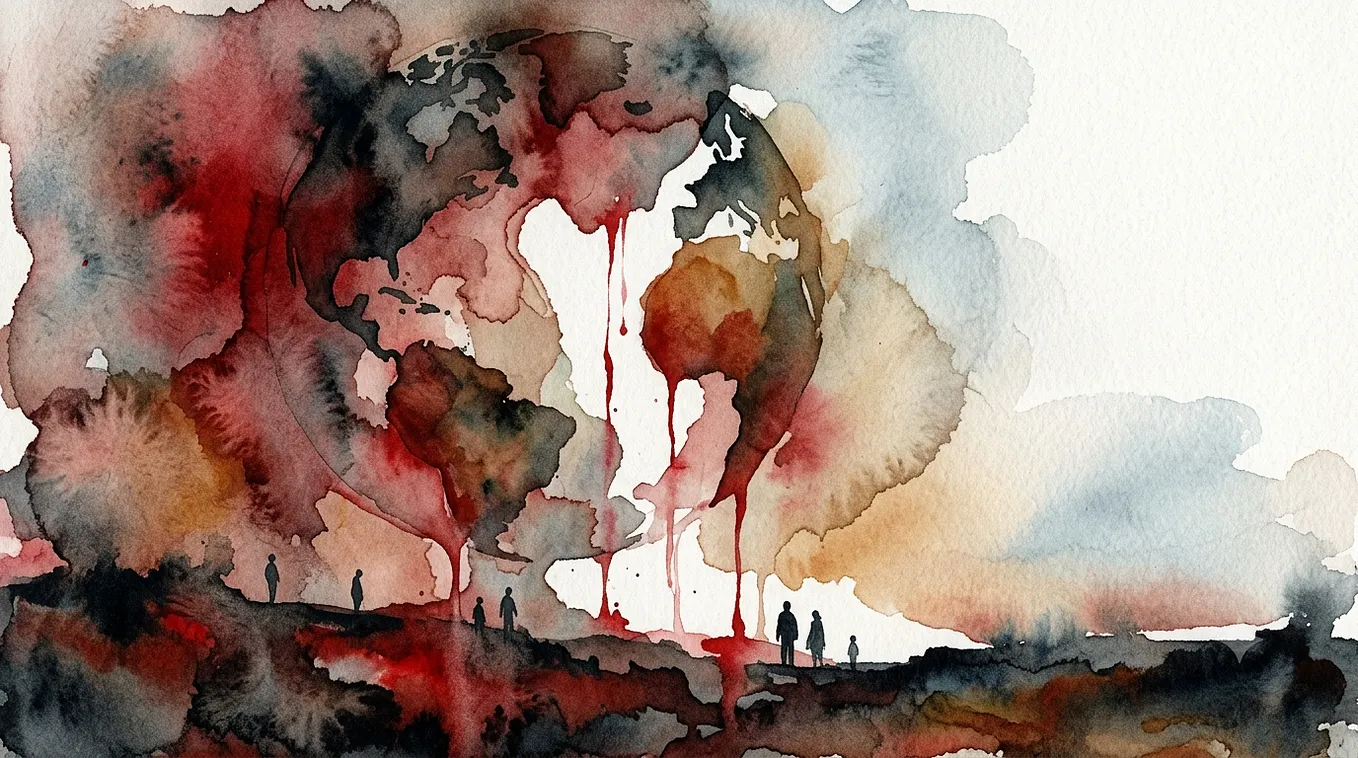
The Great Indian Dream
Prologue: The Dream That Was Breathed, Not Declared
Before the tricolor fluttered in free skies, India was a quiet scream —
her people bent under alien boots, her riches drained like blood in silence.
Famines came not from the clouds but from cruel quotas and trade laws.
The weaver’s loom fell silent, the farmer’s field reeked of unpaid debt.
Schools taught forgetting. Faith became fault lines.
And the soul of a civilization was forced into disguise. But even in the shadows, fire stirred. Tribal drums beat in forests no census could tame.
Peasant revolts flared and died, only to flare again.
1857 came like thunder — too early, too fierce, too alone —
but it left embers glowing in the hearts of future storms.

Revolutions found new names — Gandhi, Ambedkar, Bose, Bhagat,
Tagore’s pen, Nivedita’s hands, Nehru’s voice, Patel’s steel.
Ideas rose like waves, some colliding, some coalescing —
freedom, equality, dignity, self-rule.
One demanded soul-force, another justice, yet another sacrifice.
The dream was never one — it was many, stitched with sweat, blood and vision.

Then, the midnight arrived.
Not all celebrated — some were grieving, bleeding, migrating.
Still, a flag rose. A cry went out: “India is free.”
For a moment, time paused.
A billion hearts beat as one — some in joy, some in ache.
Get Indrasish’s stories in your inbox
Join Medium for free to get updates from this writer.
But dawn comes without instruction.
We had no wealth, but we had will.
No roadmap, but a million feet ready to walk.
We became a Republic on a prayer and a promise.
The Constitution was not ink on paper —
it was the gathered hope of generations who had nothing,
but gave everything.

And yet, somewhere along the way —
we remembered the nation, but forgot the dream.
Note:
- Next chapter will be published soon. Part I: Something I Saw, Something I Felt
2. The images were generated using Gemini. The prologue was reviewed with the assistance of ChatGPT, primarily for grammatical corrections.