In the classical martial arts of China and Japan, the most difficult form of training is performed slowly — without clenched muscles, furrowed brows, or intense sweating. At first glance, this may sound rather strange. In common understanding, it is precisely the limit of physical exertion that defines difficulty. And from that perspective, the average observer would seem entirely correct… if one looked at the broader picture.
The point is that practicing training forms — above all taolu and kata — without overt muscular tension presents a significant challenge even for experienced practitioners. One must remain powerful, yet without relying on the usual shortcut of maximal muscular contraction. When transitioning into this mode, the practitioner often encounters a dilemma: either the muscles tense again, or the movement loses its strength. In both cases, the purpose of such training disappears. If the movement becomes “empty,” it loses all martial meaning — hand gestures and leg patterns turn into little more than imitations of combat forms, reducing practice to a kind of “martial dance.”
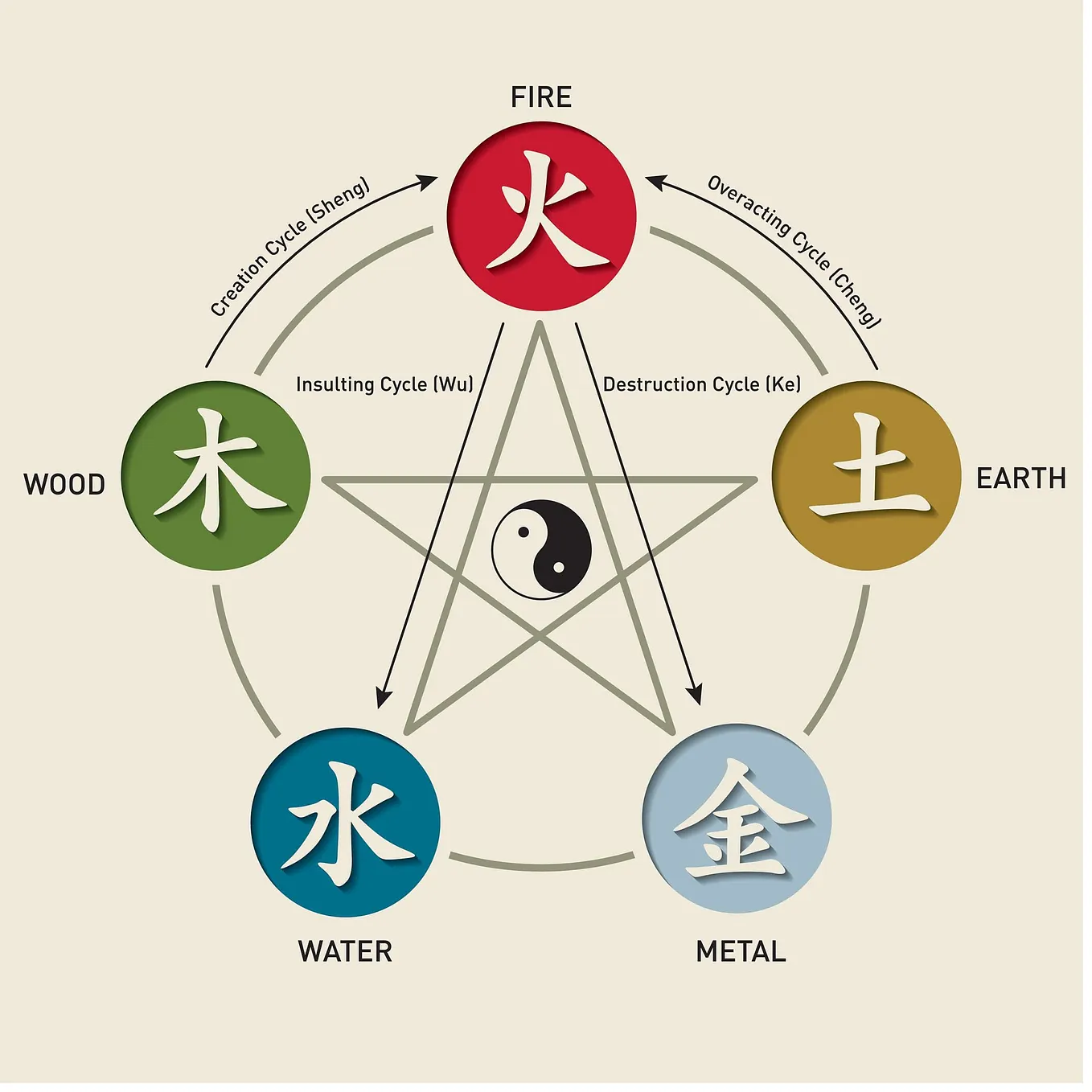
A further complication arises from the visual appearance of relaxation and the unhurried manner of movement. It easily creates the impression that the well-known Yin–Yang principle — like the alternation of tension and relaxation — simply represents a sequence of “fullness” (presence) and “emptiness” (or abscence) of force. In reality, the matter is more subtle. The task of the master is to ensure that even “emptiness” contains a powerful potential.
Get DenSu’s stories in your inbox
Join Medium for free to get updates from this writer.
At this level, the interplay of opposites must be understood as something akin to a change in the sign of a charge, while the magnitude itself remains unchanged. If this interpretation seems to contradict classical views, it is worth recalling that in the Chinese cosmological model of the unfolding of the world — the model of universal laws governing the movement of force, upon which martial training algorithms are also based — the Yin–Yang principle is explained through the idea that every phenomenon has its “mirror” opposite. This implies not merely the absence of something manifest, but the presence of its unmanifest counterpart. For this reason, relaxation in practices such as wushu, karate, and similar disciplines should release the expression of force rather than eliminate it.
Another layer of difficulty lies in the slow tempo of performing forms. The requirements for bodily coordination increase dramatically. When movements are fast, it is easy to simulate whole-body integration through momentum; the body can simply “throw” itself into the action. In slow practice, however, such shortcuts disappear. The practitioner must exert considerable conscious effort to ensure that the classical requirement — “when one part moves, the whole body moves” — is truly realized.
A particular challenge arises in locomotion: the body must move while maintaining the projection of the center of gravity between the feet, even though one leg is required to be “empty” and the other “full.” When performed slowly, it becomes extremely difficult to avoid “rocking” from one leg to the other. In faster execution of training forms, this problem is far less noticeable.
Thus, as the description above suggests, slow training indeed demands a form of maximum effort — but not the external, muscular kind. Instead, it requires an internal intensity: heightened conscious control and an even distribution of load throughout the entire body, where the muscles are only one component of a larger power structure.
Such training should be approached only after acquiring sufficient experience in more overtly “yang” forms of strength practice. Without this prior experience, it is extremely difficult to understand what a truly powerful movement actually is..
A video example is here.