The “Supreme Ultimate” of Taijiquan

Whenever one begins to speak about one of the three styles of traditional Chinese martial arts regarded as the “classical internal schools” — Xingyiquan, Baguazhang, and Taijiquan — one almost inevitably feels obliged to mention the other two. And once a few remarks have already been made about the second, one is practically bound to address the remaining one as well. Thus today we will speak about the Fist of the Great Ultimate, which is the usual translation of the Chinese term Taijiquan.
Let me note from the outset that the perspective presented here may seem somewhat unusual to the modern connoisseur. The author adheres to the view that the contemporary interpretation of what was once a powerful martial system (including its historical predecessors known under other names) is rather far removed from its authentic essence — both in terms of training methodology (its developmental aspect) and in its applied dimension, that is, the ability to effectively confront an aggressor.
Unfortunately, this phenomenon is not unique to this particular school. It is characteristic of many branches of Chinese martial arts, as well as their counterparts in neighboring countries. The reason is quite simple: grasping the deeper essence of the classical schools is difficult. It requires considerable effort — not only in physical training but also in conscious intellectual work. The latter is often the more demanding task.
The path of studying systems such as Taijiquan resembles a marathon rather than a sprint. Long-term training yields deeper results — provided, of course, that the path itself has been chosen correctly.
In earlier times, arts like Taijiquan were studied by a relatively narrow circle of experienced practitioners. But once these traditions began to spread widely, the need arose to make rather complex ideas accessible and understandable to a broad audience. This gave rise to the well-known phenomenon of “park wushu,” of which the Fist of the Great Ultimate became a part, alongside its famous “colleagues” — the Form–Intention Fist (Xingyiquan) and the Palm of the Eight Trigrams (Baguazhang).
There is nothing inherently wrong with wide popularization. The problem begins when practitioners engaged in pleasant and beneficial exercises for general health start to perceive these practices as the only correct and “authentic” form of the art.
If they were to test those graceful movements against the reality of combat — or simply apply basic logic to the foundational concepts upon which the school claims to rely, comparing them with the actual mechanics of the movements they perform — the resulting dissonance would be difficult to ignore. Inevitably, certain illusions would collapse, and one would have to admit that the familiar version of the style can hardly be described as “ultimately” powerful or effective.
It is difficult to explain the modern inconsistencies between the proclaimed ability of the Fist of the Great Ultimate to prepare body and mind for combat — and even more so to such an extent that the practitioner can defeat an aggressive attacker through the power of non-action — using words alone. In practice, it is far easier to test such claims with representatives of so-called “hard” combat sports. After all, it is often asserted that softness can overcome brute force..
What can be demonstrated through logical reasoning, however, is the correspondence — or lack thereof — between individual practice and the fundamental concepts upon which the system is built. To explore this question, we must ask: what constitutes the foundation of Taijiquan as a training method?
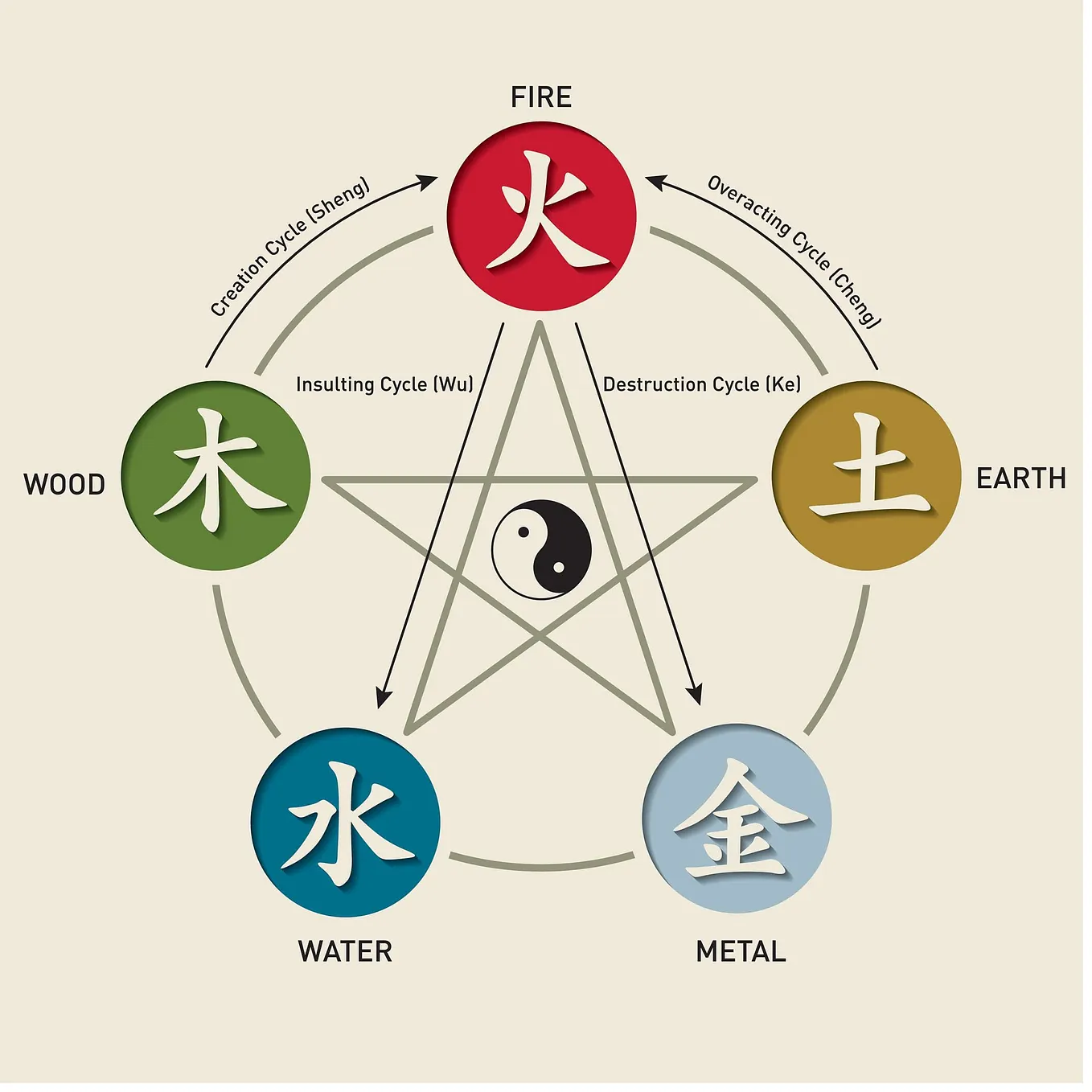
As in most systems of Chinese martial arts — and in related disciplines such as karate — the technical framework is built upon a relatively limited set of fundamental techniques. In Taijiquan, these techniques are traditionally associated with the so-called Thirteen Forms. These forms arise from the integration of the symbolism of the Five Phases (Wuxing) and the Eight Trigrams (Bagua) into a single conceptual system.
(It is interesting to recall here the famous karate kata Seisan, which belongs to the category of foundational forms and whose name likewise translates as “thirteen,” suggesting intriguing historical parallels.)
The purpose of this system is not merely to train the body to transmit force along the principal directions — while simultaneously developing the ability to receive force from a potential opponent without compromising one’s own balance and structural integrity. Equally important is the transformation of this work into a continuous, seamless flow. Achieving such continuity is extremely difficult without understanding the subtle transitions through which force transforms from one state to another and shifts from one direction to the next.
For the flow not to break when it reaches a “limit,” one must learn to follow the law of transformation — a process greatly facilitated by the aforementioned cosmological concepts.
Get DenSu’s stories in your inbox
Join Medium for free to get updates from this writer.
This principle becomes particularly evident in the paired practice of pushing hands. When one’s partner releases a stream of force, the task is not to stop it but to redirect it and return it to its source — while maintaining one’s own balance. Naturally, the partner is attempting exactly the same thing.
Thus, during the exercise the flow of force gradually intensifies, while the participants’ skill in managing that flow also grows. The increase in internal dynamics inevitably leads to a corresponding intensification of external dynamics. Opposing principles grow in fullness and gradually achieve an indivisible unity within a single system.
And this brings us to the central — one might even say transcendental — concept: the Great Ultimate.
Indeed, this very idea is reflected both in the name of the art and in its famous symbol, where the Eight Trigrams are arranged together — often combining the Earlier and Later Heaven sequences. Within this framework lie the Five Phases, while at the very center resides the Great Ultimate itself.
Viewed in this way, the Great Ultimate naturally encompasses the Thirteen Forms, which can be understood as its practical continuation within the cosmological model of the unfolding universe.
The path of studying the Thirteen Forms ultimately leads to the unadorned “simplicity” of the Great Ultimate: the inseparable unity of opposites existing in the same place at the same time, forming a state of equilibrium and jointly symbolizing the Center.
From this arises the well-known principle of movement within stillness and stillness within movement. In practice, this manifests as a unified and powerful bodily structure capable of movement without loss of integrity, transmitting force that flows continuously while remaining anchored in a stable and unmoving presence within the body.
Thus, when an adept stands seemingly motionless and relaxed, it does not mean that he can easily be pushed over and thrown off balance by a strong shove. What the attacker encounters instead is the classic image of “steel wrapped in cotton” — the force of movement within stillness.
Conversely, when the adept acts — especially in a combative context — it becomes impossible to catch him during movement and unbalance him. His external motion is accompanied by an inner immobility resembling that of a solid mountain.
The practitioner’s task in achieving the fullness of Yin and Yang is to ensure that they truly represent “two sides of the same coin,” rather than one side and the absence of the other. Here lies a common misunderstanding of the doctrine of opposites: both principles possess equal significance, differing only in sign (+/-).
Therefore, by increasing Yang we simultaneously increase Yin — and vice versa. Consequently, “soft” training must also produce greater “hardness” in its external manifestation.
If, however, one assumes that Yin represents the absence of force while Yang represents its presence, then what kind of unified and harmonious Taiji center could possibly exist? Under such assumptions, individual practice becomes futile. If one cultivates Yang only to lose it entirely when transitioning into Yin, the exercise resembles earning money only to throw it immediately into the trash. What would be the point of such effort?..
Consider one more “natural” example. As Daoist tradition often suggests, let us observe the world around us. The Sun is regarded as the embodiment of Yang, while the Moon represents Yin. Yet in both cases we receive light for us to see things.
If Yin were truly the absence of what belongs to Yang — force, tension, light and similar qualities — then on a cloudless night without the Moon, would we be able to see anything at all as we do under moonlight?
All these reflections suggest that the “softness and yielding” of Taijiquan must be understood from a very different perspective — as must many other aspects of the system’s conceptual framework. And if this perspective seems difficult, one might ask a simple question:
Is the study of sciences, the laws of life, and the mysteries of the universe ever meant to be easy, comfortable, painless, and accessible to everyone?