Sharjah 1994: When Cricket Came Alive


The desert sun was already burning down when I walked through the gates of the Sharjah Cricket Stadium in April 1994, clutching my ticket as though it were a passport to another world. For years, cricket had only existed for me in newspaper clippings, stories from cricket magazines, and fleeting news clips. Now, for the very first time, I was stepping into the arena itself—into the noise, the color, the rivalry, and the magic I had only imagined from afar.
The last match I had “watched live” was not in person at all but on television—the 1992 World Cup final. To find myself two years later at Sharjah, for an India–Pakistan clash in the Australasia Cup, felt like a dream finally taking shape before my eyes.
I went with my father and elder brother. My father was not a cricket man by nature, but he understood the weight of this fixture. India and Pakistan hadn’t faced each other in Sharjah since 1991, and the city was buzzing with anticipation. As we approached the ground, the noise rose like a wave—chants, drums, laughter, and arguments blending into a soundtrack only Sharjah could produce.
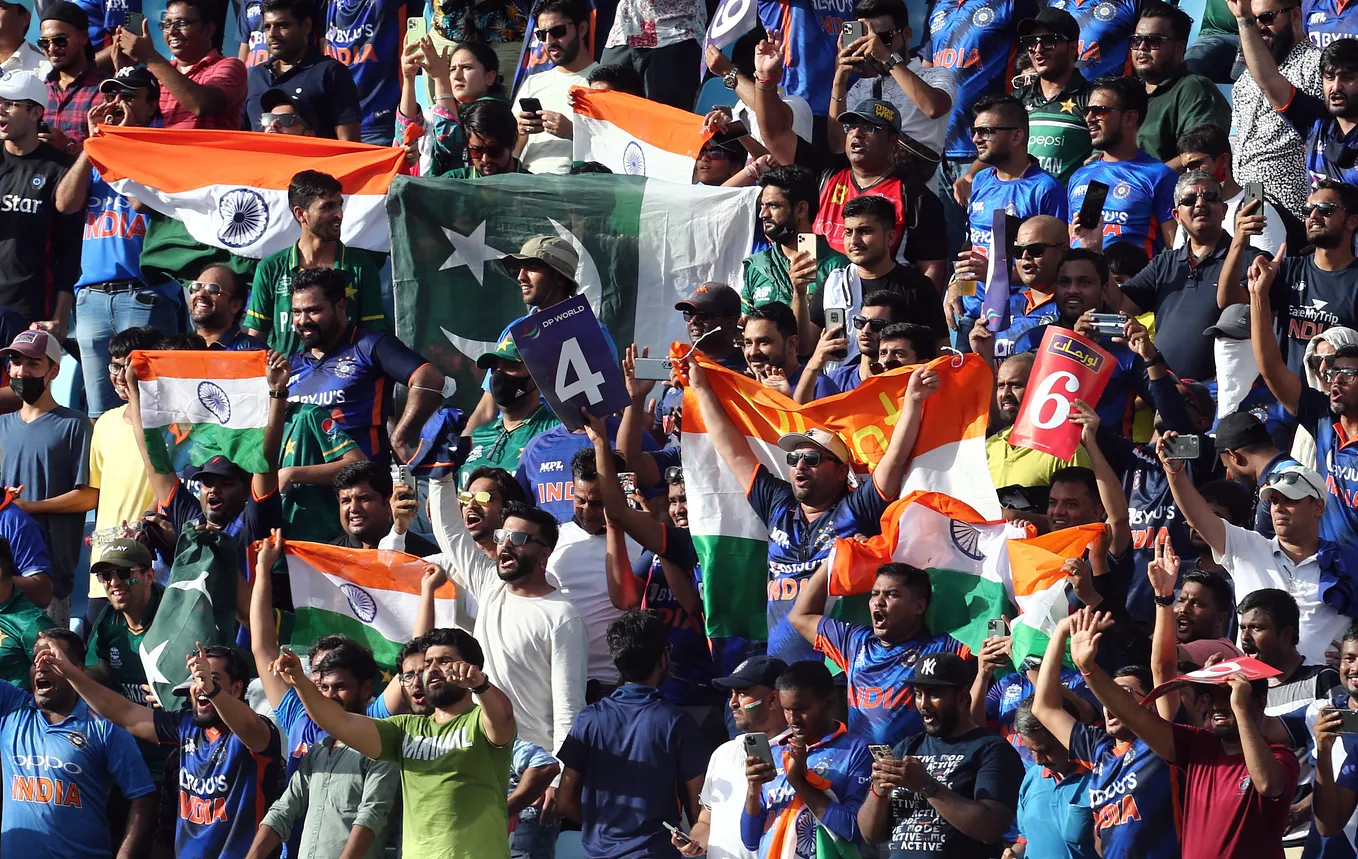
Inside, the atmosphere was electric and divided. One of the unique features of Sharjah in those days was that while some Indian and Pakistani fans sat together, many chose to sit separately—almost as if drawing an invisible line between nations. From across the stands, taunts and cheers flew like arrows, each side desperate to drown the other out. It was tense, colorful, and utterly unique—an experience that, I think, only those who lived through Sharjah in the 1980s and 90s can truly appreciate.
Get Irfan Farooq’s stories in your inbox
Join Medium for free to get updates from this writer.
When we finally settled into our seats, having arrived late with six or seven overs already bowled, I immediately felt the buzz around me. Turning to a man nearby, I asked what all the noise was about. He smiled and said, “Didn’t you see? Tendulkar has already hit two sixes.” As if on cue, the young genius struck another—this time off Wasim Akram himself. I could hardly believe my eyes. This was no longer the boy wonder I had only seen in news clips; this was Sachin Tendulkar in the flesh, carving through Pakistan’s bowling under the desert sky.
He raced to a fifty with breathtaking ease, but before the innings could truly blossom, Pakistan wrestled their way back. Tendulkar fell short of a hundred, and India’s innings stuttered to 219. It wasn’t a disastrous total, but it lacked the bite you’d expect in a high-voltage clash.
During the innings, my brother tugged at my arm, pointing to the nets where New Zealand were warming up. He even tossed an ice cream to Danny Morrison, who accepted it with a grin. He urged me to come closer, to meet the Kiwi players, but I couldn’t peel my eyes away from the field. Even from the nets, I overheard one of them murmur in awe, “Hey, look at Akram.” They had just faced him in a series back home, and his presence was still etched in their minds. For me, though, the focus remained firmly on the pitch.
After the innings break came Saeed Anwar. Watching him bat for the first time was like watching poetry unfold. He matched Tendulkar stroke for stroke, his cover drives flowing like water, and his timing as smooth as silk. If Tendulkar had lit up the first half of the day, Anwar answered with equal brilliance in the second. Pakistan’s chase never looked troubled. India’s bowling lacked venom, and what I had expected to be a nerve-shredding thriller turned into a one-sided affair.
And yet, none of that mattered to me. This wasn’t about tension or scorelines. It was about what it meant to finally be there, sitting among thousands, soaking in every cheer, every roar, every sound of leather on willow.
When the final runs were struck, I walked out with my dad and brother into the warm Sharjah evening. The chants of victory still echoed in the air, and my heart felt impossibly full. I wasn’t thinking of Pakistan’s dominance or India’s shortcomings. I was thinking about what it meant to see the game I had built in my imagination come alive before me.
Decades later, I can still feel the desert heat on my skin, hear the deafening roar of divided stands, and see the arc of Tendulkar’s six and Anwar’s cover drives. That day in Sharjah wasn’t just my first match in a stadium—it was the day when heroes I had only seen in print and in news clips became real, and the world of cricket I had dreamt of finally took shape before my eyes.