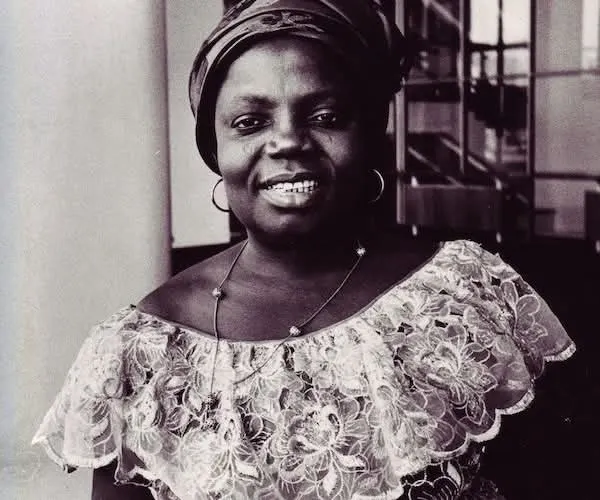
Genevieve Nnaji in Lionheart —

Written by Isaac Dominion Aju

Genevieve Nnaji is a highly respected actress in Nollywood. I grew up watching her movies, and there is something very classy and elegant about her. I’ve always loved her charisma and panache. If Genevieve Nnaji is in a movie, that movie is automatically elevated. It had been a long time since I last saw her on screen until I watched Lionheart.
The last time I saw Genevieve Nnaji was in Half of a Yellow Sun, where she played Miss Adeboye, a Yoruba lecturer at the University of Nigeria, Nsukka, which later became the University of Biafra in 1967. My interest had shifted away from mainstream Nollywood at the time because much of the acting and storytelling seemed lame. Besides, it was a period of intense reading for me. I read books as though I would die the next day, so I had little time for movies. But when Half of a Yellow Sun arrived with its highbrow acting and production, featuring people of great influence whom I already knew, such as Genevieve Nnaji and Onyeka Onwenu, I watched the film over and over again. I did not mind the war and bombing scenes. The only disturbing scene for me in the entire movie was the sex scene involving Amala. It was deeply unsettling.
Since then, Genevieve Nnaji had not appeared on my screen again, but people on social media never stopped talking about her. Lionheart came out in 2018 and featured some of Nigeria’s biggest stars, including Pete Edochie, Phyno, Ngozi Ezeonu, Kanayo O. Kanayo, Nkem Owoh, and Onyeka Onwenu. Even P-Square, the Nigerian music duo, featured in it.
I watched the movie when it came out, but I decided to rewatch it a few weeks ago, and I marvelled at the beauty of its storytelling.
Get Words Not yet Spoken’s stories in your inbox
Join Medium for free to get updates from this writer.
Genevieve Nnaji wanted to make a statement about what women could do. Her character is a woman fighting to save her father’s business through elaborate planning and strategising, while her brother, who has little interest in the family business, pursues his dream of becoming a music artist.
Although he is considered lost because he shows little interest in his father’s business, I think one of the movie’s central messages is that people are simply people, whether male or female. A son does not necessarily have to take over a business he neither understands nor cares about. People have their own interests and dreams, and these deserve to be respected.
In the movie, Genevieve’s character is passionate about the family business, but her father undermines her because she is a woman. He wishes she were a man. She earns some respect from him through her good behaviour and sense of honour, but when it comes to entrusting the business to her, he remains uncertain.
She finds herself doing everything she can to prevent the company from going bankrupt. It is a difficult fight, but she eventually succeeds with the help of her uncle, while her brother continues pursuing his musical ambitions.
At his father’s retirement party, her brother performs the song from which the movie takes its title: Obiagu, meaning Lionheart in English.
Onyeka Onwenu plays the mother. In the few scenes in which she appears, she is mostly at home. We do not get to know her character well enough. I would have loved to see more of her because she is such a remarkable presence.
Pete Edochie plays the father, the owner of a transport company on the brink of bankruptcy. Ironically, it is the very daughter he has consistently underestimated who fights to keep his business alive.
Phyno plays the son who, despite his father’s expectations, pursues his musical interests rather than taking over the family business. From what we see in the final scene, he appears to have found his own path to success.
What I find particularly interesting about Lionheart is that it does not insist that everyone must fulfil the expectations of their family. The father wants his children to carry on his legacy, but his daughter and son have different relationships with that legacy. She finds meaning in preserving the business, while he finds meaning in pursuing music.
Neither of them has to become the other.
And perhaps that is one of the things that makes the movie beautiful. Beyond its message about women and the limitations society places on them, Lionheart reminds us that people can love their families without necessarily living the lives their families have planned for them.
Isaac Dominion Aju is a Nigerian writer, editor at Words Not Yet Spoken.