Public Experiment #13
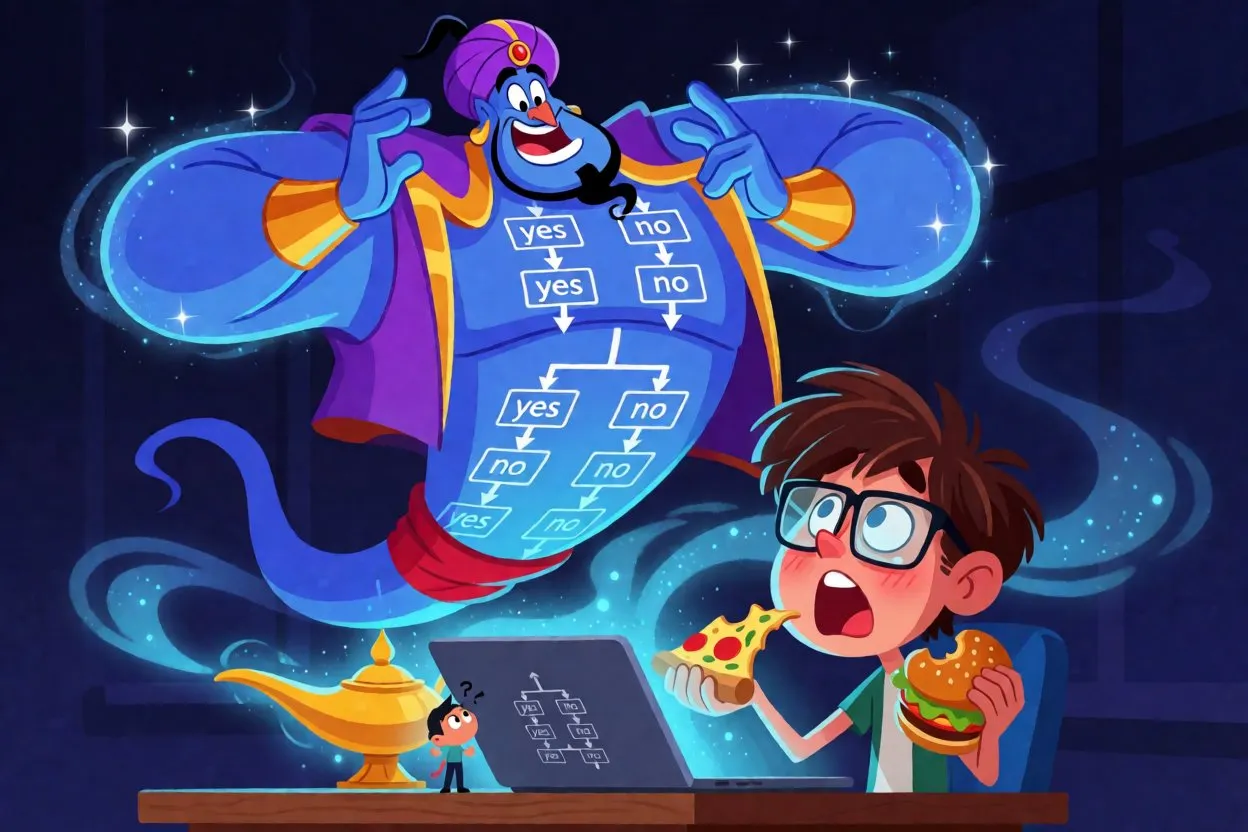
Can AI Track the Evolution of a Thinker’s Reasoning?
Testing the Updated Krugman OS Across Three Successive Essays
In Public Experiment #12, I asked a specific question:
Can AI anticipate not what a thinker will write next, but how that thinker will interpret what happens next?
To test this, I used the “Krugman OS,” a working model developed through long-term observation of Paul Krugman’s published reasoning.
The prediction was frozen before the actual essays appeared.
The process was:
Prediction
↓
Prediction Freeze
↓
Actual Essay
↓
Comparison
↓
Prediction Error
↓
OS Update
A substantial part of the structural prediction turned out to be consistent with the subsequent reasoning.
But something else was even more interesting:
what the model failed to predict.
Those prediction errors revealed variables that had not been explicit in the previous OS.
That led to a new question.
Can an updated OS continue to learn as a thinker’s reasoning unfolds across successive essays?
That is the question behind Public Experiment #13.
The Question
This experiment is not about getting a prediction right once.
The question is:
Can an updated Human-AI OS track how a thinker’s reasoning evolves across a sequence of essays?
I examined three successive essays by Paul Krugman:
- November 4: It Wasn’t (Just) the Economy, Stupid — Paul Krugman [It Wasn’t…rugman.pdf | PDF]
- November 5: What Democrats Can Do — Paul Krugman [What Democ…rugman.pdf | PDF]
- November 6: America’s Backlash Against Oligarchy — Paul Krugman [America’s…rugman.pdf | PDF]
At first glance, these appear to address different questions.
But when read structurally and sequentially, they begin to look like different stages in a developing causal chain.
Stage 1
Going Deeper Than the Democratic Mechanism
The first essay was:
“It Wasn’t (Just) the Economy, Stupid”
with the subtitle:
“2024 was a blip. This was America.” [It Wasn’t…rugman.pdf | PDF]
Paul Krugman did not explain the election simply as a result of economic dissatisfaction.
While acknowledging economic factors, the essay interpreted the result as a broad affirmation that many Americans still believed in the country’s basic values and as a rejection of a movement that threatened those values. [It Wasn’t…rugman.pdf | PDF]
Before Public Experiment #12, the Krugman OS had focused mainly on this structure:
Citizens
↓
Election
↓
Institutional Control
In other words, it focused on the democratic feedback mechanism.
But the actual essay went one level deeper:
Underlying Democratic Values
↓
Citizens
↓
Election
↓
Institutional Control
The important point was no longer merely:
Democratic institutions still function.
It was:
The democratic values capable of activating those institutions still survive.
Prediction Error #1
Underlying Democratic Values
Here the first important prediction error appeared.
The AI model had anticipated:
Democratic Feedback
But Paul Krugman’s actual interpretation went further back in the causal chain, toward:
Underlying Democratic Values [It Wasn’t…rugman.pdf | PDF]
This is more than a difference in terminology.
It suggests that institutional feedback does not activate automatically.
A deeper structure may be:
Democratic Values
↓
Recognition of Threat
↓
Citizen Action
↓
Election
↓
Democratic Feedback
The OS therefore required an update.
OS Update #1
Underlying Democratic Values
And I introduced another candidate variable for further testing:
Threat Recognition
Stage 2
What Happens After the Election?
The next day, Paul Krugman published What Democrats Can Do — Paul Krugman. [What Democ…rugman.pdf | PDF]
The focus had already shifted.
The question was no longer:
Why did the election result happen?
It became:
How can the electoral result be converted into institutional action?
A new congressional majority could exercise committee power, conduct investigations and hearings, but the president would still retain veto power. Paul Krugman proposed passing legislation that would clearly benefit ordinary Americans and, instead of trying to avoid a presidential veto, forcing the president to use it. [What Democ…rugman.pdf | PDF]
A simple model might have been:
Congressional Control
↓
Legislation
↓
Policy Correction
But the presidential veto creates a boundary condition.
The actual structure becomes:
Congressional Control
↓
Popular Legislation
↓
Presidential Veto
↓
Responsibility Becomes Visible
↓
Accountability
↓
Public Judgment
↓
Future Political Correction
Prediction Error #2
Accountability Before Correction
The earlier OS had connected:
Control → Correction
too directly.
But the actual reasoning inserted an important intermediate process:
Control
↓
Accountability
↓
Public Judgment
↓
Correction
Even when policy cannot be changed immediately, it may still be possible to make clear:
who prevented the policy from being implemented.
That information can then become part of public judgment and feed into future political correction.
So another variable was added.
OS Update #2
Accountability before Correction
Prediction Error #3
Veto as Accountability Signal
An even more interesting difference concerned presidential veto power.
Normally:
Veto = Executive Control
A veto blocks legislative action.
But Paul Krugman proposed deliberately forcing the president to exercise that power. The process could also force legislators to reveal whether they would sustain the veto or provide the votes needed to override it. [What Democ…rugman.pdf | PDF]
So:
Veto = Executive Control
but potentially also:
Veto = Accountability Signal
An institutional obstacle is transformed into political information.
OS Update #3
Veto as Accountability Signal
Another Variable Appears
Visibility
When the structure is examined more deeply, another variable appears between:
Veto → Accountability
That variable is:
Visibility
The exercise of power alone does not necessarily generate accountability.
People need to be able to see who exercised that power, what was blocked, and where responsibility lies.
The structure therefore becomes:
Exercise of Power
↓
Visibility
↓
Attribution of Responsibility
↓
Accountability
At this stage, I placed Visibility in the OS as a candidate variable to be tested further.
Stage 3
When Power Itself Generates a Backlash
One day later, Paul Krugman published:
America’s Backlash Against Oligarchy — Paul Krugman. [America’s…rugman.pdf | PDF]
The focus shifted again.
This time, the subject was not only democratic values or institutional counter-control.
Attention moved toward the other side of the system:
Oligarchic Power
Paul Krugman described massive political spending by an extremely wealthy elite while arguing that such financial power does not always translate into political success and can sometimes backfire. [America’s…rugman.pdf | PDF]
The essay identified four factors:
- Big money can be self-defeating in American politics.
- Big money feeds big corruption.
- Billionaires live in bubbles of self-delusion.
- Parties supported by billionaires can also become trapped in such bubbles. [America’s…rugman.pdf | PDF]
The conventional model is:
Extreme Wealth
↓
Political Spending
↓
Political Influence
But another causal path now appears:
Extreme Wealth
↓
Political Influence
↓
Corruption / Detachment / Information Bubble
↓
Visibility
↓
Public Backlash
↓
Electoral Defeat
Here we encounter an interesting structural reversal:
Power can create conditions that weaken Power.
Prediction Error #4
Self-Defeating Political Power
The earlier OS tended to assume:
Wealth
↓
Political Money
↓
Political Influence
But this relationship may not be monotonic.
Under certain conditions:
More Political Money
↓
More Influence
may become:
More Political Money
↓
Greater Visibility
↓
Greater Backlash
This suggests another candidate update:
OS Update #4
Get IZUMIYA Kiyotaka’s stories in your inbox
Join Medium for free to get updates from this writer.
Self-Defeating Political Power
Prediction Error #5
Power-Induced Information Bubble
There is another important element: information.
Paul Krugman argues that billionaires can inhabit bubbles of self-delusion, and that political parties heavily influenced by them can become trapped in similar self-referential information environments. [America’s…rugman.pdf | PDF]
This creates another feedback structure:
Power
↓
Insulation from Ordinary Reality
↓
Distorted Information
↓
Political Misjudgment
This leads to another candidate addition:
OS Update #5
Power-Induced Information Bubble
What Happens When the Three Essays Are Combined?
Now let us stop treating the three essays as separate objects.
A longer causal structure begins to appear:
Underlying Democratic Values
↓
Threat Recognition
↓
Citizen Mobilization
↓
Election
↓
Congressional Control
↓
Oversight / Legislation
↓
Veto / Obstruction
↓
Visibility
↓
Attribution of Responsibility
↓
Accountability
↓
Public Judgment
↓
Next Election
↓
Political / Policy Correction
On the other side of the system:
Wealth Concentration
↓
Oligarchic Power
↓
Political Spending
↓
Corruption / Information Bubble / Detachment
↓
Visibility
↓
Public Backlash
And the two structures begin to connect through:
Visibility
↓
Public Judgment
The Most Interesting Variable
Visibility
For me, one of the most interesting findings of Public Experiment #13 is Visibility.
Visibility was not originally placed at the center of the model.
But when the three essays are analyzed sequentially, a common structure appears.
On the democratic side:
Veto / Obstruction
↓
Visibility
↓
Accountability
On the oligarchic-power side:
Political Power / Corruption
↓
Visibility
↓
Backlash
There is therefore a difference between:
power existing
and:
society being able to see how that power is being exercised.
The latter may be an important intermediary variable in activating democratic feedback.
This structure is much harder to see when each essay is treated as an isolated text.
What Is Different Between #12 and #13?
Public Experiment #12 asked:
Can AI anticipate a thinker’s next interpretation?
A prediction was made, frozen, and compared with the actual interpretation.
But in #13, the object of observation is no longer a single point.
The process becomes:
Updated OS
↓
Essay 1
↓
Difference
↓
OS Update
↓
Essay 2
↓
Difference
↓
OS Update
↓
Essay 3
↓
Integrated Causal Structure
So the question is no longer:
Can the model make one correct prediction?
It is:
Can the model continue to evolve while being corrected by reality and still track the development of a thinker’s reasoning?
This Is Not an AI Designed to Reproduce a Thinker
This distinction matters.
The purpose of the Krugman OS is not to reproduce Paul Krugman as a person.
Nor is it designed to predict perfectly what he will say.
Instead, the process is:
State the current model
↓
Compare it with actual reasoning
↓
Preserve the differences
↓
Identify variables that were missing
↓
Update the model
What matters is not that the model never makes mistakes.
What matters is that we can identify:
where the model was wrong.
Human × AI × Reality
Public Experiment #12 revealed this structure:
Human Intuition
+
AI Structural Modeling
+
Actual Thinker
↓
Prediction Error
↓
Model Update
↓
New Knowledge
Public Experiment #13 adds another variable:
time.
The process becomes:
Human × AI Model
↓
Reality₁
↓
Update₁
↓
Reality₂
↓
Update₂
↓
Reality₃
↓
Integrated Model
A Human-AI model is therefore not something that must be constructed once and then regarded as complete.
It can be revised each time it encounters reality.
Where Could the Model Fail?
Because this is a public experiment, we should not look only for evidence that supports the model.
The possibility of falsification must remain visible.
If:
Underlying Democratic Values
do not lead to subsequent political action, then:
Values → Democratic Feedback
becomes weaker.
If the exercise of power becomes visible but citizens do not recognize where responsibility lies, then:
Visibility → Accountability
does not hold.
If responsibility becomes clear but does not influence subsequent political behavior, then:
Accountability → Correction
does not hold.
And if political spending by extremely wealthy actors continues consistently to increase their political influence without producing the proposed counter-effects, then:
Self-Defeating Political Power
would also need to be reconsidered.
The OS is not a conclusion.
It is:
a provisional model that contains the possibility of being broken by the next reality.
The Result of Public Experiment #13
Across these three essays, the following variables were added to the Krugman OS, or became clearer as candidates for further testing:
- Underlying Democratic Values
- Threat Recognition
- Accountability before Correction
- Veto as Accountability Signal
- Visibility
- Self-Defeating Political Power
- Power-Induced Information Bubble
These variables do not all have the same evidential status.
Underlying Democratic Values, Accountability, the political use of veto power, and information bubbles among wealthy actors and political parties are explicitly present in the three essays. [It Wasn’t…rugman.pdf | PDF], [What Democ…rugman.pdf | PDF], [America’s…rugman.pdf | PDF]
By contrast:
Threat Recognition, Visibility, and Self-Defeating Political Power
are variables or hypotheses generated by integrating the causal structures across the essays.
That distinction should remain explicit.
Conclusion
From Predicting Thought to Tracking the Development of Thought
The question behind Public Experiment #13 was:
Can AI track the evolution of a thinker’s reasoning?
The result suggests that there may be a meaningful way to do so.
Not by building a finished OS and using it to explain everything that follows.
But by allowing the OS to be sequentially corrected by differences between the model and reality, successive essays can be read as stages in an evolving causal structure.
The important point is not that AI knew everything from the beginning.
It did not.
The first model did not sufficiently capture:
Underlying Democratic Values.
Then it lacked:
Accountability before Correction.
Later:
Visibility
and:
Power-Induced Information Bubble
became clearer.
So the process becomes:
Essay
↓
Difference
↓
Model Update
↓
Next Essay
↓
New Difference
↓
Deeper Model
This is different from repeatedly asking AI for the right answer.
Instead:
We construct a hypothesis with AI, allow reality to break that hypothesis, and use the break to generate the next piece of knowledge.
That is what Public Experiment #13 suggests may be possible.
And the next stage is more demanding.
So far, the Krugman OS has been tested against Paul Krugman’s own subsequent reasoning.
But the more important question is:
Can the OS explain reality itself?
For example, does this loop actually operate in real political processes?
Visibility
↓
Accountability
↓
Public Judgment
↓
Political Correction
The next Public Experiment could therefore move beyond:
predicting thought
and beyond:
tracking thought
toward:
testing the model against reality.
Editorial Note
Public Experiment #12 tested whether a Human-AI model could anticipate a thinker’s next interpretation.
Public Experiment #13 tests something different:
Can the model continue to learn as the thinker’s reasoning unfolds?
The central method is:
Observe → Model → Compare → Find the Difference → Update → Observe Again
The objective is not to reproduce a thinker.
It is to test whether:
Human × AI × Reality
can form a continuously correctable system for knowledge creation.