The Avid Years

So here I was, now in the little glass shoebox. Still an Encompass Digital Media employee, but my title was Assistant Editor, which I think they later changed to Edit Assist. A less extravagant and impressive-sounding title, if you ask me.
Once again, I was in a room full of dudes. No problem.
I wanted to get my hands on an Avid station so badly, but before they let you near one, they trained you on Chyron first: manually typing credits. It was as tedious as you can imagine, but I was in no position to complain. Still, it felt like I was being hazed.
During my first week, I had outpatient surgery in the morning and reported to my new gig for the 4 p.m. to midnight shift that same day. The doctor had cleared me for work, especially since it wasn’t anything strenuous. That night, I sat there trying to hide the pain behind a smile while being trained.
The guy training me, let’s call him Hal, was on his way out. He’d been promoted to Editor and couldn’t wait to escape the glass box, but first, he had to train his replacement: me.
Hal was so jaded that every sentence was either drenched in sarcasm or came with some sort of double entendre attached to it. I asked him if he’d had a nice New Year’s.
“No. I hate my family.”
Hm.
K.
This was my first job with a real cast of characters.
My new supervisor came in at 4 p.m. every day and immediately started bitching, moaning, and complaining about his life, the traffic, the job, us Edit Assists, and the general state of the universe. Two hours later, he’d be cheerful and ready to grab dinner.
At first, I was afraid to piss this man off. He was older, as in shouldn’t you be retired by now? older, and I took him seriously.
The thing was, if he did happen to scream at you, which didn’t take much, he’d come over and apologize later that evening. It was almost easier not to take anything personally. Sometimes, it felt as though he were possessed.
All the Editors knew it, too. His daily mood swings had become something of a comic routine, and they’d just wave him off and laugh.
“Oh, Greg…”
Then there were the two other guys.
One, I was convinced, was having an affair with someone downstairs. He’d pop a tape in, leave the Avid running, and disappear for a smoke break with her. Over and over again.
In the beginning, he was somewhat careful about it, but eventually, he got sloppy. He wasn’t even trying to hide it anymore. And yet, no one said anything.
That part was infuriating. The rest of us were sitting there doing our jobs while he seemingly got away with disappearing whenever he felt like it.
The other guy had been in the role for years and was disgruntled that he hadn’t received the promotion Hal got. He started quiet quitting and then actually quit.
Great!
Now I was no longer Chyron-only.
Sitting behind the Avid setup felt like taking the pilot’s seat in a cockpit. It was cool. I felt in control. Now it was me, the guy with the disappearing act, and a new guy named Paul.
Here I was, training Paul while I was still a newbie myself.
The role essentially consisted of manually ingesting content from tape, in real time, into a bin within the Avid project you created. You’d drop bars and tone, a generic slate, and the entire piece of content onto the timeline, then leave the rest to the Editor.
Easy enough.
It’s funny to think there was an actual job for this sixteen years ago, but there was. These days, a video or content editor often handles everything themselves: filming, producing, culling footage, transcribing, typing up credits, creating slates, and marrying captioning. The assist part of the job has become largely obsolete, in my opinion.
At the time, though, the role was supposed to be a stepping stone toward becoming an Editor. Looking back, it’s strange to realize that this part of the career path has largely disappeared.
Sometimes, I’d get so restless while a tape was ingesting that I’d sit in on an actual edit session with the Editor and format producer. I’d watch, learn, and introduce myself to new producers. Most of them I already knew from my year and a half in Quality Control, which helped. I was slowly making connections.
Another part of the job was preparing the edit bays before every session: turning on the machines, pulling up Avid, and opening the Editor’s project folder.
Sometimes, if I knew what was going to be worked on that evening, I’d ask the Editor in advance, with the producer’s permission, if I could get started on some of the work myself.
“Sure. Go ahead, kid.”
By the time the producer entered the room, at least one of their shows would be done for the evening. I did everything I could in those thirty minutes to make their next shift easier.
Paul followed my lead. He started shadowing Editors and asking if they minded having him set up their bays and take care of anything else they needed at the beginning of each shift.
Paul was lucky I liked him. He picked things up quickly, and before long, he was following my lead. There was plenty of room for both of us, though. Branded as Forever Assists, we were nevertheless the MVPs of the Assist room.
We came in every day determined to prove ourselves, taking on more, helping more, and doing whatever we could to show we were ready for the next step.
Instead, we were becoming really good at being assists.
We were even dubbed the “A-Team,” which I found hilarious. There were six of us on the team, all rotating through different shifts, but somehow, the two of us became the favorites.
It got to the point where a producer or Editor would walk into the room looking completely disoriented, searching for help, then visibly relax when they saw us.
“Oh, good. It’s you two.”
That made me feel good. Like, really good.
I had a genuine confidence I’d never had before. This was the job that really matured me. Dealing with so many requests and personalities molded me into who I am today. My work ethic was defined there, and I started figuring out who I was professionally.
I could handle pressure. I could deal with difficult people. I could figure things out without someone holding my hand.
For the first time, I knew I could be counted on.
Get Jackie G.’s stories in your inbox
Join Medium for free to get updates from this writer.
Small problem: the pay was not great.
Better than Master Control, but still not good enough. I was getting married soon and still struggling with bills. The panic was very real, but I did my best not to let it show. On the outside, I probably looked calm. Inside, I was doing the math.
Paul and I soon found ourselves neck and neck in a race that didn’t officially exist. For the most part, it was friendly. We both wanted the same thing: a promotion.
But the stakes felt different for me. I had real adult responsibilities, real bills, a wedding on the horizon, and a growing sense that I couldn’t afford to sit in that room forever. If one of us was going to get the opportunity, I believed it should be me.
There were two Editors who were older. I’m talking late 60s.
Like vultures, we watched. We waited. Ready to replace either one of them.
But these folks were not leaving!
And why would they? This was a pretty sweet job. It wasn’t stressful enough to make someone throw their hands in the air and declare, “I’m done!” They were comfortable, and comfortable people tend to stay comfortable.
And that was the problem. There was nowhere for me to go.
I was starting to become jaded myself. With no turnover, I didn’t want to be an Edit Assist forever. There had to be more.
Eventually, my supervisor let me work as an Editor off the record.
Cute.
He’d assign me sessions that didn’t require a producer in the room, along with my regular assist duties for the night.
So now I was doing double the work for the same title and pay, and I was supposed to be grateful.
In a way, I was.
It was nice to be trusted, and even better to be allowed to work in an edit bay without supervision. I was learning by actually editing, even if technically, I wasn’t supposed to be doing it yet. I don’t think I would have gotten away with that anywhere else.
The Edit Assist team always seemed to have two openings, like a revolving door. People came and went because they just couldn’t hang, but Paul and I were the constants.
During one of our new-hire lineups, we got a particular man-child who became loud and downright nasty after only a few months in the role. He claimed he was smarter than all of us, more talented than some of the Editors, and genuinely offended that he hadn’t been promoted immediately.
Every night, he’d climb onto his soapbox and rant that the rest of us were being scammed, bamboozled, and doomed to sit in that room forever.
Sheep!
It was quite comical. He was about 5’4”, hooting and hollering every day: “Pick me! Pick me!”
To paint a picture, imagine Yosemite Sam as a young hipster.
Here’s what came of it: this man-child was so unhinged that Paul and I looked even more professional simply by sitting there and doing our jobs. NASA engineers, by comparison!
As you might guess, he was eventually fired.
Thank God. I couldn’t take it anymore.
“Disney will hire me!” he screamed on one of his last days.
In my fantasy version of events, two security guards immediately appeared and dragged him out in a straitjacket.
And you know what? To his credit, I later saw on LinkedIn that Disney did, in fact, hire him. Not necessarily as an Editor, but he landed somewhere in the mix.
So maybe he got the last laugh. Good for him.
Anyway, he was replaced by a guy a few years older than me, a former radio host with absolutely no video-editing experience.
How?!
I felt like I had to prove myself every year just to stay relevant in this industry, while this guy simply walked into our room and took a seat. To me, it felt as though he’d skipped the line entirely. Not fair!
He admitted that his relationship with my boss, Jim, was how he’d gotten in so easily. They were old radio DJ buddies or something.
Well, that explained it. Who was I to argue?
At the time, though, it really pissed me off.
But I couldn’t not like the guy. He reminded me of those young fathers you’d see on family sitcoms: funny, always had a story to tell, always ready for a conversation. He was cool.
Eventually, I realized my frustration had less to do with him and more to do with where I was.
By this point, I was getting bored. Camaraderie alone wasn’t going to be enough to keep me there.
As I approached what I would eventually call “the end times,” I started feeling disgruntled myself. Now I was the girl-child.
Where’s my title? Where’s my raise?
This was the job I’d begged for, dreamed about, and worked so hard to get.
And now, I couldn’t wait to leave.
Unlike Yosemite Sam, I didn’t shout this at anyone. But my frustration had become a point of daily commiseration. I’d been there three and a half years. I was ready for more responsibility. I was ready for better pay.
I was too anxious, too squirmy. I was a big fish in a small tank, and apparently, even fish have an expiration date on their swimming space.
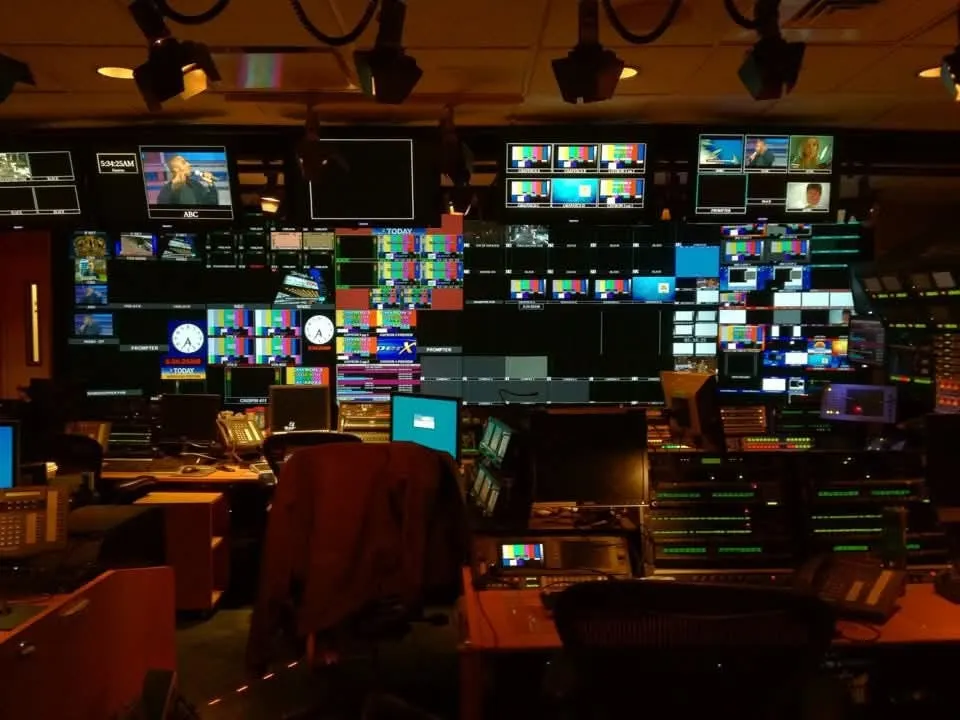
Photo by TRIANGLEMZ on Unsplash