The Future of Social Security
Who is gonna pay for it?
The Planet Money episode “Who’s gonna pay for your Social Security?” examines how demographic changes affect the financial sustainability of a major government program. Hosts Erika Beras and Jeff Guo explain that current workers’ payroll taxes fund benefits for current retirees. As baby boomers retire and people live longer, benefit payments exceed incoming revenue, putting pressure on the program’s reserves. From my perspective, this illustrates scarcity: the government must meet growing financial obligations with limited resources. The episode warns that funding could become insufficient to pay full benefits as soon as 2032 (NPR, 2026).
Get Joanna Farrell’s stories in your inbox
Join Medium for free to get updates from this writer.
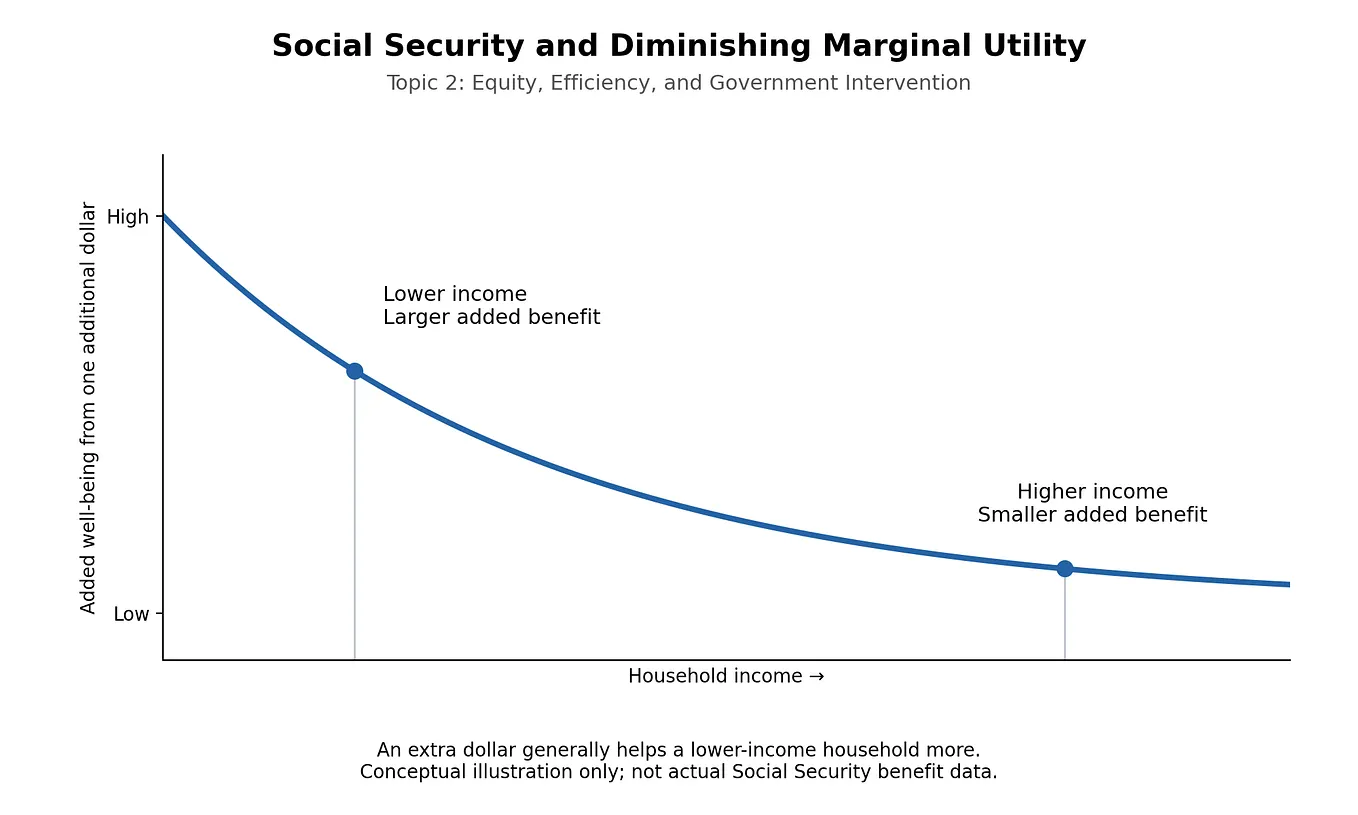
The proposed solutions demonstrate economic trade-offs and opportunity costs. Increasing payroll taxes could strengthen funding but reduce workers’ disposable income and increase employers’ labor costs. Taxing more earnings of higher-income workers would place a larger share of the burden on that group, while raising the retirement age would reduce program spending but create challenges for people unable to work longer. The episode also explores taxing employee benefits and increasing immigration to expand the contributing workforce. These options connect to economic efficiency and equity: policymakers must consider both how much a reform improves funding and how fairly its costs are distributed (NPR, 2026).
In my opinion, this episode shows why long-term financial planning must account for population trends, labor markets, and government policy. Changes to Social Security could influence household spending, retirement decisions, and businesses’ compensation costs. My economic interpretation is that evaluating reforms requires more than balancing revenue and expenses; it also requires examining incentives and the effects on different stakeholders. The discussion provides a practical example of how public policy decisions can affect consumers, employers, and the broader economy.
Source: NPR. (2026, September 30). Who’s gonna pay for your Social Security? [Audio podcast episode]. In Planet Money. Listen on Apple Podcasts.