Why I Wrote GAME on GAME


I wrote the book GAME on GAME: The Playbook for Life Beyond the Game because I saw a gap… and I lived a gap. I know what it feels like to be deeply prepared for your sport and unprepared for everything around it. I know too many athletes who were celebrated for performance, but unsupported in their transition out of sports.
At first, I thought maybe that was just my story. Maybe it was unique to me and how I handled my situation, but the more I paid attention, the more I saw it in my peers, and later in the athletes I coached and mentored. That’s when I understood this isn’t a unique story at all. A lot of athletes either are experiencing, or already have experienced, exactly what I did. I wanted to create something that I wish I had while going through my own journey.
I kept seeing athletes whose entire identity was wrapped up in their sport. They didn’t really know who they were outside of it, what else they were capable of, or even what they were interested in beyond the game. That ultimately leaves a lot of athletes unprepared for life after it. I saw athletes at all levels dealing with pressure, transition, mental health struggles, and a lack of guidance… ultra-talented individuals who knew how to compete at a high level, but had never really been taught how to navigate life outside the lines of their sport. The system teaches athletes how to be athletes. It teaches them how to perform. But it does not always prepare them for life.
For me, the journey went from NBA dreams, to adversity in college — injuries, coaching changes, unmet expectations, all of it — to then playing overseas for just one season after my college career ended. There’s so much you don’t really understand until you live it. One thing I came to realize is that from the moment you leave high school and step into college, the game changes. Even if people are sincere, even if they mean well, everybody is fighting for their livelihood. Teammates, coaches, trainers, advisors… everyone has something on the line. The older you get in your athletic career, from youth sports to high school to college to professional sports, the more it becomes a business.
That can be a hard reality for young athletes to process. Up to that point, a lot of people in your ecosystem have been trying to help you get to the next level. Once you hit college, you start to see more of the real world. People are concerned with their jobs, their responsibilities, and how they provide for themselves and their families. That doesn’t make them bad people. It just means the environment changes, and athletes have to understand that shift earlier than most do.
I wish I had a former basketball player turned business professional come to me at an earlier stage and give me permission to lean into some things outside of basketball while still being locked in on my dream. Because that transition was difficult. At 24 years old, the one thing I had always done was no longer my main thing anymore, and I had to figure out how to reinvent myself. I didn’t have the structure, the coaches, the locker room… all of that was gone, just like that. I remember how hard it was trying to quantify my experience on a resume when I had never worked a traditional job up to that point. I was thinking, How do I step into this new world when I don’t really know anything about it?
To be honest, life stayed rocky for a while. It wasn’t like I figured it out in a year or two and everything just clicked. Things didn’t really start to feel more stable for me until I was around 29 or 30; and even once life became more stable, there was still this deeper pull in me… this sense that I wanted more than just stability. I wanted to chase passion. I wanted to help people. I wanted to create impact. Deep down, I think I always knew that about myself, but no one ever really asked me about that. No one nurtured that part of me. No one helped put me on a path where I could see how those things could live in a professional setting.
And I wasn’t the only one.
I had peers going through a lot of the same things. I saw guys become teachers, coaches, security guards. In the D.C. area, I saw some people try to get into government work. I saw others go into the military after college. None of those things necessarily sparked my interest, and a lot of my peers didn’t seem excited about what they were doing either. It was just a job. It wasn’t like hooping, where you’re passionate about it, where you’ll train for hours because you love it and want to get better. This was more like, I need to survive. I need to make money. Even if I don’t like what I’m doing, I’ve got to do something.
Get Javorn Farrell’s stories in your inbox
Join Medium for free to get updates from this writer.
That realization stuck with me. A lot of my peers weren’t happy. Some were struggling with stability. Some couldn’t find jobs. Even some of the ones who did make it professionally were trying to play as long as they could, even if they weren’t making good money, because they loved the game and didn’t know who they were or what they’d do without it.
So I had to write this.
I had to write this to give athletes permission to find out who they are while still chasing their dream. I had to write this so athletes could understand that all the skills they’re developing in their sport are going to show up again in life. I had to write this so they could start thinking about the people around them, the access they have while they’re playing, and how to leverage those relationships and opportunities. I had to write this because I want us to have more stories of athletes thriving after sports, instead of constantly hearing about post-career depression, identity foreclosure, and people feeling lost once the game ends.
The more I wrote this book, and the more I sat with it, the more I realized this was bigger than just a book. It was a platform. It was a conversation that needed to be had… a real one. That’s what pushed me to build a curriculum, a mentorship program, workshops, and have speaking engagements. Not to be some motivational speaker telling athletes how badly they need to want it, but to give them practical advice and real tools they can actually use. GAME on GAME became a response to a very real need.
To be clear, this book isn’t just meant to be motivational. It can encourage you, sure, but it’s really meant to be useful. It’s for athletes at any stage of the journey… before, during, or after sports. It’s for parents, coaches, mentors, educators, and anybody who cares about the athlete experience and athlete development. It’s also for people who want a more honest, insider look at what an athlete’s journey can really feel like. Even though it was written with athletes in mind, the lessons in this book are human.
My hope is that after reading this book, athletes understand that their identity is not solely tied to their sport. I want them to understand that preparation matters… not just in the game, but in life. I want them to understand that the skills they’ve spent years developing through sports are transferable to every other area of life. I want them to understand that the game may shape you, but it does not have to limit you. I want them to understand that relationships matter, that self-awareness matters, and that suppressing parts of yourself just to survive in one environment can cost you later. I want them to understand that life after sports is not the end of the story. Your sports career is a phase. A meaningful one, yes, but still just a phase. There is still a way to win after the game is over.
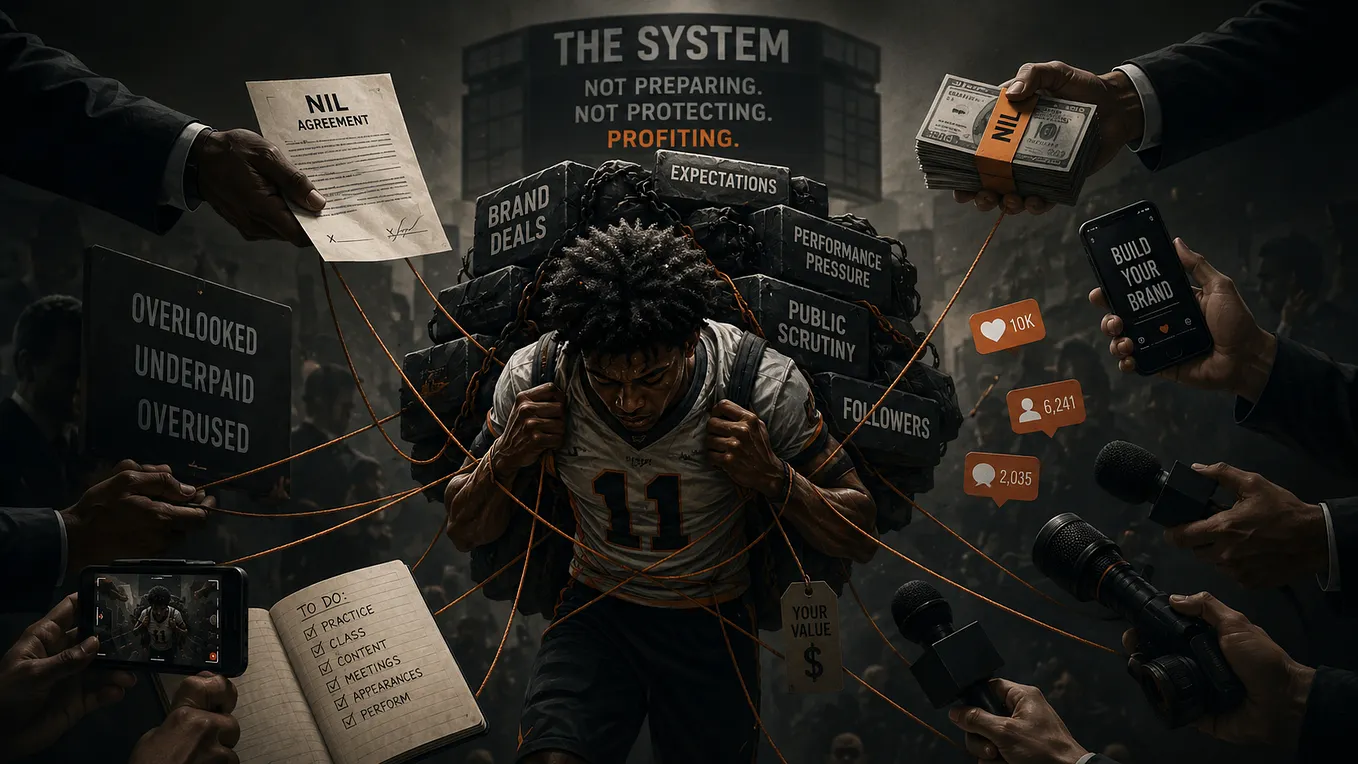
I decided to release this now because we’re living in an era where athletes are dealing with more pressure than ever. The game around the game has changed. There is money pouring into sports at younger and younger levels. Social media has changed how athletes see themselves and how they are seen. NIL has changed the college landscape. The commercialization of youth sports has changed the pressure and the stakes; and too often, athletes are still being left to figure it all out alone while the adults around them profit from their performance.
That makes this message even more urgent.
GAME on GAME is about giving athletes “game” on the game they’re playing, but ultimately on the game of life. It’s about understanding the seen and unseen parts of the athlete experience. It’s about taking the wisdom from one phase of life and applying it to the next. It’s about helping athletes recognize the tools, resources, and relationships at their disposal while they’re still playing, and making sure they know how to tap into them. GAME on GAME isn’t just meant to be a good read. It’s meant to be useful guidance. It’s meant to help make sure athletes are not left behind or forgotten once their performing days are over.
I didn’t write GAME on GAME because I had all the answers. I wrote it because I know too many athletes are asking the right questions alone. GAME on GAME is about more than sports… it’s about helping athletes build a life that lasts long beyond their sports career.
The game gave us a lot. This book is about making sure it gives us something that lasts.
If this resonates with you, don’t just read it and move on. Share it with an athlete, parent, coach, mentor, or educator who needs to be part of this conversation. Subscribe below and follow me on IG at @JavornFarrell and @GAMEonGAMEfoundation as we get ready to launch GAME on GAME. This book is for anybody who believes athletes deserve better preparation for life during and after the game.