Brother Rush Limbaugh’s Gospel of Denial


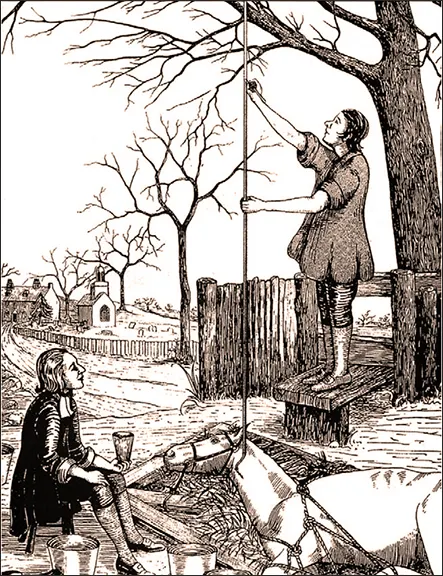
In the summer of 1856, Mrs. Eunice Newton Foote, a lady of quiet station and keen intellect, carried out experiments by placing glass cylinders filled with different gases — including carbon dioxide — under sunlight. She observed that the cylinder containing CO₂ grew noticeably warmer and held its heat longer than the others. She concluded that, were the atmosphere of our globe to be largely charged with such a gas, the temperature thereof would be augmented — an early description of what we now call the greenhouse effect. And in the years thereafter, others — armed with grander apparatus and invested with the authority of scientific academies — confirmed the soundness of her observation, though too often it was they who gathered the honors from seeds she herself had first sown.
In the 1930s, an engineer named Guy Callendar showed clear evidence that more carbon dioxide in the air was making the Earth warmer. He gathered weather records from many parts of the world and found that the average temperature had risen about 0.3 °C in fifty years. He linked this warming to the carbon dioxide released by factories and machines.
Early scientists once believed the oceans would act as an almost limitless sink, swiftly absorbing humanity’s carbon dioxide emissions and preventing any significant rise in the atmosphere. But in the 1950s, studies by Roger Revelle and Hans Suess revealed otherwise. They showed that chemical buffering in seawater sharply restricts how much CO₂ the oceans can take up in the short term. This discovery — later termed the Revelle factor — made clear that much of the emitted gas would remain in the air, driving changes in the climate.
Get William P Fleming, MD’s stories in your inbox
Join Medium for free to get updates from this writer.
From the first murmurs of scientific concern in the Kennedy years to Johnson’s bold 1965 admission that fossil fuels were altering the atmosphere, presidents have wrestled — sometimes faintly, sometimes forcefully — with the climate question. Nixon founded the Environmental Protection Agency (EPA), Carter called for conservation and solar power, and George H. W. Bush signed the first global treaty, while Reagan’s deregulatory creed slowed momentum and Clinton framed the issue as an international challenge. George W. Bush’s administration was criticized for downplaying climate science. Obama placed climate at the heart of U.S. policy through the Paris Agreement, only for Trump to reverse course with rollbacks and withdrawal, before Biden restored ambition with record clean-energy investment and a return to Paris. Now, in his second term, Trump has again steered the nation away — dismantling climate institutions, curtailing the EPA, and assailing renewable energy — leaving America’s stance once more unsettled on the world stage.
Rush Limbaugh emerged in the mid-to-late 1980s, just as his radio career began to thunder across the nation. His role in shaping public attitudes toward the environment cannot be overstated. Behind his golden microphone he preached like a revivalist of denial, his program a great radio tabernacle where millions tuned in as his congregation. Each broadcast was a daily sermon, a fiery attack not only on the “false prophets” of climate science but on liberals themselves, whom he cast as apostles of weakness and deception. He mocked the “green gospel” of conservation, denounced regulation as shackles on American freedom, and promised deliverance through consumption, prosperity, and scorn for his enemies. In his voice, the rejection of environmental warnings became an article of faith, a creed renewed day by day through ridicule and defiance, until the politics of denial took on the fervor of religion.
Vice President Al Gore, after leaving office, sought to temper Limbaugh’s destructive sermons on environmental concerns. In 2006 he released An Inconvenient Truth, a documentary and book that distilled complex science into a narrative ordinary people could grasp. The film won an Academy Award, and Gore shared the 2007 Nobel Peace Prize with the Intergovernmental Panel on Climate Change (IPCC). It became one of the most influential works of climate communication ever produced, credited with moving the issue from obscure reports into kitchen-table conversations around the world.
Yet even as Gore sounded his alarm with charts, films, and sober testimony, Rush Limbaugh mocked him relentlessly, casting him as the “high priest” of climate alarmism. Where Gore spoke with the cadence of a prophet warning of fire on the horizon, Limbaugh thundered back like a revival preacher of denial, ridiculing every plea as heresy spewed by liberals. He even went so far as to question the faith of those who believed that human actions, by altering the climate, endangered God’s creation. His message against climate change was never grounded in facts or science. It was opinion clothed as revelation, thundered daily until it calcified into creed — seeping deep into the halls of Congress, where it stifled the very possibility of change. Their clash of pulpits — one urging repentance, the other glorifying defiance — etched the nation’s divide deeper with every broadcast and every lecture.
Limbaugh’s same pattern of denial appeared in how he spoke about health. He mocked the dangers of smoking, joking that secondhand smoke was harmless and waving off warnings as liberal alarm. He puffed his cigars like a badge of defiance, lifting them high as if each cloud of smoke were proof of his invincibility. But denial cannot overturn the laws of flesh. The confidence he preached turned to bitter irony: he was struck with advanced lung cancer — the very affliction born of the cigars he glorified. In the end, the preacher of doubt met his own altar call, and the wages of his denial carried him to the grave in 2021.
So too with the environment. Just as Limbaugh’s lungs could not escape the smoke he celebrated, the earth cannot escape the poisons poured into its skies. His own decline stood as a parable: to mock the warnings, to glorify the hazard, is not to conquer danger but to hasten its arrival.