Salt and Rain in the Vein
Intravenous Therapy from the Cholera Pandemics to the Present Day


For nearly all of human history, the bloodstream lay beyond reach. The steady drip — so familiar now — belongs only to the narrowest margin of our time. Beyond what could be swallowed, the body’s interior remained closed, its deeper currents untouchable. What was lost could not be restored. Dehydration, blood loss, and electrolyte derangement were often terminal events — though today, treatment can enter the vein, reshaping outcomes that were once foregone.
The hypodermic needle did something profound: it changed the relationship between physician and body. For the first time, medicine could bypass the uncertainties of digestion and absorption and reach the bloodstream directly.
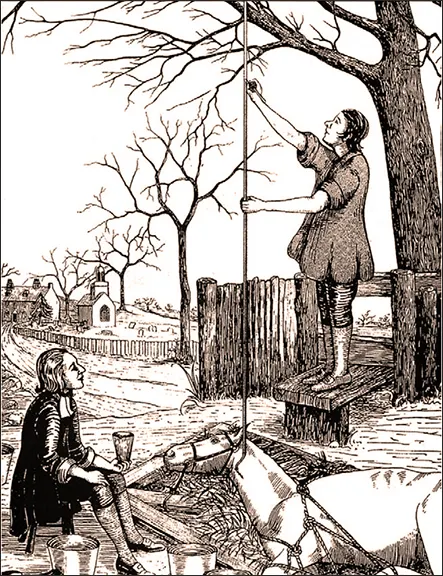
Christopher Wren — better known today as the architect of St Paul’s Cathedral in London — was among the first to attempt a practical invasion of the circulation. In the 1650s, as part of a circle of experimental natural philosophers at Oxford that would later form the nucleus of the Royal Society, Wren devised one of the earliest methods of introducing substances directly into the bloodstream. Using a goose quill attached to a bladder, he injected wine and medicinal preparations into the veins of dogs.
The meaning was revolutionary: the circulation itself could be entered. His experiments showed that substances introduced into a vein could exert rapid, observable effects — animals, for example, became intoxicated when infused with alcohol.
Yet the practice did not take hold. The technical barriers were substantial, and the risks — chief among them infection — remained poorly understood. As others extended the work to human subjects, the deaths that followed argued persuasively for abandonment. For nearly two centuries thereafter, the idea of accessing the bloodstream receded into the margins.
The development of safe IV therapy evolved through the slow accumulation of hard-won advances across about a century.
Cholera emerged as a disease of global importance in 1817, when a particularly lethal outbreak in India spread throughout most of the subcontinent. In Britain, the first cases were diagnosed late in 1831, with the epidemic reaching London in February of 1832. Physicians were confronted with a form of collapse unlike anything in their experience.
Patients did not simply weaken — they emptied. Fluid poured from the body through profuse diarrhea with astonishing speed, leaving behind profound dehydration: the skin cold and blue, the pulse rapid and thready, the blood itself thickened to a sluggish, failing stream. Death often followed within hours.
For those who survived the initial collapse and maintained hydration, the illness was self-limited — the body capable of clearing the infection, provided fluid losses were met. Diarrhea was the dominant symptom and the principal cause of death; vomiting, though common, played a lesser role. Prompt replacement of water and the body’s essential salts remains the primary treatment for cholera — as true today as it was in the cholera epidemics of the 1830s.
It was in this setting that the Scottish physician Thomas Latta attempted something extraordinary. Reasoning that the disease was, at its core, a loss of fluid, he turned to an instrument at hand — the enema syringe, a simple barrel-and-plunger device already in routine use.
He replaced its broad nozzle with a thin hollow silver tube of his own making — pointed at one end — and introduced it directly into the basilic vein on the inside of the forearm. Silver, chosen for its firmness and malleability, was stiff enough to penetrate the vessel and hold its position. With the plunger driving the flow, he injected a warm saline solution ounce by ounce, refilling and reinjecting as he went, the syringe holding no more than three ounces.
Get William P Fleming, MD’s stories in your inbox
Join Medium for free to get updates from this writer.
Observers described what followed with astonishment. Latta himself recorded the transformation: “The pulse, which was imperceptible, returned; the countenance assumed a more natural appearance; the patient expressed herself much relieved.” He further noted that the surface of the body, previously cold, became warm. The idea was simple. Its implications were immense.
And yet the success was often fleeting. Without a sustained method of replacement — and without an understanding of electrolyte balance, the body’s essential salts, chiefly sodium and potassium — patients relapsed as quickly as they had improved.
The hollow needle came in 1844, when the Irish physician Francis Rynd devised one to treat intractable pain. It was created from a flat strip of steel, folded into a narrow tube and sealed by heat along its seam. Drawn through a succession of ever-smaller dies, the metal was gradually thinned, its diameter reduced while the hollow channel within was preserved. It featured a beveled tip for easier skin penetration — the first true hypodermic needle, a design that remains standard today.
On June 3 of that year, at the Meath Hospital in Dublin, he used it on a patient whose trigeminal neuralgia had outlasted every available remedy. Margaret Cox, fifty-nine years old, had endured years of relentless facial pain — among the most excruciating known to medicine. Nothing she could swallow gave relief.
Rynd used the needle to introduce a solution of morphine and creosote directly into the tissues of her face, delivered not by plunger but by gravity alone. Her pain, at last, receded.
In 1853, two physicians working independently fashioned instruments that would become the modern hypodermic syringe. Charles Pravaz’s was of metal, governed by a screw. Alexander Wood used glass, transparent and immediate, allowing the dose to be seen as well as delivered. It was Wood who carried the method into practice — pairing the hollow needle with a repeatable technique, publishing his results in 1855, and bringing subcutaneous injection into wider use.
With the development of the hollow needle and the syringe, the essential gateway to the bloodstream had been established. The progress that followed unfolded over decades — a slow, deliberate refinement of practice, as physicians learned not only how to enter the vein, but what to deliver and how to do so safely.
Gradually, understanding caught up with practice. Saline solutions were more carefully defined, their composition brought closer to that of the body’s own fluids. Glass bottles replaced improvised containers, bringing sterility and the ability to measure what was being delivered. Gravity, simple and reliable, became the means by which fluids were delivered — elevated above the patient, descending in a controlled and continuous flow.
It was in the crucible of war that intravenous therapy advanced most rapidly. The need had been recognized in earlier conflicts — most notably during the American Civil War — where blood loss and shock claimed countless lives, but the means of effective replacement were not yet available. The demands of the early twentieth century — first in World War I, and then on a far greater scale in World War II — forced medicine to confront hemorrhage and shock as urgent, solvable problems. Fluids had to be delivered quickly, reliably, and in volume. The limitations of earlier methods became immediately apparent, and with them came innovation.
Blood transfusion, once hazardous and uncertain, became practical with the understanding of blood groups and the development of anticoagulants. Blood could now be stored, transported, and administered at the front. Intravenous lines grew more dependable. Needles improved, tubing became more consistent, and the principles of sterility — hard won in the preceding decades — were more rigorously applied.
By mid-century, the essential elements of modern intravenous therapy were in place: defined solutions, controlled delivery, reliable access, and a growing understanding of the body’s internal balance. What had begun as a tentative and often perilous experiment had become a cornerstone of clinical care — so familiar now that few pause to appreciate it, and so often taken as inevitable, yet in truth the product of a long and uncertain ascent.
And so the steady drip took its place at the bedside — unremarkable in its presence, transformative in its effect. What enters the vein now is simple: water and salt, chiefly sodium and potassium, delivered in measured continuity. No grand elixir, no hidden complexity — only the quiet restoration of what the body has lost.
For nearly all who have lived, the bloodstream lay beyond therapeutic reach — its losses final, its imbalances uncorrected. What was emptied could not be refilled. What was unbalanced could not be restored.
It was not so long ago. My own grandfather, born in 1895, came of age in a world where such treatment existed only in rudimentary form — uncertain, inconsistent, far from routine.
Now, in bags of plastic suspended just above patients around the world, there gathers a clear solution — indistinguishable, at a glance, from water itself. Drop by drop, it descends. A controlled fall, a measured return: salt and rain in the veins.