Using a Physical Mockup to Solve a Lighting Problem

I knew what I wanted to do for my next oil painting, but I encountered a problem early in the process.
The pose reference, mood, and composition were all clear, but the lighting was not. The reference photos did not contain the shadow information I needed, which meant the lighting logic had to be constructed rather than observed.

I have realized over time that my strongest instincts for light and shadow come from observation. When that information is visible, decisions feel straightforward. When it is missing, the problem shifts from painting to problem-solving, and the work slows in a way that is not especially productive at the beginning of a piece.
This is not an unsolvable limitation. It is a skill that improves with practice. It was simply not the part of the process I wanted to focus on while trying to get a painting off the ground.
There were several viable options. I could have generated a 3D model from the 2D reference image, adjusted a virtual light source, and used that output as lighting reference. That approach would have been valid, but it would also have required learning a new tool at a moment when I wanted to stay physically engaged with the painting process.
Instead, I chose a physical workaround.
Get J E MacMillan’s stories in your inbox
Join Medium for free to get updates from this writer.
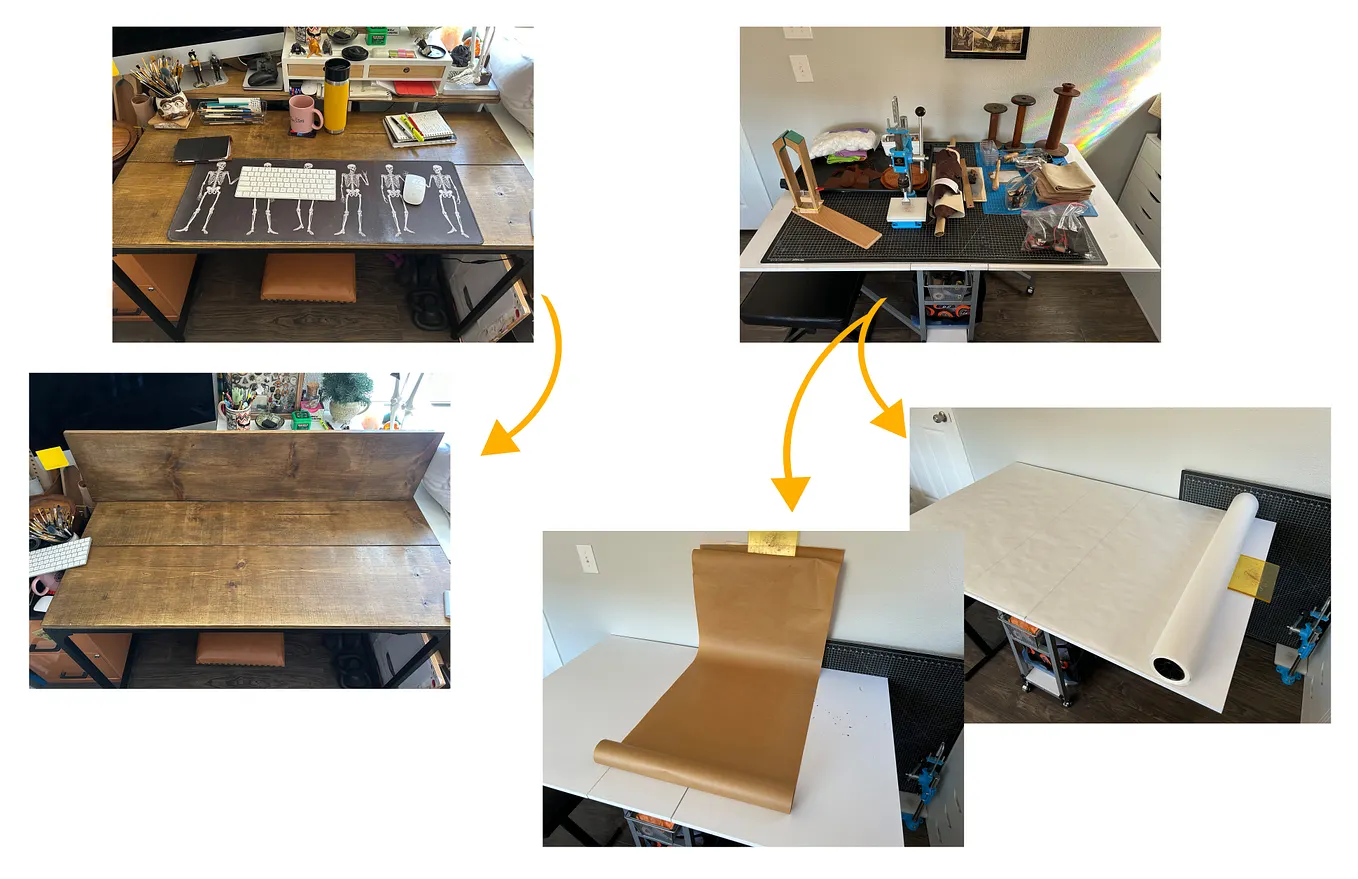
I built a small mock environment using cardboard, masking tape, and a stand-in figure. I cut a window-frame shape into the setup and introduced a single light source so I could observe how light and shadow behaved across the form and within the space I was trying to invent.

I was unable to locate my posable figure that would be perfect for this type of situation, so I used a doll. Though the figure in my painting will not be following the rules when it comes to capturing light and shadow (it would be a jet black void filled with floating eyes), my focus was primarily on capturing light and shadows on the walls and those potentially cast along the floor.
The setup was crude, but it provided consistent, observable information. I could see how the light fell across the scene, how the window shape interrupted it and the resulting shadows behaved.
I do not know how common this approach is. I assume other artists solve this problem through mental construction, repeated life studies, or digital lighting tools — but maybe there are others like me that build a physical mockup; I have no idea. But this was the method that allowed me to move forward without diverting prolonged attention away from the act of painting itself.
Whatever the case, the mockup helped me choose how I wanted to handle the lighting from the window, and even which elements I wanted to include int he frame. With this, I was able to begin the painting.

This process was not about finding a perfect or universal solution. It was about choosing an approach that preserved my momentum.
I’m happy to say that the painting has reached a point where certain areas needed to dry before further work can continue. The lighting problem that initially required so much consideration is no longer a concern.
Please feel free to share any questions, thoughts, or alternative approaches in the comments. Documenting the notes and decision-making is part of how I stay engaged with the work, and I’d love to hear your thoughts or suggestions.
Thanks!