On Working Small in a World of Spectacle


Most paintings today are made to be seen on a screen.
Not consciously, maybe. But the scale, the contrast, the visual aggression of a lot of contemporary work makes sense when you consider that its first audience will encounter it as a 1200-pixel JPEG. Big gestures. High contrast. Immediate legibility at thumbnail size.
I went the other way.
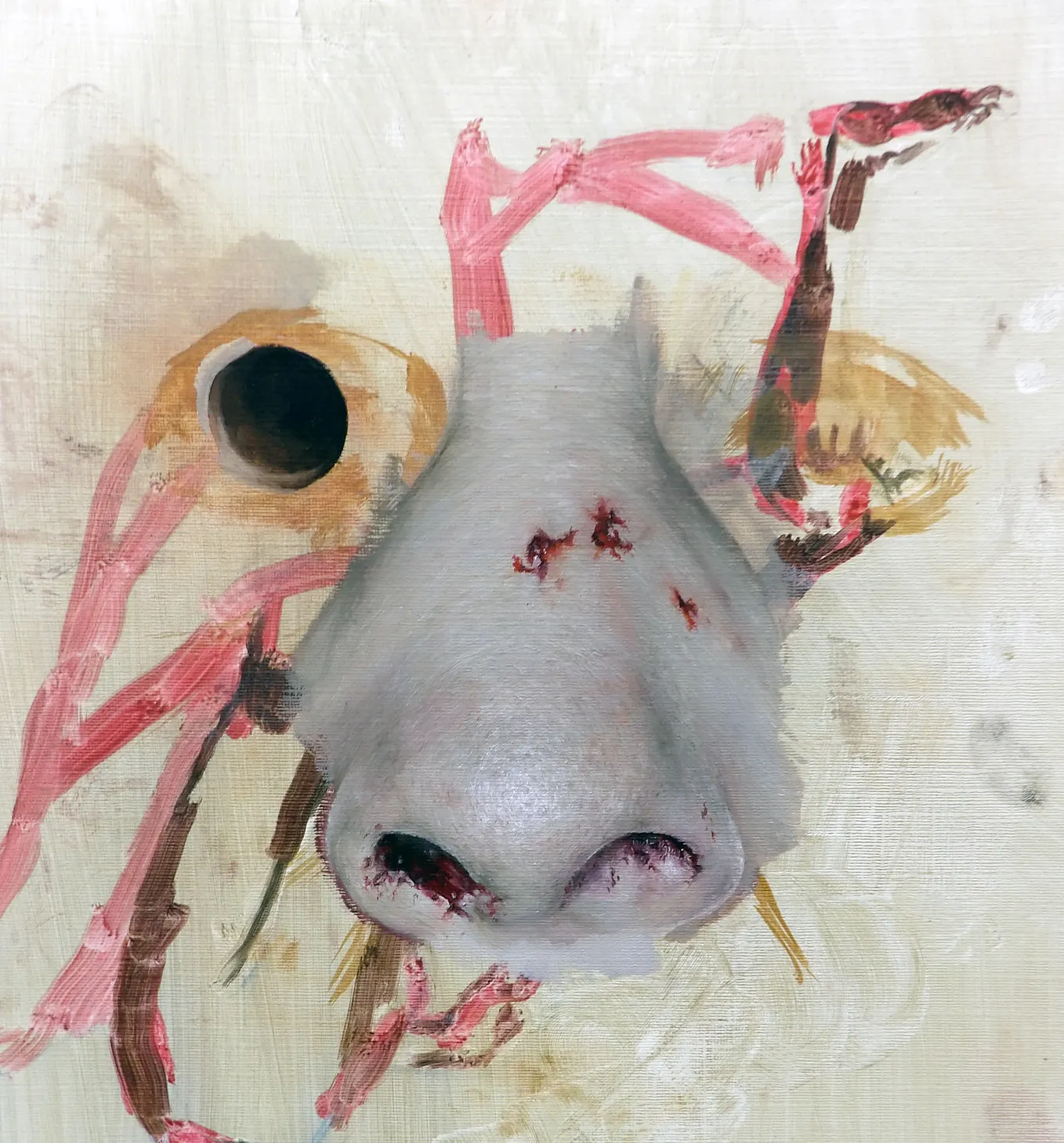
My paintings are small. Deliberately, insistently small — the kind of scale that requires you to come close, that refuses to perform from a distance. In a gallery, you have to approach them like you’d approach a person. The intimacy isn’t incidental. It’s the whole point.
Get Jérémie Marié’s stories in your inbox
Join Medium for free to get updates from this writer.
Working small forces a different kind of attention. Both mine, as I’m making it, and the viewer’s when they encounter it. There’s no room for loose passages, for gestures that read well at arm’s length but dissolve on inspection. Everything has to hold. The density accumulates layer by layer until the surface has a physical presence that no reproduction can fully capture.
This is, I know, a strange position in 2025. The logic of visibility — social media, art fairs, the attention economy — favors scale. Larger work photographs better, travels better, commands more attention in a crowded room.
But there’s something I keep coming back to: the works I remember most aren’t the ones that were impossible to ignore. They’re the ones I had to lean into.
Smallness is an invitation. You can decline it. But if you accept, something different happens.
That’s the bet I keep making.
Jérémie Marie is a French figurative and surrealist painter jeremiemarie.com