Bristol Rovers tactical preview: Portsmouth (H)


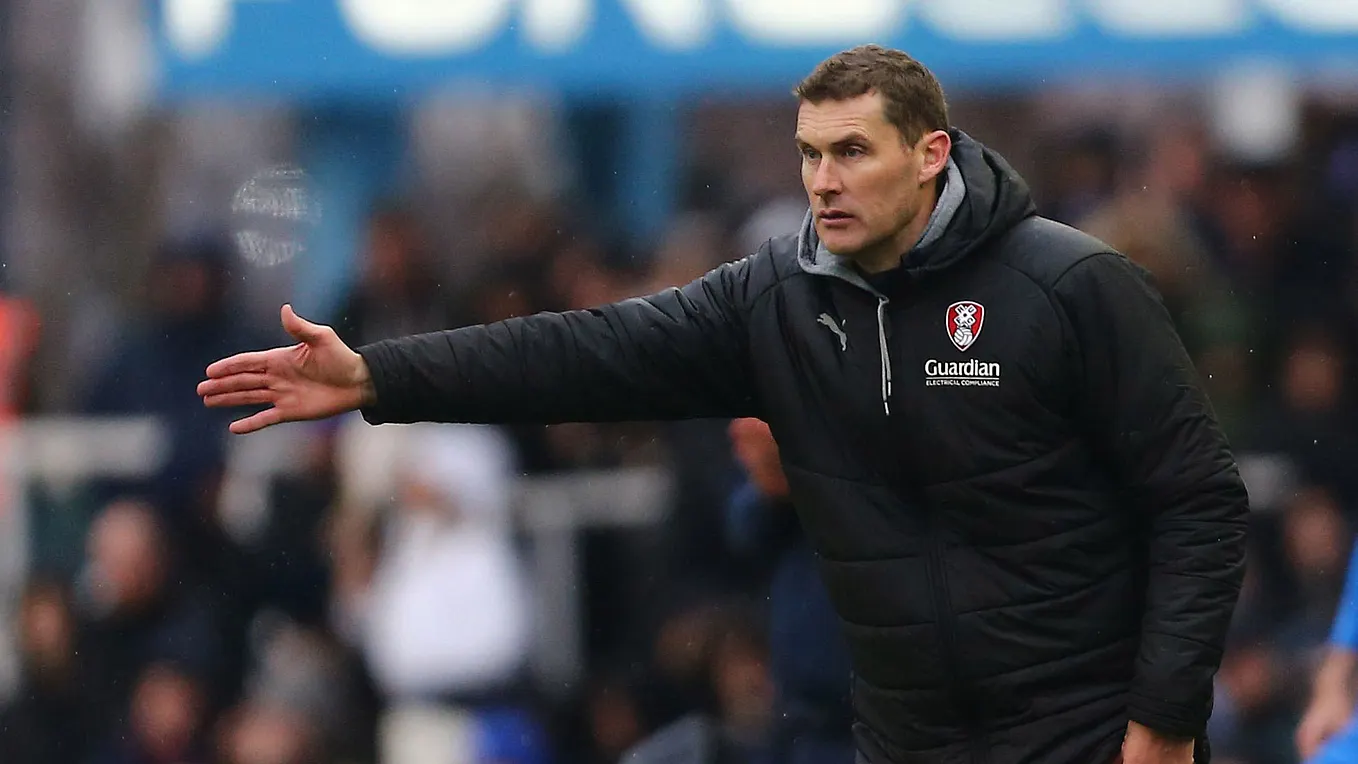
Bristol Rovers will be hopeful of achieving their first-home victory under the guidance of new manager Matt Taylor as they host current league-one leaders Portsmouth on boxing day. The gas have already claimed a competitive scalp with Taylor, having beaten fellow-promotion candidates Bolton Wanderers on the 16th December. Rovers have won, drew and lost 1 each of his other games in charge at the time of writing, yet pompey pose a different scale of beast when they travel to the west countries capital.
John Mousinho’s men have lost just 1 of their last 32 league-games; a staggering stat which has contributed to them having a 7-point buffer to 2nd place Stevenage at the time of writing. Today’s article will assess the performance vs Bolton — linking Ian Evatt’s coaching philosophies and behaviours of his individuals to that of Mousinho’s. As well as a tactical insight into Portsmouth from my good friend, Sonny.
Finally, I will discuss how I think Rovers will have the best chance of beating Portsmouth, and come up with a judgemental prediction as to how the game may play-out. Enjoy!
Analytical-summary: Bolton 1–2 Bristol Rovers

I watched part of the replay between Bolton and Rovers to see if anything stood out and/or I missed when tuning in the first time around, and there were immediately bits of the performance to reflect upon. This will not be a huge debrief, because I am aware the focus lies on a match-preview. Bare in mind, I was unable to re-watch the first 30 minutes because the footage simply was not there.

This was an extract from my piece on Matt Taylor’s out-of-possession principles as a coach and this particular part focused on the upcoming matches. As you can see, I wanted us to make Bolton’s build-up as uncomfortable as possible within means, and Matt Taylor seemingly wanted that too with the beauty of hindsight. I was so impressed with our pressing structure, and that’s what I want to look at first.


Rovers’ plan to push Bolton down the sides worked effectively because Rovers were removed the threat of the “8s”, Thomason and Maghoma, within the half spaces. They knew Bolton would attempt to overload the centre with one of the “9s” dropping (usually Bodvarsson to draw attention to himself and isolate teammates in space), creating a 3v2 scenario vs the double-pivot of Ward — Finley. Antony Evans would shadow-mark the single pivot of Aaron Morley, whilst also closing-down Eoin Toal when the ball was on his side, meaning Bolton could even have a 4v2 numerical overload on occasion.
In the thirty-three-minutes of the game where it was 11v11, Rovers were compact in their mid-block and used any action as their trigger to press and attempt to turn the ball-over. If Bolton did manipulate the block and find surpassed the first-line of the press, which they achieved particularly in the second-half, then the responsibility fell on our midfield to apply pressure and for the centre-backs to back-it-up, essentially “clogging” the area Bolton’s players want to operate in. Bolton sacrificed talisman, Dion Charles, for centre-back, Will Forester after Santos’ dismissal as Evatt attempted to re-gain control. The hosts were very good in the second-period, I must admit, probably due to the fact bodies naturally wear as the game eases towards its climax, but the gas never felt that threatened in open-play.
Charles’ absence meant the only vertical and semi-reliable out-ball was Bodvarsson, but as mentioned above, Rovers managed that situation-well. What Charles provides is the ability to run-on in-behind the last-line of defence. Bolton struggled to utilise the space behind Wilson — Taylor — Crama and that was a problem when the gas did press-high. For example, in the shots involving Marquis above, there’s every chance that goalkeeper, Nathan Baxter, goes far and direct with his-kick to ensure Rovers don’t advanced-forwards quickly. He is capable of doing that and Charles is capable of peeling off of his marker’s shoulder. That was absent.

It’s important to not understate the dividend of our in-possession impact.

This was an extract from my in-possession principles of Matt Taylor and most of it can be applied to Bolton — that is one “scalp” already defeated, as I chose to put it. In the short-part of the game I analysed, there was some noticeable trends regarding the common players responsible for sourcing and progressing offensive-transitions through carries and/or pass-retention. The main culprit? Enter, Luke Thomas.


In these images used, Rovers manifested opportunities to utilise Thomas’ combination of ball-manipulation and general ball-carrying abilities to dismark in initial confined space to free-up space on the opposing side for Harvey Vale to thrive. Jack Iredale was preferred at LWB to Randell Williams, and the former’s conservative positioning certainly contributed to Thomas having licence to roam-inside. Given Thomas is quite one-footed, I’m surprised there was no significant pressure applied from Iredale that forced Thomas to turn onto his more uncomfortable right-foot. Neither Iredale, Maghoma, Morley, Thomason took responsibility for man-marking him so Bolton ended up with a scenario where multiple players were marking space instead, inevitably leaving Crama, Finley, Vale, Collins spare.
Taylor instructed Evans to play advanced as one of the two “10s”, and his zone of influence within the right-half-space was expectedly better here than his zone of influence as an unorthodox right-winger, of which we saw at-times under Barton. Evans’ role was key — occupying Morley, Toal, etc, that immediately vacates space for Thomas to come into the interior on his instep. Collins had similar instructions to stay central in the left-half-space; optimal for one-player to operate their own in the last-line of attack — if Collins came-out, Vale came-in. Vale is a more well-rounded and tailor-made 1v1 profile than Thomas, and therefore this scenario wouldn’t have the same affect on the other side, but it wasn’t needed. Rovers executed it pretty-faultlessly.
See-below for 3 attacking scenarios (the latter-two resulting in goals).


Opposition Analysis w/ Sonny's stats
Joe has asked me for my contribution to this pre-match piece & I was happy to accept, my role is to give the lowdown on John Mousinho’s team, style of play & how that could come into play in this fixture at the Memorial Stadium.
(Written before the 23rd December League One fixtures)
Correction; number 27 for Bristol Rovers is meant to be number 21 instead.
Likely line-up/formation:
4–2–3–1:
1: Norris; 17: Rafferty, 20: Raggett, 18, Shaughnessy, 21: Sparkes; 16: Morrell, 7: Pack; 25: Kamara, 8: Robertson, 32: Lane; 9: Bishop;
Subs: 23: Schofield (GK), 4: Towler (LCB), 24: Devlin (CM/CAM) 10: Scully (LW/CAM) 11: Whyte (RW/LW) 15: Saydee (CAM/ST) 19: Yengi (ST/LW);
Get JHScouting_’s stories in your inbox
Join Medium for free to get updates from this writer.
In possession
- Play out from the back
- Wide triangles
- Switching the play
- Dominate possession
- High defensive line
- In-swinging corners
- Focus majority of attacks down the right
- Dominating the game in the opposing half
Out of possession:
- 4–2–3–1 mid-block
- Intense pressing
- Counter pressing
- Numbers back to defend the box from corners
- Defend narrow
Strengths:
- Creating chances
- Converting chances
- Defending & attacking set-pieces
- Progressive passing accuracy
- Best defensive record in the division
- Strong mentality to come back from losing positions
- Aerial duels
- Sean Raggett & Conor Shaughnessy two aerially dominant CBs
- Will Norris possess strong distribution
- Jack Sparkes possess strong crossing
- Colby Bishop a player of high ability
- Alex Robertson a player of high ability
- Marlon Pack a player of high ability
Weaknesses:
- Can be vulnerable at times on the defensive transition
- Sean Raggett doesn’t possess the same technical quality compared to his CB partner
- Don’t apply enough pressure to the CBs when defending in a mid-block
- Jack Sparkes isn’t the best 1v1 defender
- Perhaps don’t score enough goals from open play
Build-up:
Expect Portsmouth to build in their traditional 2–4–4/3–4–4 shape with goalkeeper Will Norris (1) capable of being utilised as the extra man with his composure & ball-striking ability, Raggett (20) & Shaughnessy (18) will be split either side of the 18-yard box with Norris happy to roll the ball forward in an attempt to bait the opposition front men into pressing, leaving one of the pivots available to receive & bypassing the first line of pressure.
Morrell (16) & Pack (7) will be positioned just between the central area & half-space with Rafferty (17) & Sparkes (21) out wide to make the second line, Kamara (25) & Lane (32) should be as wide as possible to stretch the defence with Robertson (8) sitting between the lines & Bishop (9) will look to hold the ball up when he receives & link the play with the midfield.
The Bristol Rovers numbers on this board reflect their line-up from their 2–1 win against Bolton, this of course could change with the likes of Jevani Brown, Chris Martin, Lewis Gordon & Jack Hunt capable of filling in at AM, ST, LCB & RWB respectively, I expect Rovers to stick with their 3–4–2–1 shape regardless of personnel with the principles staying the same.
33: Cox; 5: Wilson, 17: Taylor, 25: Crama; 11: Thomas, 6: Ward, 8: Finley, 19: Vale; 21: Evans, 10: Collins; 9: Marquis;
To give some context as to how Portsmouth look to play out from the back, it’s a relatively simple concept with Norris often playing side passes to one of the CBs where they will look to bring the ball out & play through the lines to either the ball-side winger, ST or the №10 who drops into the half-space. What we’ll also see from John Mousinho’s side is bounce passes to the CBs, this is done with one of the pivots dropping deep as Norris looks to bait the striker into the press by coming half a yard forward each time before placing his studs on the ball, by baiting the striker into the press, it then gives Norris the space to play into the deep pivot before the ball is played to the ball-side CB.
The respective set-ups of each team does give Portsmouth a 3v1 advantage in the building phase but with Rovers having a 5v4 advantage in the last two lines with the CBs & DMs against the front four, questions will be asked as to how Pompey will be able to break through these two lines. But for the set-up of Bristol Rovers to work, they’re wide CBs need to be comfortable enough to defend their respective wide channel against the Kamara & Lane, the WBs must be quick to press the Pompey FBs when they receive from the build-up & the AMs must stay tight to the double pivot.
But what Portsmouth also have is a direct outlet in the form of top scorer Colby Bishop, who is able to hold the ball up & link the play with the attacking midfielders, Morrell would need to join Robertson to compete against Bristol Rovers’ DMs for the second ball to ensure there’s no numerical disadvantage.
Generally speaking, Portsmouth look to focus their build-up on the right & there are a number of ways we could look to beat the Bristol Rovers press.
If Raggett receives from Norris, this could start a ball-side man to man press from Rovers with Collins pressing Raggett which leads to Finley (6) jumping onto Morrell & Ward (8) marking Robertson, Vale (19) will jump onto Rafferty & Crama (25) is tasked with defending the channel against Kamara but with Bishop dropping into the half-space, he will instead occupy Crama.
What this could give Portsmouth is a 5v4 overload on this right side with Kamara ready to run through on goal, this is a weakness in Rovers’ set-up Pompey could look to exploit with the WBs in the second line rather than in the defensive line. From here, Bishop could play back to Rafferty or Morrell before the through ball is played through to Kamara who makes the run into the channel between Crama & Vale.
Settled possession:
Portsmouth are usually in a 2–4–4 shape when in settled possession, Pack is often the pivot to drop deep & is capable of direct switches of play with his passing ability, Lane is capable of playing in the left half-space with Sparkes high & wide as the more attacking full-back & has very good crossing ability, Robertson will have freedom to drift into pockets of space out wide or drop between the lines.
I believe that Portsmouth can work their way into 2v1 situations against the WB by moving the ball quickly & targeting passes to inverted winger Kamara with Rafferty making overlapping runs, this can be done with Pack switching the play out wide from the left half-space with a lofted ball over to the advanced zone or from Raggett playing through the lines by baiting the pass to Rafferty which triggers Vale (19) to momentarily step out of position which opens the gap for the through ball. Kamara must be high & wide to receive at all times.
Because of Bristol Rovers playing with two CAMs, there’s no one out wide to track the overlapping run of Rafferty which will mean Finley (6) needing to step out to intercept & stop Rafferty from getting the cross away while Vale (19) engages in a 1v1 battle with Kamara. Whilst this is happening, Ward (8) could look to pick up Morrell which allows Pack to be free on the edge of the box. Sparkes should be in the advanced zone near the left by-line to pick up the loose ball if the cross from Rafferty is headed away by the CB.
Out of possession:
Portsmouth defend in a narrow 4–2–3–1 with minimum space between the lines forcing the opposition to attack down the flanks, I would expect Rovers to attack down the right & look to get Thomas (11) 1v1 with Sparkes, when the FB steps out to engage with the winger when he receives, the ball-side pivot must step back to cover the half-space & block the space for the ball-side AM to run into.
The wingers must apply sufficient pressure to the wide CBs to block off passes to the WBs, for example if Wilson (5) is in possession of the ball, Lane should press him on his right side to force a side pass across the defence where Bishop & Kamara are ready to pounce.
When Thomas has the ball in these areas, Sparkes will show Thomas outside & Lane must look to block off the passing lane to Ward (8) & look to press Wilson (5) on his right side forcing him to go back to Taylor (17) where Bishop will look to pounce, Kamara should block off Finley (6) when either Taylor or Crama (25) receives which forces Rovers to go out wide to the left where Pompey can then engage in 1v1 duels with Rafferty stepping out to Vale (19) & Morrell staying tight onto Collins (10) with Marquis (9) in a 2v1 battle with the CBs.
How do Rovers beat Portsmouth?
Disclaimer: some of Bristol Rovers’ personnel and/or formations may differ from above because of games that have taken place since Sonny wrote his piece.
Out-of-possession: 4–2–3–1 mid-block
There are two-significant parts of Portsmouth’s build-up that standout to me after reading Sonny’s piece; emphasis on right-side combinations and the use of the vertical ball from Will Norris to Colby Bishop. Whilst I very much wanted us to press-high vs Bolton, I want us operate in a settled mid-block vs Pompey, similar to how we did vs Blackpool. I thought our structure was competent vs Blackpool, and it was actually our and technically inefficiency and sloppiness that contributed to the defeat. One area they did have joy though was through lateral-switches, particularly Oliver Norburn targeting CJ Hamilton on the right-side — Vale struggled.
In essence, Portsmouth also have that unpredictability tool up their sleeve with Pack to Sparkes. Bolton lacked that, and that is why we had joy being aggressive because there was a lack of threat over-the-top of the press, especially when Charles was off. We can’t afford to be baited into one area on the right-side and leave this space on the left-side. Force them down the sides? Yes, but be disciplined within your individual duties. I’d let Pompey have an initial 3v2 overload vs Vale +1 on this-side if it means Bishop stays central and doesn’t offer a 4th body. Bishop occupying the last line isn’t a terrible thing for us if it means there is a lack of space in-behind for any third-man-runs from Robertson, Kamara, Lane and/or the substitutes like Yengi. We must shadow mark within the first-line of the press, as well, as Norris akin to Pack has the ball striking to avoid the need to play through us.
We should aim to make Pompey play out from the right — the striker is required to press Norris from his left and make him play towards the less technically-proficient Raggett (leave Raggett-free). It’s then Aaron Collins’ job to mark the space between him and Rafferty, whilst the pass to Raggett is the trigger for the 9 to press. Antony Evans should come central and man-mark Marlon Pack. Conor Shaughnessy and Jack Sparkes can be left-free to entice the switch earlier and deeper than the latter would favour. If pompey do get into our-half and do have the extra man with Kamara, Morrell, Rafferty, then it is Finley’s duty as captain to pass Robertson onto Wilson and engage in covering the wide areas. Collins must support Vale and Finley here and make it a 3v3 in the final-phase.
Speaking of wide areas, I’d return to a back 4 to match Pompey and not have scenarios where a physically-declined Josh Grant and/or Tristan Crama is defending in isolation — the return of Jack Hunt aids this shift. This allows Hunt and Thomas to operate in the same team (more on that in a minute). I would play Harvey Vale left-back, with Collins ahead of him. I’d prefer Thomas to man-mark Sparkes if ball-side and Hunt to equally man-mark Paddy Lane — allows Hunt’s lack of recovery space to not be exploited because he’s marking within the interior. I’d task Connor Taylor to challenge duels vs Colby Bishop and Wilson to mark the space in-behind in case Bishop wins the first contact. It’s important the keeper, Cox, is high-off of his line, too, because of their vertical threat. Furthermore, the double-pivot (most likely Ward and Finley), must be quick to capitalise on loose-balls ahead of Robertson and Morrell retrospectively.

In-possession: counter-attacking overloads
Pompey are going to have sustained periods of possession and that is something we have to accept and combat as I’ve mentioned above. I briefly discussed how technical insecurities in-possession vs Blackpool was our downfall. Why? There were times where we would have almost everyone other than Marquis deep and defending our box that when it was turned-over, there was a lack of consistent out-balls for our players and when there were, the quality of passing was poor. This meant Blackpool would either counter-press effectively and/or win it back on half-way anyway under no real threat of counter-attacks. Even Luke Thomas, of which was our most useful player, again, didn’t have much success in slowing the tempo down and/or moving us up the pitch — things he excelled at vs Bolton.
One of the reasons I’d like to have two-profiles of wingers accompanied by attack-minded full-backs is that there is immediately 4 options out-wide for our build-up players to look up and find (Connor Taylor, James Wilson, Sam Finley, Antony Evans) — once the ball has been turned-over. Harvey Vale, Luke Thomas and Aaron Collins all have above-par ball-carrying abilities to drive into these vacated-spaces if it is circulated to them. In Thomas’ case, his manipulation could be invaluable of giving Hunt and/or Evans to make an overlapping run and create a 2v1 scenario vs Jack Sparkes — potential to utilise their superb-crossing.
What other advantages of expanding the pitch are there? Matt Cox has been gathering a lot of stick for his distribution, but some fail to see that his short-to-medium passing range is actually pretty well-refined. If players go-wide for him, it requires a flat-flight of ball to reach them as opposed to having to aim-long and hoping John Marquis gets the better of the likes of 6ft5 Sean Raggett. It also means Marquis doesn’t have to run the channels and operate in and around the box, where he has had recent goal scoring success. Cox also has the ability to throw to a decent-extent, too, as shown in the instance vs Blackpool where a chance was created for Vale from it.
In the rare instances in settled-play where Pompey are in their settled mid-block, Sonny is right in assuming most of our build-up will be sourced primarily through right-hand-side combinations. Thomas will most-likely be occupied aggressively by Sparkes, and it’s the job of Evans, Hunt and co. to be spatially aware of allowing Thomas to take-up the interior space, like he did with aplomb vs Bolton. One area that we may have joy in is underlapping/overlapping runs from Hunt. The only way this can be achieved though is Ward dropping to cover him and Evans remaining central and in zone 14 to offer a bounce-pass and/or have access to open-up the pitch on the other side. It means Lane has to track the run of Hunt the whole-way, whilst Ward becomes the free-man.
Whilst Portsmouth have just one-outfielder in Pack to tilt the opposing defence, Rovers have two + Grant Ward (possesses it irregularly), and inevitably that is where the space is — Taylor joining the attack on the left means the gas temporarily have a 4v3 overload (Robertson’s been dragged across by Ward’s movements). Finley’s incisiveness and crossing from deep-areas, Vale’s 1v1 capabilities and Collins ability to go both ways creates all-types of angles to use. Marquis occupies the two-defenders and suddenly the Antony Evans-type crashes the box stealthily with a multifaceted finishing skillset (see second-goal vs Bolton for reference).

Conclusion: how is the game likely to play-out?
Pompey are the overriding favourites, no doubt. Even if Rovers follow some of these principles, their overwhelming quality may shine through. If we manufacture enough moments for us to thrive, as I mentioned with helping Cox to play not so vertically, or using the quality of our wide threats to bait the press, then we can have success. There will be key battles across the pitch, Vale vs Kamara, Thomas vs Sparkes, Taylor vs Bishop, Evans vs Pack, etc. Win more of those? We have every chance of taking something. Set-pieces isn’t necessarily an area we can joy in because Portsmouth are strong there, and so, compactness in our defensive shape, ruthlessness on the transition — that is the optimal way. Nevertheless, the spectacle is eagerly poised, and who doesn’t love boxing-day football?
If you have got this far, then many thanks and I hope you enjoyed reading — all support on this-piece is greatly appreciated. A special mention to Sonny for his contribution and dedication to this pre-match preview, his Twitter (X) handle is @SonStats so do check him out because the level of insight and output is top. Have a fantastic Christmas and an equally fantastic new year’s. Up the Gas.
Joe.