‘Good Luck, Have Fun, Don’t Die’ — Film Review

Satire might be a dying genre, but Verbinski and his team aren’t ready to go gentle into that good night.
It’s no secret that for the last decade or so in America, it’s become harder and harder to write effective satire. We live in an age of nonstop social media scrolling, sensationalist headlines dominating the news, misinformation around every corner. How can anyone elicit absurdist humor when every day brings the most absurd real-life story you’ve ever heard? Even beacons of satire such as The Onion will print a humorous headline that then becomes actual reported news less than a month later. With all that being said, imagine how hard it must be for an artist to come up with an honest and effective work of satire right now. With Good Luck, Have Fun, Don’t Die, director Gore Verbinski and writer Matthew Robinson make the case for satire by way of maximum absurdity. The results, sadly, are a bit mixed despite an admirable attempt.
Good Luck, Have Fun, Don’t Die opens on a neon lit diner, where a mysterious Man from the Future (Sam Rockwell) storms in proclaiming the end of the world. Despite his theatrical approach, most people in the diner are too busy staring at their phones to even notice him. Once he breaks through their doom scrolling, he claims that the only way to prevent the end of the world in the future that he comes from, is to find the right combination of diner patrons there that night to come with him to stop the rise of a rogue artificial intelligence.
Mild spoilers below, you’ve been warned!
The opening of the film quickly zeroes in on the primary subject of the satire here: modern technology. Sam Rockwell’s character spends the majority of the opening scene preaching to the diner about how addicted everyone is to scrolling aimlessly on their phones, how real human connections have fallen away in favor of algorithms designed by tech bros keeping you blissfully entertained by the content mill. Most viewers will likely agree with this sentiment more or less, but it’s dangerous opening your film with such a direct address of perceived societal faults. It’s hard to argue that the character is not openly preachy, which is bound to lose some people immediately. Fortunately, Sam Rockwell is charming enough to avoid the easy “old man yells at clouds” label and funny enough to prevent the film from collapsing under the weight of its ambitions, at least initially.
Get Jordan Machuca’s stories in your inbox
Join Medium for free to get updates from this writer.
The opening focus on phones and technology eventually gives way to broad critiques flying a mile a minute. Everything from AI, doom scrolling, TikTok slop, even poorly worded AI prompts and advertiser integration is fair game here. While most criticisms are fairly breezy and surface level, the film’s biggest strength and one of its biggest flaws lay in the handling of its satire of school shootings. It’s here that Matthew Robinson’s script really shines emotionally, seeing a character’s child revealed to be a victim of a school shooting. We are then introduced to a heightened reality where the epidemic of school shootings is so commonplace that corporations decided to cash in and create a service to clone victims of the shootings to “replace” the victim in the eyes of their parents. It’s deeply uncomfortable, with some of the film’s most darkly funny moments coming directly before or after some of its most distressing, all portrayed beautifully by Juno Temple as the grieving mother. The issue here is with the tonal whiplash that this subject matter adds to the story structure. We go from the goofy hijinks of a time traveling adventure story, to essentially a Black Mirror episode on the emotional vulnerability of the family of school shooting victims, right back to goofy hijinks. It’s a sudden transition that threatens to completely derail the film’s second act momentum.
Some of these wide-ranging themes also seem to be at odds with the content of the film. A particularly jarring example is the very funny running joke that the cloned replacement children being programmed to recite an advertisement for a product once per day. Although this is great satire of modern tech’s penchant for stuffing any and everything we use with ads, it rings a bit hollow when the film itself is stuffed to the brim with distracting product placement. An early inciting incident revolves around a bottle of brand name hot sauce with its label clearly focused in frame multiple times. This is treated like a serious plot moment and, conveniently, gives the filmmakers a reason to have us stare at a brand for an extended period of time. A high school student recites the Pepsi brand name over and over again in their sentences, even prompting Michael Peña’s substitute teacher character to respond with “why are you saying Pepsi so much?” Sure, it’s clearly foreshadowing the human-ad-reads reveal later on, but in using a real-life brand name, how is this supposed satire any different than actually just advertising the product? It’s unclear whether this was a paid placement or not, but it’s hard to feel like this isn’t an example of the film trying to have its cake and eat it too, which threatens the entire thematic premise.
Sadly, the logical inconsistencies don’t end with failings of satire. The script feels energetic and fresh early on, but by the end you realize that it’s actually propped up by various clichés and plot holes present in many contemporary genre stories. Our hero’s goal is to go back in time to prevent an apocalyptic future from coming to pass, which if successful, would clearly create a paradox in that if our hero succeeds and there’s no existential threat in the future, he would never have to go back in time to save the world in the first place. Even in a film that’s so clearly embracing absurdity, this lack of internal logic feels like an embrace of cliché instead of a clever subversion of it. Sure, that’s a bit nitpicky, but I’d be more willing to let it go if we weren’t also subjected to a third act plot twist that was so obviously telegraphed an hour earlier that it almost feels like a direct insult to our intelligence to treat it like a revelation. I’m not usually a viewer who’s trying to “solve” the movie ahead of time or guess what twists will happen, but when something connects without requiring much thought, it simply comes off as sloppy writing to treat that like a twist.
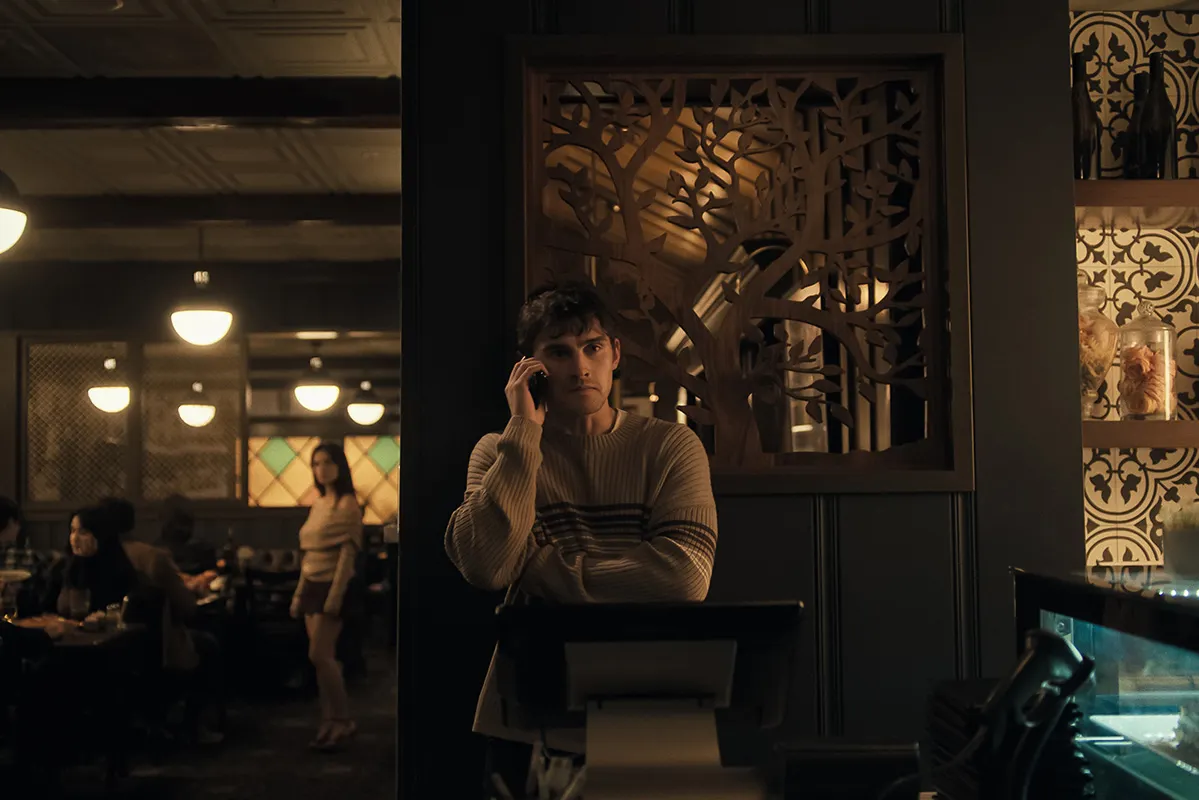
The presentation is a real issue with this film as well. Cinematographer James Whitaker frequently fills the screen with bland, uninteresting visuals despite the wild and wacky antics happening. It feels like a missed opportunity for a story so otherwise unafraid to be weird as hell to mostly feel safe and conventional on the technical filmmaking side. There is a notable exception to this, the finale really does deliver some very engaging visuals that will stick in my mind for a while, so it’s clear that Whitaker and his team can do great things visually. I just wish the movie was a bit more consistent in its visual weirdness for the length of it’s run time.
Despite all these gripes, I can’t say I didn’t have a great time. When a film takes the approach of comedy that Don’t Die takes, multiple jokes a minute, I tend to enjoy it as long as more joke are landing than are faltering. It doesn’t sting so much when a joke completely falls flat, and a few do here, when you’re not asked to sit in the failure because they’re already halfway through the punchline of another joke. It does suffer from the much discussed “MCU problem”, where dramatic character or plot moments are undercut by a joke, particularly when it comes to the Sam Rockwell character who never seems to rise above caricature. Despite these struggles, there’s enough well-handled earnestness in both the Susan and Ingrid character moments that you do grow to care about them and their motivations, while appreciating the laughs along the way. There are some particularly great jokes centered around high school aged kids early on that anyone who works with kids, knows someone who works with kids, or can remember what high school was like will likely find highly relatable.
All that being said, let’s get to the bottom line; should you go spend your hard-earned money to see Don’t Die? My answer to that is emphatically yes. Despite some gripes I have with the plotting, presentation, and theming, this film represents a confidently voiced work from a long dormant industry legend in Verbinski. Watching it feels like a sometimes hilarious, sometimes deranged deep dive into the imagination of a mad genius. With all its imperfections, it’s the rare big budget blockbuster that offers something for audiences to think about, and because of that, I’m glad it exists.
Score: 3/5