A Letter to the Author: “Bad Words”
Dear Rioghnach Robinson,

It is amazing what an evening off and an excellent novel will do for my creativity. The last time I wrote a review on here was when I was 23. I am now 25. Haven’t opened this website in two full years. But I just finished Bad Words by Rioghnach Robinson, and my fingers started to tingle.
Let me preface this mess of thoughts by saying I devoured this book. I usually gravitate towards books that I know will make me feel Big Feelings. This book did that. I went into it expecting a romance; and a romance it is. But it is also quite philosophical. It is a medium sized novel. The prose is beautiful. The plot moved along leisurely, but I feel that grappling with the host of questions the author presented took enough of my cognition that I did not mind the pacing. The characters were compelling and fully developed — true to themselves — which I always give points for. All in all, this is definitely a novel I would recommend. Let’s get into it, shall we?
Quick recap of the story: Parker Navarro is a novelist, with his sophomore project set to release in a couple months. Selina Chan is a critic with City Magazine who reviewed and destroyed Parker’s debut novel and has now come to do the same to his upcoming release. Selina’s main gripe with Parker’s novels is they tend to build up to saying something but never quite manage to SAY the thing in the end. She believes Parker holds himself back in his writing, and correctly guesses that he does so in his real life as well — largely to appease the people around him. Parker, the character enduring the criticism in this novel, believes the occupation of criticism itself is unnecessary and unkind. He deals with the aftermath of Selina’s negativity surrounding his work, (which, to be fair, nearly destroys his career).
This book begins by opening the question on what literary criticism means for all of the parties involved and who it’s for. Selina represents brutal honesty and absolute truth. This is reflected in her personal life as well: she is mostly isolated from her family and friends, she never shies away from saying exactly what she means regardless of who it alienates in the process, and she is wholly content with being alone as a consequence.
Parker, on the other hand, is a chronic people pleaser. He can never bring himself to reveal his emotions to his family, friends, and even strangers online. He tends to hide away his feelings as to not be a burden to those around him. He ends up meeting Selina in a chance encounter after her scathing review of his sophomore work, and blows up at her; this is entirely out of character for him. It sets him on a path to considering what it means to finally be honest about his feelings to someone.
This novel deals with the medium of literary criticism, but I appreciated the overarching context: what does honesty mean to the teller and to the receiver? Is saying your absolute truth worth alienating everyone for, and at what point does people pleasing and chronic agreement do more harm than good?
This book asked some very thought provoking questions and I feel like it accomplished what it set out to do. What does it cost artistically to be so obsessed with the public reaction to your work? Parker gave up so much to write the book that he thought people would want to read while trying to stay true to himself. He slowly realizes that by compromising his voice, readers never really understood what it was that he wanted to do with his novels. And, as a consequence, it rendered his work utterly meaningless. Would you not rather say something controversial, than say nothing at all?
Another question this book provoked is that often, literary criticism can ruin an author’s life — is it even necessary? I would argue, yes. From Selina’s perspective: you only get one life, and you should not waste your minutes, hours, days, engaging with work that is simply not good. Literary criticism saves you from that. While I agree, I think literary criticism, at it’s core, forces consumers to engage with the material. It forces authors to confront differing opinions on their work. It forces everyone to evolve — whether that be in their reading or in their writing. On the other hand, a bad review can tank a book’s sales and effectively ruin an author’s shot at getting published again. My response to this is a harsh one: simply write a better novel. Parker pissed me off because he couldn’t understand what he did to deserve a bad review and a tank in sales. Why is it so hard for people to confront their own shortcomings?
Get Kashish Bhatia’s stories in your inbox
Join Medium for free to get updates from this writer.
Some more questions I grappled with while reading: Is being aware of how your opinion affects others and never voicing it mere niceness, or is it a dilution of truth? When does honesty become unretractable?
There is one quote from Selina’s perspective that really stuck out to me:
“Niceness. The world is drowning in it.”
And well, yes. It is true that we should be careful about what we say and how we say it, because we can never unsay something. But is being nice all the time a disservice to the people around you? I think it can be. I think, today, society is so afraid of “being canceled” that we forget the power of an opinion. No two human beings are the same, and that can and should be reflected in our taste in art. Art is meant to provoke. Negative reactions are simply a part of that. Negative reactions produce better work.
I still don’t know the answers to many of these questions, but it was very interesting to grapple with them through the eyes of two wholly clashing personalities.
Eventually, Parker writes something that Selina likes. When she tells him this, I have to imagine it is more gratifying than any other passive flattery he has received on his work. Because it is finally the truth.
I think this was an interesting take on romance because of the completely opposite points of view of both the main characters. I found myself being unequivocally on Selina’s side in “the feud”, and I found Parker to be an exceptional irritation. But in a good way. In a challenging way. The dynamic between the two was both frustrating and enjoyable. I think this book had some high reaching goals, but it definitely tackled them with fortitude and, in my opinion, succeeded.
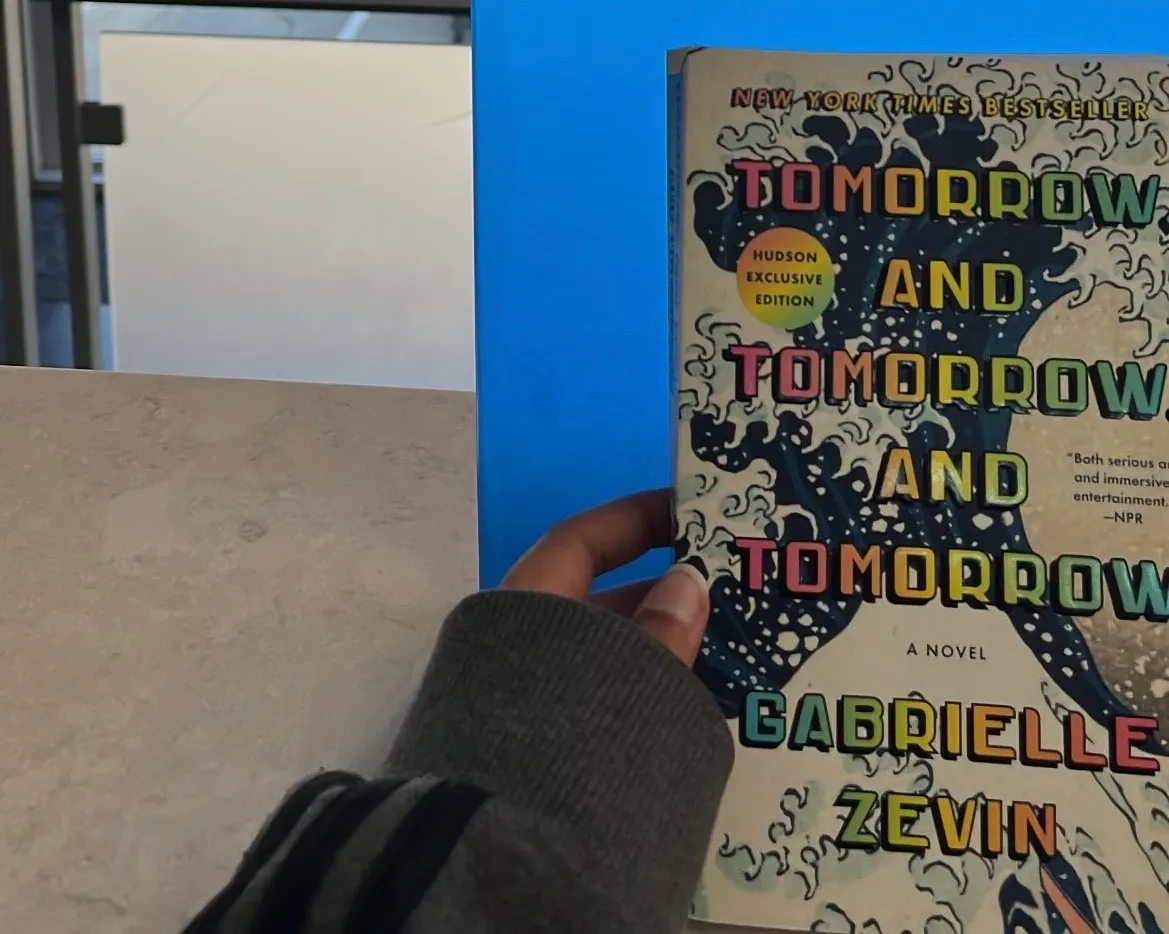
I started this little section in the last review I did (you can read my review of “Tomorrow, and Tomorrow, and Tomorrow” here) and felt I should continue it now. Here’s what I was listening to while reading Bad Words.
Fontaines D.C. collaborated with Rosalia and released a hauntingly beautiful single called “Where Is Gone”. I have had it on repeat since it came out. It’s extraordinarily beautiful and deeply moving.
The song is largely about the paralysis of a relationship that has become unbearable but feels impossible to end. Both people in the relationship are unhappy, but neither person wants to leave the other. They only want the relationship to stop hurting. Both are being held up against an ideal of happiness that everyone around them believes in, while privately living miserable lives. At what point do you “leave it, let it go”? And most importantly, how did they get there?
This one doesn’t parallel the book quite as nicely as “Somebody Come Through” by Wasia Project paralleled Tomorrow, and Tomorrow, and Tomorrow. But the music stirred up the same feelings in me that Bad Words did. I think both pieces of art are singular and exceptional, and I could not recommend either more.
Again, Bad Words blew me away. It is really a phenomenal and thought-provoking novel, and I can hardly believe this is Robinson’s debut. Everyone should pick it up immediately.