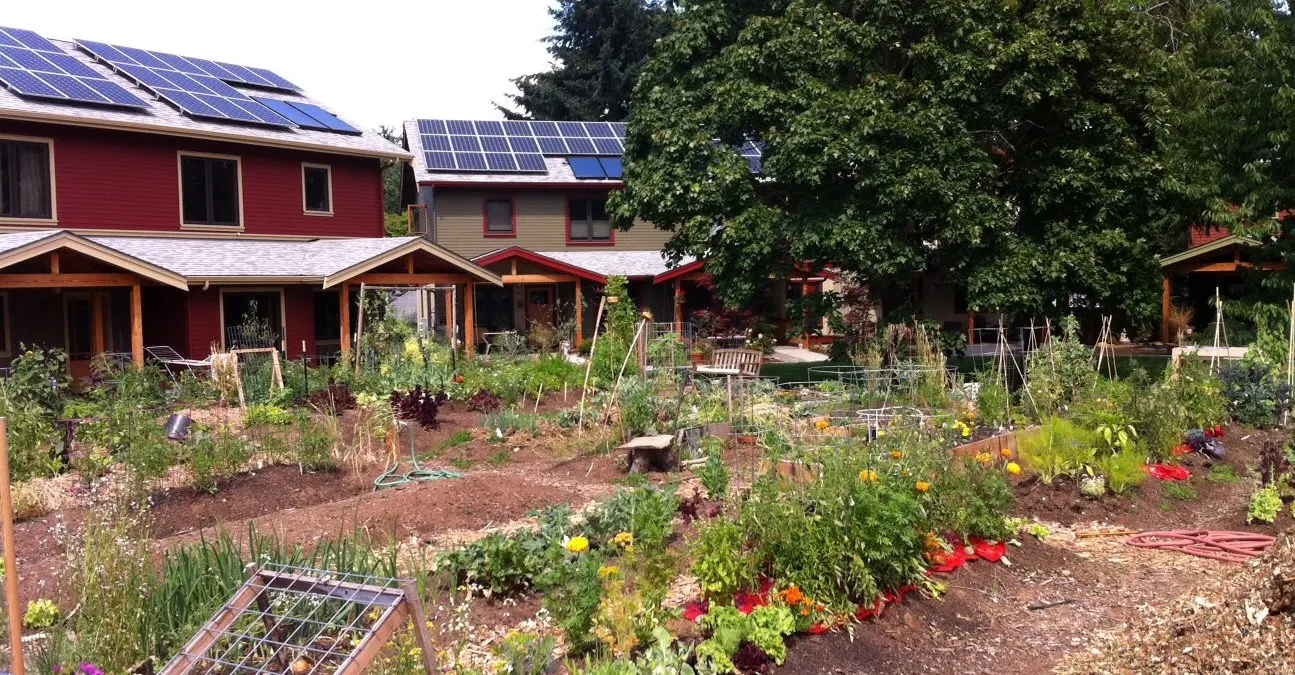
Creating vitality in the spaces between houses


When it comes to housing, it’s just as important to pay attention to the spaces between as it is the housing itself and to plan, design, and value these in-between spaces. In permaculture, we speak about the importance of the relationships between things-how one thing relates to another and the reciprocal value that comes from that relationship. The permaculture principle integrate rather than segregate also speaks to this.
The value of these “between” spaces is both physical and invisible and should be considered highly in the design of our housing and neighbourhoods to enable more wellbeing and abundance for residents and the wider community.
These between spaces are what I also refer to as the because they are filled with the physical elements of soil, water, air, and other natural things that we share in common with all of life. And where social interactions with others occur that create a sense of community. In community development speak, we call this “bumping spaces.”
There is a focus now on developing more and better housing and, if we are going to create socially resilient, ecologically regenerative, and economically thriving communities, that housing development must include design and development of the Commons around and between the houses.
Houses are static but the Commons, if designed well, are alive and dynamic, a place of possibility, of vitality, of magic. We need places to interact with nature and where nature can flourish and us along with it. We need places where we can connect with others, to feel less isolated, and have shared experiences.
If we don’t pay attention to the creation of the Commons, we risk creating static neighbourhoods which lead to degeneration of our environment and our social fabric.
Here’s an invitation for you to develop a Commons right where you are:
I invite you today to walk around your neighbourhood and work environment paying close attention to those between spaces-the Commons — and observe how those spaces are either serving life, vitality, creative engagement, abundance, and are ripe with becoming or do those between spaces have dead, dull, or static energy.
If you put on a designer lens, how could those areas have been better designed to enable thriving Common spaces?
Some ideas to try right away to create more of a Commons in your own area:
Get Zola Rose’s stories in your inbox
Join Medium for free to get updates from this writer.
· Plant out your verge with wildflowers, fruit trees, or herbs like rosemary and lavender
· Make a submission to Council on their parks plan-to include a community allotment garden and/or food forest.
· If you get along with your neighbour, talk to them about taking down the fence between you and them and creating an edible or wild garden or sitting space in between.
· Make a picnic on the front lawn and say hi to all that pass.

An invitation to connect and learn more
Whether you are a housing developer, land owner, community pioneer, or resident-be in touch with us to get more information on this topic and notice of upcoming courses, workshops, and resources on this topic.
Common Ground offers support to housing projects and teams to design, create, and maintain a vibrant Commons for housing development, that creates better places for people and nature to thrive (and could save money, mitigate climate change, increase biodiversity, and create food security)
Visit us at Common Ground to learn more about what our social enterprise is about and sign up for the Planning Guide for Impact-Focused Housing and our newsletter.
Book an appointment to meet with Zola to explore ways for us to support you and for us to collaborate.
I leave you with a fun music video by the Formidable Vegetable Sound System that creatively expresses these concepts, the permaculture principle of integrate rather than segregate and the value of cultivating relationships in community.
Originally published at https://www.linkedin.com.