The Theater of Mingled Myths

Get Won Ch. Kimetarx’s stories in your inbox
Join Medium for free to get updates from this writer.
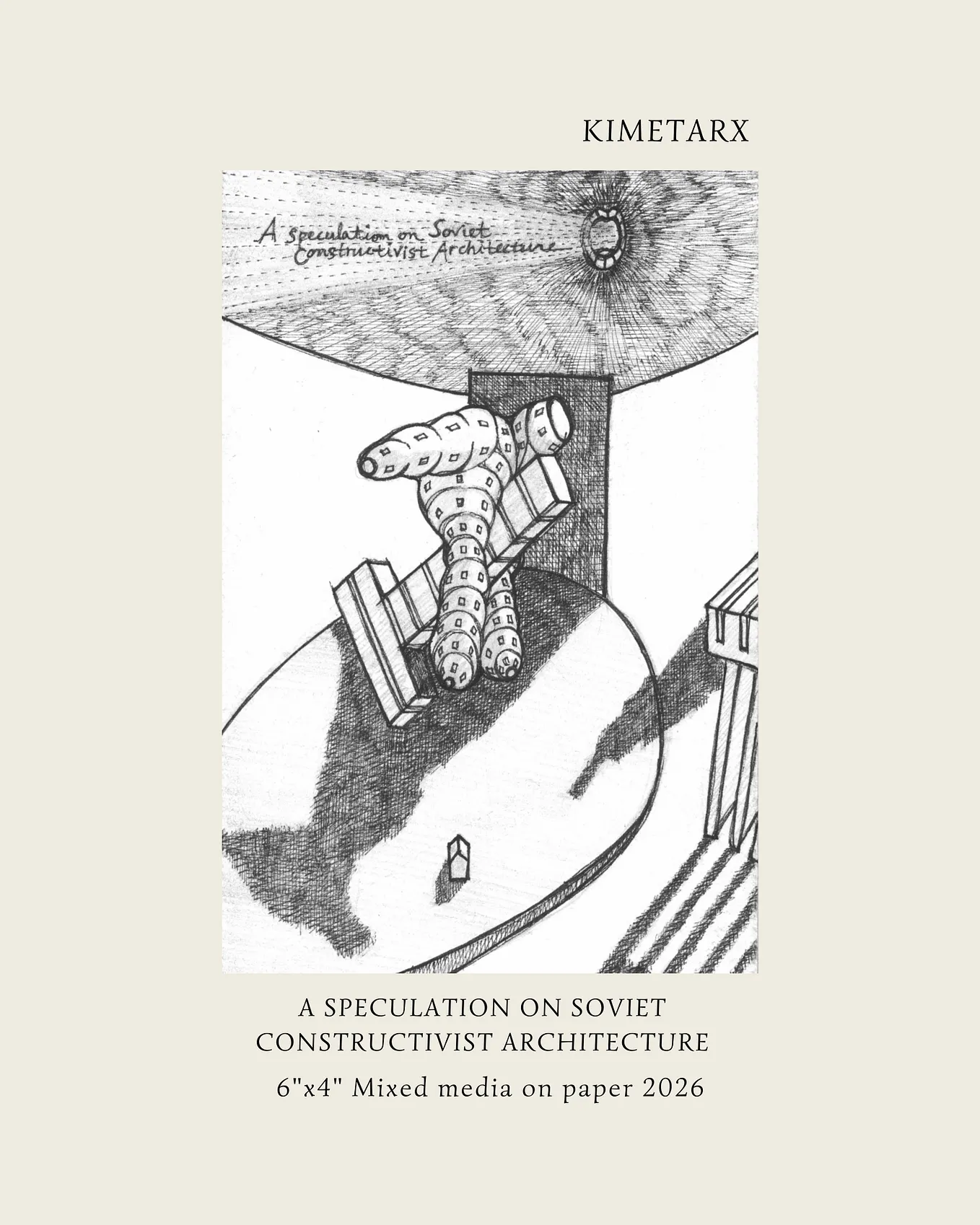
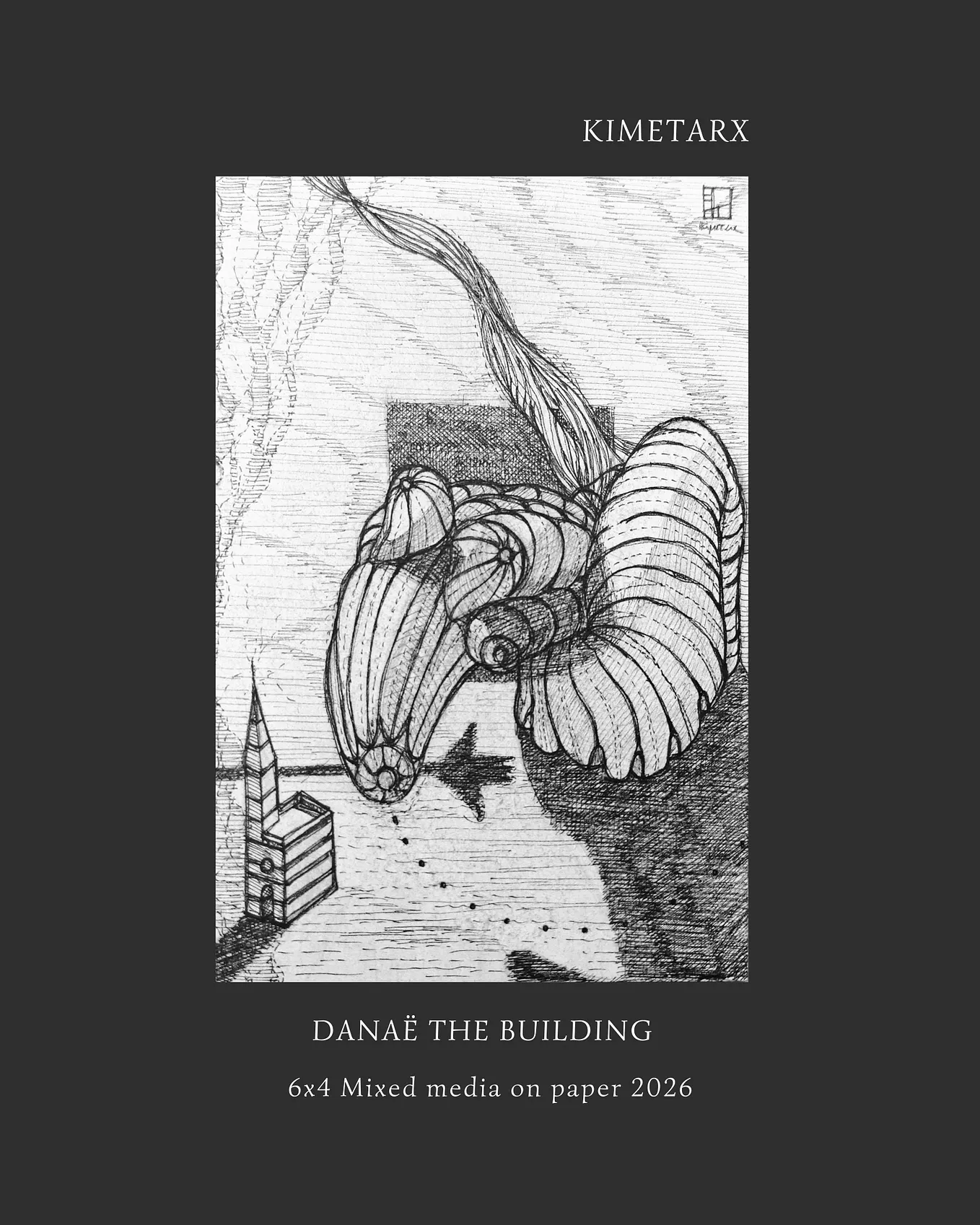
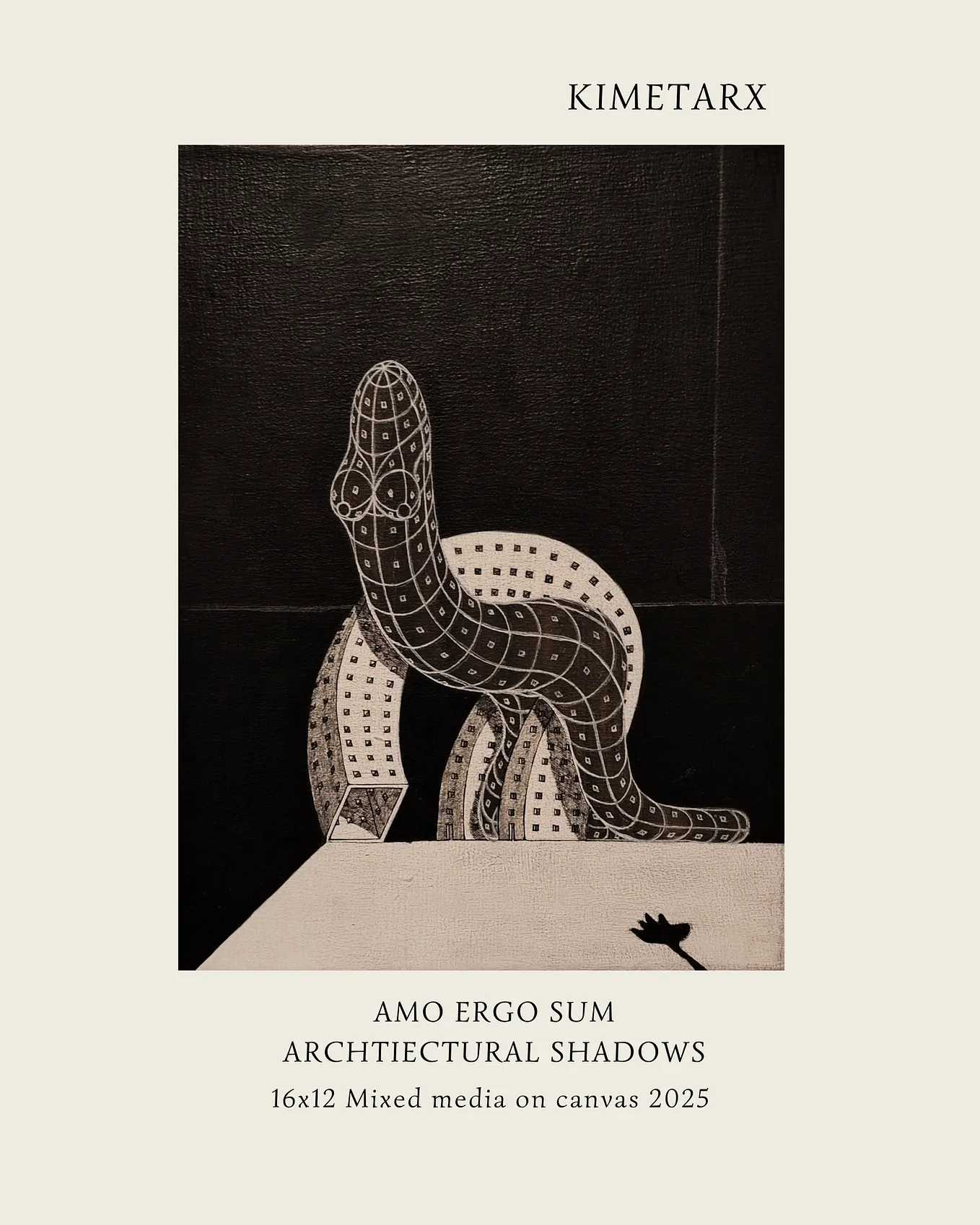
This triptych, ‘Theater of Mixed Mythologies,’ is a fantasmazed architectural world where diverse mythological characters manifest through incarnation. These characters manifest artistically, appearing on the stage of art through the artist’s architectural phantasm. This represents artistic manifestation rather than creation, as these characters emerge through the artist’s phantasm as mediator, not from creative imagination.
What does the artist as mediator mediate? In this work, I mediate between things and humans. Through the artist’s mediation, things — or the thing‑in‑itself understood as a singular assemblage constituted by a multiplicity of things — manifest in the mode of incarnation. Just as God became present in the world through incarnation, things too come to presence in the world through incarnation. If the former is the incarnation of the infinite singular and its historical manifestation in the world of faith, the latter is the incarnation of radical individuals and their artistic manifestation within the world of architecture.
The City of Yin and Yang : At the center of the triptych, there are two cities: a yin city of female‑buildings and a yang city of male‑buildings. Here, “female” and “male” do not indicate sexual or gender binaries, but rather the principles of yin and yang. Between them flows a waterfall of viscous, sticky liquid — a tensile medium whose very adhesiveness both distinguishes and connects yin and yang.
Myth of Modern Architecture : There is a building that seems on the verge of being submerged in that viscous flow. This small building is the little house, Chez Soi, the dwelling of rest conceived by the modern master Le Corbusier. The secretions pouring down from the two cities stream into a sensuous sea. Beyond this sea stands a sculpture: Le Corbusier’s Open Hand, facing the dwelling. Rational construction and existential dwelling confront one another, yet they never meet.
The left and right panels correspond to one another. The two largest building‑figures are the Sphinx and Oedipus. The Sphinx, through speech, casts human existence into peril, while Oedipus, through speech, overcomes the monster. The tongue of Oedipus, which makes this speech possible, appears in the left panel. Corresponding to it is Oedipus’s eye on the right. This eyeball figures Oedipus as the archetype of the philosopher, the locus of his perspectival thinking (Goux, 1992), and it is also the very eye he later pierces himself.
(Goux, Jean-Joseph, Œdipe philosophe, “La Psychanalyse prise au mot”. French original of Oedipus, Philosopher (Stanford University Press, 1993).)
Behind that tongue and eye stand the three Magi and the pregnant Virgin. The Magi gaze at Oedipus’s tongue; in doing so, they affirm the tongue that proclaims human self‑esteem. The Virgin casts her shadow over the plucked‑out eye; in doing so, she negates the eye that refuses human destiny.
Human self‑esteem arises from intellect. Humanity, in other words, becomes possible through the acquisition of knowledge, figured as the forbidden fruit. The tree of the knowledge of good and evil signifies human autonomy. Destiny, by contrast, can shatter such autonomy in an instant, for the beginning and end of life are not subject to human self‑determination. Around the tree of life, flaming swords still bar human approach.
The protagonists of my myth contemplate these entangled myths. On the left, the Queen of Architecture, and on the right, the Ghost Architect, watch the theatrical performance unfolding upon the stage of this schizophrenic spectacle.