The Symphony of Integrations: How Rudderstack Manages Errors in a Multi-Service World

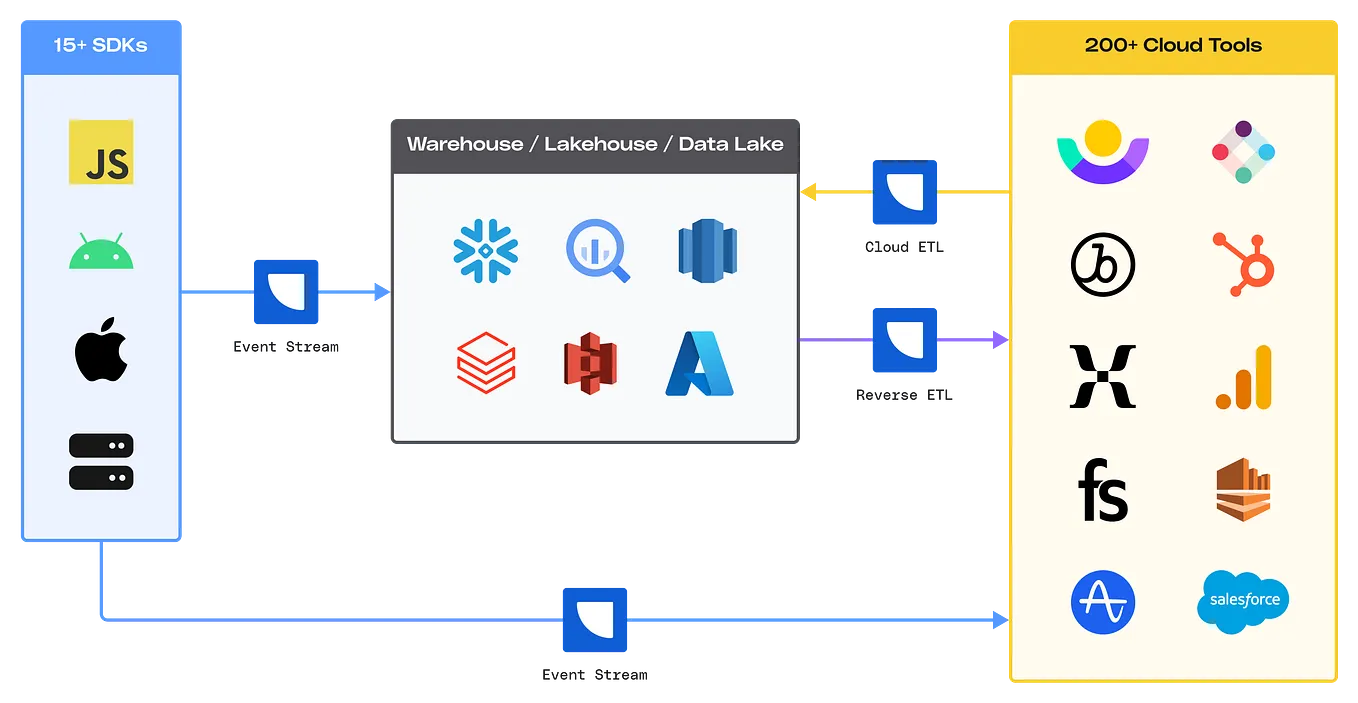
The world of software development thrives on integrations. Platforms like Rudderstack act as conductors, orchestrating seamless communication between your application and a vast orchestra of third-party services — email platforms, analytics tools, marketing automation systems, the list goes on! With over 200 integrations at our disposal, Rudderstack empowers developers to collect, transform, and route customer data with ease.
But managing this intricate ecosystem comes with its own challenges. Just like any complex musical performance, even the slightest discord can disrupt the harmony. In the realm of integrations, this discord often manifests as errors. Here’s where Rudderstack dons its detective hat, constantly vigilant for potential issues within these integrations.

The Challenge: Detecting Errors in a Sea of Services
Imagine sifting through error messages from over 200 different services, each with its own language and error codes. Traditional approaches that rely solely on keyword matching quickly become overwhelmed. A simple error message like “API request failed” could indicate a generic issue or a specific version deprecation error within a particular service. Rudderstack needed a smarter solution to differentiate between these nuances.
Get Dilip Kola’s stories in your inbox
Join Medium for free to get updates from this writer.
Furthermore, relying on basic keyword matching often leads to a frustrating phenomenon — false positives. Imagine an error message mentioning the word “deprecated” but not in the context of an outdated API version. This could trigger unnecessary alerts, cluttering the troubleshooting process for developers.
A New Approach: Categorizing Errors with Smart Text Analysis
To address these challenges, Rudderstack has implemented a novel approach to error detection. We leverage the power of natural language processing (NLP) to go beyond just keywords. Here’s the core idea:
- Understanding the Context: We don’t just look at individual words; we analyze the entire error message. This allows us to grasp the underlying meaning and intent behind the message.
- Grouping Similar Errors: Detecting common phrases allows for the grouping of similar errors by analyzing their context, facilitating targeted troubleshooting for issues such as version deprecation, authentication challenges, or network problems.
- Extracting Core Phrases: Using the Longest Common Subsequence (LCS) algorithm, we extract core phrases within each group by identifying the most frequently occurring sequence of words. These core phrases serve as signatures, pinpointing the root cause of errors specific to each group.
from sklearn.feature_extraction.text import CountVectorizer
from nltk.tokenize import word_tokenize
import nltk
import numpy as np

# Download NLTK resources if not already downloaded
nltk.download('punkt')

def get_closest_group(groups, text_phrases):
  """
  This function iterates through groups to find the closest match based
  on shared phrases with the input text_phrases.
  """
  for group in groups:
      if np.intersect1d(group['phrases'], text_phrases).size > 1:
        return group
  return None

def get_phrases_per_text(texts, min_words=2, max_words=20):
  """
  Extracts common phrases from multiple error messages.
  """
  vectorizer = CountVectorizer(tokenizer=word_tokenize, ngram_range=(min_words, max_words))
  count_matrix = vectorizer.fit_transform(texts)
  return [ vectorizer.inverse_transform(m)[0] for m in count_matrix ]

def lcs(X, Y):
  """
  Finds the longest common subsequence between two texts.
  """
  # ... (implementation of the LCS algorithm)

def pairwise_lcs_merge(texts):
  """
  Merges multiple texts using LCS to find the core phrase.
  """
  if len(texts) == 1:
    return texts[0].strip()

  # Merge first two texts
  merged_lcs = lcs(texts[0].strip().split(), texts[1].strip().split())

  # Iteratively merge remaining texts with the current LCS
  for text in texts[2:]:
    merged_lcs = lcs(merged_lcs, text.strip().split())

  return " ".join(merged_lcs)

def extract_common_phrases(texts, min_words=2, max_words=20):
  """
  Groups error messages based on shared phrases.
  """
  phrases_per_text = get_phrases_per_text(texts, min_words, max_words)

  groups = []

  # Group texts with common phrases of at least 3 words
  for i, text in enumerate(texts):
      group = get_closest_group(groups, phrases_per_text[i])
      if group is None:
          groups.append({'texts': [text], 'phrases': phrases_per_text[i]})
      else:
          group['texts'].append(text)
          group['phrases'] = np.intersect1d(group['phrases'], phrases_per_text[i])

  return [ {'phrase': pairwise_lcs_merge(group['texts']), 'texts': group['texts']} for group in groups]
This approach offers several advantages:
- Reduced False Positives: By considering the overall context, we can differentiate between generic error messages and those that indicate a specific problem, like version deprecation.
- Improved Efficiency: Grouping similar errors streamlines the troubleshooting process for developers, allowing them to focus on the most relevant issues.
- Proactive Maintenance: By pinpointing core phrases associated with version deprecation, Rudderstack can proactively alert developers and suggest potential solutions, such as upgrading the integration to a compatible version.
Conclusion
Rudderstack’s approach to error detection is dynamic and ever-evolving. Through continuous learning and refinement, our system adapts to new challenges and improves its accuracy and efficiency over time. By embracing innovative techniques, we ensure a seamless and reliable experience for developers on our integration platform. Just as a skilled conductor anticipates disruptions in an orchestra, Rudderstack proactively identifies and addresses integration errors, minimizing the risk of data loss for our customers and maintaining the reliability of our integrations.