Je suis Charlie


Eleven years ago, this saying was first crystallised as an opposition to restrictions on freedom of speech. Six months ago, it came back to life — to push the same argument. But what did it mean to be Charlie then, and what does it mean to be Charlie today?
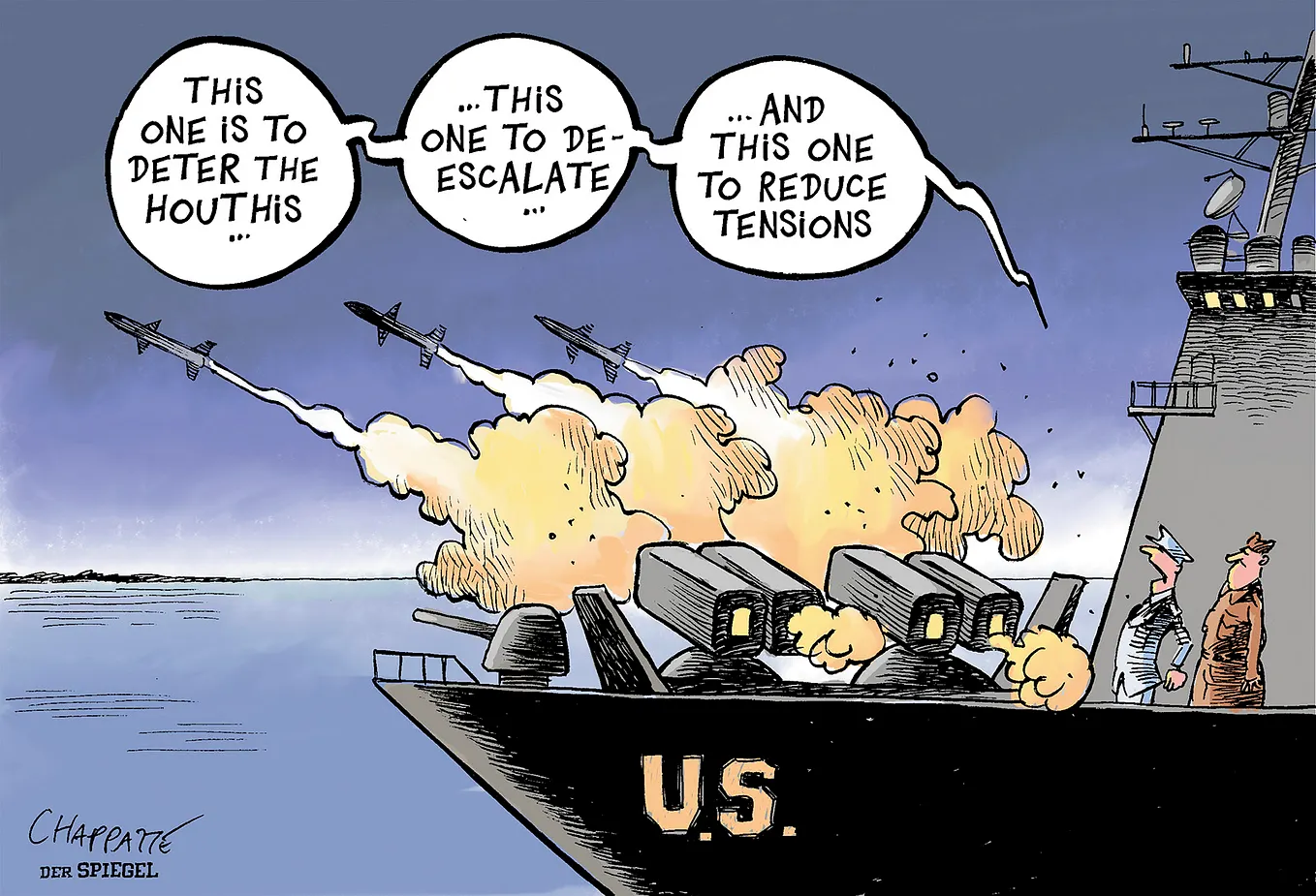
In 2015, Charlie Hebdo, a satirical weekly newspaper in France, was the victim of its second major attack by Islamist extremists who objected to the depiction of Muhammad, the Prophet, by the publication. When the attack took place, French, European, and other Western liberals chose to adopt the slogan that they were Charlie — that they supported Charlie Hebdo in its satire and stood firmly against attempts to silence dissent through violence. It meant upholding one of the fundamental pillars of democracy: the ability to criticise the government and the society it exists within without facing a threat to one’s life.
In 2025, American personality Charlie Kirk was killed in a public forum in Utah. The same phrase — Je suis Charlie — was resurrected following Kirk’s assassination. Kirk, an internet sensation, made himself popular through his staunch support of the Republican Party and his vocal call to “bring America back to its golden age.” He represented a segment of the Republican movement that stood firmly for America for Americans and for the re-election of Donald Trump as the saviour of the nation. When right-wing activists and supporters of Kirk claimed they were Charlie, they invoked the same principle — that freedom of speech and expression must be protected, and that no one should be killed for what they say. But in an increasingly polarised and distorted world, it becomes essential to ask: what did it mean to be Charlie then, and what does it mean to be Charlie now?
Charlie Hebdo, founded in 1970, built its reputation through satirical impressions and cartoons of contemporary politics and organised religion. Controversy escalated in 2011 when its headquarters were firebombed after a caricature of the Prophet Muhammad appeared on its cover. In 2015, the most devastating attack occurred, killing twelve people, including the publishing director, Michel Charb. The aftermath of these killings sparked a widespread movement in defence of freedom of expression and against censorship. Thousands of French citizens gathered, chanting Je suis Charlie — asserting that they stood with Charlie, not with those who sought to suppress satire through violence.
This support operated along two central questions:
- Should the French public, governed by its own constitution and legal framework, be bound by religious blasphemy laws observed by Muslims under Sharia law?
- To what extent can freedom of speech and expression be protected, and at what point does expression become genuinely offensive — not merely to a religion, but to its followers?
Answering these questions is far from simple. Significant nuance must be applied, both in the context of French society at the time and the broader global climate. In the years surrounding the attack, parts of the Muslim world were experiencing heightened political instability, sectarian violence, and the rise of Islamist extremism. Against this backdrop, depictions of the Prophet Muhammad were received not merely as satire, but as symbolic affronts in an already volatile environment. However, it is critical to distinguish between context and culpability. The attack on Charlie Hebdo did not emerge from the cartoons themselves, but from a broader ideological rejection of secular critique. Yet the aftermath of the violence gave rise to a renewed discourse on Islamophobia — the claim that Muslims, as a community, were being racially targeted under the guise of criticism of religion.
In this framing, being Charlie was increasingly interpreted not simply as a defence of free expression, but as tacit endorsement of hostility toward Muslims themselves. This conflation between attacking religious ideas and attacking religious adherents became central to the controversy. As a result, the slogan Je suis Charlie ceased to function as a neutral declaration of free speech and instead became, for many, a symbol of exclusion rather than solidarity.
Get kanishk’s stories in your inbox
Join Medium for free to get updates from this writer.
Thus, being Charlie came to signify three things:
- Standing against restrictions on freedom of speech
- Standing with the anti-clerical, anti-religious, left-wing ethos of Charlie Hebdo
- Standing for the protection of liberal ideology against a rising global right
Eleven years later, attention shifts to Charlie Kirk. After his assassination, obituaries described him as three things: a conservative, a staunch supporter of Donald Trump, and a leader who mobilised thousands of young voters during the 2024 U.S. presidential election. All of this was made possible by his ability to exercise free speech. Kirk’s rhetoric, though ideologically opposed to the values expressed in this article, was centred on the defence of speech and the right to voice one’s beliefs. He sought to platform his views, inviting challenges while presenting his vision of the “ideal Republican” and the “true American.” When The Free Press and other media outlets described Kirk’s death as an attack on freedom of speech, the claim carried some merit — but it also ignored significant nuance.
Kirk’s emergence as a symbol of free speech must be understood within the polarised state of American politics. While Donald Trump’s rise was not unprecedented, the sharp rightward shift of mainstream politics was. American political ideology exists on a continuum: the radical left, moderate left, centrists, moderate right, and radical right. The Republican Party, once positioned as a moderate right force, increasingly drifted toward the radical right. Labels such as fascist, dictatorial, and autocratic were applied to the Trump administration due to its rhetoric and governance style.
It was within this environment that Kirk rose to prominence. He became a mouthpiece for the administration, translating its rhetoric into language that resonated with his audience, often through disparagement of political opponents. Crucially, this is also a form of speech, and he and his supporters sought to protect it. One cannot claim that this is inherently wrong; politics is personal, and people have the right to exercise it the way they please. And this is the way Kirk pleased. He stood as a firm believer in the protection of his “God-given rights,” and in the protection of his use of his freedoms.
So where does the distinction arise?
While both invocations of Je suis Charlie seek to defend free speech, the values and implications behind them diverge sharply. A decade ago, Charlie Hebdo sought to extend freedom of speech universally. It aimed to create a society that constantly interrogated power — held by the government, religions, and institutions alike. Through satire, it challenged assumed authority and moral superiority, advocating for accountability and equality. This relentless critique was its democratic function as the fourth pillar of society.
Kirk, by contrast, adopted a narrower vision. He defended free speech — but primarily his own. He positioned himself as unquestionably correct, dismissing opposing arguments regardless of evidence. While he championed expression, he simultaneously resisted criticism, expecting the world to conform to his beliefs. No matter what kind of logical, semantic, factual, or ontological argument one presented him with, he always had a dogmatic counter for it. Kirk refused to accept that he might be wrong and wanted the world around him to bend to what he stood for. So yes, he was for freedom of speech, but only his.
The reason the need for such an article even arises — to examine the roots of adages like Je suis Charlie — is because of how irresponsible modern media can be with what it says. Ten years ago, Hebdo could never have envisaged the world to be what it is today. And ten years from now, we may be shell-shocked at what we see around us. But it is important for us to understand what it is we say, and the weight of the things we say. Saying Je suis Charlie cannot be something we say in passing, just to display solidarity or put up a façade of support. It has to be something we say to truly stand for the ideals it stood for at its creation.
Charlie Kirk is not Charlie Hebdo. With due respect, the two are not interchangeable. Kirk may have worn the badge of Charlie, but for fundamentally different reasons. A lifelong evangelical, he would likely have adopted the slogan in opposition to Muslims and their diaspora, rather than in defence of secular critique. While he supported satire directed at others — notably as a defender of The Babylon Bee — he actively resisted criticism of his own ideological camp. His founding of the Professor Watchlist, targeting academics who criticised right-wing politics, demonstrates this contradiction. Professors such as Kellie Carter Jackson and Hakeem Jefferson were singled out for expressing views critical of racial privilege and the Capitol riots. More importantly, though, Kirk did not extend the same liberty of freedom of speech to others. These organisations that he founded were, in essence, intended to intimidate people on the other side of the argument into silence. He wanted America to return to its “glory days,” and he believed this could only happen when the entire political discourse said what he wanted it to say. So morally, the position that Kirk should be extended the freedom he actively wanted to take away from others is unfathomable and justifiably wrong.
The ideals Kirk stood for and purported cannot be what it meant in 2015 to be Charlie, and cannot, under any circumstance, come to be what it means in 2026.