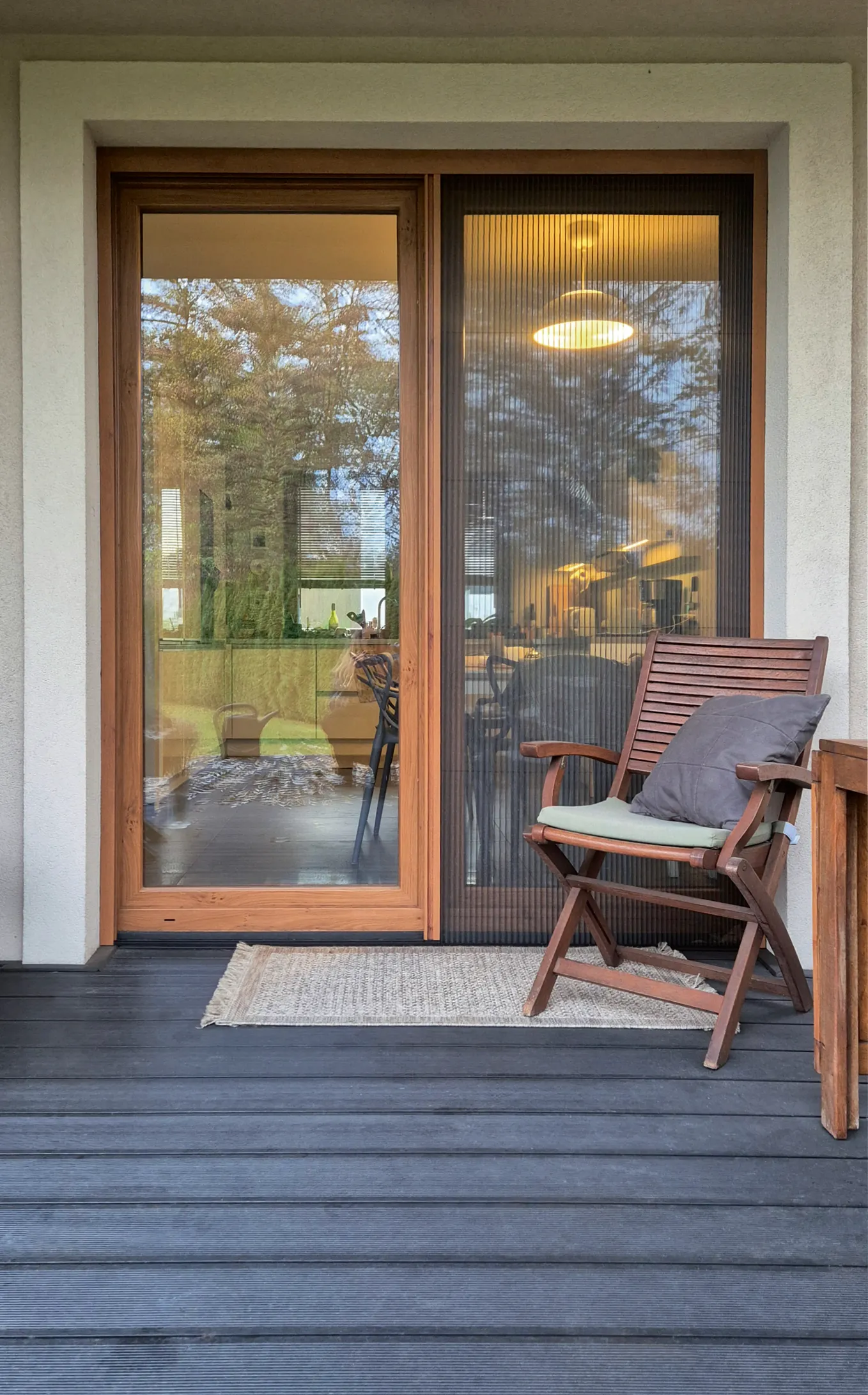
The House That Knew How to Sit Outside

On pergolas, property value, and the quiet shift in what we expect a home to offer

There is a moment at every property viewing that tells you more than the floor plan does.
It happens when the buyer steps through the back door and onto the terrace. You can read everything in how they stand. Whether they pause and look around, or whether they turn back inside after two seconds. Whether the space invites them to stay, or offers them nothing to stay for.
I have been thinking about that moment a great deal lately. Because the gap between those two experiences — the terrace that holds people and the one that does not — has grown into something measurable. And at the centre of that gap, more often than not, is a pergola. Or the absence of one.
The outdoor space used to be the afterthought. It is becoming the argument.
I. What changed, and when
The shift did not happen overnight. It accumulated over roughly a decade, driven by three things running in parallel.
The first is climate. Summers in Northern and Central Europe are longer and hotter than they were twenty years ago. The outdoor season — the stretch of months when a terrace is genuinely useful rather than aspirationally so — has extended. A home that was perfectly adequate in July a generation ago may feel significantly less so today, on the same plot, with the same layout, under a harder sun.
The second is travel. Europeans — particularly from the north — have been going to Italy, France, and Spain for decades. They eat under pergolas. They sit on covered terraces in the evening. They wake up to shuttered facades that manage the morning light without asking anyone to get up and close a curtain. That experience of what outdoor living can feel like has come home with them. It has become a reference point. A quiet standard.
The third is energy. When electricity prices rose sharply across Europe, sun protection stopped being a lifestyle choice and became a financial calculation. An awning or a pergola with adjustable louvres can reduce interior heat gain enough to meaningfully cut air conditioning use. That reduction shows up in bills. And bills, it turns out, are something buyers now ask about.
None of these forces announced themselves. They arrived quietly, and then one day the market had rearranged itself around them.
II. The room that is not on the floor plan
Property valuation is, at its core, a negotiation between what exists and what is imagined. A buyer does not only purchase what is there — they purchase a picture of what life will be like in a place. The more vivid and convincing that picture, the more they are willing to pay for it.
This is where a pergola does something that most improvements cannot. It does not merely improve what is there. It adds a room that was not there. Not formally — it will not appear in the surveyor’s floor area. But experientially. A pergola with glazing and heating is a room in every meaningful sense: you sit in it, eat in it, work in it, receive people in it. The fact that one wall happens to be sky does not make it less of a room.
And buyers feel this. The language they use — without being prompted — is instructive. They do not say: nice pergola. They say: it is like having an extra room.
The most powerful thing a home improvement can do is change the category a buyer thinks they are buying into.
An awning works differently — it is not a room, it is a modification of the existing space. But it does something important: it makes the terrace usable on days when it would not be. Hot afternoons. Bright mornings. Light showers. The awning turns the terrace from a space that waits for perfect conditions into a space that creates adequate ones. That is a meaningful change in how the property functions.

III. The signal a facade sends
Get MOL Sp. z o. o.’s stories in your inbox
Join Medium for free to get updates from this writer.
There is a detail about how property works that does not get discussed enough: buyers make up their minds faster than they think they do.
Research on decision-making in property purchase consistently shows that buyers form a strong initial impression within the first few minutes of a viewing — sometimes within the first few seconds of arriving outside. Everything that follows is, in large part, a process of confirming or complicating that first impression.
A well-chosen pergola or awning is one of the few external elements that actively works on that first impression. Not because it is decorative — though it often is — but because of what it implies. It implies that someone has thought carefully about what it is like to live here. That is an inference buyers draw from a building, and it colours everything they see after.
Buyers pay a premium for the version of the home that already works, over the version that could work if someone did something about it.
A pergola is not just shade. It is evidence of a particular kind of attention to a place.
IV. The Southern European idea, travelling north
There is a useful comparison to be made with how kitchens changed in Northern European homes over the past thirty years.
In the 1980s, a kitchen was a functional room, mostly closed off, where food was prepared and then carried somewhere else. The open-plan kitchen-living space was, at that point, a mostly Mediterranean idea. Homes in Italy and Spain had always been designed around eating and gathering. Northern Europeans encountered it on holiday and brought the idea home. Over a generation, it became the default.
Something similar is happening with outdoor living. The covered terrace, the shaded loggia, the pergola attached to the rear of the house — these have been standard in Southern Europe for centuries. They exist because the climate requires them, and because the culture has always understood that the outdoors is where life happens in warm months.
Northern European summers are now warm enough to ask the same question. And Northern Europeans, having seen the answer on countless holidays, are beginning to expect it at home.
This is not a trend. A trend implies something that will reverse. This is a ratchet. Once you have lived with a covered outdoor space, you do not want to live without one.
V. This is not really about property values
I want to end somewhere slightly different from where property articles usually end.
Everything I have written here about value and buyers and transaction prices is true. A well-chosen pergola or awning does influence how a property is perceived. It does affect the purchase decision. It does, in many cases, pay for itself at the point of sale.
But the more interesting question is not about the sale. It is about the years before the sale.
A covered outdoor space changes how you use your home. It adds months to your year — months when you eat outside, work outside, sit outside in the evening. It changes the rhythm of daily life in a house in ways that are hard to quantify but easy to feel.
The financial case is real. But the reason people who have a pergola rarely remove it is not the resale value. It is that they have stopped being able to imagine summer without it.
The best home improvements are the ones that change not just what your home is worth, but what it is like to live in.