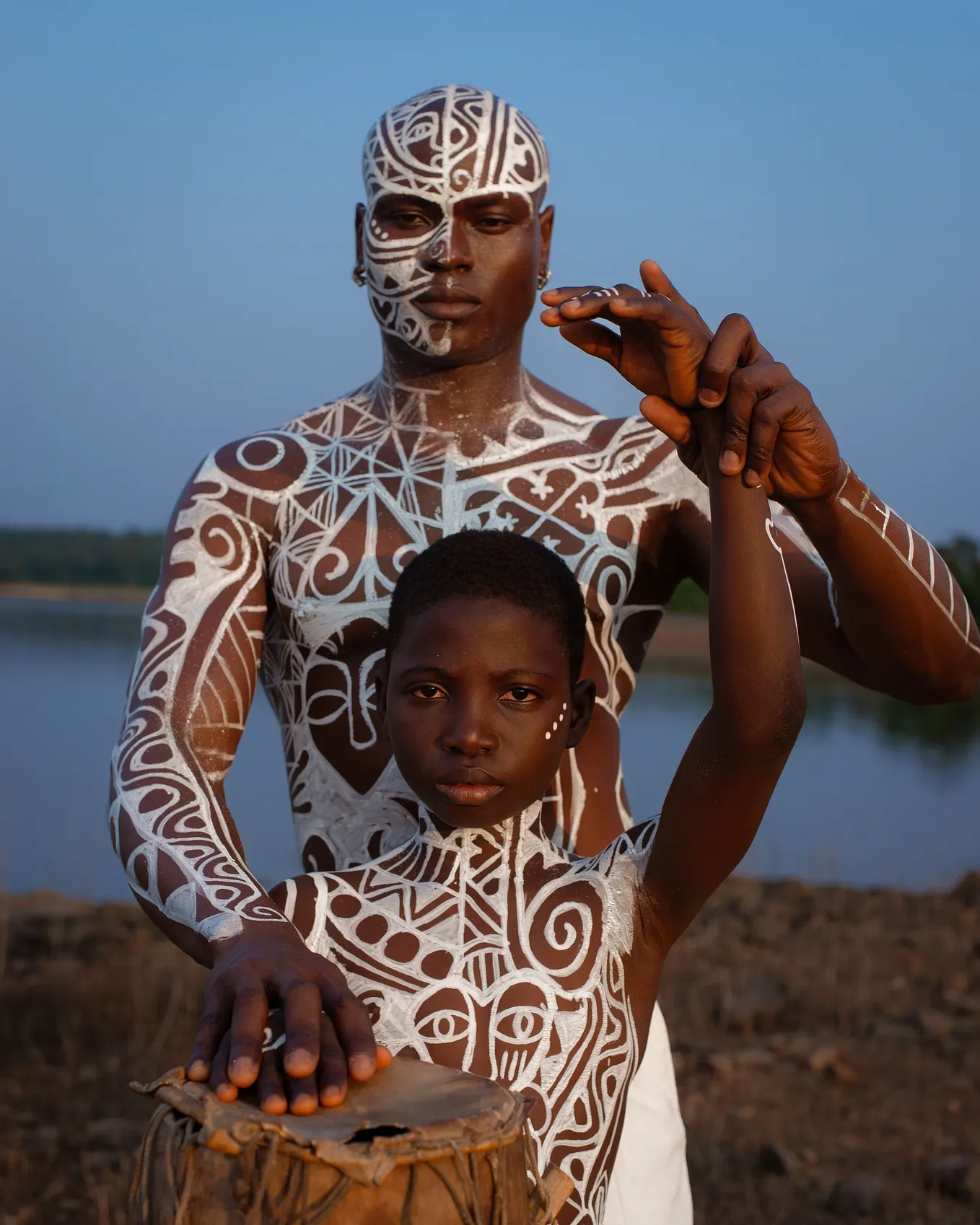
What Do We Owe The Traditions We Inherit?

Part One of “The Cycle of Deconstruction” trilogy — Exploring the deconstruction patterns of belief systems across generations using Africans and African spirituality as a case study

My mother once told me a story about a man from her village who was one-half of a twin. In the community he was born into, twins were not celebrated. They were warnings, abominations, and evidence that the gods had been offended.
When he and his brother were born, the customs of the time demanded that both children be abandoned in the forest to die.
Their mother fought against it, but tradition ultimately won.
My mother says she sat at the edge of the forest listening to the cries of her children. For two days, she listened to their voices in the darkness, holding on to the fragile comfort that both still remained. Then, one cry disappeared.
When she could no longer bear the silence of one of her children, she ran into the forest screaming, “Njíòlé!” — an Igbo lament that loosely translates to “How many do I have left?” She found the surviving child, gathered him into her arms, and fled with him, disappearing from the village until the custom was eventually abolished and the village, as villages often do, moved on to new certainties.
The child survived and was given the name Njíòlé.
He grew old.
He prospered.
And eventually, he became a Christian.
Today, two generations have survived Njíòlé. The Njíòlé family of Amaishii in Oke-Uvuru, Mbaise — a large and prosperous family of children, grandchildren, and great-grandchildren — now carries the memory of one-half of a twin who made them possible. A man whom tradition once marked for erasure became the ancestor of an entire lineage. The child the forest was meant to swallow became a family tree, and somewhere in those stories, passed from one generation to the next, lives the memory of the twin brother who never came home, and the matriarch who refused to lose them both.
I think about him often. Not because of what had happened to him, but because of what happened after. Imagine being told that your existence was once considered offensive to the gods of your people or growing up knowing that your own traditions wanted you dead before they ever wanted to give you a name.
Then imagine encountering another religion whose God promises protection, dignity, and worth. Would conversion be betrayal? Or would it feel like refuge?
I ask because I have younger twin siblings — my brother and sister.
My EJÌMẸ
I have watched them argue over the TV remote, fight over food, interrupt each other, laugh together, and annoy each other.
I have watched them exist in the wonderfully ordinary ways siblings do, and I sometimes think about how extraordinary their ordinary would have seemed not very long ago.
I look at them and wonder what history would have stolen from us.
If they were born just one era away, would their laughter have been considered dangerous?
Would their existence have been considered offensive to heaven?
Would my brother have been called an abomination before he was ever called a son?
Would my sister have been condemned before I ever got to know her as my best friend?
Would tradition have asked my mother to prove her loyalty by surrendering her children?
Would my mother have fought?
Would she have fled with them?
Or would she have become another woman sitting at the edge of a forest learning how to count silence?
Some questions ask too much of the living, but they remain worth asking. Especially now.

Across Africa and throughout the diaspora, there is a growing movement back toward indigenous spirituality and traditional practices. For many people, this return feels necessary, perhaps even inevitable. After centuries of colonialism, slavery, missionary campaigns, and cultural erasure, people want to recover what was lost.
Get The Rabbit Hole Diaries’s stories in your inbox
Join Medium for free to get updates from this writer.
Call it a deconstruction of modern religions if you’d like, but people want their roots, their names, their stories, their gods back. I understand this impulse, and I even share parts of it.
But there is a question that every revival movement eventually has to answer: Are all the things we want to return to worthy of returning to?
Because history is honest about one thing: No civilization has ever had a monopoly on wisdom, and none has ever had a monopoly on cruelty either.
African societies produced philosophies of community, stewardship, kinship, and coexistence that the modern world still struggles to replicate today. African spiritual systems understood ecology long before environmentalism became fashionable. They understood community long before individualism became the global default.
They carried beauty.
They carried meaning.
They carried answers.
But they also carried human sacrifice, ritual killings, customs that buried servants with kings so they could continue serving them in death, practices that harmed women, children, and anyone unfortunate enough to be born on the wrong side of tradition.
This should not shock us.
The Greeks had their cruelties; the Romans had theirs. Europe had witch hunts. Asia had its own systems of exclusion and sacrifice. The Aztecs had their eclipse human sacrifices, too. Human beings have always had a remarkable ability to mistake certainty for morality.
Which is perhaps why every belief system eventually faces deconstruction. Even in places where religion remains culturally important, the shape of belief changes with time. Japan, for example, moved through periods of intense religious observance, religious restriction, and eventually into a society where many people participate in spiritual traditions without strong commitment to organized religion.
History changes what people worship, and it is rarely as simple as conquerors and victims.
Colonial powers spread Christianity and Islam through violence, coercion, political pressure, and systems of domination.
That is true…
But it is also true that in the very same villages, on the very same days, some people ran toward the new god before anyone forced them to kneel.
Perhaps they embraced these religions willingly.
Perhaps some conversions happened because people encountered new ideas
Perhaps, some happened because of political power and social pressure
And perhaps, some happened because the old world they inhabited no longer offered them protection.
Ironically, many of those same religions now find themselves facing the very questions they once asked of traditional societies. The current wave of deconstruction happening within Christianity and Islam should remind us that today, many people are walking away from churches because of religious charlatans exploiting desperation, manipulators disguised as pastors and priests, fake prophecies destroying families and businesses, religious leaders weaponising guilt, fear, and divine authority for profit & control, and political authorities using religion to evade accountability.
And so people leave, and the cycle of deconstruction repeats.

This is not unique to Christianity. It is not unique to Islam. It is not unique to African spirituality. Every belief system eventually arrives at the same crossroads: Will it adapt to humanity? Or will it demand that humanity adapt to its cruelties?
Belief systems survive only as long as people believe they deserve to survive. What one generation considers sacred, another generation may consider superstition. Traditions are not sacred because they are old; age is not evidence of morality. The survival of any religion or tradition depends less on its age than on its willingness to answer these questions honestly.
Because people can endure mystery, they can endure rituals. They can endure discipline and sacrifice. What people eventually reject are systems that repeatedly ask them to surrender their humanity.
This reality should concern every religion, ideology, and spirituality. Especially African spirituality, because if African spirituality is to experience a revival, then it must be brave enough to interrogate itself; not because African traditions are uniquely flawed, but because every tradition is flawed.
Every civilization inherits wisdom and prejudice in the same basket, but maturity is learning the difference. Because if we refuse to interrogate our traditions, eventually our children will interrogate them for us.
And if the answers they find are insufficient, they will leave, not because they hate their culture, but because they love their humanity more.
The purpose of culture is not to preserve itself but to preserve its people. Humanity should always shape customs, and customs should never shape humanity into something smaller than itself.
Not every inheritance deserves descendants, but the ones that do will not survive by being protected from questions; they will survive by answering those questions truthfully. Because to interrogate a tradition is not to abandon it. It is to ask it, one more time, whether it still deserves its people.