How Eyes Rest: The Practice of Restorative Viewing
Why Softness and Nature Are Restful for Our Eyes

There is a kind of tiredness that arrives quietly — behind the eyes.
Is it Stress-related? Muscle tension? Long hours of screen time and reading? Concentrating too hard? Focusing at a fixed distance for too long?
Whatever may be the reason, these are the overworked muscles of our eyes — asking for relief.
And here is what we can do.
The distance we stopped admiring
Human vision evolved in an environment that was expansive.
Eyes across animalia (the animal kingdom) have evolved to scan their surroundings for everything — from poisonous insects close by, to any evidence of water bodies or forest fires in the far distance.
For such expertise- eyes needed to stay sharp.
Horizon lines. Trees that recede into depth. Mountains that sit far away without demanding focus. Open landscapes where the eyes can wander and wonder- shifting between near and far.
That range is essential to allow our eye muscles to recalibrate.
Especially in contrast to waking up to screens and practically spending our entire day on them. Our visual world has become predominantly near-field — short distances, fixed focus, minimal depth.
The eye, biologically, is built for variation. For distance. For movement across space.
So let’s allow our eyes to settle upon the distance they need to recalibrate.

Attention, vision, and the rested viewing
In the 1990s, psychologists Rachel and Stephen Kaplan introduced a concept called Attention Restoration Theory (ART).
They suggested that attention is not unlimited.
It fatigues when used continuously in a focused, effortful way — what they called directed attention.
Screens demand exactly this kind of attention:
- sustained focus
- rapid switching
- constant interaction with distraction
Nature, on the other hand, engages something different: soft fascination.
It holds attention without demanding it. 𓂃 ོ☼𓂃
A tree swaying. Light moving across water. Clouds shifting slowly across a wide sky.
A bird perched on top of a tree branch. A langur at the top of the highest tree, alone — doing what, we wonder.
This little break- is not only restful for our eyes, but also for our attention.
And in that resting state, we recover.

Why looking at nature feels physically relieving
There is also something simpler happening at the level of the eyes.
When we focus on near objects — phones, books, laptops — the eye’s focusing system (the ciliary muscles) stays continuously engaged.
When we look at distant objects, that system relaxes.
This is why even optometrists often recommend brief breaks of looking far away during screen use.
As a reset.
Distance gives the visual system something it increasingly lacks in modern life: ease of focus.
Myopia and the modern visual environment
A growing body of research suggests that Myopia or nearsightedness can be influenced by environmental factors — particularly prolonged near work and limited outdoor exposure, which are strongly associated with its increase.
Get Laksh Rampal’s stories in your inbox
Join Medium for free to get updates from this writer.
Children who spend more time outdoors tend to show lower rates of myopia progression. One proposed reason is not just light exposure, but the use of distance vision itself.
In other words, the issue is not only what we look at — but how far we are allowed to see.
The developed world is visually close.
And the eyes, over time, adapt to what they are given.

The practice of restorative viewing
Reintroducing distance into daily vision.
A simple practice:
1. The 20–20–20 reset
Every 20 minutes of near work:
- look at something 20 feet away
- for at least 20 seconds
Let the gaze soften. No focusing effort.
2. The horizon break (2–5 minutes)
Once or twice a day:
- look out of a window or step outside
- choose the farthest visible point (trees, buildings, sky, sea line)
- allow the eyes to move freely across depth
No goal. No scanning. Just distance.
3. Soft gaze walking
During short walks:
- avoid locking attention on your phone
- let your eyes move between near and far naturally
- notice depth instead of detail
4. The green pause
If possible:
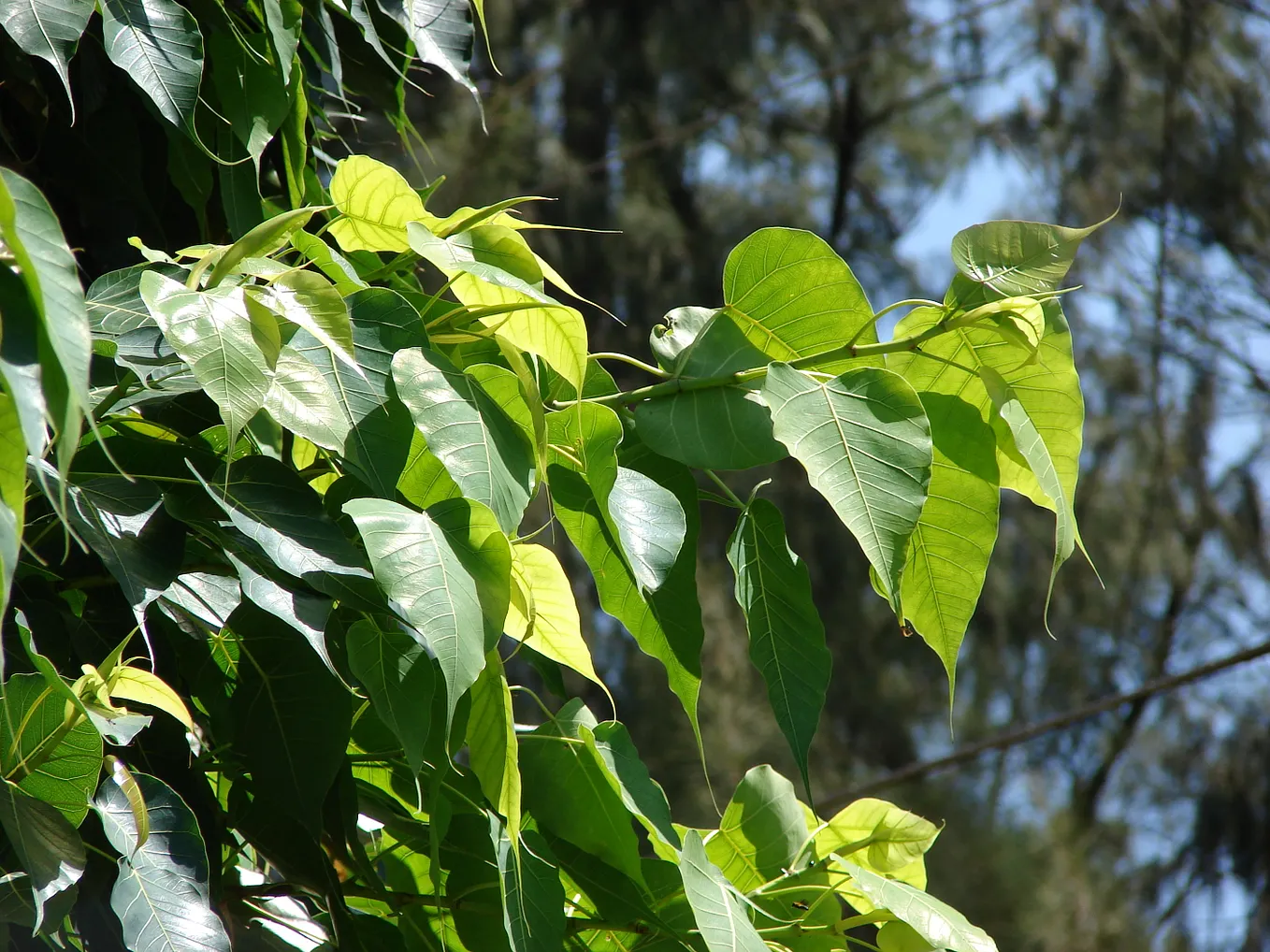
- spend a few minutes looking at natural greenery
- trees, plants, grass, or open landscapes
This creates space for visual decompression.

Where the eyes settle
We often think of vision as passive — something that simply happens.
But seeing is an active biological process. It adapts to rhythm, environment, and habit.
When vision is constantly narrowed, the world feels narrower too.
And when we return, even briefly, to distance — to trees, skies, horizons — something subtle shifts.
The eyes soften. Attention loosens. The mind follows.
Not because nature fixes us.
But because it reminds us of how vast the world is.
𓅪
PS: Your tech may also need rest and recovery, much like your eyes.
Jagadish Chandra Bose, the Indian polymath and biophysicist (1858–1937), explored how repeated stress affects sensitivity and responsiveness across all systems — living and non-living alike.