It doesn’t matter why you’re asexual. Why is anyone the way they are? If you experience attraction in a way that gives you something in common with the ace community, that’s it. You’re in. And you’re free to come and go. No one worth knowing is checking your ticket at the door.
Articles on asexuality commonly quote that asexuals comprise one per cent of the population. This figure is based on old research in which the researcher decided for himself who counted as asexual, and doesn’t take self-identification into account. So, what percentage of the population is asexual, really? That is just not something it’s possible to know. Also, the percentage is going to shift, according to time and place, depending on how compulsory sexuality feels to individuals, and individual access to information and community.
Until the door-bitch of society quits requiring overt displays of sexuality to enter The Real Men’s Club (TM), we’re definitely never going to know how many cis men are asexual. The figures show hardly any. That ain’t right. Kinda like how no women were Autistic, either, until very recently, when our understanding of Autism evolved.
The A on the LGBTQIA+ acronym originally did stand for ‘ally’. These days it stands for at least three identities: Asexual, Aromantic, Agender. Some people think Agender is covered by the T. It doesn’t matter. What matters is: Asexuals are here, we are inherently queer, and although many aces have felt shunned and alienated by their local queer community, shunning queer as a label, queerness is both an identity label and also a descriptor which exists outside the individual.
Asexuality does not exist in opposition to heterosexuality. Asexuality exists in opposition to heteronormativity. The distinction is vital to understand.
Asexuality does not exist in opposition to sex positivity. Asexual acceptance is in fact vital to genuine sex positivity. Sex which is compulsory is not sex positive at all. Aces are in an excellent position to push back against compulsory sex, as Compulsory Sexuality Culture affects us the most. However, Compulsory Sexuality Culture does affect everyone in the world.
Avoid using the word ‘sex positive’ to describe someone who enjoys sex. Sex positive describes an ideology, a movement. Its opposite is ‘sex negative’. Instead, a person who desires sex is ‘sex favorable’. A person who does not desire sex is ‘sex averse’ or ‘sex repulsed’.
‘Hypersexuality’ has a very specific meaning in psychology. It refers to unwanted and undesired levels of sexual behaviour which impact negatively on a person’s life. It’s generally a trauma response. However, more and more people are using the word to mean ‘enjoys a lot of sex’. Language does change and I guess that’s what it also means now. This is a shame. ‘Supersexual’ or a similar neologism would have sounded more sex positive and less medicalising. Fortunately, its inverse, ‘hyposexual’ is correctly seen by most speakers as medicalising, and the DSM is less interested in describing asexuals that way these days. (Only after campaigning by asexual elders.)
The DSM still ain’t great for asexuals.
Asexuals are right up there with trans people when it comes to conversion abuse practices. We know this. There are stats.
Many aces are transgender or genderqueer. The two tend to go together. To put it another way, people who experience strong sexual attraction are more likely to be cisgender. Perhaps this is because attraction somehow reinforces gender roles. Until this is flipped, and people quit treating aces as the weird ones, we’ll probably not understand exactly how this works.
There are more aces in queer communities than you think. We are inclined to stick to the first label we realise they are. For example, someone who comes out first as LGBT and finds their place in L/G/B/T community, may realise after a while that they also have much in common with the ace community. But due to widespread misunderstandings about who aces are, individuals may not find it useful to come out as ace within the broader queer community.
Labels are useful for understanding yourself, and then for finding your community. Labels also have inherent limitations. Two people who experience sexuality the same — on paper — won’t necessarily identify with the exact same labels as each other. That’s fine.
There’s a huge crossover between asexuality and Autism. There’s a huge crossover between Autism and queerness more broadly. However, whenever anyone points that out, they are obliged to add “Most Autistics are not asexual.” This is due to the history (ongoing) of desexualisation of the disabled community.
Queer literacy means not misusing the word ‘asexual’ when you mean ‘desexualised’ (or ‘sex negative’).
Asexuals are very likely to carry sexual trauma. Intersecting marginalised identities increase the likelihood. However, sexual trauma is horrifyingly common across society as a whole, and the vast, vast majority of sexually traumatised people did not ‘turn asexual’ as a result… just as the vast, vast majority of women assaulted by men did not turn lesbian as a result.
Many asexuals look back on our childhoods and the differences were there all along, if we are able to remember. Allosexual children behave as allosexuals from a very young age. This does not mean allosexual children were sexual (in behaviour) from a very young age.
Self-identified traumagenic aces exist and are valid.
An asexual identity says nothing about an individual’s sexual behaviour, or desire, or libido, or sexual history. The letter A on the acronym is the most diverse letter, as far as behaviour goes. Asexuals accumulate at the ‘never interested in any sex’ part of the spectrum, and also at the ‘frequent kink clubs’ and ‘work in the sex industry’ part of the spectrum.
Kink is not necessarily sexual. What we call ‘kink’ can serve as calming and grounding and relaxing and healing, as well as sexually arousing.
To allosexual comedians: If you’re thinking of cracking a joke about asexuality in public, run this through your head first: Does this joke only work if ‘asexuality’ is defined as ‘never has sex’? If your entire ‘joke’ rests on this misconception of asexuality, it doesn’t work and isn’t funny.
To fellow asexuals: Have at it. Jokes about not having sex are a part of our culture, and can help bond us in ace-only or ace-predominant spaces. So long as we understand and accept the full-breadth of our community, and respect our sex repulsed friends, we’re good. (Caveat: Not everyone who cracks a joke about asexuality is obliged to come out, but we can generally tell from the content of the joke whether you ‘get it’ or not.)
To podcasters/writers ‘educating’ the public about asexuality: It’s not possible to understand our community after a single morning of Internet research. Engage an actually asexual person before you even think of posting anything about us. You’re going to be spreading misinformation and encouraging bigotry otherwise. One hundred percent, every time.
Asexuality is not a ‘lack’. Asexuality has its own distinct culture. If you’re still describing ‘asexuality’ as a ‘lack of sexual attraction’, you’re living in the early 2020s. I recommend checking the AVEN website for the most up-to-date and widely accepted definition of asexuality. If you quote old research, those papers will quote the older definition.
Most research on asexuality recruits disproportionately online and from America and from AVEN specifically. Research on asexuality skews young. No one really knows that much about asexuality in older people and non-Americans, especially non WEIRD asexual folk.
If someone comes out to you as asexual, and you are close to them, a good response is: “Awesome. I bet you came to that after much reflection. Congratulations on knowing yourself so well.” This is a great response even if a ten-year-old comes out to you. I knew I was asexual at the age of ten. (There was no word for it.)
For allosexuals, the average age children start to experience sexual attraction is eleven years old. If you consider your own experience and that of your peers at the time, you’ll see that this is true. If an eleven year old comes out to you as straight, likewise, believe them. (I bet you do already.)
Puberty has been getting earlier and earlier, for various reasons. It is likely that children are now experiencing attraction at even younger ages.
So if a child around this age tells you they are asexual, congratulating them for their deep self-reflection is still an excellent, affirming response. Even if their sexual orientation changes, it’s very likely they’re queer. Allocishet kids don’t tend to come out as anything ‘by mistake’.
Allosexual describes people who are not asexual. It works better than ‘sexual people’ because the word ‘sex’ is so broad it’s pretty much meaningless. Also, some/many asexual people are, indeed, quite sexual. This seems to confuse many people.
Likewise, many asexuals are also LGB+. You can be ‘bisexual asexual’, ‘gay asexual’, ‘lesbian asexual’ and so on.
Sexual attraction isn’t binary. It’s a spectrum, ranging from none at all to ‘heaps’. An ace who experiences a non-normative amount of sexual attraction, at the low end, will absolutely know if the attraction they do have swings straight, gay or whatever.
Also, the ace community understands that sexual attraction is only one kind of attraction. Romantic attraction is a different thing. This is not just an asexual distinction, although we are more likely to recognise it. Think of the ‘straight’ men who marry a woman but who have sex with other men. We might describe them as heteroromantic AND ALSO as homosexual/bisexual. That is an example of ‘split attraction’.
There are problems with calling it The Split Attraction Model (often shortened to the SAM). Adding the word ‘model’ makes it sound more scientific than it is, a la The Seven Love Languages. There is a frequently shared list of the different types of attractions, but they in NO WAY encompass all of the ways a person can be attracted to another person. However, many people do find it useful as a kicking off point, just as people can find the Love Languages framework of pop culture useful as well, as a way into self-exploration or communication with others.
If someone tells you they’re asexual, do not say, “A sexual what?” We have all heard this ‘joke’ many, many times.
Garlic bread and cake are asexual symbols. Asexuals who don’t like cake get sick of the cake jokes. I guess asexuals who don’t like garlic get sick of the garlic jokes, but I haven’t seen as many complaints about garlic.
Jokes about ‘Invading Denmark’ are best fully avoided, given world instability, cultural insensitivity etc. That joke comes from a meme based on that the 75,000,000 Asexuals can overthrow the Danish Army of 92,000 so that the population of Asexuals can all fit into the Free State to create a Utopia for Asexuals to be free from Acephobia and form a sexless country. Problem: We have no idea how many asexuals there ‘really’ are. That is just not something we can know. Also: not all asexuals seek a world free of sexuality.
In fact, many asexuals derive much pleasure from sexuality, and that pleasure is only enhanced by living side-by-side with allosexuals. Kind of like how compersion works in polycules.
Many asexuals are relationship anarchists and would like to see the world work quite differently from how it is currently set up, and in many ways the allocishets rarely consider. However, not all asexuals are polyamorous. Asexuals should not be pushed into polyamory. No one should be pushed into polyamory. Asexuals are more likely to be encouraged into it though, because we are frequently seen as inadequate partners who should not be so audacious as to expect any kind of romantic relationship with an allosexual.
Sexuality is not vitally important to everyone. About ten percent of allosexuals feel other things in a romantic relationship are more or equally important. Sexual desire often wanes with age, though definitely not always. Just as we can’t assume the sexuality of asexuals, nor can we assume the (absence of) sexual behaviour in people over forty, or seventy, or whoever we consider ‘old’.
Attraction, libido and sexual desire are three different things and should be treated as such. This will only help you out, not confuse you. Sexual attraction: A bodily experience in response to another person, often pleasurable but not always desired. Libido: Often related to hormones and other complex bodily functions. Your body’s internal horniness, if you will. Sexual desire: The specific desire to carry out sexual behaviour, and not necessarily with another person. Perhaps solo.
Sexual response is partly learned. For example, in a society which sexualises female breasts, the people living in that society will learn to associate naked breasts with sexuality, and their bodies will respond to naked breasts. But there are other societies from different eras where breasts were not sexualised to anywhere near the extent they are in the West today. And so breasts did not have such a reliable impact on those viewing them.
Your body can respond sexually even when you don’t want it to, for example, even when you are being sexually abused. Your body and your mind do not always line up. Everyone must understand this, but especially people whose bodies have responded to sexual abuse. This wasn’t your fault. This does not mean you ‘secretly liked it’. Bodies do that. Your body is not your mind.
Likewise, just because someone’s body appears to be [erect/lubricated etc.] does not mean they desire sex (with you). There is only one way to be sure someone desires sex in any given moment. Ask them. ‘Reading’ someone else’s body parts is dangerous.
Sexual consent is at least taught to young people these days. But it remains too binary in its approach. A particular kind of enthusiasm is positioned as requisite, which ignores the reality of sexual behaviour, including in long-term sexual relationships, in which Desire to Participate is where it’s really at. And people of all sexualities can desire partnered sex for a wide variety of reasons. ‘Because I find this person sexually attractive’ is just one of those many reasons.
It is up to allosexuals to self-reflect on the extent to which they require their partner/s to find them sexually attractive, specifically. If a partner or potential partner tells you they are asexual, that asexual person has already done the work of self-reflecting on their sexuality. That is an enormous gift everyone should bring to the table, or bed. It is far too easy for allocishets to just coast along, expecting everyone who is not that to do all the work of self-reflecting, accommodating and providing sexually and normatively.
With the obvious caveat that gender is not a binary, and many aces are genderqueer, we live in a gender binary society. So, the people who are designed feminine are expected to provide all sorts of care to masculine people, from the practical to the emotional. Everyone brings societal expectations to sexual situations, and if you are the societal beneficiary of feminine care, self-reflect on the sex that society has taught you is your due, and your reward for being Good. Especially do this if you came up in any kind of church.
Unless you’re asexual, you probably have no idea that sex is compulsory, actually. Those churches who preach against sex outside marriage? Well, sex is compulsory after marriage. But even outside religious settings, sexuality is expected. Not just encouraged, expected. Even in the workplace, people want to know who you are. Sexual legibility is a privilege. People can get mistrustful of you if they can’t work you out right away.
Dr Kate Manne describes misogyny as invisible until someone designated ‘woman’ transgresses the rules of patriarchy. Misogyny is the police force of the patriarchy. You don’t necessarily know you’re being watched and controlled until you ‘fail’ to toe the line. Sexuality works the exact same way. Allonormativity describes this system as it applies to asexuality. Acephobia or aphobia describes the equivalent of misogyny. I haven’t come across an exact match for ‘allosexual patriarchy’ which in my opinion is a conceptual hole. I tend to use ‘hegemonic sexuality’ which includes allonormativity. (But how much reading should someone have to do before getting their noggin around these things?)
Another word for ‘conceptual hole’ is ‘epistemic injustice’. Coined by Miranda Fricker, numerous scholars have been adding to the list of terms which describe all the ways in which information is withheld from us, resulting in injustice. Most people have experienced some form of epistemic injustice in their life. For instance, you might have an invisible disease, but every time you visit the doctor you’re told to lose weight or seek CBT for anxiety, and your very real somatic pain is minimised. Then you finally learn what it is and everything falls into place. Nothing is cured, but at least now you have epistemic justice. You know the story of yourself. Queerness works the same way. An asexual is still asexual even if they don’t know what asexuality is, or if they’ve been fed a bunch of disinformation about it. Everyone deserves information about themselves. It is a basic human right.
Asexuals have always existed. But until the internet united marginalised groups, there was no widely shared term to describe us. Asexuality as a shared concept came into existence at the turn of the 21st century, but there are examples of historical figures telling us who they were, very clearly, and then being mislabelled by others as homosexual, usually. One good example is Edward Gorey. There are many others.
Last century, living in a ‘Boston marriage’ probably encapsulated a good number of lesbian asexuals. But mostly, we have remained invisible to others, including to ourselves.
Queer spaces which include asexuals end up being better for everyone. For example, coloured wristbands at an event which indicate to others how DTF you are, and how you’d like to be approached. Disability accommodation works the same way — spaces which accommodate for disability tend to be more pleasant and safe for everyone, regardless of disability status.
Many asexuals are parents. This should never, ever come as as surprise. Remember: You don’t know an asexual person’s sexual behaviour or desires or anything else. You certainly don’t know someone’s desire for parenthood. Parenthood and sex are quite different things. One lasts for a few minutes, the other lasts a lifetime. In fact, procreation and sexuality are way less related than the hegemonic culture would like us to believe. Resist the conflation.
That said, asexuals (and especially aromantics) have much in common with the child-free-by-choice. We are in your corner when it comes to anything society deems ‘compulsory’.
When the asexual movement first began, asexuals and aromantics tended to be lumped in together. We are now at a point where aromantics can feel marginalised under the A-umbrella. I’ve always thought the two experiences are quite different and should be treated as such. At the same time, for many aroaces, one plays into the other and cannot be disentangled. Once again, labels have their limitations, suggesting that two related experiences are more distinct than they really are. Nonetheless, for aromantics who are not the least bit asexual, it’s important to acknowledge the existence who are fully dialled up by one metric, and fully dialled down by another.
Aromantic corrects to ‘aromatic’ in spellcheckers. Asexuals plural also elicits the squiggly red line. Gays, homosexuals, lesbians, bisexuals and intersex folk are accepted by spellcheckers.
The asexual flag comprises horizontal stripes of black, grey, white and purple.
Some aces wear a black ring on their right middle finger to indicate their asexuality. However, other communities also wear various rings on various fingers for various reasons, so you can’t rely on jewellery as a statement of orientation. A pride flag, or pride colours, is a bit more reliable. Remember, many aces simply identify as ‘queer’ and leave it at that, preferring to keep exact details about how their attraction works to themself.
Like being trans, revealing yourself as ace pretty much guarantees you’ll be delivering PowerPoint presentations to people who know very little about it, or letting them sit with the wrong info. Very few non-aces understand what asexuality is and is not. Unfortunately, the word itself suggests ‘lack of sexuality’.
Asexuals are commonly asked super invasive personal questions e.g. about masturbation, about sexual fantasies. People who ask these questions to strangers are gross, but also, they tend to conclude that ‘true asexuals’ do not exist. They are not worth your energy.
Bigots such as JK Rowling are also not worth your energy. It’s tempting to think that if only the wider public understood asexuality, bigots like her would shut up. But no. The sad reality is, the worst and best-resourced bad actors know far more about us than the average Joe Blow. JK Rowling and all the other usual bigots are literate and smart enough to know exactly who we are, and they do know. They know, and they don’t like it. They don’t like queers in general, and aces are the most queer of the lot: Not only do we exist in opposition to heteronormativity, but also in opposition to allonormativity. Explaining to bigots why we’re okay, actually, and “that aces can enjoy sex” etc. isn’t going to achieve a thing with bad actors.
When sex experts talk about sexuality they most often ignore the existence of asexuals. Increasingly though, we’ll get a brief mention. Frequently, the sex expert will quote AVEN (hopefully with the updated definition, a few years old) and then they’ll follow up with “But asexuals can have sex for various reasons, for example because they find it pleasurable or because they wish to please their partner.” I hear this introduction time and time again. They seem to be echoing each other by this point. We are now at an awkward place where any asexual who speaks out against Compulsory Sexuality Culture is regarded as… checks notes… anti-asexual.
Likewise, it is not anti-homosexual to read a fictional character as asexual. That is not ‘gay erasure’ or ‘sex negativity’. Stories belong to everyone, and no two people experience a story in the same way. That’s the beauty of narrative. Everyone is allowed to headcanon as they see fit.
Asexual or allosexual, your body belongs to yourself. No one else gets sexual access to your body just because they want it. Maslow’s hierarchy of ‘needs’ is a gross bastardisation of what the guy himself meant, and no, partnered sex is not as important to survival as food and water and shelter. Sexual intercourse is a desire. (Sexual reproduction is of course necessary to the survival of the species.) Individuals owe nobody sex we don’t want. This includes your partner/s. We currently live in a (Western) culture where the person with lower sexual desire will be encouraged to investigate what’s ‘wrong’ with them. The person with higher sexual desire is far less frequently told, either by the dominant culture or in therapeutic situations, that perhaps they’re asking too much and that there are other ways of connecting intimately with a partner than penetration. Listen very carefully to your own body. If you are at the point where you are feeling ‘used’, like a ‘receptacle’, that your partner doesn’t care whether you want sex or not and demanding sex anyway… if you’re feeling that you are inadequate as a person because you are somehow ‘broken’, then your relationship is unsustainable, for you. The longer this endures, the more trauma you’ll need to work through after it ends.
If you are the higher-desire partner, whether asexual or allosexual, interrogate your own cultural conditioning. Does masturbation feel shameful, whereas penetrative sex feels ‘correct’? If so, that needs interrogation. Masturbation is an excellent (and oftentimes fun) way to live with discrepancies in sexual desire within a committed relationship. When you don’t get the partnered sex you desire, do you feel aggrieved, and that your partner is deliberately withholding sex from you as punishment? Is that what they’re really doing, or is that your misperception? Have you developed other ways of achieving intimacy with your partner than sex? Reconsider ‘foreplay’ as the real intimacy-maker, and what we call ‘sex’ as ‘afterplay’, which may or may not happen in the way society has scripted for you. Challenge absolutely everything you think you know (and deserve) about sex. Self-reflect. Ask yourself if you feel less of a man/woman if you don’t get sex. (You’re whatever gender you say you are, regardless of how much partnered sex you’re having or not having in any given era.) Bare your own sexual vulnerabilities to your partner. Then, after all that has been done, set your own minimum sexual boundaries, and live your ideal life accordingly. Just remember, if your partner is asexual, or has a much lower need for sex with you, that’s not something to take personally as an indictment on you or your character. You’re not the first to experience desire discrepancy, and you sure won’t be the last. This is the main reason couples seek sexual counselling.
If you are asexual and looking for couples counselling, you’ll be very lucky to find someone who knows what they’re talking about regarding asexuality. Unfortunately, counsellors who specialise in sex therapy (the very thing you need) are very often in the business of allosexuals working through sexual shame, and consider those who don’t want sex, broken. If you seek out queer sexual counselling, you might have better luck (might), but if you’re in a straight-passing relationship (if your partner is straight) you might have trouble getting them to queer counselling. Good counsellors exist, though, and the best you can do is look out for red flags. Does the counsellor know the first thing about asexuality (other than parroting a definition from AVEN)? Does the counsellor assume you are deliberately withholding sex as ‘punishment’? After sessions, do they leave you with the feeling that you’re broken? Do they push you to have more sex, in small, graded step, with the goal of satisfying your partner’s desire for sex, but not respecting your own need for less, or no sex at all?
The strong desire for partnered sex does not trump someone else’s need for no sex. The first causes frustration and may induce unaddressed feelings of personal inadequacy. The second causes trauma, especially over time. To riff on Margaret Atwood: Allosexuals are afraid asexuals won’t have sex with them. Asexuals are afraid allosexuals will traumatise them.
Message to pop-advice columnists: Rather than ask, “Can asexuals be in a relationship with an allosexual?”, ask, “Can allosexuals be trusted to be in a relationship with asexuals?”
An allosexual and an asexual in a relationship together are in a Mixed Orientation Relationship. Many others have been through this before you. Seek out their stories. The Graying Rainbows podcast archive remains available. These interviews are with people who have much life experience to bring, and are worth a listen for that reason alone.
The Ace Couple podcast is great for keeping you up to date on the latest asexual chat. Hosts Courtney and Royce are both asexual and Autistic.
For a course in Asexuality 101, read, or listen to the audiobook The Invisible Orientation by Julie Sondra Decker.
Another great read is Ace: What Asexuality Reveals About Desire, Society, and the Meaning of Sex by Angela Chen.
Beyond the 101, I wish more people would read Refusing Compulsory Sexuality by Sherronda J. Brown. (Yes, this includes you, asexual community and especially asexuality researchers.) Asexuality cannot be fully understood without also understanding ableism and racism. I would argue, we won’t fully understand asexuality until we understand Autism either (by the social model).
Also beyond the 101, and you don’t even need to pay for a book: This podcast.
Asexuality has more in common with ableism than homophobia, but almost all the bigotries have ableism at their base, if you only take the time to follow the miserable threads downwards.
At the same time, asexuals get the bum end of both homophobia and ableism. Anti-asexual sentiment is real. Please don’t opine about how “asexuals don’t hurt anyone, why would anyone hate on them”. This shows you don’t accept asexuals as fully queer. We are. We are superqueer. So of course the anti-queers hate us. Also, asexuals are human, like any other human. As fellow humans, we’re capable of ‘hurting’ others.
However, asexuals are not p**dophiles. It pains me to have to say it. However, there is a movement afoot which seeks to position asexuality as not-real, as a mere ‘cover’ for ‘less socially acceptable orientations’. You know who else are considered groomers? The entire rest of the queer community, yes. Sadly, I have seen online, “minor attracted” people who also describe themselves as “asexual”. These people are not asexual by the accepted, queer meaning of the word, in which asexuality means low-to-no experience sexual attraction. These people are trying to tell us they are not sexually active. They are — fortunately — few and far between. To be clear, attraction to minors comes under the umbrella of allosexuality, since outwardly-directed sexual attraction is the major driver of their sexual experience.
Asexuals are not a separate ‘species’ of human. On the one hand, our life experience is really quite different. It is a very different experience of sociality to exist in a world where almost everybody else is more-of-less driven by this constant buzz of attraction. But, almost everything we say about asexuality is relevant to allosexuality as well. For example, it’s not just asexuals who have to deal with discrepancies of sexual desire in relationships. It’s not just asexuals who are misunderstood and talked over. It’s not just asexuals who bear the brunt of sexualised stigma. We do have a bird’s-eye view of it, unfortunately. We are worth listening to, as a way into better understanding your own sexuality.
Asexuality is the Generous Orientation. First, I work on the premise that ‘selfishness’ is not a thing. ‘Selfish’ is a construction, and an insufficiently-specific accusation which most often seeks to control others. (Like laziness, which Dr Devon Price — fellow Autistic asexual — writes eloquently to dismantle.) Asexuals frequently experience a form of sexual compersion. We are frequently in the position of offering sexual favours to accommodate people we find attractive in other ways. Our relationships tend to be less contingent on sexual reciprocity, and widen to include many other forms of intimacy. We derive pleasure, and share it as best we can, in manifold interesting ways.
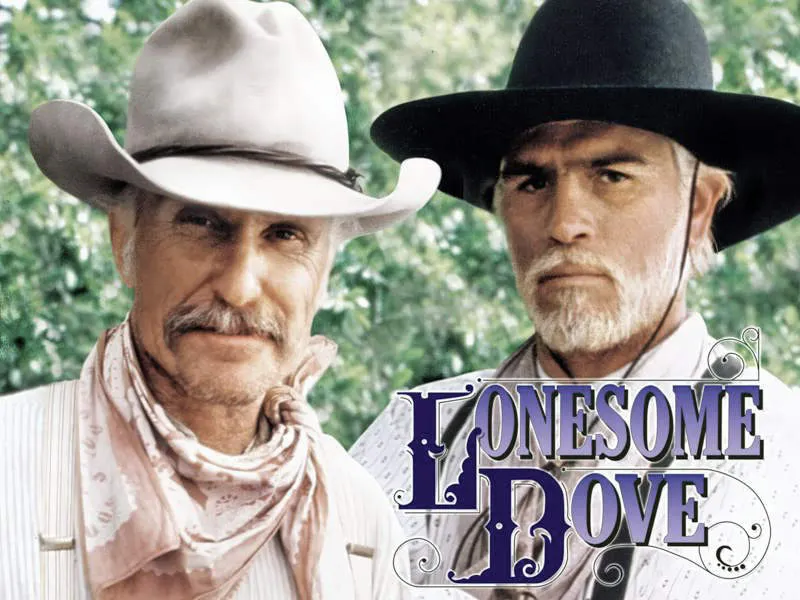
For asexual representation on screen I recommend: Princess Cyd, Remains of the Day, Lonesome Dove andFreaks and Geeks. For younger viewers, Anne With an E. As a child I identified with Marilla and Matthew in Anne of Green Gables. The recent screen adaptation brings queerness onto the page (without anachronistically naming it) and two things about it stand out as affirming: Matthew is permitted to live his life happily without responding to the sexual interest of an old flame, and the love between Matthew and Marilla (elderly brother and sister) is appreciated as much as romantic kinds of love. In none of these instances is asexuality on the page, named. However, the fact that writers created these characters in the 20th century shows that asexual people have always existed. Writers don’t pull character archetypes out of nowhere.
The asexual character (unnamed) generally gets shunned on TV. And asexuals can’t even feel justified in complaining about it, because someone will always argue that “the shunned character isn’t even named as asexual.” I explore the extent of this issue by taking a close look at ‘weird housemates’ in comedy series, and — no coincidence — one of the few positive representations of a weird housemate was created by an aromantic writer.
An episode of Houseis notorious among aces for its anti-asexual storyline. The anti-asexual episode did untold damage to ace representation on screen. New Zealand’s Shortland Street had a remarkably early asexual storyline. Gerald Tippett is considered the first named asexual character on TV.
Dating TV shows are very popular. In Australia, Married At First Sight is a massive ratings winner (and when they accidentally accept an asexual, things go very badly for him). These dating shows influence and reflect mainstream culture, whether individuals watch them or not. What they illuminate: In contemporary dating culture, daters are expected to feel an instant ‘spark’. If they don’t, they are encouraged and supported to ‘move on’ to the next possible partner. This makes contemporary dating culture a complete wash for partnership-seeking demisexuals, who must somehow find partners by other means.
What does it mean for a story to be asexual, or asexual-friendly? We can’t expect older narratives to name it on the page. It might be metaphorical, or other labels might be used. The Bone People by Keri Hulme is an asexual (agender and I would say Autistic) narrative. The author knew who she was even before the culture came up with the concepts.
In general, society needs more words to describe family relationships, or human relationships in general. For example, what’s a non-binary word for aunt or uncle? (Some are trying to make pibling happen — as in, parent-sibling — good luck making that take off.) Likewise, there are nowhere near enough words to describe asexual and aromantic experiences of relationships. Queerplatonic is a good general term to describe a kind of love which cannot be neatly categorised as either ‘friendly’ or ‘romantic’.
Asexual culture means you don’t rank the different types of love with ‘romantic’ at the pinnacle. Love is not hierarchical. Friendships are very important.
At least, they can be. Some people are asocial and that’s okay. Society is NOT set up for existing in isolation, but that’s a separate issue. Asocial people exist, just as asexual people exist. There can be some overlap, including with Autism, of course. If you doubt such people exist, I recommend reading The Stranger in the Woods: The Extraordinary Story of the Last True Hermit by Michael Finkel. “In 1986, a shy and intelligent twenty-year-old named Christopher Knight left his home, drove to the woods of Maine, and disappeared into the forest for 27 years, surviving by his wits and courage until he was finally arrested for stealing food.”
Asocial is not a synonym for ‘antisocial’. ‘Antisocial’ behaviour refers to acts which destroy the fabric of human society: lying, cheating, stealing, murdering, that sort of thing. To be ‘asocial’ pretty much means ‘minding your own damn business.’
Sex makes us human? No, shuddup.
It is Asexual Experience (TM) to feel ‘on the edge of things’. Joining asexual communities can help with feeling less alone, but actually, it’s also really common to feel alone within an ace community. Perhaps you’re a sex repulsed ace who finds yourself among aces who love sex jokes — or vice versa. Asexuality is such a broad community… and that’s why the microlabels exist. They help us to find our people. Asexuals are frequently derided for our huge number of microlabels which seem to describe every fringe experience. But, if people find them helpful, they are helpful. Until they are not. It is a common experience to learn you’re asexual, investigate the microlabels, realise you’re not alone, and then pull back somewhat from the microlabels, perhaps all the way back to “I’m queer. The rest is nunya.”
Likewise, it is a common experience these days for an adolescent to self-identify as asexual, and then later meet someone, fall in love, and experience sexual attraction for the first time only after love happens. Now it’s clear they are demisexual. They are still asexual. Asexuality, unlike the other orientations, is ‘identification by exclusion’ (riffing on the medical term, diagnosis of exclusion), so it naturally takes us longer to get to the end of our self-exploration. I would even say it’s a lifetime’s work. (Similarly, it takes someone with e.g. MEcfs longer to get a correct diagnosis, compared to someone with, say, high blood pressure or diabetes. Your GP will send you to every specialist under the sun first. But you had MEcfs all along, even if your initial diagnosis was, say, POTS.)
As part of ‘feeling on the fringe’ of things, including our own communities, it’s a common asexual experience to feel on the edge of other things as well. Take gender. Many of us self-identify as agender (or non-binary), meaning we have not internalised the rules of gender. This doesn’t mean we ‘don’t understand’ them. It means we think gender rules are bullshit. In fact, our position as outsiders gives us a particular insight into gender rules that the cisgender folk don’t necessarily have.
Unfortunately for us, it is also common to feel a more tenuous hold on life itself. Asexuals have a concerningly high suicide rate. But also, the feeling of ‘existing on the edge of life itself’ doesn’t necessarily fall into the category of ‘suicidal ideation’ or ‘actively making plans’. It can be far more subtle — and enduring — than that. If you know, you know.
Some asexuals like touch, others definitely don’t — and for many others, it’s complicated.
If you accept asexuals as queer, if you accept us as fully human, not broken… congratulations. You’ve done the work we ask of you, and you probably apply this same approach to others society considers ‘weird’. You are someone who accepts every last weirdo, and can legitimately call yourself a progressive thinker. Thank you.
Get Larre Bildeston’s stories in your inbox
Join Medium for free to get updates from this writer.
History is full of people who just didn’t. They said no thank you, turned away, ran away to the desert, stood on the streets in rags, lived in barrels, burned down their own houses, walked barefoot through town, killed their rapists, pushed away dinner, meditated into the light.
— Anne Boyer, from “No,” published on the Poetry Foundation blog
Queer, neurodivergent. Author of (aromantic) romance novel The Space Ace of Mangleby Flat (2023). Writing here about depictions of asexuality in media.