The Accumulation of Work Effort
How Yesterday’s Ideas Manifest Into Today’s Reality
This is meant to be long, to prove a point. Do not feel you must read all this. It was AI generated and I went through and removed as much “AI flourish” as I could to shorten but again no judgement to just say, “Ok, I get it” and proceed to the end.
While reading however keep in mind all this is run by Us, “The People” with the support of Us, “The People”. Each individual adding to or supporting the adding to, our collective physical reality.
That being said, anyone that is interested in metallurgy may find the entire story of interest. If so, I hope my editorial work effort helped to provide more concise information than Rusty originally did, while still representing the true scope of the effort worked.

A Fairly Comprehensive Work Effort of the Austrian 1967 Mint Set
In 1967, Austria maintained nine standard denominations (2 Groschen up to silver 50 Schilling).
Total Weight: 57.4 Grams (~1.845 Troy Ounces)
Total Silver Weight: 36.528 grams (~1.174 Troy Ounces)
Total Copper Weight: 15.76 grams (~0.507 Troy Ounces)
Total Aluminum Weight: 2.612 grams (~0.084 Troy Ounces)
Total Zinc Weight: 2.5 grams (~0.08 Troy Ounces)
This is our work effort audit for ~1.845 Troy Ounces of mass:
Before we begin auditing the ledger, there are two massive, invisible “work effort streams” that flow quietly through every single stage of this process: The Energy Stream and The Chemical Stream.
These are not just industrial inputs; they are the thermodynamic and molecular gears of our collective labor:

- The Energy Stream: We do not simply mine and melt metal; we bend physical forces. Every step of this coin set represents an expenditure of captured sun and heat. It is the diesel fuel burned by heavy mining trucks; the megawatts of electricity pulled from alpine rivers; and the heat of induction furnaces operating at thousands of degrees. This energy is “stored labor” — the physical effort of the power-grid engineers, coal miners, and dam builders.

- The Chemical Stream (The Molecular Battleground): To force the Earth to yield zinc, copper, and silver, we must provide effort at the molecular level. This stream represents the work effort of the chemical industry: the manufacturing of sulfuric acid, the synthesis of sodium hydroxide, and the compounding of cyanides and nitric acids. Every chemical reagent used to purify these coins has its own independent, planet-spanning supply chain of human safety, engineering, and physical labor.
Let’s begin the audit.

Part I: The Metallurgical Extraction & Smelting Ledgers
Domain 1: The Aluminum
- Refining Processes: The Bayer Process and the Hall-Héroult Process.
- Resulting Metal: 1.0 Al.
- Target Coins: The 2 and 10 Groschen.
- The Raw Materials: Bauxite Ore
The Proof of Work Ledger:
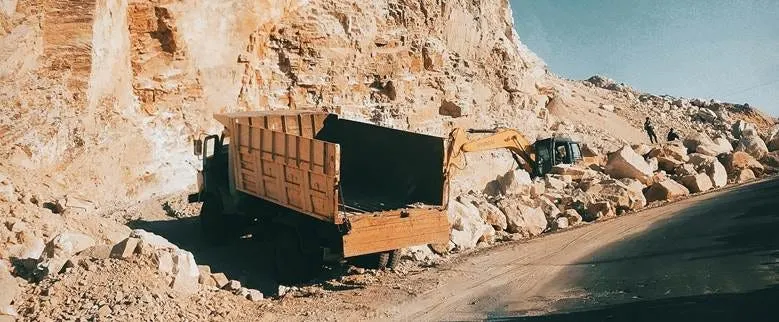
- Extraction: Giant diesel draglines tear open massive open-pit mines to excavate red, clay-like bauxite ore. Tons of earth are shifted and washed to concentrate the basic minerals.
- The Chemical Dissolution (The Bayer Process): The raw bauxite is pulverized and mixed with hot, pressurized sodium hydroxide (lye) at 300° F. The aluminum minerals dissolve into a sodium aluminate liquid, leaving behind a toxic, iron-rich “red mud” waste. The liquid is cooled, seeded with aluminum hydroxide crystals, and roasted in massive rotary kilns at 2000° F to produce pure alumina powder Al₂O₃
- The Hall-Héroult Electrolytic Blast: The alumina powder is dissolved in a molten bath of cryolite Na₃AlF₆ at 1760° F inside carbon-lined steel pots. Millions of amperes of electricity are pumped through the bath, breaking the chemical bonds between aluminum and oxygen. Molten aluminum settles to the bottom of the pots, where it is siphoned off at 100% purity, cast into ingots, and hot-rolled under massive steel rollers into ultra-thin, ductile sheets.
From here we have 5 more mining and refining processes. Each image from here is a point the reader may wish to pause on as it is a significant change point in the industries audited.

Image by Keesstes from Pixabay
Domain 2: The Slate-Grey Grave
- Refining Processes: Roasting and Acid Electrowinning.
- Resulting Metal: 1.0 Zn.
- Target Coin: The 5 Groschen.
- The Coin: 5 Groschen
- The Raw Materials: Sphalerite Ore (Zinc Sulfide)
The Proof of Work Ledger:
- Extraction: Deep-shaft miners working hundreds of feet underground, drilling into dark veins of sphalerite, loading the ore into rail cars, and hauling it to the surface.
- The Sulfide Roast: The ore is crushed to dust and subjected to froth flotation to concentrate the zinc. This concentrate is fed into roasting furnaces at 1650° F to burn off the sulfur as sulfur dioxide gas, transforming the ore into a crude zinc oxide powder called “calcine.”
- Acid Electrowinning: The calcine is leached with warm sulfuric acid to dissolve the zinc. Because iron, cadmium, and copper impurities would ruin the coin’s stability, the solution must be chemically purified with zinc dust. Once pure, the zinc-sulfate solution is subjected to high-current electrolysis. Pure zinc metal (1.0 Zn) plates out onto massive aluminum cathodes, where workers manually peel the grey metal sheets away to be melted, cast, and cold-rolled into coin blanks.
Domain 3: The Golden Shield
- Refining Processes: High-temperature Induction Smelting.
- Resulting Alloy: Aluminum-Bronze .915 Cu .085 Al.
- Target Coins: The 50 Groschen and 1 Schilling.
- The Coins: 50 Groschen and 1 Schilling
- The Raw Materials: Chalcopyrite (Copper Ore) and Bauxite (Aluminum)
The Proof of Work Ledger:
- Co-Extraction: Coordinating the shipment of heavy copper concentrated from open-pit mines with the light aluminum from the Hall-Héroult smelters.
- The Precision Melt: The raw materials are loaded into a high-frequency induction furnace. The copper is melted first at a blinding 1984° F. Once liquid, pure aluminum is slowly introduced. The reaction is highly exothermic (releasing massive amounts of heat), requiring strict thermal monitoring to prevent the metals from boiling away.
- Alloying to Spec: The mixture is kept at exactly 91.5% copper and 8.5% aluminum. The aluminum atoms lock into the copper’s crystalline lattice, creating an alloy that is significantly harder than either parent metal. The molten bronze is continuously cast into long strips, acid-pickled to remove dark scaling, and cold-rolled to precise coin-strip thickness.
Domain 4: The Low-Grade Silver
- Refining Processes: The Parkes Process and Moebius Electrolysis.
- This path splits into three distinct chemical “fine silver” purities:
- Standard 1 .64 Ag: Alloyed as .64 Ag .36 Cu for the 5 and 10 Schilling.
- The Coins: 5 and 10 Schilling
- The Raw Materials: Argentiferous Galena (Lead-Silver Ore) and Copper
- The Alloy Standard: Billon Silver (.64 Ag .36 Cu)
The Proof of Work Ledger:
- The Sulfide Roast: Silver at this level is rarely mined pure; it is pulled from lead sulfide (galena) deposits. The ore is roasted to remove sulfur, then smelted in a blast furnace to produce a lead-silver bullion.
- The Parkes Desilverization Process: The molten bullion is stirred with liquid zinc at 900° F. Silver has a much higher affinity for zinc than lead. The zinc-silver compound forms a crust that floats to the surface, where it is skimmed off and distilled in retorts to recover the silver.
- Billon Alloying: The pure silver is blended with exactly 36% copper in an induction furnace at 1800° F. This high copper content ensures the 5 and 10 Schilling coins have the physical strength to survive daily hand-to-hand transactions of commerce.
Domain 5: The Fine Silver
- Refining Processes: The Parkes Process and Moebius Electrolysis.
- This path splits into three distinct chemical “fine silver” purities:
- Standard 2 .8 Ag: Alloyed as .8 Ag .2 Cu for the 25 Schilling.
- The Coin: 25 Schilling
- The Raw Materials: Argentite Ore (Silver Sulfide) and Copper
- The Alloy Standard: Fine Silver (.8 Ag .2 Cu)
The Proof of Work Ledger:
- Chemical Leaching: High-grade silver ores are ground to a fine slurry and treated with a sodium cyanide solution while oxygen is bubbled through the mixture. The silver dissolves as a sodium silver cyanide complex, separating it from the host rock.
- Zinc Precipitation: Fine zinc dust is introduced to the liquid. The zinc replaces the silver in the chemical solution, causing the pure, metallic silver to precipitate out of the liquid as a dark, fine mud.
- Sovereign Fine Smelting: The silver mud is collected, washed, and fired in a cupellation furnace to oxidize any remaining base metals. The resulting .999 pure silver is then alloyed in a furnace with exactly 20% copper. At .8 fine, this alloy strikes a perfect balance: it is highly ductile for detailed coin designs while maintaining a bright finish.
Domain 6: The High-Grade Silver
- Refining Processes: The Parkes Process and Moebius Electrolysis.
- This path splits into three distinct chemical “fine silver” purities:
- Standard 3 .9 Ag: Alloyed as .9 Ag .1 Cu for the 50 Schilling.
- The Coin: 50 Schilling
- The Raw Materials: Pure Silver Veins and Copper
- The Alloy Standard: Coin Silver (.9 Ag .1 Cu)
The Proof of Work Ledger:
- Anodic Refinement (Moebius Process): To achieve the flawless purity required for Austria’s premier 50 Schilling piece, raw silver is cast into massive anode plates and suspended in a nitric acid bath. A high electric current causes pure silver ions to migrate across the acid, forming needle-like crystals of .9999 pure silver on the cathode, while gold, platinum, and base metals fall to the bottom as anode slime.
- The Precious Blend: The ultra-pure silver crystals are melted at 1760° F and mixed with 10% pure copper.
- Annealing Cycles: Because .9 silver is highly malleable, it easily work-hardens (becomes brittle and cracks) when rolled. To prevent this, the cast ingots must undergo multiple, delicate annealing cycles — heated to a dull red glow 1200° F in a controlled-atmosphere furnace and slowly cooled to realign the metal’s grain structure — before being rolled into perfect sheets.

Now we have our metal. Take a seat as there is still much effort to be invested in the minting process itself.
Get Lance Laughlin’s stories in your inbox
Join Medium for free to get updates from this writer.
Part II: The Human Masterwork (The Artistry & Engraving)
Before a single coin can be struck, years of human artistic training, hand-eye coordination, and physical engraving labor must be spent to create the steel dies.
Artist’s Sketch > Plaster Model > Copper Galvano > Pantograph Reduction > Hand Retouching.
1. The Sculptor’s Clay
The design begins with the Chief Engraver of the Vienna Mint. Working on a massive, oversized scale (typically four to five times the diameter of the final coin), the artist hand-carves the intricate relief of the design into fine clay or wax.
2. The Plaster Cast & Copper Galvano
Once the clay model is perfect, a negative mold is cast in fine plaster. When this plaster dries, a positive plaster model is poured.
The plaster is coated with a microscopically thin layer of graphite powder to make it electrically conductive. It is then submerged in an electroplating bath for several days until a thick copper shell (a galvano) is deposited on its surface.
3. The Janvier Pantograph Reduction
The copper galvano is mounted onto a Janvier pantograph machine. This uses a tiny tracer stylus to walk across the details of the rotating copper model over a period of 24 to 48 hours.
As the stylus moves over the copper model, a steel cutting tool on the opposite end of the machine reproduces the exact design, scaled down to the millimeter, onto a softened, cone-shaped steel cylinder called a master hub.
4. Hand-Sinking the Dies
Even with the precision of the Janvier machine, the micro-details are slightly blurred during the mechanical reduction.
Under microscopes, master engravers spend hours using hand-gravers and microscopic chisels to sharpen the steel lines, clean the flat fields, and punch the individual dates and letters into the master die.
5. Heat-Treating the Steel
To make the final coining dies tough enough to strike tens of thousands blanks without breaking, they must undergo heat-treatment:
- The steel dies are heated in a vacuum furnace to 1500° F to prevent oxygen from scaling the surface.
- They are quenched in an oil bath to lock the steel’s carbon molecules into an ultra-hard structure.
- Finally, they are tempered (re-heated to 450° F and cooled slowly) to relieve internal stresses, transforming the steel into a tough, shatter-resistant tool.
Part III: The Coining Floor (The Physical Strike)
This is where the metallurgical elements and the artist’s dies collide to turn blanks into coins.
Blank Strip > Blanking Press > Upsetting (Edging) > Acid Wash > Coin Press
1. Punching the Planchets
The metal sheets from the smelting refineries are fed into blanking presses. High-speed steel punches slam through the strips under 50 tons of force, punching out smooth, blank metal disks (planchets) at a rate of several hundred per minute. The remaining web of metal strip is shredded and sent back to the melting furnace.
2. Annealing & Upsetting
Punching the blanks compresses the metal, making it too hard to easily accept the coin design.
- The raw blanks are fed through a rotary annealing furnace at 1300° F to soften them.
- They are quenched in water and fed into an upsetting machine, where they are squeezed between rotating steel-grooved plates. This compresses the edges of the blank, raising a rounded rim around the circumference. This raised rim is critical: it protects the final design from wear and ensures the metal flows evenly during the strike.
3. The Acid Wash & Polish
To ensure the proof-like, brilliant luster of the 1967 set, the upset planchets must be completely free of surface tarnish, oil, and heat scaling. They are tumbled in a hot bath of weak sulfuric acid, thoroughly rinsed in deionized water, and dried in warm, vibrating sawdust or hot air centrifuges.
4. The Double-Strike (The Proofing Process)
For the standard circulating coins, the planchets are struck at lightning speed on automatic presses. But for the elite Mint/Proof Sets, the coining process is a slow, methodical ritual:
- Polishing the Dies: The flat fields of the steel dies are polished with diamond paste to a mirrored finish, while the raised details of the designs are acid-frosted.
- The Coining Press: A single planchet is hand-fed into the chamber of the press using soft brass tweezers to avoid scratching the metal.
- The Blow: The upper and lower dies slam together with up to 100 tons of hydraulic pressure. For the silver coins, the press strikes each blank twice. This double-strike ensures that every micro-line of the design is completely filled, forcing the cold metal into the deepest recesses of the dies and producing a sharp, pristine rim.
Part IV: Packaging the Proof
The proof of work does not end when the coin leaves the press. In fact, some of the most delicate manual labor is spent protecting the finished metal surfaces from the environment.
1. Manual Clean-Room Inspection
Under strict clean-room conditions, workers wearing lint-free white cotton gloves use vacuum tweezers to lift each coin off the press. They are never allowed to touch the flat, mirrored surfaces of the coin. Each piece is inspected under high-intensity lamps for the slightest hair-line scratch, metal flake, or water spot. Even a microscopic flaw results in the coin being instantly rejected and tossed back into the melting pot.
2. Sonic Sealing & Presentation Display
To prevent oxygen, moisture, and sea air from reacting with the pure zinc, bauxite aluminum, and high-purity silvers, the nine coins are sealed immediately.
- The coins are arranged inside a custom acrylic holder designed to display both the obverse and reverse faces.
- The holder is placed into an ultrasonic welding machine. High-frequency sound waves melt the edges of the plastic together, creating an airtight, moisture-proof seal.
Audit complete.

Audit Summary.
The Ultimate Reality of the Nine Disks
When you hold the completed 1967 Austrian Mint Set in your hands, you are holding the physical culmination of:
- Over 5,000 hours of manual design, clay modeling, pantograph calibration, and microscopic steel hand-engraving.
- Hundreds of thousands of megawatts of electricity expended in high-voltage electrolytic smelters to isolate pure aluminum and zinc atoms from stone.
- Fierce thermodynamic energy used to run blast furnaces and chemical leaching operations to refine copper and silver to three distinct, chemically certified purities.
- Over 100 tons of hydraulic pressure applied repeatedly on the coining floor to stamp the pride of the Austrian Republic into the cold metal.
This shows just how intertwined our work effort is in the world. Each one of these coins contains a little bit of the work effort passed into it at each stage as it was being created. The work effort from the previous stage carried forward to the next stage, building work effort value as it transforms due to work effort. All the buildings, all the cars, all the roads, all the clothes, all the jewelry, all the art, all the everything was created from the earth using the force of a human’s physical and mental will.
Currency is the container for the completed efforts of that will. In this story, we showed how that same work effort created the currency (hardware). We have basically described to you the process that creates the physical packaging for your life’s effort, currency. The money is the software system behind the currency. It’s the rulebook we created.
The problem isn’t with the packaging; it’s the ever-changing amount of energy that is actually included in the container due to the “rules.”
It reminds me of the potato chip aisle at the grocery store — the bags stay the same size and they look full, but the chip contents are variable.
We see you, potato chip industry.

Grace and Luster
Originally published at https://laughlinmasterworks.substack.com.