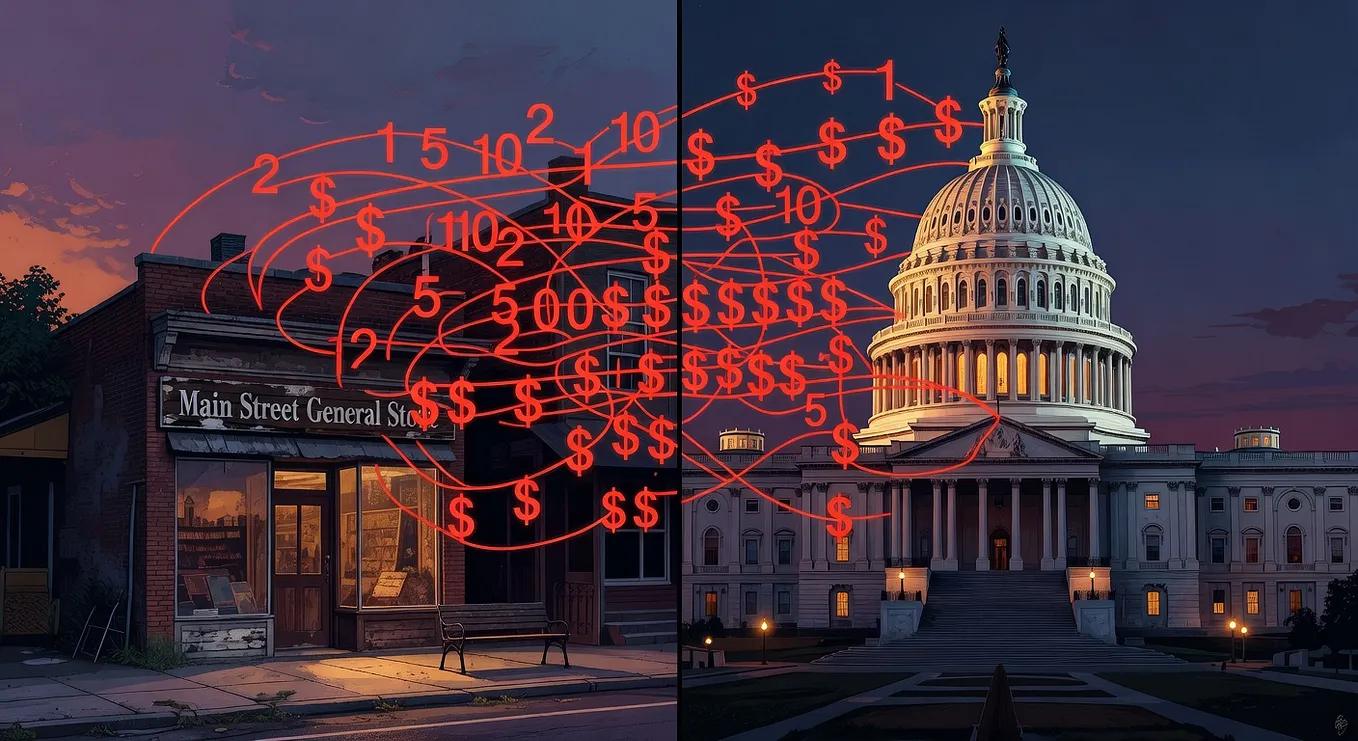
What if… the IRS got abolished?

This post is not meant to argue politics one way or another. It is mainly meant to focus on what people would notice change in their daily lives, and my personal perception of the good and bad of those.
To be clear, I am specifically referring to the abolishing of direct taxation, to include: direct taxation on income, gifts, inheritances, capital gains, as well as corporate taxes.
The bad
Here are a few detrimental effects of abolishing direct taxation:
- Tens of thousands of IRS agents are out of a job
- Many tax lawyers, CPAs, tax preparers would be out of a job (possibly close to 200,000 total)
- Companies like TaxAct, TurboTax, H&R Block (etc.) would have to shut down or find new raisons d’être
- A lot of revenue the federal government counts on today would be lost, and the federal government would need to find alternative sources of revenue (I will mention some below)
- Many people have capital losses they could not deduct in prior years (well, because if you owe the federal government you have to pay them right away, but if they owed you, they only pay you up to $3000 yearly for losses you incurred) — you may never get that money back!
The good
- No more filing taxes each year! (I personally spend 2–6 days yearly just on this, sometimes longer)
- No more keeping documents to file taxes each year (no more W2s, 1099s, etc.)
- No more extremely complicated math (usually) figuring out how much you owe
- No more estimated taxes to pay monthly/quarterly
- No more payroll withholding — payroll becomes a lot simpler for employers and employees!
- No more deductions (well, your entire pay is auto-deducted in a way) to seek and ask for
- 6.2% of your paycheck (the employer share of FICA taxes) is now kept by your employer — they can choose to pay it back to you, hire more employees or invest it in new R&D
- No more FSA/HSA accounts and related paperwork
- No more 401k, IRA, SEP and similar retirement accounts
- You end up keeping upwards of 50% of your pay that you used to pay to the federal government (up to 37% income tax, then social security, Medicare and such)…
Alternative taxation
Some alternatives to direct taxation include indirect taxation — some examples include:
- Sales taxes and/or value-added taxes
- Duties/tariffs and excise taxes
One thing to note is that the federal government already levies some of those taxes, such as excise taxes (on tobacco and firearms, among others), so it is equipped to do so.
Get Jade N’s stories in your inbox
Join Medium for free to get updates from this writer.
Duties (most Nations in the world charge duties, so do we, just not to the extent of other Nations yet) are alreadylevied for some goods too. We may need to tweak these numbers a bit more.
Further, this type of taxation brings revenue almost equally from all persons in the US, whether citizens, residents or visitors.
So will prices go up or go down?
This is a hard one to answer fairly — on one hand, with VAT and tariffs, certainly we will see a bump in the price of many goods (VAT on all goods, tariffs on goods we import). However, you will be keeping more of you take home pay (usually more than what you are paying in added cost to goods).
In theory, you may break even, you may end up richer, you may end up poorer — I honestly do not know and am not equipped to perform the studies to see what the actual effect over time is.
But what is certain is this: our paperwork will become a lot simpler! The current tax code is a mess, so convoluted and takes too much of our time, money and effort (both in the public and private sectors) to comply with.
My vote?
If some sort of VAT plus tariffs means the vast majority of us (and the federal government) will break even for day-to-day expenses, I would still opt for eliminating direct taxation (and the IRS) because it simplifies our lives so much. Yes, there will be a near-term hit to tax professionals (public and private sectors), but it should be just an adjustment period that may be worthwhile in the long run.