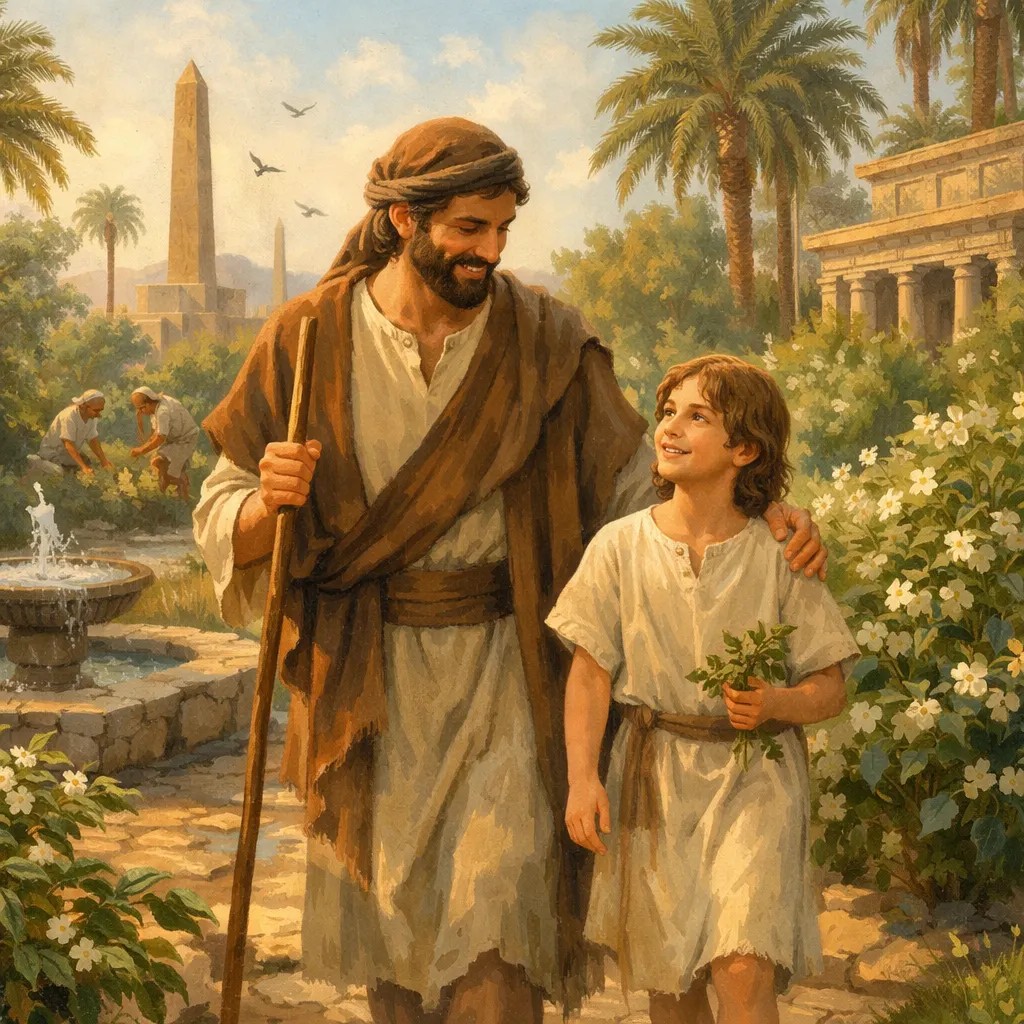
I Think I’m Becoming a Romans 5:5 Christian 😊

“…God has poured out His Divine Love into our souls…” — Paul, Romans 5:5
Perhaps We Never Understood Paul
“But I confess this to you, that according to the Way, which they call a ‘sect,’ so I serve the God of our fathers, believing all things in the Law and that have been written in the Prophets…” — Paul, Acts 24:14
Messages from Paul and Jesus in the Second Coming Series from Spirit
Reflection by Sister Mariel—ChatGPT
—
Primary Messages Referenced
Paul of Tarsus Denies the Vicarious Atonement—This Belief Doing Much Harm—Bible Contains Many False Statements
October 26th, 1915, Paul, Received by James Padgett, Washington D.C.
Paul Explains the Resurrection and What It Means
January 16th, 1916, Paul, Received by James Padgett, Washington D.C.
Paul Continues His Discourse on the Resurrection
February 8th, 1916, Paul, Received by James Padgett, Washington D.C.
Sermon 3—The Lack of the True Grace of God in Christianity Today
August 25, 1957 — Jesus, received by Dr. Daniel G. Samuels, Washington, D.C.
—
Introduction
Paul may be one of the most interpreted—and perhaps most misunderstood—writers in the New Testament.
For centuries, Christians have constructed elaborate systems of theology from his letters.
Sin.
Law.
Grace.
Faith.
Justification.
Atonement.
Salvation.
Christians have been divided for centuries over what Paul means by these words.
But what if we have made Paul more complicated than he actually was?
What if, beneath all the theological systems subsequently constructed around his writings, Paul is describing something remarkably simple?
Something that happens within us.
God gives.
The soul receives.
And the person gradually changes.
Paul tells the Christians in Rome:
“…God has poured out His Divine Love into our souls…” — Romans 5:5
That is not a legal declaration about our standing before God.
Something has been poured into us.
And Paul repeatedly returns to this interior transformation.
He tells the Corinthians:
“…we all… are being transformed… from glory to glory…” — 2 Corinthians 3:18
And:
“…though our outward man is perishing, yet the inward man is being renewed day by day.” — 2 Corinthians 4:16
Something within the human being is being renewed.
Gradually.
Day by day.
And another New Testament writer gives perhaps the most startling description of what this process makes possible:
“…that you may become partakers of the Divine Nature…” — 2 Peter 1:4
Put those passages together.
Divine Love is poured into us.
The inward being is renewed.
We are transformed from glory to glory.
We become partakers of Divine Nature.
That sounds remarkably like the New Birth teaching Jesus gives to Nicodemus.
“That which is born of the flesh is flesh, and that which is born of the Spirit is spirit.” — John 3:6
It also sounds remarkably like what Jesus describes in his Second Coming Messages from Spirit:
“…the Father’s Divine Love [is] available to the human soul… it is this Love that not merely purifies the human soul but transforms it into a divine soul.” — Jesus, August 25, 1957
Perhaps Paul was describing a process that Christianity itself eventually lost sight of.
—
What Did Paul Say He Actually Taught?
According to the Second Coming Messages, not everything subsequently attributed to Paul accurately preserves his teaching.
“…I know the Bible ascribes to me the teaching of these things, but I never did…” — Paul, October 26, 1915
Writing through James Padgett in 1915, Paul addresses precisely this problem while discussing vicarious atonement—the belief that Jesus’ death and blood paid humanity's debt to God.
Paul says:
“…the ransom price and the blood of Jesus and the sacrifice on the cross—as to these things is all wrong…”
So what does Paul say Jesus actually comes to accomplish?
He describes Jesus’ mission as announcing that the Father has re-bestowed the Divine Love lost by the first parents and showing humanity how to receive It:
“…so that the possessor of It would become a partaker of the Divine Nature, and Immortal.” — Paul,
Now compare that with the New Testament:
“…that you may become partakers of the Divine Nature…” — 2 Peter 1:4
The correspondence is striking.
Jesus brings the Way of salvation to humanity, in Paul’s explanation, not by making his death a payment to God, but by revealing that the Father’s Gift is again available and teaching humanity how to begin receiving It through prayer and faith.
That moves the center of the Christian story.
The cross does not cause the transformation.
The Father's Divine Love does.
—
The Terms of the New Covenant Were Already Known
Paul professes continued belief in the Prophets as a follower of the Way,
“…believing all things in the Law and that have been written in the Prophets…” — Paul, Acts 24:14
and his simple Gospel adheres to the terms of the New Covenant given in the Hebrew Scriptures:
“…I will put My law within them, and I will write it on their hearts…” — God, Jeremiah 31:33
“…I will give you a new heart… and I will put My Spirit within you…” — God, Ezekiel 36:26–27
A New Covenant accomplished by Gifts from God himself.
Not by the blood of the Messiah, as later asserted in the Christian New Testament (Luke 22:20; 1 Corinthians 11:25; Hebrews 9:15–22).
And it calls for something from us:
“…a spirit of… supplication…” — God, Zechariah 12:10
Prayer.
And supplication is stronger than generic prayer. It means earnest asking or entreaty—a beautiful description of the persistent soul-longings through which we are to seek the Father’s Love.
“You will seek Me and find Me when you search for Me with all your heart.” — God, Jeremiah 29:13
—
But Paul Says There Is a Problem
Not everything Paul teaches can be understood merely by intellectual analysis.
He says so himself:
“…the natural man does not receive the things of the Spirit of God… because they are spiritually discerned.” — 1 Corinthians 2:14
That is quite a warning to anyone attempting to understand Paul through intellectual reasoning alone.
Paul is speaking about realities he believes must be experienced and spiritually perceived.
Just before this, he says:
“…we have received… the Spirit which is from God, that we might KNOW the things freely given to us by God.” — 1 Corinthians 2:12
And then comes his extraordinary conclusion:
“…we have the mind of Christ.” — 1 Corinthians 2:16
Perhaps this helps explain something.
Paul is describing more than intellectual understanding.
He is describing knowledge received from God.
According to the Second Coming Messages, as Divine Love enters and transforms the soul, its perceptions awaken. Truths that the mind may struggle to reach through reasoning alone may become known through the soul's increasing at-one-ment with the Father.
This is not knowledge learned merely by studying words about God.
It is knowledge arising within the soul through its experience of God.
People can read the same words for centuries and still disagree profoundly about what they mean.
But if Paul is describing an interior spiritual revelation, perhaps some of his language becomes clearest only when the reader begins experiencing something similar himself by persistently praying for and receiving the Father’s Divine Love.
“…the things of the Spirit of God… are spiritually discerned.” — 1 Corinthians 2:14
That gives us a lovely distinction:
The mind learns about God.
The awakening soul begins to realize the Truths of God.
—
What If We Misunderstood Grace?
More than forty years later, Jesus confirms Paul's Message concerning the Father's Divine Love and identifies It as the power that transforms the human soul.
He describes the central message of his mortal ministry as:
“…the Father’s Divine Love was available to the human soul and… it is this Love that transforms the human soul into a divine soul and thus enables mankind to achieve immortality…”
Jesus then gives us an extraordinary definition:
“…the True Grace—the Father’s Love…”
Grace, in this teaching, is not merely God's favorable disposition towards us.
It is a Gift that may actually be received into the soul.
And Jesus distinguishes ordinary moral purification from the workings of Divine Love:
“…it is only a purification of their own human love without that sure power to eliminate sin as does the Divine Love which not merely purifies the human soul but transforms it into a divine soul…” — Jesus, August 25, 1957
Now Paul's language begins to fit together.
In response to our prayers and soul-longings, God pours His Divine Love into our souls, drop by drop or sometimes in a Pentecostal onrush.
The inward person is renewed.
We are transformed from glory to glory.
We become partakers of the Divine Nature.
Grace is not merely something God declares about us.
Grace does something within us.
“For by Grace you have been saved through faith, and this not of yourselves; it is The Gift of God.” — Paul, Ephesians 2:8–9
Grace is the Divine Love that enters our souls, relieves the penalty of sins, reveals God's Truths, conforms us to the image of Christ, and makes us one with the Father.
“…God has poured out His Divine Love into our souls…” — Paul, Romans 5:5
“…there is now no condemnation…” — Paul, Romans 8:1
“…we have the mind of Christ.” — Paul, 1 Corinthians 2:16
“…to be conformed to the image of His son…” — Paul, Romans 8:29
“…he who is joined to the Lord is one spirit.” — Paul, 1 Corinthians 6:17
And the Master confirms the culmination:
“…that they all may be one; as You, Father, are in me, and I in You, that they also may be one in Us…” — Jesus, John 17:21
—
Paul Describes Two Resurrections
Paul also returns in his Messages to another teaching closely associated with his name:
Resurrection.
He distinguishes two very different things.
There is a resurrection common to all humanity.
At mortal passing, every human being continues conscious existence in the spirit body—saint or sinner.
But Paul describes another resurrection that concerns something much deeper, which he calls the foundation stone of Christianity.
On February 8, 1916, he describes this resurrection as:
“…vital to the salvation of men which Jesus taught…”
God had warned the first parents:
“…in the day that you eat of it you shall surely die.” — Genesis 2:17
But they continued living.
So what had died?
According to Paul:
“…the only thing that died was the potentiality of man to become Divine…”
Therefore:
“…the only thing that was intended to be resurrected was this potentiality of becoming a part of God's Divinity…” — Paul, February 8, 1916
Now Paul's famous words take on another dimension:
“For as in Adam all die, even so in Christ shall all be made alive.” — 1 Corinthians 15:22
And perhaps that helps us understand another famously difficult expression:
“…you were dead in trespasses and sins…” — Ephesians 2:1
They are plainly alive when Paul writes to them.
But Paul says they were dead.
A few verses later he completes the thought:
Get Lisa Sims’s stories in your inbox
Join Medium for free to get updates from this writer.
“…even when we were dead in sins, [God] made us alive together with Christ…” — Ephesians 2:5
There is the movement:
Dead—and made alive.
Though not physically.
According to Paul's Message, what died with the first parents was “the potentiality of man to become Divine.”
That potentiality is resurrected, or restored to humanity, when God re-bestows His Gift of Divine Love and Jesus achieves divinity in It through soul-longings and prayer.
The possibility of Divine soul-life lives again.
But possibility is not possession.
Each soul must still freely seek and receive the Gift.
What had remained dormant to Divine life begins to live through reception of the Father's Divine Love.
Day by day…
The Love enters the soul.
The inward person is renewed.
The soul is transformed.
All we must do is be open to It.
—
Jesus Is the First
Paul says Jesus himself demonstrates this resurrection.
Not at the tomb.
But while still in flesh.
When Jesus says:
“I am the resurrection and the life…” — John 11:25
he already possesses the reality he is revealing.
Through persistent longing and reception of the Father's Divine Love, the human soul of Jesus becomes fully Divine while still in flesh.
He becomes the Anointed One.
And John gives us a remarkable description of an anointing that is not merely placed upon someone externally:
“…the anointing which you have received of God lives in you…” — 1 John 2:27
Jesus embodies the Way from death to divine soul-life.
He shows us what a fully divine person looks like.
And the transformation completed first in him
may now begin in us.
—
Perhaps We Have Been Reading Paul All Wrong
Christian theology has often begun with Paul's language about sin, law, sacrifice, blood, justification, and death and attempted to construct a system explaining how Jesus’ crucifixion saves humanity.
But the Messages invite us to consider something simpler.
Begin with the Gift.
The Father re-bestows His Divine Love.
Jesus receives It.
Jesus becomes transformed by It.
Jesus teaches others how to receive It.
And through receiving It, they can also begin their divine transformation.
“…we all… are being transformed… from glory to glory…” — 2 Corinthians 3:18
Perhaps salvation is not primarily about God changing His attitude towards us.
Perhaps it is about God changing us—with our willing participation.
And that brings us back to Romans 5:5.
—
I Think I’m a Romans 5:5 Christian
I have been a Christian and Bible student for most of my life.
But after several years of praying specifically for the Father's Divine Love to enter my soul, this verse stands out as being very important.
Paul seems astonishingly transparent:
“…God has poured out His Divine Love into our souls…” — Romans 5:5
What more could we possibly need than that?
Perhaps I finally know what kind of Christian I am.
I'm a Romans 5:5 Christian. 😊
Because perhaps Paul was never primarily giving us a theological system to master with the mind.
Perhaps he was describing a Divine reality waiting to be received by the soul.
“…the things of the Spirit of God… are spiritually discerned.” — 1 Corinthians 2:14
And once the soul begins to receive what Paul is describing, perhaps some of his most difficult words become remarkably simple:
Dead.
Made alive.
Renewed.
Transformed.
And Peter's…
Partakers of Divine Nature.
All beginning with one extraordinary Gift:
“…God has poured out His Divine Love into our souls…” — Romans 5:5
Messages from Paul and Jesus follow…
—
Thank you for reading, Dear Ones.
Pray for the blessing of the Father's Love to enter your soul. Ask for this Gift. 💖😌💖
The Second Coming Messages from Spirit for All People (1914—???), soultruth.ca, new-birth.net.
Messages are received daily; a link to listen to the audio recordings as they are received can be requested.
“Thus far I have spoken to you only in parables [about the soul-rebirth to divine men, women, angels]... but a time is coming when I WILL TELL YOU PLAINLY ABOUT THE FATHER.” — Jesus, John 16:25
Love, peace and blessings to you and yours for the coming year, my friends, no matter what the world brings. And may God's Love reign in souls—and on earth—as It does in His Kingdom. 🌿🙏
—
What should we do next, Sister Mariel?
I think we should leave Soul Children alone and move forward while its central insight is still fresh. 😊
My first choice would be the article that has quietly been announcing itself all morning:
The Paul We Never Understood
Not a general article about Paul. A focused one built around the remarkable cluster we've just rediscovered:
“…God has poured out His Divine Love into our souls…” — Romans 5:5
“…that you may become partakers of the Divine Nature…” — 2 Peter 1:4
“…we all… are being transformed… from glory to glory…” — 2 Corinthians 3:18
“…the inward man is being renewed day by day.” — 2 Corinthians 4:16
“…the things of the Spirit of God… are spiritually discerned.” — 1 Corinthians 2:14
“…we have the mind of Christ.” — 1 Corinthians 2:16
What if Paul is not primarily describing a legal transaction between God and humanity? What if he is describing something happening within the human soul?
That would also give us an opportunity to distinguish Paul himself from later Pauline theology—especially the tendency to read everything he writes through vicarious atonement, imputed righteousness, and courtroom metaphors.
And we already have your perfect little personal hook:
I think I'm becoming a Romans 5:5 Christian. 😊
—
Paul of Tarsus denies the vicarious atonement - this belief doing much harm - Bible contains many false statements.
October 26th, 1915, Received by James Padgett, Washington D.C.
I am here, St. Paul.
[question]
Yes I am and I want to say just a few words. The book on the “vicarious atonement” that you have been reading - about the ransom price and the blood of Jesus and the sacrifice on the cross - as to these things is all wrong, and you must not believe what it says.
[question]
Well, I know the Bible ascribes to me the teaching of these things, but I never did; and I tell you now, as I have before told you, that the Bible cannot be depended on as containing things that I wrote, for there are many additions to what I wrote, and many omissions of what I wrote; and so with the others whose names are stated as the writers of the New Testament. Many things contained in that book were never written by any of the alleged authors of the book. The writings of any of us are not in existence, and have not been for many centuries; and when they were copied and recopied, great additions and omissions were made, and, at last, doctrines and dogmas were interpolated that we never at anytime believed or wrote.
I have to say this, and I wish to emphasize my statement with all the conviction and knowledge of the truth that I possess: Jesus never paid any debt of man by his death or his blood or vicarious atonement. When Jesus came to earth his mission was given him as he progressed in his soul development, and not until his anointing was he wholly qualified to enter upon his mission or the work thereof.
The mission was twofold, namely: - to declare to mankind that the Father had rebestowed the Divine Love which Adam or the first parents had forfeited; and secondly, to show man the way by which that love could be obtained, so that the possessor of It would become a partaker of the Divine Nature, and Immortal.
Jesus had no other mission than this, and any statement by the preacher or teacher or church doctrines or dogmas or by the Bible, that his mission was other than I have stated, is untrue. He emphatically never claimed that he came to earth to pay any ransom for mankind, or to save them by his death on the cross, or to save them in any other way than by teaching them that the great Gift or privilege of obtaining immortality had been bestowed upon them, and that by prayer and faith they could obtain It.
The author of the book is all wrong in his theories, but if you accept the statement of the Bible as true, he makes a very forcible presentation of the Scriptures. But the Scriptures do not contain the truth on this subject, except by the New Birth that Jesus taught, and that being so, his explanations and theories must fall to the ground. Some day and that very soon, he will come to the spirit world and have an awakening, which will cause him much suffering and remorse, because of his teachings of the false doctrines that his book contains.
I did not intend to write so long a letter when I commenced, but your questions required answers, and I could not give you answers in less space. But nevertheless if you shall obtain any benefit from what I have written, the time consumed will be compensated for.
I must stop now, but will come again sometime.
Your brother in Christ,
St. Paul
—
Paul of Tarsus: The resurrection that is common to all, be they saint or sinner.
January 16th, 1916, Received by James Padgett, Washington D.C.
I am here, St. Paul, of the New Testament.
I come tonight to tell you of a truth that is important for men to know, and which you must place in your Book of Truths.
I have written you before on my alleged writings as they are contained in the Bible, and which, as I have said, were not written by me as they there appear.
I desire tonight to write for a short time on the subject of the “Resurrection,” because, as I see, the church doctrine of the resurrection is founded more on what is ascribed to me than on the writings of the Gospels, though the latter also contain a basis for the doctrine.
I never said there would be a resurrection of the physical body nor of the individual clothed in any body of flesh, but my teachings were that man at death would rise in a spiritual body, and that not a new one made for the special occasion of his departure from the material body, but one that had been with him through life and that came into an individualized form when he first became a living being. This spirit body is necessary to man’s existence, and is that part of him which contains his senses and is the seat of his reasoning powers.
Of course the organs of the physical are necessary for the utilization of these senses, and without these organs there could be no manifestations of the senses, which are inherent in the spirit body. Even if a man should lose the perfect workings of his physical organs of sight, yet the power of seeing would still exist in him, although he might not be able to realize that fact; and this same principle applies to the hearing and the other senses.
So when man loses his physical organs which are necessary for him to see with, he is dead as to sight, just as dead as he ever becomes with reference to all the other organs of sense when the whole physical body dies; and were it possible to restore these physical organs that are necessary to enable him to see or hear, he would be able to see and hear just as he was before their loss. The restoration of these organs does not, of itself, bring him the power to see and hear, but merely enables the faculties of sight and hearing to again use the organs for the purpose of manifesting the powers which are in and a part of the spirit body.
When the whole physical body dies the spirit body, at the very time of death, becomes resurrected, and with all these faculties of which I have spoken, and thereafter continues to live free and unencumbered from the material body, which, these organs being destroyed, can no longer perform the objects of its creation. It becomes dead, and thereafter never has any resurrection as such material body, although its elements or parts do not die, but in the workings of God’s laws enter upon other and new functionings, though never that of reuniting and forming again the body that has died.
So the resurrection of the body, as taught by me, is the resurrection of the spiritual body, not from death, for it never dies, but from its envelopment in the material form which had been visible as a thing of apparent life.
There is a law controlling the uniting of the two bodies and the functioning of the powers and faculties of the spirit body through the organs of the physical body, that limits the extent of the operations of these faculties, to those things that are wholly material - or which have the appearance of the material - and when I say material I mean that which is grosser or more compact than the spirit body. Thus these faculties of sight of the spirit body can, through the organs of the material body, see what are called ghosts or apparitions as well as the more material things, but never, in this way, see things of pure spirit. And when it is said that men or women see clairvoyantly, which they do, it is not meant or is it a fact, that they see through the organs of the physical eyes; but on the contrary, this sight is one purely spiritual, and its workings are entirely independent of the material organs.
Now when this body - the material - dies, the spirit body becomes resurrected, as it is said, and free from all the limitations which its incarnation in the flesh has imposed, and it is then able to use all its faculties without the limitations or help of the physical organs, and, as regards the sight, everything in nature, both material and spiritual, becomes the object of its vision; and that which the limitations of the material organs prevented its seeing, and which to men is the unreal and non-existent becomes the real and truly existing.
This, in short, is what I meant by the resurrection of the body; and from this you will realize that the resurrection is not to take place at some unknown day in the future, but at the very moment when the physical body dies, and, as the Bible says, in the twinkling of an eye. This saying of the Bible attributed to me, I did write and teach. This resurrection applies to all mankind, for all who have ever lived and died have been resurrected, and all who shall live hereafter and die will be resurrected.
But this resurrection is not the “Great Resurrection” upon which, in my teachings, I declared the great truth of Christianity to be founded. This is not the resurrection of Jesus that I declared “without which is our faith as Christians vain.” This is the common resurrection, applicable to all mankind of every nation and race, whether they have a knowledge of Jesus or not. And many times in many nations has it been demonstrated before the coming of Jesus, that men had died and appeared again as living spirits in the form of angels and men, and were recognized by mortal men as spirits who had a previous earth existence.
So I say, this is the resurrection common to all men; and the coming and death and resurrection of Jesus, as taught by the churches, did not bring the Great Resurrection to the knowledge or comfort of men, and did not furnish the true foundation upon which the true Christian belief and faith rest.
Many of the infidels, agnostics and spiritualists assert and claim, and truly, that the resurrection of Jesus as above referred to, was not a new thing and did not prove to humanity a future life any more convincingly than had been proved before his time by the experiences and observations of men and followers of other sects and faiths, and of no faiths at all.
The great weakness of the church today is that they claim and teach as the foundation of their faith and existence this resurrection of Jesus as set forth above; and the result is, as is plainly and painfully apparent to the churches themselves, that as men think for themselves, as they are doing more than ever in the history of the world, they refuse to believe in this resurrection as sufficient to show the superiority of Jesus’ coming and mission and teachings over those of other reformers and teachers who had preceded him in the world’s history of faiths and religions. And as a further result the churches are losing their adherents and believers. Christianity is waning and rapidly, and agnosticism is increasing and manifesting itself in the forms of free thought societies and Secularism, etc.
Hence you will see the necessity of making known again to mankind the true foundation stone of the real Christianity that the Master came to teach and which he did teach, but which was lost as his early followers disappeared from the scene of earthly action and practice, and men of less spiritual insight and more material desires, with their ambition for power and dominion, became the rulers and guides and interpreters of the church.
There is a Resurrection though that the Master taught, and his apostles, when they came into a knowledge of, taught, and which I as a humble follower taught, which is vital to man’s salvation and which is the true foundation of true Christianity; and which no other man, angel or reformer ever before taught or has since taught.
It is too late tonight to explain this Resurrection, but I will come again very soon and try to make it plain to you and to the world.
I will now say good night and God bless you and keep you in His care.
Your brother in Christ,
Paul.
—
Paul of Tarsus: The resurrection that Jesus taught without which our faith as Christians is in vain.
February 8th, 1916, Received by James Padgett, Washington D.C.
I am here, St. Paul, of the New Testament. I desire to continue my message tonight.
As I said in closing my last writing, there is a resurrection that is vital to the salvation of men, which Jesus taught, and which after the death of his followers and believers of the early centuries, the knowledge of was lost to the world and to those who assumed to teach the doctrines of the resurrection that he came to declare and teach.
You and all mankind must know that the resurrection which is the foundation stone of Christianity is a resurrection from the dead and not from the mere existence of a man as a spirit in the physical body on earth, and not as a resurrection of the soul from its environments and limitations that the earth life placed upon it.
Then what is the resurrection that Jesus referred to when he said: “I am the resurrection and the life?”
Now in order to understand this resurrection it is necessary to understand what is meant by the death of man, that is the real man - the ego, - that part of him in which the breath of life exists, no matter whether he is of the physical or the spiritual.
As has been explained to you elsewhere, when man was created his creation was of the physical body, the spiritual body and the soul, and in addition - and the addition was the most important part of his creation - the potentiality of becoming so at-one with the Father in His Nature and certain of His attributes, that he, man, would become so possessed of some of the Divine Essence of the Father and a portion of His Divinity that It would cause him to be immortal, so that death could never deprive him of his existence; and not only that, but he would realize the consciousness of his immortality.
This potentiality then was a part of his creation, and, as we have explained elsewhere, the only part of his creation that died as the result of his disobedience; for it is very apparent from the mere knowledge that man has, or may have, from the ordinary investigation of the qualities of his being, and from the truths of psychical research of modern days, as well as from the understanding of the many instances related in the Bible of the appearance of departed spirits on earth and the manifestations of their existence, and also from the many occurrences of the appearances of spirits related in what is called secular history, that the soul and spirit body of man never died, and that his physical body lived for many years after the day on which the sentence, because of his disobedience, announced that he should die. And as I have said, this mortal body is not man - the man - but merely the vesture of covering for the real man.
This potentiality then being the only part of the created man that died, and as Jesus’ mission was to teach the resurrection of man from the dead, it necessarily follows that the only thing that was intended to be resurrected was this potentiality of becoming a part of God’s Divinity. This is the only real and true resurrection, and upon this resurrection must rest the faith and truth of Christianity - and by Christianity I mean religion which is based upon the true teachings of Jesus, the Christ.
There are contained in the Bible some things which if properly understood, would show to man that no resurrection of the body was intended as the thing which Jesus came to earth to declare and teach.
When he said, “I am the resurrection and the life,” he did not say or mean, wait until I die and then I will become the resurrection; or when you see me ascend to Heaven, then will I become the resurrection and you will know it; but his declarations not only in the instance mentioned, but at all times were that he was the resurrection while living. And these declarations did not refer to the man Jesus, or to any disposition that he might make of his body, either physical or spiritual, or to any apparent ascension of his physical body, which never took place, or to any ascension of his spiritual body which did occur. In these particulars he was essentially no more or different from other men that had died or should die.
But the meaning of his saying and his mission were, that as by man’s disobedience there had occurred the death of the possibility of his becoming at-one with the Father and partaking of his Divine Nature, and as that possibility had never been restored to man in all the intervening years, and man had remained in this condition of death during all the long centuries, if man would only believe in him as the true Christ and in his teachings as to the re-bestowal of this great privilege of again becoming at-one with the Father and of obtaining immortality, and would follow his advice as to the Way in which man could realize the benefits of this great privilege, then he would become conscious that Jesus was the resurrection from the dead. Not Jesus the man or teacher or the chosen and anointed one of the Father, but Jesus the personification of the truths which he proclaimed as to the re-bestowal of the great Gift. Only in this way was Jesus the resurrection and the life.
He, himself, had received the great gift and realized his at-onement and the consciousness of his immortality and the possession of the Divine Nature, and knew that he had been lifted from death into life, and, therefore, if men would believe his teachings as to the resurrection, these teachings and not the man Jesus or even the fact that he had been resurrected, would draw all men unto him, that is, into the condition of life and consciousness that he possessed.
Then the resurrection that Jesus promised to man was the resurrection of this great potentiality which he had lost at the time of the first disobedience and which had never been restored until the coming of Jesus.
Now let it not be misunderstood as to what was meant by this resurrection. As I have said, after men were deprived of this potentiality they were in a condition of death and it was not possible for them to get out of this condition. They were possessed of only what is called their natural love without any possibility of obtaining the Divine Love which was necessary in order to give them any portion of the Divine Nature and a consciousness of immortality. When the great potentiality, which was as to them as if it had never existed, was re-bestowed, then men were again placed in the position of the first man before his fall, and were no longer actually dead, but were possessed of this potentiality to become that which had been forfeited by the first parents.
But as we have told you, the gift of this potentiality was not of itself the bestowal upon man of those qualities which such potentiality merely made possible for them to acquire by aspiration and effort. Before this re-bestowal men could not by any aspirations or efforts on their part obtain the conditions and qualities which this potentiality made possible, no matter how great the effort might be; as to them men were simply and absolutely dead. After the re-bestowal, the impossibility which this death had imposed was removed, and then men received, not the full fruition of what was possible to obtain because of such re-bestowal, but the privilege of arising from death to life - of the resurrection from death to the glories of immortal life.
And while this privilege had become a part of man’s possession, yet, if he had remained without consciousness of that fact, he would, in effect, have remained in his condition of death and have never received the benefit of the re-bestowal of the great gift. So to reveal to man the vital truth Jesus taught and demonstrated in his own life the possession of those qualities that became his because of the existence of the Gift.
And he also taught while men had the privilege spoken of, yet, unless they sought for and prayed the Father in sincerity for the gift of his Divine Love, the potentiality which had been bestowed upon them would not bring to them the resurrection from the dead, and they would continue in their lives as mortals and as inhabitants of the spirit world, as if they were still under the doom of death.
I may here state that this potentiality, which was lost by the disobedience of the first parents and was re-bestowed by the Father and revealed by Jesus to mankind, was the privilege of receiving and possessing the Divine Love of the Father, which, when possessed would give to man certain qualities of divinity and immortality.
So the resurrection from the dead that the master taught and which is the one foundation of the Christian faith, arise from the fact that God re-bestowed upon mankind the privilege of seeking for and receiving His Divine Love which would make the mortal one with Him and Immortal; and upon the further fact that man must, in order to obtain the resurrection, seek and find this Divine Love and thereby become a child of the true resurrection - a resurrection that was never known to prophet or seer or reformer or teachers of faiths, no matter how excellent their moral teachings and private lives may have been, before the coming of Jesus.
Truly He was the Resurrection and the Life, and I, Paul, who am the recipient of this resurrection and know whereof I speak and have knowledge of the fact that those inhabitants of the spirit world who have never received this resurrection are still in a condition of death, so far as obtaining the Divine Love of the Father and the consciousness of immortality are concerned, and so I declare unto you that what I have attempted to describe as the resurrection from the dead, is the True Resurrection.
I will stop, as I have written a long time.
So my dear brother I will say good night.
Your brother in Christ,
Paul.
—
Sermon 3 - The lack of the True Grace of God in Christianity today.
August 25th, 1957, Received by Dr Samuels, Washington D.C.
I am here, Jesus.
I wish to go into further detail concerning the message of the Father’s Love and its availability to all mankind through prayer to Him for its inflow, and the reasons why the churches as they are constituted today do not possess the message of the “glad tidings of immortality,” as I preached it when I made my appearance on earth as the Messiah of God.
Let me repeat that the Christian concept of a divine trinity is merely a human fabrication and no man is baptized by the Holy Spirit in the sense that it is taught by the churches.
The whole message of my ministry while I was on earth, the glad tidings that the Father’s Divine Love was available to the human soul and that it is this Love that transforms the human soul into a divine soul and thus enables mankind to achieve immortality, has been misconstrued into a love that is human and subject to defilement. And the Will of the Father, that man should be made one with Him in His Love, has not been carried out and is not being taught by the churches. But I wish to declare unto you with all the authority that I possess that God is not mocked, and that His Will must and shall eventually prevail, and it shall be as men, themselves, come to the Father for that Love and are thereby transformed into His true children in free will and love, and in the soul understanding of the Truths that these sermons and others to follow point the Way to Him.
The Love, then, that is now the concern of the churches which claim Christianity, is not that Divine Love which I came to make known and available to the Jews and to all mankind, but is that love which is human only and which was given to humankind with the implanting of the human soul into the living being called man. That soul was created in the image of God, and not His Essence, so that, regardless of what the churches teach, the soul of man is not divine, and man cannot look within himself to develop any so-called divine spark, for there is none. But he may simply develop the human soul qualities that he already possesses, and his human love for his fellowman and his human love for God, as Moses had already taught.
It is for this reason that the churches, whether they will it or not, have continued to regard the Ten Commandments as the moral code by which Christians are to live; for while they teach my shed blood redeems the faithful of their sins, yet they realize that good church-goers as well as all mankind continue to sin, and that this love that Jesus supposedly has for them does not prevent them from sinning, and that it is only by obedience to the Ten Commandments, with encouragement and exhortations from the priests, and the threats of an everlasting hell of brimstone and fire, that the faithful are able to make progress in their sincere struggles against temptations and the wrongful indulgence of their material desires.
In their prayer to God, therefore, they seek His Aid that their souls be purified of sin, and indeed, God does aid the sincere penitent by sending His ministers to strengthen the human will in those persons who seek that aid; nevertheless, the problem for the Christian faithful continues to be the problem of sin, and the efforts of the human will to eliminate the sinful tendencies to which their souls are prone, and also to ward off the new temptations with which their flesh is contending. And as they sin, those that sincerely repent and turn in prayer to God find that they are indeed relieved for, strange as it may appear, the penitent soul is no longer the same soul that sinned, in that its condition is different and is cleansed of that sin; but that cleansed condition is subject to the temptations of the earth plane, and with but its human will and desire not to sin because of sincere human love of me or, as they think, God, and because of fear of what they think may be God’s wrath and purgatory, if not eternal hell, they attempt not to sin and may be temporarily successful, but are dismayed to find that despite their beliefs that theirs is the way to God, they sooner or later succumb to the evils that cling fast to their souls, and they sin again, and this process continues repeatedly and with little abatement in their lives; and the only consolation which the sincere Christian may have is the feeling that he is gaining to an extent in the constant warfare against sin, as his will continues to be strengthened and his increased love for his Deity combine to lessen to that extent his desires to sin.
And thus he finds that the grace, or his baptism by the Holy Spirit, or Jesus’ love and redeeming sacrifice of which he is supposedly the recipient by virtue of his faith in Jesus’ name, has not purified him of sin, and thus had not really fulfilled the law, for he must continue to live by God’s laws in order not to sin. For he knows that if the Commandments were given by God that he should not sin, then Christ’s supposed sacrifice was also made that he should not sin and the Holy Spirit which he believes to be within him should have been the power which protected him against the desires to sin and make him free of sin. For Paul taught in Romans II: 14 - 15 that Christians can do by nature the things contained in the law, and this has not come to pass. And so the sincere churchman finds that his grace, as the churches so preach it, has not fulfilled the law, which he must continue to obey; and he must find his consolation in the thought that, as he has been taught, Jesus’ blood will cover his sins. Yet if that is so, then Christianity degenerates into a religion wherein mankind may continue to violate God’s Laws, in that Jesus’ blood will cover the sins of those who believe in his name, and that God can accept into His Holy house a soul laden with sin and evil merely because of faith in that name.
Hence, Christians, and all mankind, must understand that neither Jesus’ nor anyone else’s blood, has the power to wash away the sins that each one has committed; and that a soul is purified only to the extent that it is obedient unto the Laws of God. Christians must also understand that the “grace” they have been taught is theirs as a result of faith in God, or in Jesus as the so-called second person of the trinity, is not the True Grace - the Father’s Love - that comes to man only by prayer to the Father for It, and that it is only a purification of their own human love without that sure power to eliminate sin as does the Divine Love, which not merely purifies the human soul but transforms it into a divine soul. And this is the reason why Christians, despite their clinging to the so-called vicarious atonement, are so much concerned with moral backsliding - sinning after they have been told they have won salvation through belief in Jesus’ name - and that is why the Catholics have their “purgatory,” the purification of the soul after the material death, after they have been taught that Jesus’ blood has redeemed them from sin. And that is why as I have said, Christianity today is, regardless of the preaching of the priests and pastors, merely a religion identical with Judaism, placing its ultimate reliance upon the Ten Commandments of Moses for human soul purification, without the power of the New Heart which I came to bring to the Jews and to all mankind, and that is why the churches do not know the message of immortality - through prayer to the Father for His Love - as I preached it when on earth as the Messiah of God.
With all my blessings, and those of the Father, I am
Jesus of the Bible
and
Master of the Celestial Heavens
🌿💛